
" We don't sell the wine without touching the vine "
I am a new customer.
By creating an account at Timeless Wines you will be able to shop faster, be up to date on an orders status, and keep track of the orders you have previously made.

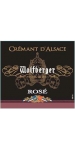
Wolfberger Cremant d Alsace Rose Brut is 100 % Pinot Noir.
The wines from Alsace date back to 589 A.D., but Cremant d’Alsace has more recent beginnings, starting in 1900. Dopff au Moulin (founded in 1574) was the first to produce Cremant d’Alsace in the Method Champenoise style. Cremant d’Alsace received AOC status for sparkling wine in 1976. Two types of Cremant are produced today, resulting in about 2.5 million+ cases of Cremant d’Alsace production annually:
Wolfberger's Cremant d'Alsace Rose Brut displays a lovely delicate salmon color with active, small bubbles. Round and full-bodied, this Cremant Rose displays beautiful watermelon and strawberry aromas cascading in a smooth finish. A minimum of 15 months bottle aging before disgorging ensures ripeness.
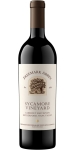
Freemark Abbey 'Sycamore' Cabernet Sauvignon is made from 95% Cabernet Sauvignon, 4% Petit Verdot, 1% Cabernet Franc.
Located on the southern end of the Rutherford Bench, Sycamore Vineyard’s proximity to the Mayacamas Mountains provides the perfect climate for growing a rich, textured Cabernet. The wine is intense in aromatic complexity, reminiscent of blackberry, pomegranate syrup, black tea, and forest floor. The palate is rich and textured with flavors of forest fruits, dark chocolate, bay leaf, and warm oak spices. The ‘Rutherford dust’ is evident in the tannin structure, giving it textures that are bold but integrated, making it lovely to drink now with the capability to age in the cellar for decades.
Primary Vineyard: Sycamore Vineyard—Rutherford (100%): Small 24-acre vineyard located about 1.2 miles south of Bosche, right up against the Mayacamas Range, this vineyard has a rich clay loam. Sycamore Vineyard produces small berries reminiscent of mountain fruit berries, with intense extract of color and flavor. The color is very dark early in the fermentation, with flavors of black currant and black berry with a forest floor complexity.
Review:
Even better, the 2019 Cabernet Sauvignon Sycamore Vineyard is jaw-dropping stuff and does everything right. More structured and tannic compared to the Bosche, it has loads of red and black fruits as well as sandalwood, camphor, bay leaf, and bouquet garni-like aromas and flavors. Full-bodied, deep, layered, and concentrated, yet still with this wonderful sense of elegance, it needs 3-5 years of bottle age and will evolve for 20-25 years as well.
-Jeb Dunnuck 97 Points



