
" We don't sell the wine without touching the vine "
I am a new customer.
By creating an account at Timeless Wines you will be able to shop faster, be up to date on an orders status, and keep track of the orders you have previously made.

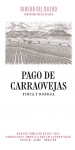
Pago de Carraovejas Ribera Del Duero is made from 90% Tempranillo, 6% Cabernet Sauvignon and 4% Merlot
The most honest interpretation of the Carraovejas Valley.
Body, structure and balance with a vibrant background. Delicacy, harmony and passion for detail are perceived in a wine that reflects the unique character of the valley in an outstanding way.
The 2022 vintage was characterized by cool winter months and extremely low rainfall, reaching limits that had not been observed for years. Due to the good rainfall of the previous year, the vines had good accumulated water reserves, which allowed the vineyard to have a good phenological cycle and normal development. Budding and flowering were perfectly developed in each of the varieties worked, and a homogeneous and balanced development of the plants was achieved. The summer was excessively hot, with several episodes of heat waves, which were mitigated by drip irrigation. Veraison, which was slower than in previous years, and ripening began in early August and the berries developed very uniformly. Harvest began on September 12 and ended on September 28.
Pago de Carraovejas 2022 is the most honest reflection of the valley to which it owes its name. An environment in which the vines climb the slopes to form a unique landscape. On the surface, its tertiary soil of limestone marl, clay and sandstone outcrops force the vines to self-regulate and give their best. Plots that converge in an orography marked by its unique mesoclimate. The vineyards are distributed from the middle zones to the moors that exceed 900 meters in altitude; from the gentle undulation that descends towards the stream, to the plots that exceed 30% slope. South- and north facing slopes, each with its own personality, create the profile of the Carraovejas Valley.
The grapes for Pago de Carraovejas 2022 were harvested by hand after an initial selection of bunches in the vineyard. Subsequently, in the winery, a double selection was made: first by cluster then by berry. Gravity must production allows maximum respect for the raw material. During the fermentation process, indigenous yeasts and lactic bacteria from our own estate were used. The wine was aged in French and American oak barrels for 12 months. The entire process was marked by precision and care in every detail. For greater protection, the wine contains sulfites. Finally it was clarified with natural egg white and bottle in spring of 2024.
Review:
A concentrated, dense Ribera del Duero, but there is a lot to like if you enjoy plushness, with its lush blackberry fruit and dark chocolate. Fine-grained and full-bodied on the palate, but fresh and still pretty tense, with chalky tannins. Drink from 2025.
-James Suckling 93 Points
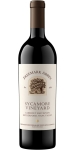
Freemark Abbey 'Sycamore' Cabernet Sauvignon is made from 95% Cabernet Sauvignon, 4% Petit Verdot, 1% Cabernet Franc.
Located on the southern end of the Rutherford Bench, Sycamore Vineyard’s proximity to the Mayacamas Mountains provides the perfect climate for growing a rich, textured Cabernet. The wine is intense in aromatic complexity, reminiscent of blackberry, pomegranate syrup, black tea, and forest floor. The palate is rich and textured with flavors of forest fruits, dark chocolate, bay leaf, and warm oak spices. The ‘Rutherford dust’ is evident in the tannin structure, giving it textures that are bold but integrated, making it lovely to drink now with the capability to age in the cellar for decades.
Primary Vineyard: Sycamore Vineyard—Rutherford (100%): Small 24-acre vineyard located about 1.2 miles south of Bosche, right up against the Mayacamas Range, this vineyard has a rich clay loam. Sycamore Vineyard produces small berries reminiscent of mountain fruit berries, with intense extract of color and flavor. The color is very dark early in the fermentation, with flavors of black currant and black berry with a forest floor complexity.
Review:
Even better, the 2019 Cabernet Sauvignon Sycamore Vineyard is jaw-dropping stuff and does everything right. More structured and tannic compared to the Bosche, it has loads of red and black fruits as well as sandalwood, camphor, bay leaf, and bouquet garni-like aromas and flavors. Full-bodied, deep, layered, and concentrated, yet still with this wonderful sense of elegance, it needs 3-5 years of bottle age and will evolve for 20-25 years as well.
-Jeb Dunnuck 97 Points



