
" We don't sell the wine without touching the vine "
I am a new customer.
By creating an account at Timeless Wines you will be able to shop faster, be up to date on an orders status, and keep track of the orders you have previously made.

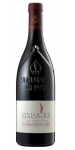
Clos Saint-Jean is a 41-hectare estate in Châteauneuf-du-Pape run by brothers Vincent and Pascal Maurel. Considered by many critics and wine-writers as the preeminent estate espousing the modern style of winemaking in Châteauneuf, this cellar is one of the oldest in the region, having been founded in 1900 by the greatgreat-grandfather of Vincent and Pascal, Edmund Tacussel. A short time after its founding and well before the AOP of Chateauneuf-du-Pape was created in 1923, Edmund began bottling estate wines in 1910.
The farming at Clos Saint-Jean is fully sustainable due to the warm and dry climate, which prevents the need for chemical inputs. Instead, Vincent and Pascal employ organic methods for pest control, mainly pheromones, to prevent pests from taking up residence in their vines, a process called amusingly enough in French, confusion sexuelle. The vines tended manually, and harvest is conducted in several passes entirely by hand.
Deus ex Machina is a literary and dramatic term for a miraculous intervention that interrupts a logical course of events in a plot or play. A suitable name for a cuvée that had it’s start in the torrid vintage of 2003 when Philippe Cambie and Vincent Maurel made the decision to harvest at the end of September, weeks after their neighbors. Deus ex Machina is a blend of old vine Grenache from La Crau, aged in tank with equally ancient Mourvedre from the sandy soils of BoisDauphin aged in demi-muid. Deus ex Machina is only made in the best vintages.
Review:
Lastly, the 2022 Châteauneuf Du Pape Deus-Ex Machina shows a similar profile to the Combes des Fous, yet it brings another level of tannins and concentration. Kirsch liqueur, white flowers, sandalwood, cured meats, and graphite notes all shine here, and it's full-bodied, has a deep, layered, powerful, yet weightless profile, lots of ripe tannins, and a blockbuster of a finish. This ripe, sexy, seamless, incredibly impressive beauty will compete with anything in the vintage. As usual, this cuvée is 60% Grenache and 40% Mourvedre, which is brought up in roughly 40% new demi-muids.
Review: Jeb Dunnuck 97 Points
-75x150.jpg "Maranones Garnacha Vinos de Madrid Sierra Gredos 2022")
“Marañones is so to say our signature vine. This is why the winery was named after this location.
It is part of the mountain at 800 m in altitude, oriented North. We find there the three types of granite of San Martin: the white granite, the brown and the pink. Each vineyard at Marañones has a different soil. Some are on a hill. Others are more towards the plains.
In this wine we wish to convey the Marañones area so representative of the whole winery. this is why we make this wine from the great Garnacha grape. We use a mix of vines since it is not a Parcela wine, which would be much more delicate and of more limited production.
The 100 percent Garnacha expresses itself fully, both in the nose and in the mouth, with flavours of blackthorn, a sensation of fleshy fruit retaining a slightly crispy texture. Then comes a full silkiness, with the granularity of these granite soils rich in quartz. That nugget of quartz is noticeable in the texture, length, fineness, elegance and the floral element of the wine.”
bright, ruby Grenache with wild herb, flower and crunchy red fruit flavors. Sharp tannins add structure to this full-bodied wine.



