
" We don't sell the wine without touching the vine "
I am a new customer.
By creating an account at Timeless Wines you will be able to shop faster, be up to date on an orders status, and keep track of the orders you have previously made.

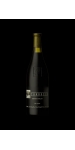
Every now and then, in life and in wine, we are presented with unique opportunities to express ourselves and create something truly remarkable.
When rare opportunities arise, we need to capture, nurture and develop them so that their potential is fulfilled. So when Torbreck was given the opportunity to work with one of the most famous vineyards in the Barossa Valley, it became almost inevitable that the resulting wine would be truly remarkable.
In 2003, Torbreck growers and fourth generation descendants of the Seppelt family, Malcolm and Joylene Seppelt, asked our winemakers to create for them a small batch of Shiraz from their old Gnadenfrei vineyard in the sub-region of Marananga.
Planted in 1958, the five acre vineyard is traditionally dry grown and comes from an original Barossa clonal source. South facing, on the eastern side of a ridge separating the Seppeltsfield and Marananga appellations, these aged vines have been meticulously hand tended, traditionally farmed and pruned by a grower with a lifetime’s experience on Western Barossa soils of very dark, heavy clay loam over red friable clay. The resulting low yields of small, concentrated Shiraz berries make the vineyard the envy of all winemakers in the Barossa.
We looked longingly at the wine when it was returned to the Seppelts, knowing that it was the best we had ever made. In 2005 we convinced the Seppelts to sell Torbreck the fruit and The Laird was born. In 2013 Torbreck purchased the Gnadenfrei vineyard, securing The Laird’s reputation as one of the world’s great single vineyard Shiraz wines.
Torbreck is the name of a forest near Inverness, Scotland and you’ll find more than a passing nod to the Celts in our wine naming conventions. The Laird of the Estate in Scotland is the Lord of the Manor and master of all he surveys.
Review:
I poured the 2017 The Laird, set it aside and got about doing other jobs for 45 minutes or so, to give it some room to breathe. And it does breathe. It has its own pulse and beat and life, and it flexes and moves in the mouth. This is incredibly enveloping, with aromas reminiscent of campfire coals, charred eucalyptus, lamb fat, roasted beetroot, black tea and a prowling sort of countenance. In the mouth, the wine is bonded and cohesive and seamless, there are no gaps between anything, no space between fruit, oak and tannin; it all comes as one. While this is a singular wine, it is so big and concentrated that it needs no accompaniment other than some fresh air and a good mate. It's denser than osmium and is impenetrable at this stage.
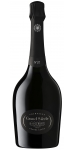
Laurent-Perrier Grand Siecle No. 27 is a blend of 60% Chardonnay, 40% Pinot Noir.
Grand Siècle was born from the vision of Bernard de Nonancourt: to recreate the perfect year, one that nature alone could never deliver. Iteration N°27 embodies this idea, crafted from a masterful blend of three outstanding years – 2015, 2013, and 2012 – with a predominance of Chardonnay complemented by Pinot Noir, sourced from eight Grand Cru vineyards.
After at least 10 years of aging on the lees, the result is a wine of rare aromatic complexity, combining freshness, energy, and timeless elegance. Grand Siècle is never tied to a single vintage but represents a higher concept: the pursuit of absolute balance between intensity, finesse and harmony. Since 1959, it has been revealed only 27 times in bottle and 24 times in magnum, affirming its place among the most exclusive and refined champagnes.
Vintage in Champagne is usually synonymous with excellence for Prestige Cuvées. Contrarily, Laurent‑Perrier believes that only the art of assemblage can offer what nature can never provide, that is, the perfect year.
The expression of the perfect year is that of a great champagne wine that has long ageing potential and over time develops depth, intensity and aromatic complexity yet retains its freshness and vibrancy.
Since 1959, Grand Siècle has been revealed only 26 times in bottle format and 23 times in magnum.
The « Grand Siècle » (Great Century) is the name given to one of the most prosperous periods (17th century) in the history of France known for the capacity of man, through his works, to create what nature cannot. Louis XIVth, known as the « Sun King », by creating the « Château de Versailles » and its gardens, was the architect of this model of harmony, balance and perfection.
The symmetry and perspective of the « Jardins à la française », the capacity to grow Mediterranean fruits (especially Oranges inside the « Orangerie ») in such a Northern climate, creating the Grand Canal, the fountains and ponds with no nearby rivers are many illustrations of this ability of man to sublimate natural elements. The name of Grand Siècle was chosen for Laurent‑Perrier’s Prestige Cuvée based on this common vision to reach a perfection that Nature, on its own, cannot provide.
Review:
Impressively aromatic, showing honeysuckle, violets and lavender with bread dough and just a hint of light caramel as well as dried apples, cooked pears and tarte tatin. Reductive with graphite, stone and iodine. Some chalk too. Full-bodied but not at all heavy, turning almost weightless. Nine years on the lees and 7 g/L dosage give energy, length and form. Goes on for minutes. This will age beautifully but is already fascinating, evolving in the glass. Drink or hold.
James Suckling 99 Points



