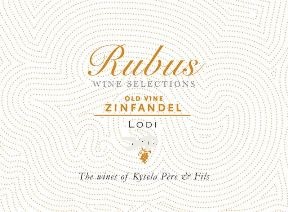
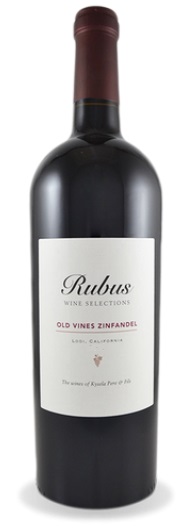
" We don't sell the wine without touching the vine "
| Country: | United States |
| Regions: | California California (Lodi) |
| Winery: | Rubus |
| Grape Type: | Zinfandel |
| Vintage: | 2014 |
| Bottle Size: | 750 ml |
SALE!
Lodi, American Viticulture Area (AVA) – The Lodi AVA is located in the northern end of the San Joaquin Valley, Central Valley California, east of the San Francisco Bay. Lodi has warm days and cool nights, similar to the Mediterranean climate. The lower temperatures that occur in Lodi result in fruit with good acidity. A wide range of soils are found in the Lodi AVA, but they generally are deep, loamy, sandy, rocky soils similar to that found in southern Rhone valley.
The Lodi appellation totals almost one half million acres, and the approximately eight hundred growers farm roughly 90,000 acres. Lodi produces more Cabernet Sauvignon, Chardonnay, Merlot, Sauvignon Blanc, and Zinfandel than any other wine region in California, but it is probably best known for its old vine Zinfandel. The vines are often head trained giving them a classic old world appearance.
Zinfandel – The Zinfandel grape is a hearty variety that produces grapes with high sugar levels, often resulting in wines with a high alcohol content. Thought to be a relative of Primitivo that is found in southeast of Italy (the boot heel), Zinfandel can be made into a wide range of wine styles, including White Zinfandel, light or full bodied red wines, and even late harvest desert style wine. However Zinfandel, especially Old Vine Zinfandel from Lodi, is usually made into a full bodied, spicy red wine with characteristics of red fruit, raspberry, and cherry.
Produced in the heart of Lodi AVA.
Rubus Zinfandel Lodi is made from 98% Zinfandel + 2% Cabernet Sauvignon
Bottled after aging in French and American oak for 9 months.
Rubus Zinfandel Lodi presents with ruby red in color, with red fruit, raspberry, and spice on the nose. This wine is medium in body, with notes of ripe cherry, cedar box, cinnamon, anise, black pepper, and hint of smoke on the palate. It has a long, silky finish.
Selected by Fran Kysela MS.
Grace Town Old Vine Zinfandel Lodi is amde from 98% Old VIne Zinfandel + 2% Cabernet Sauvignon.
Ruby red in color, with red fruit, raspberry, and spice on the nose. This wine is medium in body, with notes of ripe cherry, cedar box, cinnamon, anise, black pepper, and hint of smoke on the palate. It has a long, silky finish.
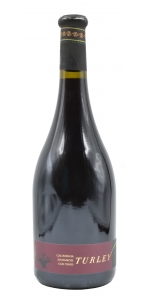
The sage, autumnal older sister to the spring verve of the Juvenile, Old Vines encompasses everything we stand for at Turley. Teeming with dark berries, currants, baking spices, earth, and a sprinkle of petrichor on the nose. The palate is brooding yet supple, serious yet satisfying. Inherently embodies the depth, complexity, and grace that can only come from old vines.
Review:
As with the Juvenile bottling, the 2022 Zinfandel Old Vines punches above its weight in this vintage. The nose is considerably deeper, fuller and more polished, opening with aromas of crushed plums, wild berry preserves, tobacco leaves and similar autumnal accents to its younger sibling. The palate is light- to medium-bodied, carrying through the polished quality of the nose and melds it with a subtly dusty tannin structure and bright acidity. The finish is straightforward and easy to drink, offering generous layers of fruit, spice and floral notes.
- Robert Parker's Wine Advocate 92 Points
A gutsy little red, with intense yet zesty flavors of raspberry, cranberry, savory anise and black pepper that finish with briary tannins.
Wine Spectator 92 Points
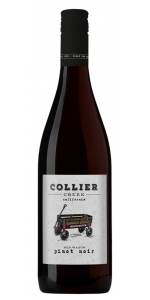
Collier Creek Old Press Zinfandel is made from 93% Zinfandel and 7% Petite Sirah.
Nestled in the heart of the Lodi Appellation, where farmland ran as far as the eye could see, Collier Creek is a place that reminds us of simpler times. The ol' press may look different these days, but this Zinfandel is still a classic with notes of dark fruit, baking spice, vanilla and a velvet mouthfeel.
Pair with blue cheese, bbq pork ribs, leg of lamb.
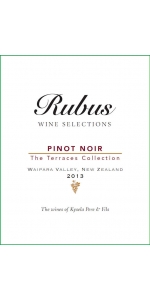
The Rubus Project was created by Fran Kysela as a way to source & sell incredible wines at value prices. All wines in this international project are hand-selected by Fran Kysela. Rubus wines are fruit driven, true-to-type values that over deliver - a true representation of quality for the consumer at an excellent price.
Grapes are sourced from the Lessini hills in the Colli Berici, where the cold nights allow the aromatic compounds in the grapes to develop. The vines, 20 years old on average, are planted on calcareous soils of volcanic origin.
Nice garnet and red color. Expressive and charming on the nose with cherry and blackberry aromas. On the palate, the wine has a nice spicy note. The length to the finish is round and long.
Rubus Pinot Noir is made from 100 percent Pinot Noir from Veneto Italy
Tasting notes: Nice garnet and red color. Expressive and charming on the nose with cherry and blackberry aromas. On the palate, the wine has a nice spicy note. The length to the finish is round and long.
Vineyards:
The grapes are grown primarily on the hills south of Vicenza, the Colli Berici, where the hillside sites ensure lower yields and better ripeness of the grapes.
The vineyards are located in the hills and are south-west facing. The hillside sites experience cooler nights, allowing the aromatic compounds in the grapes to develop. The vines are trained using the Guyot system, planted on calcareous soils of volcanic origin.
Average age of the vines is around 20 years old.
Vinification:
The grapes were harvested, destemmed, crushed and then cool soaked for 24 hours. Maceration on the skins took place before fermentation at temperatures of up to 22°C. Following malolactic fermentation, 30% of the wine was aged in oak for four to five months prior to bottling.
Winemaker: Alberto Marchisio
Acidity: 5.3 g/Liter
RS: 5.6 g/Liter
pH: 3.42
Nice with roasted or grilled beef, game and a very good companion for matured cheese.
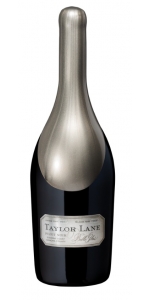
Belle Glos' first wine under the newly minted West Sonoma Coast AVA and a cellared release, this majestic vineyard brings plum with a slight burnt edge in the glass and boasts aromas of freshly tilled land, a rich oak forest in Autumn, and Crème de Cassis. Once on the palate, the acidity sparks a fire of smoked caramel and cinnamon spiked cranberry sauce. The silky-smooth texture gives way to a long and balanced finish that leaves your senses wanting more.
Review:
Located in the westernmost section of Sonoma County, this rugged, elevated, marine-influenced sub-AVA is the newest in the region. This almost nine-year-old wine immediately delivers a memorable experience through its perfume of jasmine, gardenia, and tangelo; on the palate, notes of brown-sugared cherry join a parade of orange peel and crushed stone. Grainy yet juicy strawberry weaves into vanilla and cedar as white pepper keeps the palate primed for more flavor.
-Tasting Panel 97 Points
Lodi, American Viticulture Area (AVA) – The Lodi AVA is located in the northern end of the San Joaquin Valley, Central Valley California, east of the San Francisco Bay. Lodi has warm days and cool nights, similar to the Mediterranean climate. The lower temperatures that occur in Lodi result in fruit with good acidity. A wide range of soils are found in the Lodi AVA, but they generally are deep, loamy, sandy, rocky soils similar to that found in southern Rhone valley.
The Lodi appellation totals almost one half million acres, and the approximately eight hundred growers farm roughly 90,000 acres. Lodi produces more Cabernet Sauvignon, Chardonnay, Merlot, Sauvignon Blanc, and Zinfandel than any other wine region in California, but it is probably best known for its old vine Zinfandel. The vines are often head trained giving them a classic old world appearance.
Zinfandel – The Zinfandel grape is a hearty variety that produces grapes with high sugar levels, often resulting in wines with a high alcohol content. Thought to be a relative of Primitivo that is found in southeast of Italy (the boot heel), Zinfandel can be made into a wide range of wine styles, including White Zinfandel, light or full bodied red wines, and even late harvest desert style wine. However Zinfandel, especially Old Vine Zinfandel from Lodi, is usually made into a full bodied, spicy red wine with characteristics of red fruit, raspberry, and cherry.
Produced in the heart of Lodi AVA.
Rubus Zinfandel Lodi is made from 98% Zinfandel + 2% Cabernet Sauvignon
Bottled after aging in French and American oak for 9 months.
Rubus Zinfandel Lodi presents with ruby red in color, with red fruit, raspberry, and spice on the nose. This wine is medium in body, with notes of ripe cherry, cedar box, cinnamon, anise, black pepper, and hint of smoke on the palate. It has a long, silky finish.
Selected by Fran Kysela MS.
The Rubus Concept
Rubus wines are a private label created and used by Kysela Pere et Fils, LTD in order to buy, bottle and market wine found at incredible quality/price ratio. All Rubus wines are selected by Fran Kysela MS.
It was first used for a superb batch of 1,200 cases of Amador county Zinfandel back in 1997. The wine sold in a few days and the Rubus brand was not used since then.
During a trip in California in 2009, when Fran Kysela tasted some incredible wines (available in bottle but without label), he decided to help resurrect the brand creating an outstanding Cabernet Sauvignon from Stag's Leaps district in Napa Valley (California) , followed by an excellent Chardonnay from Russian River Valley (California)
We then developed the Rubus Zinfandel from Lodi (California).
In 2011, we added a Shiraz/Viognier blend from the Barossa in Australia.
For 2012, the newest addition to the Rubus line is a Chardonnay from Colchagua Valley in Chile.
Rubus is now its own brand representing quality for the consumer and an incredible price along the way.
Rubus Meaning
The name RUBUS means "raspberry" in Latin and it is the name given to the genus of flowering plants in the rose family. For instance, here are some famous fruit from the Rubus family with their latin names:
Rubus fruticosus agg. – Blackberry
Rubus idaeus – European Red Raspberry
Rubus occidentalis – Black Raspberry
Rubus pensilvanicus – Pennsylvania Blackberry
Rubus strigosus – American Red Raspberry
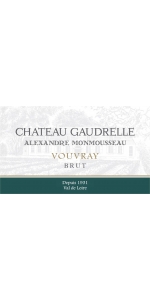
Produced from 100% Chenin Blanc planted on clay and flint stones based soils.
Vinification: aged in stainless steel tanks with temperature controlled fermentation. Aged on the lees for 4 months.
Kieselguhr filtration.
This sparking wine is fresh and fruity. Rich and easy to drink, which makes it a wonderful aperitif. For the aficionados this is an excellent food friendly wine. Its quality makes it a great alternative to Champagne.
"The two sparkling wines should not be missed. They’re both terrific examples of how good sparkling Vouvray can be. Both are 100% Chenin Blanc cuvees, with the non-vintage Chateau Gaudrelle Vouvray Brut showing lots of effervescence and plenty of flowery brioche, buttered citrus, melon and dried apricot notes. It is crisp, fresh, and ideal for drinking over the next several years."
-Wine Advocate 90 pts
"Just off-dry, this almond- and apple-flavored wine achieves a fine balance of crispness and richness. There is just a touch of honey, intertwined with delicious citrusy acidity."
- Wine Enthusiast , 90 pts
Inglenook Rutherford Cabernet Sauvignon is made from 96% Cabernet Sauvignon, 4% Cabernet Franc.
Stunningly deep ruby in color, the 2019 Cabernet Sauvignon opens with heady aromas of brambly black cherry, vanilla, warm brioche, and crème de cassis. As the wine warms on the palate, notes of red cherry, graphite and fennel emerge, as very polished, refined tannins carry the wine into a long, fragrant finish. Layered flavors, good tension, and a perfect integration of wine and oak interact to create this classic expression of Inglenook Cabernet Sauvignon.
Review:
This shows notes of ripe blackberries and blackcurrants with hints of licorice, cloves, walnuts and chocolate. It has full body and a velvety tannin structure. Juicy and vibrant fruit on the palate with a touch of earthiness. Smooth and delicious. Long, fruity finish. Very pure fruit. Try after 2024.
-James Suckling 95 points
Obsidian Vineyard Syrah is bathed in terroir. The vines experience severe stress, pushing the roots ever deeper through rock in search of water, producing miniature clusters of intense power. Given the wine’s natural propensity for tannin, we take extreme care in the cellar to chisel/whittle its rough edges and leave room for richness to flatter its distinctive scaffold. The mid-palate supports flavors of roasted coffee beans, sarsaparilla, and dark chocolate. The finish marches on long after most wines have tired.
Our estate vineyard — the six-acre Obsidian Vineyard in the Knights Valley AVA — has an incredibly complex soil structure. It takes its name from a layer of volcanic obsidian rock that was discovered when we drilled for water.
Chocolate ganache, black currants, fig, graphite, and an expansive mouthfeel.
Review:
"Joe Donelan believes his Obsidian Vineyard is one of the world’s greatest sites for Syrah. I’ve visited the site twice, and can say candidly it certainly sits among the most striking vineyards I've ever laid eyes on within the U.S. It sits like a rock on a promontory—two switchbacks to reach the top—and the stones under the top soil, quite literally, never stop emerging from the ground. The place has an ancient, almost sacred, temple-like feel. It is consistently swept by afternoon breezes. The vineyard was replanted in 2017 after fires ravaged it. Winemaker David Milner laid out the site at denser spacing than before, at 2,000 vines per acre to keep yields per vine low while still achieving sensible tonnage, averaging around three tonnes per acre. Viognier was planted for co-fermentations, alongside some Cabernet Sauvignon, for a single vineyard bottling of that grape. ‘God put on his viticultural hat when he designed this site,’ says Milner. The vineyard is planted with ENTA 174, 877, and Alban 1 clones, along with Donelan Heritage selections certified virus-free. The wine, the 2023 vintage release (the first from the new vines), was aged for 21 months in 36% new oak and co-fermented with 1.8% Viognier, using 32% whole clusters. And it is positively gorgeous: composed of nine different blocks, each fermented separately, then assembled through sequential blending, with no racking until bottling. From just five-year-old vines, this wine is utterly extraordinary—something oddly achievable from young vines on rare occasion. I tasted this wine from the same bottle over three days. While the high-toned espresso-bean and cedar accents are present at first pull of the cork, they mellow out a day later, and the fruit profile is so vibrant. This is the sign of an excellent wine. I first tasted wines from the Donelan’s Obsidian Vineyard years ago at Tasting Panel Magazine in the late, great Anthony Dias Blue’s office. Cushing Donelan showed the wines, and to this day, I recall the first moment I put my nose into a glass of Obsidian Syrah. In early January of 2026, as I nosed this brand new release of Obsidian Syrah, I was transported straight back to that tasting twelve years ago. What’s remarkable is that the aromatics are unmistakably the same, yet from these new, more densely planted vines, the aromas are more refined—precision-farmed wines from young vines delivering a level of detail and poise that feels beyond their years. So what’s in the glass? Pure red, black, and blue fruit nuances layered with tobacco, white truffle character, violet pastille, and an intoxicating perfume. White pepper notes emerge on the medium- to full-bodied palate, framed by velvety tannins. Iron-like and crushed slate minerality underpins dazzling black cherry and blackberry fruit, brown spices, and blood orange richness. There’s a velvety, iron-fist quality here that exudes polish, complexity, and undeniable quality. You want to drink it now—and you absolutely can—but it will also reward time in the cellar. Either way, you’ll be utterly wowed. And when you realise the price is under £100, the achievement becomes even more staggering. As these vines mature, what will become of them in subsequent vintages? I suspect that as the vines mature, they'll go in and out of phases, but so long as Mother Nature cooperates, I expect this wine to continue to dazzle each vintage. - Jonathan CRISTALDI"
Decanter (January 5th 2026), 100 points
This is the first vintage of the Obsidian Syrah after wildfires torched the vineyard in 2017, leading to significant redevelopment. Throughout all those years, the Donelans have exhibited remarkable patience and a clear sense of purpose. This is their reward: a truly magnificent, towering wine of the highest level.
Knights Valley is one of the most magical grape-growing districts in the United States, but it is not very well known because only a few estate wineries are located there.
The 2023 Syria Obsidian Estate is one of the most profound, moving wines I have tasted in Sonoma County. Blackberry, gravel, incense, chocolate, lavender, and dried herbs race out of the glass. Delicate yet powerful, the 2023 is spectacular. It is also very fairly priced in today’s market.
Vinous 100 Points