
" We don't sell the wine without touching the vine "

In 2008, fourth generation farmer and aspiring winemaker Giovanni Balistreri, under the tutelage of award-winning winemaker Anthony Austin, set out to reclaim the rich history and enormous un-tapped potential of one of Sonoma County’s finest wine-making estates. The estate lies in the heart of the Russian River Valley and thus proudly and appropriately bears the Russian River Valley appellation.
The winemakers understood the potential of this small estate, but even more importantly, they had come to know the special region in which it sits. This was not a place to build a large, corporate winery to produce wine in high volume. It was a place where a careful, patient approach could produce world-class wine. And in the decade since, the venerable estate has been returning to its former glory.
At Russian River Vineyards, they don’t mystify the winemaking process. They are farmers, first and foremost. Gio, the winemaker, is a product of four generations of farmers, and he wouldn’t have it any other way. To produce great wine, you must first produce excellent fruit. And it is the essential character and flavor of that fruit, when it is harvested, that will determine its potential to become a superior wine. There is no shortcut. You have to be there and manage the crop at every step. They are hands-on farmers, not only with their estate-grown grapes, but they also directly manage the farming of all vineyards from which they produce wine, whether they own the property or not. If they don’t farm it, they don’t make wine from it.
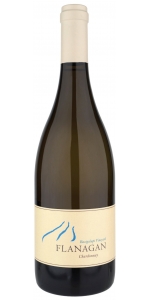
Just south of the winery, Bacigalupi Vineyard straddles Westside Road in the upper reach of Russian River Valley. The 125 acre vineyard encompasses a range of terroir, from heavier valley floor soil along the Russian River to alluvial clay loam on the rolling hillsides. The fruit is sourced from a superb block of 25 year-old Wente Clone vines located on the western slope of the site. Bacigalupi was the source of the Chateau Montelena Chardonnay that, famously, beat the French wines at the "Judgement of Paris" in 1976.
Bacigalupi Chardonnay has a nose of lemon zest and vanilla bean. The palate opens with red pear and Meyer lemon, and brioche toast and honey comb notes on the finish. Like well-made Chardonnay from great vineyards around the world this wine benefits from getting some air, will age for years, and is best when served chilled around 50 degrees. This wine will evolve in the bottle for many years to come. A terrific wine from one of Sonoma County's top sites for Chardonnay.
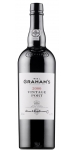
W & J Graham's Vintage Port is made from 35% Touriga Nacional, 47% Touriga Franca and various others.
It is with great pleasure that Graham's announces the declaration of the 2000 Vintage, a wine that has been deemed to meet our very exacting standards, and one that shows every promise of living up to the reputation of the very best Vintage ports that the Twentieth Century provided.
This is a landmark wine for Graham's, not only being the first Vintage of a new millennium, but being the first Vintage wine to enjoy the extraordinary results achieved by the new robotic 'lagares' at Malvedos in the inaugural year of our remodelled winery. Significant also has been the decision to include a rather larger proportion of mature Touriga Francesa and Touriga Nacional from Vila Velha, a classic riverside Quinta a short distance downstream from Malvedos, and some spectacular old vine lots from Vale de Malhadas in the Upper Douro. These wines each from family-owned Quintas have been used to reinforce the predominant component from Malvedos and the traditional excellence of the Rio Torto lots from Lages, to produce a rounded and even blend in the hallmark rich Graham style.
Picking began at Malvedos on September 22nd and the last lagar was run off on October 10th, an unusually short and compact Vintage. Fruit arrived in good condition although yields were less than three quarters of a kilogram per vine, and the juice to skin ratio well below normal. 2000 was a year noted for a very low average yield across the Douro, and with the grapes unusually lacking in liquid, the extra amount of treading work required made it an ideal time to employ our new, tireless, mechanical treaders alongside the two original 1890 stone lagares still worked by human feet. It was evident early on in the Vintage from the colour and aroma of the fermenting musts that we were looking at a spectacular year, and after the usual waiting period of sixteen months or so to see how the lots would develop, we have now made our final selection and assembled the final blend.
The blend displays many of the typical Graham aromas of ripe plum and 'esteva' (gum cistus) and is pleasantly smooth on the palate despite its youth. It is full and rich in the mouth with fresh blackberry and red plum notes. Despite the hallmark Graham sweetness in the mouth the finish is long and clean.
As with all Graham Vintages, this is a wine made to last for years and the patience of laying down the wine for fifteen to twenty years will certainly be rewarded.
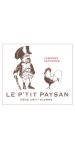
Ptit Paysan Cabernet Sauvignon is made from 91% Cabernet Sauvignon, 6% Petite Verdot, 3% Cabernet Pfeffer.
Oak: 11 months on lees in neutral barrels
The Cabernet Sauvignon is sourced from a vineyard at the foot of the Santa Cruz Mountains west of Morgan Hill, which grows in a mix of granitic and volcanic soils, and a 25-year-old vineyard east of Gilroy, which grows in deep, extremely sandy soils against the foothills of the Diablo Range. The Petite Verdot is sourced from the Paicines AVA and grows in rocky alluvial deposits above the Tres Piños Arroyo. All three vineyards experience the warm days and cold nights typical of the Central Coast, allowing these late ripening Bordeaux varieties to be picked at high acidity and moderate sugars.
Le P'tit Paysan offers intense blackberry, dark cherry aromas, chocolate, herbaceous and toasty notes on the palate. Medium-bodied, well-balanced with moderate and integrated tannins that give structure and liveliness to the wine.
Pairs well with steak, duck, game, hearty stews, ribs, and dark, rich sauces.



