
" We don't sell the wine without touching the vine "
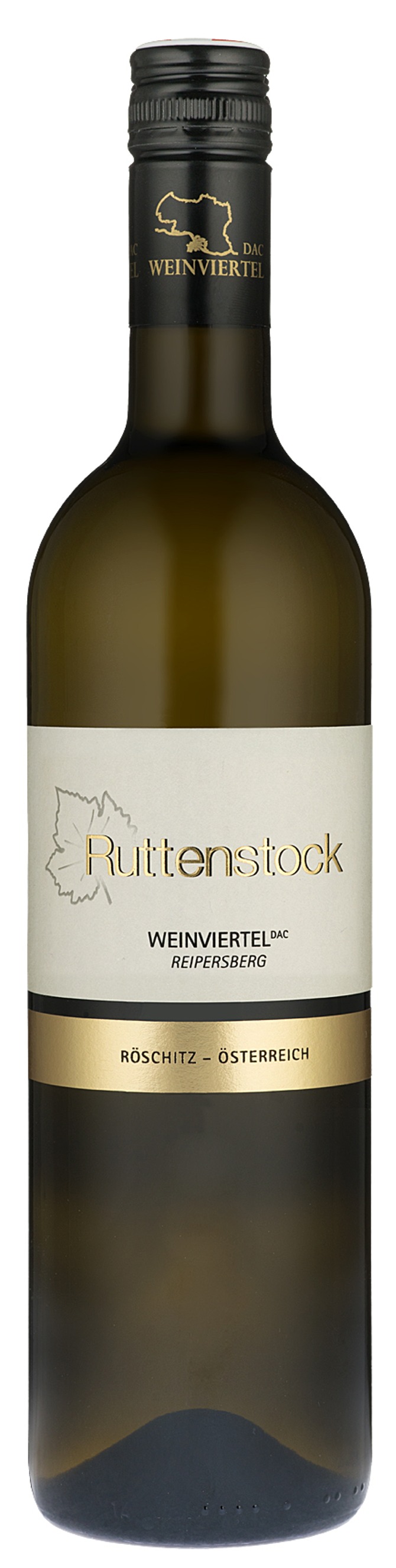
| Country: | Austria |
| Region: | Weinviertel |
| Winery: | Ruttenstock |
| Grape Type: | Gruner Veltliner |
| Organic: | Yes |
| Vintage: | 2023 |
| Bottle Size: | 750 ml |
Ruttenstock Gruner Veltliner Ried Reipersberg DAC is 100% Gruner Veltliner.
The wine offers a touch of pear, spice and dried fruit aromas on the nose, and exotic fruit characters.
Minerality emerges from the primary rock soils, followed by an elegant and lively finish.
Pairs well with chicken and pork dishes.
Ruttenstock Gruner Veltliner Weinviertel Klassik is a white wine made of 100% Gruner Veltliner.
The wine offers a touch of pear, spice and dried fruit aromas on the nose, and exotic fruit characters.
Minerality emerges from the primary rock soils, followed by an elegant and lively finish.
Good food companion to many dishes; chicken, pork, fish or cold appetizers.
Ruttenstock Gruner Veltliner is made from 100 percent Gruner Veltliner.
Very fruity and light Gruner Veltliner with fresh aromas of citrus and green apples. Crisp on the palate with lively acidity structure.
Pair with cold appetizers, soup, fish, vegetables, salad.
Ruttenstock Gruner Veltliner is made from 100 percent Gruner Veltliner.
Very fruity and light Gruner Veltliner with fresh aromas of citrus and green apples. Crisp on the palate with lively acidity structure.
Pair with cold appetizers, soup, fish, vegetables, salad.
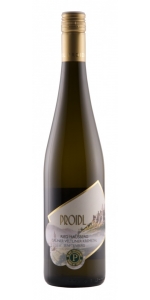
Proidl Gruner Veltliner Ried Hausberg Kremstal DAC is made from 100 percent Gruner Veltliner.
Medium yellow green colour with silver reflections. Ripe tropical fruits, a bit of candied clementines, a bit of apricot, dark minerality, inviting bouquet. Juicy, elegant, fine acidity, mineral and salty, a touch of yellow apples, lingers long, versatile.
Review:
"Medium yellow green colour with silver reflections. Ripe tropical fruits, a bit of candied clementines, a bit of apricot, dark minerality, inviting bouquet. Juicy, elegant, fine acidity, mineral and salty, a touch of yellow apples, lingers long, versatile. - Peter MOSER"
- Falstaff (April 21st 2023, Kremstal DAC Cup 2023), 92 pts
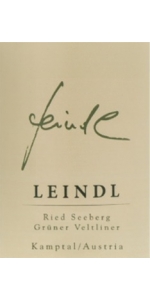
Leindl Gruner Veltliner Seeberg Kamptal is made form 100 percent Gruner Veltiner. Medium yellow green. Fine yellow apple fruit, delicate hint of quince and honey, candied orange zest, highly attractive bouquet. Juicy, good complexity, extract core sweet, silky texture, fine acidity bow, fine and salty minerality, great length, secure aging potential, a very finesse Veltliner-style.
Review:
"Here’s a wonderfully cool and elegant Gruner Veltliner with mountain freshness that makes it very enticing. Medium-bodied and quite sleek, but with a touch of marzipan richness on the mid-palate, then a stunning wet-stone freshness in the long and polished finish. Drink or hold. - Stuart PIGOTT"
- James Suckling (October 10th 2024), 95 pts
The wine offers a touch of pear, spice and dried fruit aromas on the nose, and exotic fruit characters. Minerality emerges from the primary rock soils, followed by an elegant and lively finish.
Chicken and pork dishes, good food companion to many dishes.
Mathias Ruttenstock, 4th generation winemaker in Röschitz in the Weinviertel region of Austria. He has been in charge of the winery since 2011, following the footsteps of his father, grandfather and great grandfather. Mathias gained his experience by working with Anton Bauer in the Wagram and through internships at Roman Pfaffl and Julius Klein.
The vineyard is small, with only 42 acres and a total production of 80,000 bottles. The vast Weinviertel stretches from the Danube valley in the south to the Czech border in the north, and from the Manhartsberg in the west to the border of Slovakia in the east. The Weinviertel is mostly known for Grüner Veltliner and the first DAC in Austria. If the label reads Weinviertel DAC it is always 100% Grüner Veltliner. A highlight of the western part of Weinviertel is the area around the historic winetrading town of Retz, with its labyrinth of underground wine cellars.
Wachau Riesling is dry and often defined by high levels of dry extract (due to a lengthy ripening period) and a pleasing freshness (due to dramatic temperature swings between day and night). Sedimentary soils of sand and stone give Kirchweg Riesling a dense mineral texture and fine fruity flavors.
Review:
Welcome to the dark side of Wachau dry riesling! Deep and delicately spicy nose that’s full of mystery. Incredible concentration and massive wet stone character on the very precise medium-bodied palate. Radical mineral energy and garden herb freshness at the enormously long and tightly-focused finish.
-James Suckling 98 Points
Weinkeller Erbach Goldmuskateller Feinherb is made from 100% Goldmuskateller.
The old name for the Erbacher Honigberg was Wacholderwiesen, meaning juniper meadows. At the Wacholderwiesen there was an uprising of the peasants in the 16th century. All the ringleaders were hanged.
The Muskateller grape has the smell of elder-berries, apricots and quince. A subtle aroma of lime and coconut rounds off the experience.
RS: 27.7grams / Liter
Acidity: 6.1
Pairing: Mountain cheese, spicy Asian food, ice-cubes with lemon balm in a long drink (lemon balm grows in the vineyard Erbacher Honigberg).



