
" We don't sell the wine without touching the vine "
| BUY MORE! SAVE MORE! | ||||||||||||||||||||
|
| Country: | United States |
| Regions: | California California (Napa) |
| Winery: | Silver Oak |
| Grape Type: | Cabernet Sauvignon |
| Vintage: | 2020 |
| Bottle Size: | 750 ml |
Silver Oak Cellars Napa Valley Cabernet Sauvignon is made from 81.6% Cabernet Sauvignon, 14.8% Merlot, 1.8% Petit Verdot, 1.4% Cabernet Franc, 0.4% Malbec.
Ruby in color, the 2020 Silver Oak Napa Valley Cabernet Sauvignon is a harmony of black and blue fruit notes that dance delicately on the palate. Plum and blueberry intertwine with whispers of baking spices, creating a tapestry of flavors that unfold in layers of complexity. On the palate, it is a study in elegance—smooth and effortlessly refined. Silky tannins provide structure without imposing, ensuring a seamless journey from the first sip to the last.
Review:
A super creamy, delicious and detailed red with oodles of red fruit, silky tannins and a full body. It tastes pure, fresh, almost delicate, offering raspberries, cherry cream, blueberries, cafe au lait and subtle oak toast on the palate. A gentle, layered, pretty wine that seems not at all affected by the wildfire smoke that year.
-James Suckling 95 Points
Ray Twomey Duncan, a Colorado entrepreneur who began investing in California vineyards in the late 1960s, and Justin Meyer, a Christian Brothers-trained winemaker, co-founded Silver Oak out of a Napa Valley dairy barn in 1972, producing only 1,000 cases of their inaugural vintage.
Silver Oak began over a handshake between two friends with a bold vision: focus on one varietal, Cabernet Sauvignon, aged exclusively in American oak and worthy of cellaring for decades to come.
In 2006, a fire destroyed our historic Oakville winery. While rebuilding was a difficult and emotional event; the opportunity to design a new, state-of-the-art winery from the ground up has resulted in better Napa Valley Cabernets and minimized our eco footprint.
Ten years after the fire, Silver Oak Napa Valley was designated the world’s first LEED Platinum winery for existing buildings, operations and maintenance (EBOM) by the U.S. Green Building Council (USGBC).
Next, when it came time to reimagine the Silver Oak Alexander Valley winery, we applied the lessons learned from our Oakville winery and set an even higher bar. With a goal of net-zero water and energy as our north star, the new Sonoma county winery has since become the world’s first winery to achieve LEED Platinum for building, design and construction (BD+C).
“We have yet to make our best bottle of wine,” or the idea that our best wines are still ahead of us, is a founding philosophy that still guides us to this day.
We farm more than 400 acres of vines in Napa Valley and Alexander Valley with a leading-edge approach toward farming and viticulture, and the softest possible impact on natural resources and the environment.
Since 2014, Napa Valley native Nate Weis has overseen all grapegrowing and winemaking operations at Silver Oak. Nate worked side-by-side with his predecessor Daniel Baron, just as Daniel worked with Justin Meyer before his retirement. These overlapping tenures ensure consistency and quality control, as well as the inherent wisdom that our best wines are still ahead of us.
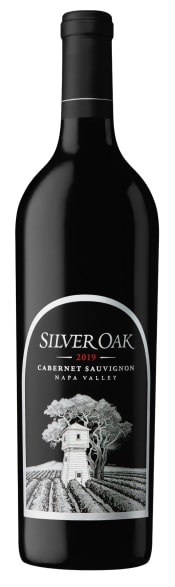
Silver Oak Cellars Napa Valley Cabernet Sauvignon is made from 76.61% Cabernet Sauvignon, 18.13% Merlot, 2.56% Cabernet Franc, 2.32% Petit Verdot, 0.38% Malbec.
Expressive and lively on the nose, the 2019 Silver Oak Napa Valley Cabernet Sauvignon has a black cherry and huckleberry aroma laced with dry floral notes. Integrated oak adds a light note of sweet nutmeg to this wine. Ruby in color, it has a fruit-forward entry with silky tannins that builds across the mid-palate and through a long and balanced finish. Structured while still approachable, this wine remains true to the signature Silver Oak winemaking style and will continue to improve through 2047 given proper cellaring conditions.
Review:
A beautifully compact wine that delivers complex and nuanced aromas of Bing cherry and black raspberry with tobacco, currant leaf, and cedarwood laced with dried sage. Cool raspberry, cherry, and blackberry fruit are perfectly represented, and the lengthy finish is crisp, lively, and energetic.
Decanter 96 Points
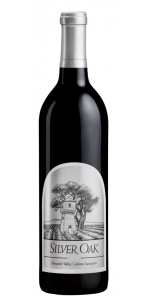
Silver Oak Alexander Valley Cabernet Sauvignon is made from 95.2% Cabernet Sauvignon, 2.5% Cabernet Franc, 1.9% Merlot, 0.4% Petit Verdot
The Silver Oak Alexander Valley Cabernet Sauvignon 2019 has notes of red cherry, raspberry, blackberry, iris, vanilla and clove. Ruby in color, this elegant wine has great acidity and lift on the mid-palate. Black currant and warm baking spices linger with a deep and fruity finish. It will provide drinking pleasure through 2047 given proper cellaring.
Review:
The 2021 Silver Oak Cabernet Sauvignon from Alexander Valley was harvested between 4 September and 8 October. The blend comprises 96% Cabernet Sauvignon, 2% Merlot and 1% each of Cabernet Franc and Petit Verdot. After blending, it was barrel-aged for 24 months in American oak, 50% of which was new, followed by 14 months of bottle ageing prior to release. The wine is beautifully layered and highly fragrant, with remarkable precision and focus in this vintage. Medium- to full-bodied, it integrates the hallmark Silver Oak American spice character through cedarwood aromatics, elegant whispers of vanilla bean, and nuances of fresh fennel (from more refined American oak barrels crafted after precision trials of both seasoning and toasting from the American oak cooperage they own in Higbee, Missouri). Supple dark-cherry and blackberry fruit are framed by graphite minerality, violets and clove, building in richness and complexity across the palate. Suave and silken, the dark-berry fruit is wrapped in a tapestry of velvety tannins, gliding to a focused finish of brown baking spices and crisp, clean acidity.
-Decanter 96 Points
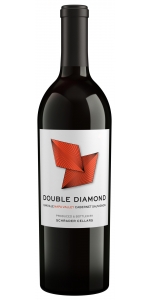
Double Diamond by Schrader Oakville Cabernet Sauvignon is made from 100 percent Cabernet Sauvignon.
Barrels: 54% new French oak, 46% second-use Schrader Darnajou French Oak
The 2022 Cabernet Sauvignon offers concentration, lively acidity, and refined tannins that have become the hallmark of the 2022 vintage. The nose holds notes of black raspberry, toasted cedar, juicy plum, and pennyroyal mint—a Napa Valley Cabernet Sauvignon signature. The palate is mouthwatering with intricately woven layers of blackberry compote, dark chocolate shavings, oolong tea, and flint. The dynamic flavors carry across the mid-palate in vivid harmony into a long, floral finish. This wine is ready to drink upon release but will cellar well for years to come.
Double Diamond is sourced exclusively from a complement of prime vineyard estates. Sourced from the same famed vineyards as its beloved inspiration Schrader Cellars in Napa Valley’s world-renowned Oakville AVA, including our To Kalon Vineyard.
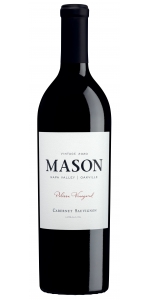
Mason Cellars Pelissa Vineyard Cabernet Sauvignon is made from 100 percent Cabernet Sauvignon.
The 2020 Mason Oakville Cabernet Sauvignon is quintessentially Oakville from nose to finish. Attractive fresh blackberry, red current and chocolate with a hint of sweet oak boast out of the glass. This wine showcases graphite, velvety tannins and concentrated, beautifully balanced flavors with a bit of spice and white pepper. These bold flavors typical of Oakville Cabernet are rounded out with velvety tannins, a weighty mid-palate and a long, juicy finish.
Production Notes:
The fruit was delicately hand-picked in the early morning hours and brought into the winery for processing. The grapes were crushed, about 60% whole berry, and cold soaked for three days before being inoculated for primary and malo-lactic fermentation. Once dry, the wine was put down to barrel for 20 months in medium toast French oak, 25% of which was new.
Vineyard Notes:
Grapes for our 2020 Mason Cabernet Sauvignon are sourced exclusively from the Pelissa Vineyard in Oakville. This vineyard spans 60 acres and is planted to Old BV Clone 7 Cabernet Sauvignon as well as Zinfandel. This vineyard is named for Andrew and Babe Pelissa, who after their marriage on August 30, 1930, made their home at the site of this vineyard which, at the time, was a dairy. Oakville is the core of Napa Valley’s famed Cabernet Sauvignon production, and this site is no exception with the flawless blending of climate and soil to create a remarkable wine.
Review:
“This firmly structured, well-balanced wine has the feel of a classic Bordeaux blend. Just-ripe red and black fruits blend with subtle toast, cedar and mint on a moderately tannic, slightly tangy texture. The wine is tasty enough to decant and drink soon with grilled lamb chops or roast chicken. Best from 2026–2036.” – Jim Gordon
-Wine Enthusiast 94 Points
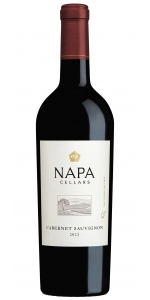
Napa Cellars Cabernet Sauvignon is made from 100 percent Cabernet Sauvignon.
Napa Cellars Cabernet Sauvignon brims with ripe, concentrated aromas of black currant, loganberry and fig, underscored by threads of warm spice and mocha.
Review:
Aged 21 months in French and Hungarian oak, notes of toasty, spiced cocoa, cassis, and clove are the preamble for the palate’s introduction to this most approachable red. Deep and savory, with black tea, plum, and graphite. Tannins are supple and easy going, and acidity is bright, establishing an energetic finish. - The Tasting Panel, July/August 2025
-Tasting Panel/Somm Journal 92 Points
When the founding fathers of the Napa Valley carved out new sub-AVAs (American Viticultural Areas) in the 1980s, Soda Canyon Ranch was not yet on anyone’s map. The vineyard is neighbored to the northwest and west by the winegrowing districts of Stags Leap District and Oak Knoll District, respectively, which were among the early pioneers of California Cabernet Sauvignon to attain global fame. To the northeast and southeast—and further off the beaten path—were Atlas Peak and Coombsville, thought to be the next frontiers for the emerging wine-producing region.
This opulent wine has a broad and balanced mid-palate, notes of vanilla and blueberry, a dried floral character and chalky tannins. Anise and cherry lift the palate to a beautiful, lingering finish. In both aromatics and palate, this is an elegant vintage worthy of cellaring for years to come.
The winter of 2019 was marked by cold, foggy days in Napa Valley. Well-drained soils of Soda Canyon Ranch and steady, purposeful farming decisions mitigated the rainy and wet conditions as they persisted into spring. After months of ever-shifting weather, the vines were greeted by a consistent, warm and dry summer plus a mild harvest season, resulting in bright and ethereal fruit. Once blended, the 2019 vintage rested in French oak barrels for 16 months.
It is the purest example of tempranillo grapes from Rioja Alavesa. Coming from a vineyard over a hundred years old with an extremely low production. You can taste a high concentration of ripe fruit, well-bodied, with a final touch of toffee and lime soil plus a perfect acidity which makes this wine fresh and very tempting.
VINEYARD From the Cuba Negra Vineyard in southern Labastida, the El Belisario bottling comes from Tempranillo vines planted in 1910.
ALCOHOL 14.5%
PROCESS Fermented naturally in oak foudre. Malolactic fermentation and aging occur in 100% new French oak barriques over two years.
TASTING Along with its brilliant garnet color, aromas of cherries, dried plums, black pepper, and savory mushroom leap from the glass. The palate is fresh and concentrated with mixed red and black fruit, chocolate, menthol, and coffee. Displays a surprisingly elegant nature. Pair with game, red meat and dark chocolate.
Review:
One of those wines that makes you belief in the special magic of old vines, El Belisario hails from La Greña, parcel planted on limestone rich soils in 1910. Aged in older French barrels, it's a focused, nuanced, wonderfully expressive Tempranillo with raspberry, pomegranate and red cherry fruit, filigree tannins, energetic acidity and sweet, caressing oak spices.
96 Points - Top Rated Single Vineyard in Tim Atkin's 2023 Rioja report
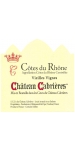
Chateau Cabrieres Cotes du Rhone Rouge Vieilles Vignes is made from 50% Grenache and 50% Syrah.
Château Cabrières’ Côtes du Rhône vineyard is located south of Orange, on the edge of Châteauneuf-du-Pape. The area of the vineyard is 1.53 hectares. The soil is comprised of clay-limestone mixed with pebbles.
Bright cherry red color with an expressive red fruit nose (strawberry and raspberry). Soft tannins in mouth, with freshness and spices. This CDR tastes like a baby Châteauneuf-du-Pape!
Pairs with charcuterie, pizza, pasta and mild cheeses.



