
" We don't sell the wine without touching the vine "
| BUY MORE! SAVE MORE! | ||||||||||||||||||||
|
| Country: | United States |
| Regions: | California California (Napa) |
| Winery: | Stags Leap Winery |
| Grape Type: | Chardonnay |
| Vintage: | 2020 |
| Bottle Size: | 750 ml |
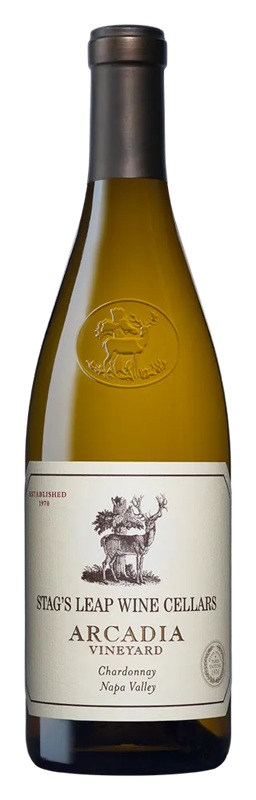
This ARCADIA VINEYARD Chardonnay offers inviting aromas of honeydew melon, peach pie, baked squash, brioche, lemongrass and honeycomb. These aromas are very fragrant and layered with just a touch of oak. The wine has a bright and flavorful entrance with flavors of Kiwi fruit, brioche, and a pleasing mineral note on the finish. Enjoy this wine with grilled fish or shrimp with capers and lemons, seared scallops drizzled with lemon-infused olive oil, or roast chicken with fennel and sage.
Review:
This beautiful wine stays with you beyond the palate. Deliciously balanced and bright, it holds its weight well, revealing rich, complex layers of green apple, pear and Meyer lemon with notes of baking spice, oak and crème brûlée. Virginie Boone
-Wine Enthusiast 95 Points
1872 - A Vineyard is Born After decades of being owned by a multitude of owners - via Mexican land grants (Yajome Rancho), homesteading, a bounty award, and patents - the Grigsby family consolidated a 700-acre parcel where the current Stags' Leap estate resides today. The Grigsbys planted grapes on the land in 1872 and 13 years later they transferred the land to W.W. Thompson and H.H. Harris (Napa County Sheriff). The next year Mr. Harris conveyed his interest in the property to Thompson’s nephew, Horace Blanchard Chase.
1886-1909: The Chase/Mizner Era In the late 1880s, Horace Chase, an eligible bachelor from Chicago, and Mary Ysabela “Minnie” Mizner, belle of society in the former state capital of Benicia, met at Napa Soda Springs Resort in the hills outside Napa. They fell in love and were married in 1888 at the Benicia home of Minnie’s father who had served as California State Senator for two terms in the 1860s and who later became an ambassador to Latin American countries. Shortly thereafter Horace and his uncle divided their 700 acre tract into two parcels and Horace became sole owner of the northwestern 365 acres. The Chases were known for their lavish hospitality and, in season, hosted the scions of San Francisco society during an era of great wealth stemming from gold and silver mining. During the winter, the Chases left Stags’ Leap and spent their winters in San Francisco attending opera, theater, receptions, Cotillion Club dances, and hunt balls at the Palace Hotel.
1913-1956: The Grange Era In 1913 the property was purchased by Clarence and Frances Grange who were prominent members of San Francisco society. Clarence, an ex-Chicagoan, was an heir to the Grange Farm Equipment Company fortune; and he and Frances wanted to have a country home in Napa so that they could entertain their socialite friends. The Granges moved in the Manor House with their two children, where they lived until 1956. The Granges lived in the Manor House year ‘round; and, while they did not intend to make wine, the vineyards remained in production. After Clarence had a severe accident with a horse, most of the responsibilities of running the property fell to Frances. With Clarence unable to work, Frances created an upscale destination resort, Stags' Leap Manor, which became known as one of the most prominent resorts in Napa Valley at the time. Tales of ghosts, mummies, mischievous monkeys, and “shady” dealings at Stags Leap Manor abound.
1956 - Between Grange and Doumani Eras Following the deaths of Frances and Fred Grange, the property was sold in 1956. The next two owners let the Manor House decay into an uninhabitable state, particularly the wooden additions made by Frances Grange. The owners, unable to keep up the property, asked Napa County for tax relief and, at the suggestion of the tax assessor, boarded up the building and turned off the power and water so that the county would charge taxes on the property only and not on the structures. Rumors abound that hippies squatted on the property during that time, and long time Napa residents tell of breaking into the house to party on weekends. In 1958 the movie “This Earth is Mine”, funded by the Napa Valley wine industry, was filmed at Stags’ Leap.
1970-1996: The Doumani Era In 1970, Carl Doumani and his wife Joanne purchased a portion of the property. Doumani was a Los Angeles restaurateur, builder, and wholesaler who first came to Napa Valley on a trip gifted by friends. Intrigued by the setting, history, and privacy of the area, Doumani purchased the property and began a vast nine year restoration project. In addition to preserving most of the original stonework of the Manor House, Doumani restored the Stone Winery, Cottage, and grounds. During this time, the vineyards were also restored and winemaking resumed under the Stags’ Leap Winery label. Under Doumani's ownership, the winery went from being a small operation in which he often wore many hats to a fully staffed 85,000 case winery with a solid reputation for excellent and a cult following for its Petite Sirah.
1996 - The Treasury Wine Estates Era In late 1996 Carl Doumani sold the property to Beringer, now Treasury Wine Estates. Shortly after, construction began on a 28,000 sq. foot wine cave in the volcanic rhyolite rock of the Stags Leap Palisades. The new cave is a companion to the original cave built in 1893, but it is much larger at almost 700 feet deep with 17 cross areas and room for 7,000 barrels. At the same time, Robert Brittan and landscape designer Jonathan Plant developed the Apothecary and Sensory Garden, building it on the existing kitchen garden on the north side of the Manor House. A majority of the plants cultivated there evoke aromas and flavors of wines made on the estate. With the restored buildings, pastoral setting, and top-of-the-line winemaking facilities, Stags' Leap is one of the most charming and high-quality wineries to visit in Napa Valley.
Stags' Leap Estate Vineyard On one of California’s earliest wine estates, a unique terroir and ideal microclimate support a classical standard of viticulture, land use, and winemaking that is as relevant today as it was over a century ago. An intimate valley within the greater Napa Valley, Stags’ Leap is a 240-acre estate, of which 85-acres are planted with grape vines.
The Terroir The rock outcropping that forms the eastern boundary of the estate, the Stags Leap Palisades, sheds debris in the form of volcanic rhyolite and tuff, which is carried to the valley floor where it mingles with the deeper subsoil made up of Bale loam formed from ancient river sediment. Topographically, the slope of the palisades and its small valley are oriented to block early morning sun, retain afternoon heat, and funnel cooler marine air coming from the San Pablo Bay to the south.
Stags Leap District This combination of Napa Valley’s extended growing season with the accentuated warmth and cooling of the Stags Leap District results in an ideal balance of acid and sugar in the fruit. The wine grapes are given time to mature and develop their characteristic soft texture and intense flavors.
Heritage Vines In the 1980s, the winery undertook DNA testing to uncover the identities and possible sources of heritage vines on the property, especially the 1930s field blend planting of Petite Sirah and other Rhône varieties in the Ne Cede Malis block. The results have been used to graft new vines and were contributed to the research being conducted by UC Davis on the origin of the Petite Sirah variety. Today, the carefully tended head-trained and dry-farmed vines in this 5-acre plot continue the legacy and heritage of this vineyard as it was in the late 1800s.

Dark plum in color with abundant aromas of dark chocolate, black cherry, and sun-ripened blackberry with a hint of cedar. Layered flavors of blackberry and raspberry pie filling, accompanied by notes of cinnamon, chocolate, and nutmeg play on the palate. Smooth and focused with refined tannins and a medium finish.

Belle Glos Clark and Telephone Vineyard Pinot Noir is made from 100 percent Pinot Noir.
Deep ruby red in color with scarlet highlights, Clark & Telephone opens with bountiful aromas of red fruits of cranberry and raspberry jam, laced with clove, cedar, and holiday baking spices. Bold and complex flavors of crushed ripe cherry, cranberry and blueberry pie linger on the palate. The texture is rich and lively, and leads into a warm and structured finish.
Review:
A dark shade in the glass, this bottling offers intense aromas of black cherry, cola, rosewater and caramelized oak on the nose. The palate is rich and powerful, pairing smoky oak with black cherry flavors to create a lavish sip.
-Wine Enthusiast 93 Points

Mason Cellars Pelissa Vineyard Cabernet Sauvignon is made from 100 percent Cabernet Sauvignon.
The 2020 Mason Oakville Cabernet Sauvignon is quintessentially Oakville from nose to finish. Attractive fresh blackberry, red current and chocolate with a hint of sweet oak boast out of the glass. This wine showcases graphite, velvety tannins and concentrated, beautifully balanced flavors with a bit of spice and white pepper. These bold flavors typical of Oakville Cabernet are rounded out with velvety tannins, a weighty mid-palate and a long, juicy finish.
Production Notes:
The fruit was delicately hand-picked in the early morning hours and brought into the winery for processing. The grapes were crushed, about 60% whole berry, and cold soaked for three days before being inoculated for primary and malo-lactic fermentation. Once dry, the wine was put down to barrel for 20 months in medium toast French oak, 25% of which was new.
Vineyard Notes:
Grapes for our 2020 Mason Cabernet Sauvignon are sourced exclusively from the Pelissa Vineyard in Oakville. This vineyard spans 60 acres and is planted to Old BV Clone 7 Cabernet Sauvignon as well as Zinfandel. This vineyard is named for Andrew and Babe Pelissa, who after their marriage on August 30, 1930, made their home at the site of this vineyard which, at the time, was a dairy. Oakville is the core of Napa Valley’s famed Cabernet Sauvignon production, and this site is no exception with the flawless blending of climate and soil to create a remarkable wine.
Review:
“This firmly structured, well-balanced wine has the feel of a classic Bordeaux blend. Just-ripe red and black fruits blend with subtle toast, cedar and mint on a moderately tannic, slightly tangy texture. The wine is tasty enough to decant and drink soon with grilled lamb chops or roast chicken. Best from 2026–2036.” – Jim Gordon
-Wine Enthusiast 94 Points

The 2020 Skycrest Vineyard Chardonnay offers fresh Meyer lemon, quince and pear fruit notes alongside subtle sea spray and white lily. A note of flint minerality runs through the palate balancing the wine along with a bright focused acidity that highlights the incredible texture and produces an exceptionally long finish.
Review:
A light hazy yellow hue, the 2020 Chardonnay Skycrest Vineyard is a bit reserved at the moment, with yellow apple, chamomile, and lemon pith notes. The palate is more expressive, offering medium to full body and a supple texture, with a soft floral expression coming through in its notes of vanilla spice, lemon pastry, and almond. A gorgeous wine, it will take some time to open in the glass. Drink 2024-2032.
Jeb Dunnuck 93 Points
Beautiful aromas immediately waft out of the glass, recalling coconut, white orchid, lily of the valley, sea salt salinity and white peach. The palate is driven by steely acidity softened by balanced alcohol. It incorporates additional notes of lime leaf, lemongrass and blanched almond. The challenge is to delight in each nuanced detail, since the wine is just too delicious to stop sipping.
Editors' Choice Wine Enthusiast 93 Points

Morlet Family Vineyards Ma Douce Chardonnay is made from 100 percent Chardonnay.
The cool maritime breeze and mild and sunny mountain climate create ideal conditions for this hillside vineyard located on the second ridge from the Pacific Ocean. Handcrafted using classical Burgundian winemaking techniques, this wine is dedicated to Jodie Morlet. It is ‘My Sweet’ or ‘Ma Douce.’
Full yellow color. Aromas of lemon drop, Crème Brulée and orange zest intermixed with strong notes of minerality (wet stones) and fresh hazelnut. Full-bodied, mineral driven, this wine displays a creamy texture and very long mineral finish. Built to age gracefully for a decade, this wine is already very approachable.
Propietary Name Ma Douce
Name Meaning My Sweet “Douce brize” from the Ocean
Varietal composition Chardonnay
Type of wine Vineyard designated
Appellation Fort Ross-Seaview
Vineyard singularity On the second ridge off Ocean High elevation Goldridge soil
Typical harvest date End of October
Picking Manual, small lugs, refer truck
Sorting Cluster by cluster
Fermentation In barrel through native yeast 100% Malolactic
Upbringing Sur lies with bâtonnage
French oak from selected coopers
Bottling Unfiltered
Cellaring time 5-10 years
Serving Slightly below room temperature Decanted when served young
Review:
"Lots of white peach, quince, white flower, and green almond notes emerge from the 2020 Chardonnay Ma Douce, a full-bodied barrel sample with beautiful depth as well as freshness."96 Points Jeb Dunnuck:

Hahn Estate Lucienne Chardonnay Lone Oak Vineyard is made from 100 percent Chardonnay.
Reviews:
Lemon blossom, grapefruit rind, pastry flake and a hint of ash show on the nose of this single-vineyard expression from the Hahn family. It's suave and broad on the palate at first, then it chisels down to pinpoint acidity, delivering flavors of apricot, lime zest and chalk before the slightly nutty finish. Matt Kettmann
-Wine Enthusiast 94 Points

Sojourn Chardonnay Sangiacomo Vineyard is made from 100 percent Chardonnay.
The core of Sojourn Sangiacomo Vineyard Chardonnay is from the same vineyard source as the highly-acclaimed Sojourn Sangiacomo Vineyard Pinot noir wines. This wine features a combination of Clone 95 Chardonnay from Sangiacomo Roberts Road Vineyard and Old Wente Clone from Sangiacomo Vella Ranch. The Roberts Road block, planted in 1998, provides minerality and vibrancy. The Old Wente Clone selection is known to produce distinctively small clusters, low yields, and results in elegant, complex wines that round out this blend. These ranches are perfectly suited for growing Chardonnay, with cool climates and well-draining soils.
Sojour Chardonnay is fresh and lively, fruit-forward with bright acidity, stone fruit, citrus and apple flavors that leave your mouth watering.

Ferren Chardonnay Sonoma Coast is made from 100 percent Chardonnay.
The Sonoma Coast bottling is a blend of barrels from Ferren's single vineyard offerings; Lancel Creek, Silver Eagle, Volpert, and Frei Road Vineyards. The wine is always somewhat more approachable early in its life as less new oak is used in the blend. Pure and translucent fruit is the hallmark of this cuvée. Citrus, quince, sea spray, and minerals are buoyed by refreshing acidity and a seamless finish.

All older vintage wines have been purchased from a single collectors cellar. Pictures can be requested before shipment.

Argot Sauvignon Blanc Sonoma County is made out of 100 percent Sauvignon Blanc.
Massive aromatics, and a bold, intensely, full-flavored palate define the personality of this wine. Juicy stone fruits, laser-focused lemon Jolly Rancher and a full-blown tropical fruit character explode on the palate. This bright and inviting wine is perfectly suited to sunny afternoons or paired with classic summer fare.
This bright and inviting wine is perfectly suited to sunny afternoons, or paired with classic summer fare.



