
" We don't sell the wine without touching the vine "
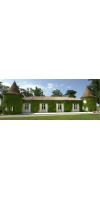
The Chateau Suau Estate
Hidden behind a row of 100-year-old oaks, Chateau Suau was once the hunting lodge of the Duc d'Epernon. It was restored in the 16th century and in 1687, during the reign of Louis XVI, the chateau was owned by the Suau family of Capian. Monique Bonnet purchased the Château in 1986. She lends her impeccable style and elegance to this Bordeaux estate that represents a great value in today’s French wine market.
Important changes have been implemented at Chateau Suau since 2008 :
1/ A change in the AOC. From the 2008 vintage on, Chateau Suau's « Premieres Cotes de Bordeaux » will now be known as « Cotes de Bordeaux and « Cotes de Bordeaux -Cadillac ».
There will no longer be « Premières Cotes de Bordeaux »
Château Suau will use the appellation "Cadillac" on its labels due to its area of production. This "village" appellation lends itself to its enduring notoriety and the image that it represents. As with its namesake, the luxury Cadillac, this wine is the "Cadillac" of wines!
As a result of these changes, all the labels and packaging have been redesigned to reflect the new appellations. These labels will be a reflection of the strong and symbolic identity with Cadillac. This AOC is made with a rigorous set of specifications, which allow it to be named after the village of Cadillac.
Chateau Suau Tradition "Premieres Cotes de Bordeaux" becomes Chateau SUAU Cotes de Bordeaux
Chateau Suau Prestige "Premieres Cotes de Bordeaux" becomes Chateau SUAU Cotes de Bordeaux - Cadillac
2/ Since 2008, Chateau Suau has been converting its vineyard to organic agriculture techniques. Certified by Ecocert, sensitive to environmental problems and consumer-concerns, this healthy, progressive and sensitive conversion will be completed in the year 2012. This action also stays true to Chateau Suau's history for exceptional quality as it was once the home of Joseph Guenant, Vice President of the Agricultural Society.
Chateau Suau is one of the first vineyards of Bordeaux to start its ISO 14 001 certification. This process begins by implementing an EMS, Environnemental Management System (SME in French) of the wines of Bordeaux, intiated by our CIVB. The EMS aims to reduce the impact of wine production on the environment while improving overall productivity.
This environmental management tool integrates both energy consumption, the sorting and recycling of waste, methods of pest control, cropping patterns, health and safety of employees, residents and consumers.....We feel that these changes complement perfectly with our approach to an organic farming culture.
The Chateau Suau Vineyard
The vineyard is situated in the Cotes de Bordeaux-Cadillac appellations, and encompasses 65 hectares (160.55 acres) of red grapes: 10% Cabernet Franc, 55% Merlot and 35% Cabernet Sauvignon; and 7 hectares (17.3 acres) of white grapes: 50% Sémillon, 30% Sauvignon, and 20% Muscadelle. The vines, planted in gravel and clay "terroir", benefit from favorable south-south east facing slopes and plateaus.
The vineyard is farmed with the culture raisonnée method, in conversion to an organic farming. The soil has a gravel and clay base. The red wines are aged in a combination of French oak barrels. No oak is used for the dry white wine produced.
No products found
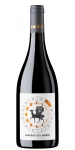
Arzuaga Ladera del Norte Ribera del Duero is made from 100% Tempranillo.
The grapes come from organic crops and are harvested from the "Valdesardon" farm, owned by the Arzuaga Navarro family, which is the westernmost vineyard of the Ribera del Duero DO, located at an altitude of 800 meters in the village of Olivares de Duero. Clay-limestone soil on a hillside that will mark the characteristics of the wine.
The wine is of medium high intensity in color, a clear and bright cherry with purple flashes. An array of red fruits such as raspberry and cherry predominates with a high aromatic intensity, combining with balsamic tones, coffee and roasted notes coming from the aging in oak barrels without being overwhelming. This is a fresh and elegant wine, with an easy and balanced entry into the mouth followed by juicy and chewy sensations. Slightly sweet and toasted notes, and a pleasant and balanced aftertaste that is reminiscent of the fruity aromas on the nose.
Ideal companion for red meat, white meat, game and game, roasted or in sauce. Blue fish and soft cheeses.
Review:
"Intense cherry color. Aromas of dried herbs, creamy oak, black fruits and lactic notes. In the mouth, ripe fruits, spices, fine tannins, full-bodied."
- Penin 2022, 92 pts
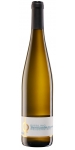
Bastgen Berncastel-Cueser Weisenstein Riesling Spatlese Trocken is made from 100 percent Riesling.
Bright, clean, fresh and zesty. Grapefruit like flavors. Fruity aromas and a nice minerality, typical of the Riesling grape grown on blue slate soil. Round, rich and a very long finish. The grapes for this wine are vigorously selected. Botrytis is not tolerated. At harvest the grapes are fully ripened, have a golden color, and a soft tartness. After a long spontaneous fermentation in a traditional 1000L barrel, the wine just reaches the dry stage. This gives the wine a creamy structure that interplays with ripe yellow and exotic fruit aromas.
They meticulously tend 4.5 ha (11.11 acres) of which 80% is Riesling. The soil is made of slate. Their vineyards are located in Kesten and Brauneberg, on a steep terrace, and planted to 50-year old vines. Fortunately for Bastgen, they own part of the famous Brauneberger Juffer Sonnenuhr. The vines produce very small, ripe berries that are very tasty.



