
" We don't sell the wine without touching the vine "
| Country: | United States |
| Region: | Washington |
| Winery: | Tamarack Cellars |
| Grape Type: | Cabernet Sauvignon |
| Vintage: | 2013 |
| Bottle Size: | 750 ml |
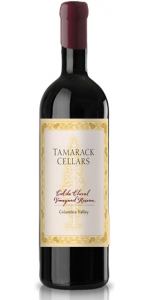
Tamarack Ciel de Cheval Vineyard Reserve holds dark and chocolate nauces, spiced with pretty notes of allspice and clove, this wine is round and rich, bursting with ripe berries, combined with an earthy complexity and a velvety finish.
Cabernet Sauvignon makes up half of this blend, with the balance Cabernet Franc, Petit Verdot and Merlot
The wine spent 22 months on 75% new French oak with the remaining 25% second vintage French oak. Select barrels from the best forests of Taransaud, Boutes, Quintessance, and Vicard cooperages.
Tamarack Chardonnay is made from 100% Chardonnay.
Bright aromas of ruby red grapefruit, mango and stone fruit are found in the bouquet while on the palate, the bright acidity of this wine showcases flavors of guava, crisp Granny Smith apples and Asian pears. Combing the best of both cooperage techniques, the combination of aging in stainless steel highlights the fruit while the aging in neutral French oak provides an added complexity to the wine.
Aged 60% in neutral premier French oak and 3% in new premier French Oak 37% stainless steel.Dropped by gravity straight to the press, the juice is pumped directly to barrel or tank and chilled, inoculated with Chardonnay 3079 yeast, primary fermentation started and finished, secondary fermentation started but completed to preferred taste, typically around 50% completion. All fermentation is done in a 58 degree Fahrenheit barrel room.
Walla Walla Valley Appellation: Alderbanks Vineyard
Columbia Valley Appellation: Bacchus and Gamache Brothers Vineyards
Yakima Valley Appellation: Olsen Brothers and French Creek Vineyards
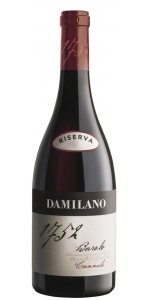
“1752” is the name of the Damilano Barolo Cannubi Riserva, in honor of the year in which the historic bottle was first marked “Cannubi”. It still exists today perfectly conserved by the Manzone family in Bra, close to Barolo. The bottle is clearly marked as being of “1752” vintage, indicating that Cannubi historically precedes Barolo.
About the Vineyard:
The Cannubi Cru is in found within one of the 6 core zones which comprise a UNESCO heritage site in Italy. A mixture of Tortonian and Helvetian calcareous marl gives the grapes intense aromas of cherry, plum and tobacco, rose and violet in sequence. Its low potassium and high calcium/magnesium content offer the wine a fine and polished touch. The vineyard is located at about 270 m. a.s.l. and has a south-east sun exposure. Barolo Riserva Cannubi 1752 It is a small plot of about 2 hectares of Nebbiolo vines, currently between 30 and 50 years of age.
Tasting Notes:
Garnet ruby red in color, the bouquet is intense and balanced, with notes of violet, red fruit, cherry and plum, spices, liquorice, cocoa, leather and tobacco. Dry, robust, full-bodied, very persistent, rich and velvety
Food Pairing:
This wine is excellent with typical piedmontes pasta (tajarin, ravioli); perfect with red meat, braised and roast meat, game and absolutely ideal with all types of cheeses.
Review:
The purity of this wine is pretty phenomenal with blackberries, strawberries, fresh flowers and licorice. Hints of tar. It’s full-bodied, yet composed and compact with ultra fine tannins and a long, flavorful finish. Very structured. Try after 2024.
-James Suckling 97 Points
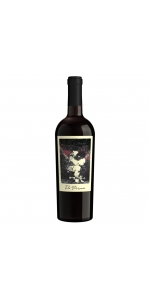
The Prisoner Wine Company The Prisoner Red Blend is made from a blend of Zinfandel, Cabernet Sauvignon, Petite Sirah, Syrah, and Charbono.
Bright aromas of ripe raspberry, vanilla, and coconut give way to flavors of fresh and dried blackberry, pomegranate, and vanilla, which linger harmoniously for a smooth and luscious finish.The Prisoner Red Blend was inspired by the wines first made by the Italian immigrants who originally settled in Napa Valley. The Prisoner is now the most recognized red blend, leading the resurgence of interesting blends by incorporating Zinfandel with the unlikely mix of Cabernet Sauvignon, Petite Sirah, Syrah, and Charbono.
On the nose, dried blackberry, dried açai berries, and hints of cedar and tobacco leaf are accented by sweet spices of clove, cinnamon, and nutmeg. Flavors of ripe dark cherry, blackberry coulis, and hints of anise linger harmoniously for a soft, vibrant finish balanced by ripe tannins.
Chef Brett recommends pairing The Prisoner Red Blend with Kalbi Short Ribs or Chicken Mole Tostada.
Vineyards: When you outgrow winemaking tradition, you must forge your own path. And we did. The Prisoner exists because of the collaboration with our growers, many of which have been with us since the very beginning—from the Solari Family Vineyard in Calistoga, where old school sensibilities meet new techniques, to the Korte Ranch in St. Helena, a vineyard whose diligence outlasted the Prohibition and has sustained four generations.
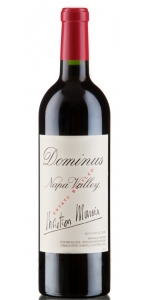
Dominus Napa Valley Red Blend is made from 88% Cabernet Sauvignon, 7% Cabernet Franc, 5% Petit Verdot.
The historic Napanook Vineyard, a 124-acre site west of Yountville, was planted in 1838. This vineyard was the source of fruit for some of the finest Napa Valley wines. Estate-bottled in the spirit of the Bordeaux châteaux, Dominus Estate is dry-farmed to allow natural stress and good concentration of fruit. Grape clusters are crop-thinned to allow sun and air to pass in between, helping to achieve full maturation and soften the tannins. Only 20% to 40% new French oak barrels are used in order to limit the extraction of oak notes. To express the unique terroir, the classic Bordeaux grape varietals of Cabernet Sauvignon, Merlot, Cabernet Franc and Petit Verdot are planted with different root stocks best suited for the varying soil composition of gravel, heavy clay and loam.
Reviews:
One of the legendary Dominus, the 2021 Cabernet Sauvignon is unquestionably in the same league as the 2018, 2016, 2015, 2013, 2010, and 1991, and to my mind, wine simply doesn't get any better. Sporting a dense purple hue as well as an incredible perfume of blackcurrants, crushed stone, cedar pencil, smoke tobacco, and baking spices, it s rich, full-bodied, and voluptuously textured, with ripe yet building tannins. It reminds me slightly of the 2010 (maybe the 2013), and I suspect it will have a similar evolution. Hide bottles for 7-8 years, and it will evolve gracefully for 30+ years. Hats off to the team of Christian Moueix and director Tod Mostero.
Jeb Dunnuck 100 Points
Dominus Napa Valley Red Blend is made from 88% Cabernet Sauvignon, 7% Cabernet Franc, 5% Petit Verdot.
The historic Napanook Vineyard, a 124-acre site west of Yountville, was planted in 1838. This vineyard was the source of fruit for some of the finest Napa Valley wines. Estate-bottled in the spirit of the Bordeaux châteaux, Dominus Estate is dry-farmed to allow natural stress and good concentration of fruit. Grape clusters are crop-thinned to allow sun and air to pass in between, helping to achieve full maturation and soften the tannins. Only 20% to 40% new French oak barrels are used in order to limit the extraction of oak notes. To express the unique terroir, the classic Bordeaux grape varietals of Cabernet Sauvignon, Merlot, Cabernet Franc and Petit Verdot are planted with different root stocks best suited for the varying soil composition of gravel, heavy clay and loam.
Reviews:
One of the legendary Dominus, the 2021 Cabernet Sauvignon is unquestionably in the same league as the 2018, 2016, 2015, 2013, 2010, and 1991, and to my mind, wine simply doesn't get any better. Sporting a dense purple hue as well as an incredible perfume of blackcurrants, crushed stone, cedar pencil, smoke tobacco, and baking spices, it s rich, full-bodied, and voluptuously textured, with ripe yet building tannins. It reminds me slightly of the 2010 (maybe the 2013), and I suspect it will have a similar evolution. Hide bottles for 7-8 years, and it will evolve gracefully for 30+ years. Hats off to the team of Christian Moueix and director Tod Mostero.
Jeb Dunnuck 100 Points
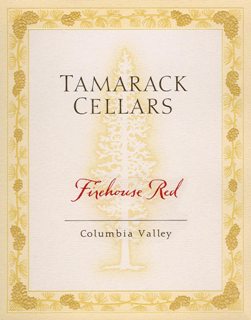
Tamarack Firehouse Red 2013 is 29% Cabernet Sauvignon, 22% Syrah, 22% Merlot, 11% Cabernet Franc, 5% Malbec, 3% Sangiovese, 2% Grenache, 2% Cinsault 1% Petit Verdot, 1% Counoise, 1% Mourvèdre and 1% Carmenere.
Deceptively sweet aromas of strawberries, raspberries and rose petals. The flavors are dark, rich, lusciously mouthwatering, with cherries, boysenberries, tart plum skins, hints of leather, sweet pipe tobacco, and coffee beans. The tannins are firm, but not a bit edgy and the finish lingers with just a touch of anise. A truly lovely vintage.
The Tamarack Cellars Estate
Founded in 1998 by Ron and Jamie Coleman, Tamarack Cellars is dedicated to the production of small lot, hand-crafted wines from select vineyards in the Walla Walla Valley, Yakima Valley, Red Mountain and Columbia Valley appellations.
“Boutique winery from Waterbrook and Canoe Ridge alumnus Ron Coleman delivers ripe varietals and blends; Syrah-Bordeaux blend Firehouse Red is outstanding value.”
- Anthony Dias' blue pocket guide to wine 2006
The Tamarack Cellars Vineyard
Grapes are purchased throughout the Columbia Valley and are crushed, fermented and blended in a small winery located in a World War II firehouse complex at the Walla Walla airport.
Lingua Franca The Plow Pinot Noir is made from 100 percent Pinot Noir.
A large proportion of fruit from some of our finest sites, 48% coming from Blocks 1 - 3, planted with PN777 clone. Another 44% is sourced from two blocks of the bold PN 115. The elegant and nuanced PN777 Pinot Noir grown on Gelderman-Jory soils creates the top notes of mineral, rose petal and savory elements while the PN115 provides the fruit, body and weight of the wine.
Loin of lamb, Filet Mignon, veal chop, veal scallopini, pasta with Bolognese sauce, charcuterie, hard cheeses, hamburger, Viennese boiled beef (Tafelspitz), Wienerschnitzel, Kalbi, Bulgogi. Teriyaki, Vietnamese shaking beef, Chinese broccoli beef or Feast of the Immortals? Experimentation is welcome!
Review:
The 2022 Pinot Noir Estate saw 20% whole clusters and 20% new oak. A representation of the vineyard, the blend can vary from year to year. The 2022 is a ripe ruby color and opens to notes of spice and ripe raspberries. Medium-bodied, it’s a great appellation wine, with ripe tannins and a great finish. Drink 2024-2036. A few thousand cases were produced.
-Jeb Dunnuck 94 Points
Chappellet Pritchard Hill Estate Vineyard Cabernet Sauvignon is made from 94% Cabernet Sauvignon & 6% Petit Verdot.
Chappellet's Pritchard Hill Cabernet Sauvignon has been, since the beginning of their winemaking career, the most sought after wine of their portfolio. The wine is truly a love letter to the winegrowing potential of Pritchard Hill. The wine was inspired by Bordeaux, and like most left bank Bordeaux, the wine is a blend of predominately Cabernet Sauvignon with remaining amounts other classic Bordeaux blend varieties. The vines grow upon rocky, mountainside vineyards. After harvest and fermentation, the wine was aged for 22 months in 100% new French oak barrels.
Review:



