
" We don't sell the wine without touching the vine "
| BUY MORE! SAVE MORE! | ||||||||||||||||||||
|
| Country: | Australia |
| Region: | Barossa Valley |
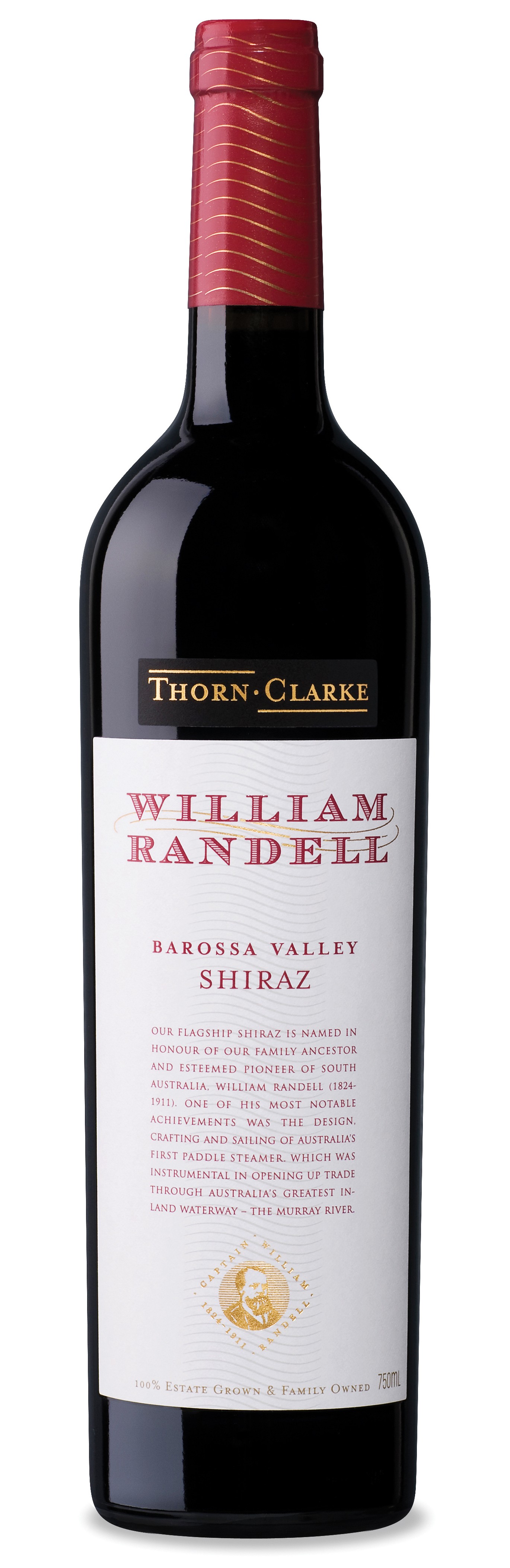
| Winery: | Thorn Clarke - William Randell |
| Grape Type: | Shiraz |
| Vintage: | 2021 |
| Bottle Size: | 750 ml |
Thorn Clarke William Randell Shiraz is made from 100 percent Shiraz
The William Randell range of wines were created in honor of our family ancestor - the esteemed pioneer William Richard Randell (1824 - 1911). The wines are sourced solely from grapes grown on our estate vineyards. Wines in this range are only made in exceptional vintages.
Deep red with inky purple hues. This classic Barossa style shows rich blackberry, licorice, spice plum and smoky oak on the nose. The palate is dense with ripe mulberry and berry compote and generous supporting oak. The tannins are savory and long with spicy refined finish
Following harvest the fruit was crushed into a variety of small fermenters (4 to 6T in capacity). Fermentation was carried out at a warm temperature (25-28 degrees ). The ferments were manually pumped over to provide good control of tannin extraction. Each fermenter was treated as a separate parcel of wine and once dry was filled to American oak (40% new). Following malolactic fermentation the wines were racked and returned to the same oak. Parcels remained in barrel for an average of 18 months prior to blending. Only the best barrels from the multiple parcels were used to make the final blend. Once blended the wine was prepared for bottling.
The Thorn Clarke William Randell Estate
The winery owners are David and Cheryl Clarke (born Thorn) and their son Sam is the manager of the winery. The Thorn-Clarke family has a long history in the Barossa - six generations of involvement in the region's world famous wine industry. The Thorns have been grape growers in the Barossa since the 1870's. David Clarke's passion for the wine industry lead to the planting of the Kabininge vineyard outside of Tanunda in 1987, which represents the start of a deeper involvement by the family in the Barossa wine industry.
The Thorn Clarke William Randell Vineyards
William Randell is sourced from Thorn-Clarke's 33 hectare Kabininge vineyard (81.51 acres) is true Barossa Valley floor terroir. This is the oldest of their 100% family-owned vineyards and is situated in the heart of one of the great wine regions of the world - the Barossa Valley. Kabininge is planted predominantly to Shiraz - the variety for which the Barossa Valley is best known - supported by smaller plantings of Cabernet Sauvignon and Cabernet Franc. At just 270 metres above sea level and located on dark grey to dark brown carbonaceous soils (known as Bay of Biscay soil) red winegrapes ripen easily here. By monitoring soil moisture levels to limit yield and berry size, we can achieve exceptional red wines with superb varietal flavor and concentration.

Thorn Clarke William Randell Cabernet is made from 100 percent Cabernet
The William Randell range of wines were created in honor of the family ancestor - the esteemed pioneer William Richard Randell (1824 - 1911). The wines are sourced solely from grapes grown on the family estate vineyards. Wines in this range are only made in exceptional vintages.
The deep red color with purple hues of this wine draw you in. The nose is brimming with notes of fresh blackcurrant intertwined with complexing savory spice. The palate has an integrated French oak influence with notes of toasty cedar accompanied by further notes of briary fruits. A wine with great depth and drive.

Thorn Clarke Shotfire Shiraz is made from 100% Shiraz.
Striking deep red-purple in color. A rich, voluptuous wine with aromas of blackcurrant and mulberries accompanied by notes of smokey oak and hints of cloves. The palate is filled with dark fruits and chocolate backed up by taut tannins and lingering oak.
Story:
When the Clarke forebearers discovered gold in 1870 at the Lady Alice mine in the Barossa goldfields, so began a family dynasty intrigued by geology. A fine legacy that is reflected today in the terroir of our vineyards. The Shotfire range immortalizes the Shotfirer's hazardous job of setting and lighting the charges in the mines.
Fran shares his story on how he discovered Thorn-Clarke:
"It was October 2001 and I was searching for and sourcing for Australian wines, as it was clear that Australia was going to become the "next big thing." After tasting about 100 assorted wines, I decided I liked the style of Barossa, Shiraz best - chocolate, cherries, mint and eucalyptus - so I started focusing on Barossa growers (years later, Barossa Shiraz would develop its reputation as the Icon Shiraz for Australia).
Late on a Thursday afternoon, the carrier delivered a beat-up box of 12 bottles from Australia, 10 of which were leaking. The box was from a guy named Steve Machin, who had just left Hardy's and was beginning work with the Clarke family on setting up a possible new brand. The samples were sticky and messy, but I popped the corks anyway ..... and I was glad that I did. The wine inside tasted like Christmas - mint, eucalyptus, camphor, and evergreen aromas. Great acidity, color, flavor and length of finish - very tasty. These samples were so good and so exciting, especially compared to what I had tasted prior, that I immediately called the number on the card. I didn't realize that it was a Perth number (Western Australia) and it was actually 3:00 in the morning. It turned out I was calling the residence of David and Cheryl Clarke, where a sleepy Cheryl answered the phone. I told her, you don't know who I am, but we are going to be doing business together very soon, and lots of it! After a few months of talking, faxing (yes, faxing) and sorting out the details, I began importing their wines.
That super-star wine from the busted box of samples is the wine we know today as Shotfire Shiraz. It was originally called Stone Jar, but fortunately we came up with a better name. Many years and vintages later, I'm still glad to be importing Shotfire Shiraz and other Thorn-Clarke selections .... and I'm still glad that Cheryl Clarke woke up for that phone call."
Thorn Clarke Shotfire Shiraz is made from 100% Shiraz.
Striking deep red-purple in color. A rich, voluptuous wine with aromas of blackcurrant and mulberries accompanied by notes of smokey oak and hints of cloves. The palate is filled with dark fruits and chocolate backed up by taut tannins and lingering oak.
Story:
When the Clarke forebearers discovered gold in 1870 at the Lady Alice mine in the Barossa goldfields, so began a family dynasty intrigued by geology. A fine legacy that is reflected today in the terroir of our vineyards. The Shotfire range immortalizes the Shotfirer's hazardous job of setting and lighting the charges in the mines.
Fran shares his story on how he discovered Thorn-Clarke:
"It was October 2001 and I was searching for and sourcing for Australian wines, as it was clear that Australia was going to become the "next big thing." After tasting about 100 assorted wines, I decided I liked the style of Barossa, Shiraz best - chocolate, cherries, mint and eucalyptus - so I started focusing on Barossa growers (years later, Barossa Shiraz would develop its reputation as the Icon Shiraz for Australia).
Late on a Thursday afternoon, the carrier delivered a beat-up box of 12 bottles from Australia, 10 of which were leaking. The box was from a guy named Steve Machin, who had just left Hardy's and was beginning work with the Clarke family on setting up a possible new brand. The samples were sticky and messy, but I popped the corks anyway ..... and I was glad that I did. The wine inside tasted like Christmas - mint, eucalyptus, camphor, and evergreen aromas. Great acidity, color, flavor and length of finish - very tasty. These samples were so good and so exciting, especially compared to what I had tasted prior, that I immediately called the number on the card. I didn't realize that it was a Perth number (Western Australia) and it was actually 3:00 in the morning. It turned out I was calling the residence of David and Cheryl Clarke, where a sleepy Cheryl answered the phone. I told her, you don't know who I am, but we are going to be doing business together very soon, and lots of it! After a few months of talking, faxing (yes, faxing) and sorting out the details, I began importing their wines.
That super-star wine from the busted box of samples is the wine we know today as Shotfire Shiraz. It was originally called Stone Jar, but fortunately we came up with a better name. Many years and vintages later, I'm still glad to be importing Shotfire Shiraz and other Thorn-Clarke selections .... and I'm still glad that Cheryl Clarke woke up for that phone call."

Thorn Clarke Milton Park Shiraz is aged for 12 months in American oak barrels.
Deep red color. The wine is deep and rich smelling with dark fruits, plums and spice with some good oak. There is very rich fruit on the palate with plums, blackberry and sweet spice from the oak. The palate is vibrant and young with a flavorsome viscous mouthfeel which will develop complexity with time. There are some slightly chewy tannins which will soften with time and there is great length of fruit flavor.
Thorn Clarke Milton Park Shiraz is aged for 12 months in American oak barrels.
Deep red color. The wine is deep and rich smelling with dark fruits, plums and spice with some good oak. There is very rich fruit on the palate with plums, blackberry and sweet spice from the oak. The palate is vibrant and young with a flavorsome viscous mouthfeel which will develop complexity with time. There are some slightly chewy tannins which will soften with time and there is great length of fruit flavor.

Thorn Clarke Shotfire GSM is made from 51% Grenache, 39% Shiraz, 10% Mourvedre.
The Shotfire range honors a family pioneer who worked the Barossa goldfields in the late 1800's. He had the hazardous job of being a 'Shotfirer'; one who handled the explosives to be used in finding that rich vein of gold.
A classic blend of the traditional stalwarts from the Barossa, this blend of Grenache, Shiraz and Mourvèdre is sourced from older low yielding vines.
Bright crimson in color with purple highlights at the edge of the glass. The nose is lifted and draws you in with ripe plum, mulberry and white pepper. The palate is plush and vibrant with cherries, forest fruits and enticing spice. As silky and smooth as it is complex and savory - the wine is beautifully balanced and juicy with great structure and generous mouthfeel. This classic GSM finishes with long, velvety tannins.
Each variety was destemmed and fermented separately - in small 6 tonne open fermenters - to allow full expression of varietal character. To ensure optimum extraction of tannins, color and flavor the Grenache was pumped over twice daily for a duration of 10 days and both the Shiraz and Mourvedre spent 7 days on skins with pump overs twice daily. Fermentation temperatures were maintained between 22-25 degrees to retain fruit purity. All batches were pressed off and once both primary alcoholic fermentation and secondary malolactic fermentation were complete the wines were then racked to new (10%) and 10 year old French hogsheads where the wines matured for a period of 18 months. Bench blends were created to ensure a harmonious final wine.
Pairs best with slow Cooked Lamb or Roasted Vegetable Medley.

Alejandro Bulgheroni Lithology Beckstoffer Las Piedras Cabernet Sauvignon is made from 100 percent Cabernet Sauvignon.
From a St. Helena vineyard planted by early Napa settler Edward Bale more than 150 years ago, and later serving as the estate vineyard for the area’s first winery built by Henry Pellet in 1860, the Las Piedras site always gives us our prettiest wine. When placed next to Dr. Crane and To-Kalon wines, the Las Piedras show a certain elegance, with a very graceful entry and finely detailed complexity. We produce it with at least 75% new French oak, so there is a floral, spicy, and vanilla accent to the intense red and black fruits, cassis, and black cherry liqueur. What distinguishes this bottling is the beautifully fine tannins, delicate texture, and stunning purity. (Less than 100 cases made.)
Fermentation 70% Oak, 24% Concrete, 6% Puncheon
Review:
"The 2018 Cabernet Sauvignon Lithology Beckstoffer Las Piedras Vineyard comes from a world-class site outside of St. Helena and is all Cabernet that spent 20 months in 80% new oak. It offers a touch more red fruit as well ample cassis, spring flowers, loamy earth, and spice-like aromas and flavors. It has a wonderful sense of minerality, ultra-fine tannins, a dense, layered texture, and incredibly purity of fruit. It’s another just about off the charts release from this estate."
- Jeb Dunnuck 98 Points

Bachelet Bertrand Maranges Rouge is made from 100 percent Pinot Noir.
The Maranges appellation is the youngest of the Côte de Beaune family, making its debut in May 1989. It spans three villages: Dezize-les-Maranges, Cheilly-les-Maranges and Sampigny-les-Maranges. Several hills and slopes make up this appellation, that are south/south-east-facing. This appellation produces mainly red wines comprising 95% of total production.
Bachelet Bertrand Maranges is produced from two villages, Aux Artaux and En Crevèches, both situated in the Cheilly-les-Maranges area.
The wine offers a deep red color with purplish highlights, a powerful nose with aromas of raspberries, blackcurrants, and small red candied fruits. A silky texture on the palate, complemented by delicate tannins and a lingering finish.
Pairs well with roasted meats, stews, and mature cheeses.



