
" We don't sell the wine without touching the vine "
| Country: | United States |
| Regions: | California California (Sonoma County) |
| Winery: | Verite |
| Grape Type: | Merlot |
| Vintage: | 2016 |
| Bottle Size: | 750 ml |
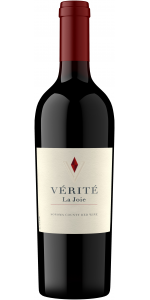
Verite La Joie Red is made from 76% Cabernet Sauvignon, 9% Merlot, 7% Cabernet Franc,5% Petit Verdot, 3% Malbec.
The 2018 La Joie displays a brilliant violet core with a thin rim of bright ruby. Generous fruit-for- ward aromas of ripe black currant and black cherry are followed by earthy notes of fresh conifer, dried mushroom, black olive, dusty clay, anise and clove. The palate is rich and structured; possessing similar flavors of the nose, refined tannins, well-balanced acidity and a complex, luscious finish.
Review:
Blackberries, black mushrooms, violets, flowers, and dark tobacco. Black truffle, too. Full-bodied, yet in check and pretty. The fine tannins frame the wine perfectly. Really long and focused. Seamless. Elegance with power. This will age incredibly well, but already so gorgeous to try. 76% cabernet sauvignon, 9% merlot, 7% cabernet franc, 5% petit verdot and 3% malbec. Try after 2026, but attractive now.
-James Suckling 99 Points

All older vintage wines have been purchased from a single collectors cellar. Pictures can be requested before shipment.
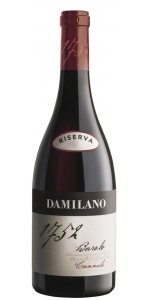
“1752” is the name of the Damilano Barolo Cannubi Riserva, in honor of the year in which the historic bottle was first marked “Cannubi”. It still exists today perfectly conserved by the Manzone family in Bra, close to Barolo. The bottle is clearly marked as being of “1752” vintage, indicating that Cannubi historically precedes Barolo.
About the Vineyard:
The Cannubi Cru is in found within one of the 6 core zones which comprise a UNESCO heritage site in Italy. A mixture of Tortonian and Helvetian calcareous marl gives the grapes intense aromas of cherry, plum and tobacco, rose and violet in sequence. Its low potassium and high calcium/magnesium content offer the wine a fine and polished touch. The vineyard is located at about 270 m. a.s.l. and has a south-east sun exposure. Barolo Riserva Cannubi 1752 It is a small plot of about 2 hectares of Nebbiolo vines, currently between 30 and 50 years of age.
Tasting Notes:
Garnet ruby red in color, the bouquet is intense and balanced, with notes of violet, red fruit, cherry and plum, spices, liquorice, cocoa, leather and tobacco. Dry, robust, full-bodied, very persistent, rich and velvety
Food Pairing:
This wine is excellent with typical piedmontes pasta (tajarin, ravioli); perfect with red meat, braised and roast meat, game and absolutely ideal with all types of cheeses.
Review:
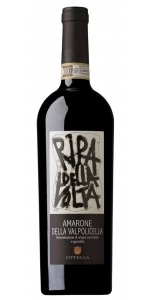
Ripa Della Volta Amarone della Valpolicella 70% Corvina, 20% Corvinone, 5% Oseleta and 5% Spigamonte.
The vineyards are located at an elevation of 300-600 metres above sea level, with a south-southwesterly exposure. Training system: Guyot.
It features an intense red color with garnet highlights. The nose offers up a rich variety of aromas with fruity notes of cherries, morello cherries and plums, spices and hints of chocolate. It is round and caressing with soft, mellow tannins balanced by excellent acidity that enhances its drinkability and ageing potential.
It is a wine with a marked personality, great finesse, elegance, and extraordinary longevity.
It pairs well with main dishes such as game and roasts, but also cured meats and mature cheese.
Review:
Strong, dark ruby with a light garnet edge. Intense and very clearly defined nose with notes of ripe plums, dark forest raspberries and some tobacco in the background. Round on the palate with plenty of supple tannin, pleasantly dry, firm pressure in the finish.
-Falstaff 92 Points
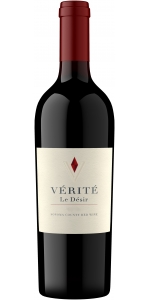
Verite Le Desir Red is made from 82% Cabernet Franc, 12% Merlot, 6% Malbec.
The 2018 Le Désir has a dark inky appearance with a violet hue that extends to the rim. The compelling characteristics of Cabernet Franc are expressed on the nose and palate with flavors of crunchy cranberry, ripe raspberry, red currant, dried sage, crushed mint, and cinnamon bark; followed by spice cake, subtle vanilla liquor, and singed toast. The persistent finish and bright acidity suggest the wine will continue to evolve in the cellar for many years to come.
Review:
The Cabernet Franc blend of the trio, the 2018 Le Desir is 82% Cabernet Franc, 12% Merlot, and 6% Malbec, and as with all these wines, it was brought up in new barrels. Ruby/purple and not completely opaque, it offers up a classic Cabernet Franc nose of mostly red fruits, spring flowers, damp earth, cedary spices, and truffle. Medium to full-bodied on the palate, it shines for its incredible elegance and purity more than outright power, yet it still brings plenty of richness. With ultra-fine tannins, perfect balance, and one heck of a great finish, it's another great, great wine from this estate.
Jeb Dunnuck 98+ Points
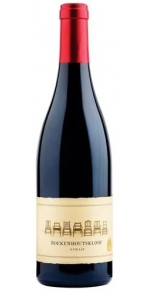
Boekenhoutskloof Syrah Swartland is made from 100 percent Syrah.
Grapes for our Boekenhoutskloof Syrah are picked from selected parcels of the finest Syrah, grown at our Swartland farms, namely Porseleinberg and Goldmine, close to the small town of Riebeek-Kasteel. These vineyards were planted on the rocky bedrock of decomposed Mica-Schist, a unique terroir, finding its expression in our concentrated and structured wines made from this Rhône grape.
The nose is perfumed, forthcoming and fresh, offering an array of rich dark fruits with a spicy, floral, even feral character, derived from complex aromas of dark berries, plums, violets, black olives, star anise and potting soil. The black fruits and earthy character of the nose follow through onto a dark, brooding palate with flavours of wild berries, brambles, liquorice, tobacco, cloves and black cardamom. The mid-palate is concentrated, deep, dense and slightly dusty, with dry, very fine cocoa-powdery tannins lending structure. The wine is very precise, with a medium to full body, a tight, grainy texture and vibrant acidity to balance. Blackberries, blueberries and notes of garrigue and dark chocolate linger on a savoury finish.
Review:
Using fruit from two exceptional Swartland sources – Goldmine and mostly Porseleinberg – this foudre-aged Syrah is fresh, subtle and intensely aromatic, as schist Syrahs often tend to be. Complex, floral and refined with remarkable freshness and palate length. Drink: 2020-2028.
– Tim Atkin MW, 95/100
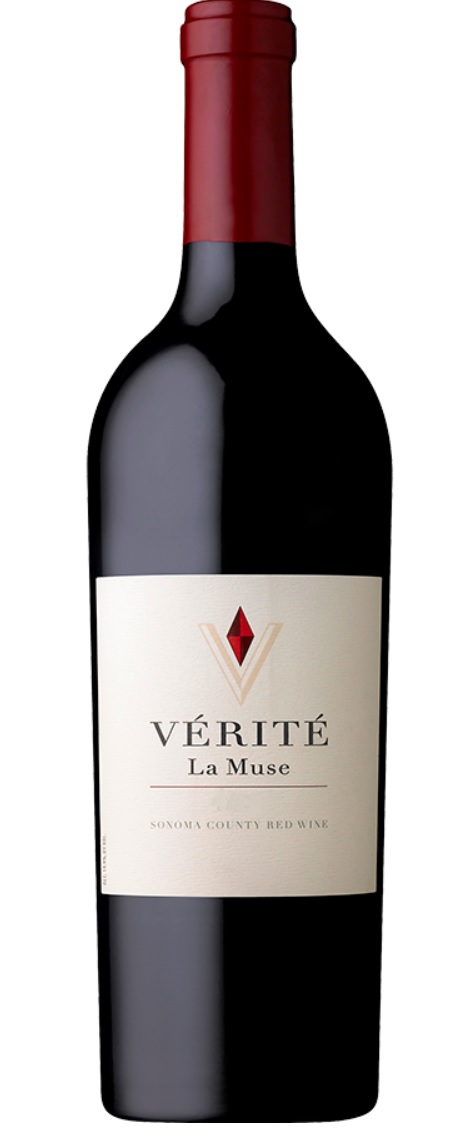
Verite La Muse is made from 93% Merlot, 5% Cabernet Franc and 2% Malbec.
Profound and sophisticated, La Muse delivers the incredible depth and texture with a Merlot-based blend from the top micro-crus of eastern Sonoma County. Like a graceful swan, it embodies elegance, softness and strength.
Review:
Deep garnet-purple colored, the 2016 La Muse is composed of 93% Merlot, 5% Cabernet Franc and 2% Malbec. Wow—it comes strutting out of the glass with flamboyant crème de cassis, ripe plums and black cherries notes followed by nuances of aniseed, chocolate box, wild thyme, violets and chargrill plus a fragrant suggestion of potpourri. Full-bodied, rich and concentrated, the densely packed perfumed black fruit layers are beautifully framed by perfectly ripe, finely grained tannins and fantastically knit freshness. It finishes long with the most incredible display of mineral sparks. 2,300 cases were produced. -Wine Advocate 100 Points
Jess Jackson (1930–2011) was already the founder of one of the most successful family-owned wine companies in the United States when he met Pierre Seillan during a visit to France in the 1990s.
A true visionary, Jackson’s lengthy career, which spanned more than 30 years, was driven by a passion for producing extraordinary wine from California’s best vineyards. Jackson had longed to create a wine that would be just as good as the world’s best wines and was confident that the terroir in Sonoma County had that potential.
A friendship developed between the Jackson family in California and the Seillan family in Bordeaux. When Pierre Seillan visited California in 1997, he too saw the potential and did not hesitate when Jackson asked him to come to Sonoma County to realize this dream together. And so, Vérité was born.
Pierre Seillan has spent the past five decades perfecting his micro-cru philosophy to create world-class wines. His passion lies in crafting wines from diverse terroirs, using the same approach to capture the unique expressions of Sonoma County, Bordeaux, and Tuscany in each vintage.
Seillan’s career in the wine industry began at Bellevue, his family's estate in Gascony, France, where he learned to grow Cabernet Sauvignon, Merlot, Cabernet Franc, and several white varieties. Later he focused on Cabernet Franc at Château de Targé in the Loire Valley. Seillan then spent two decades in Bordeaux making wine at several châteaux for Raoul and Jean Quancard. While working across eight different appellations, he quickly discovered the many nuances within various vineyard sites. This became the backbone of his micro-cru philosophy and allowed him to build the elegant and complex architecture of his wines.
Verite La Joie Red is made from 76% Cabernet Sauvignon, 9% Merlot, 7% Cabernet Franc,5% Petit Verdot, 3% Malbec.
The 2018 La Joie displays a brilliant violet core with a thin rim of bright ruby. Generous fruit-for- ward aromas of ripe black currant and black cherry are followed by earthy notes of fresh conifer, dried mushroom, black olive, dusty clay, anise and clove. The palate is rich and structured; possessing similar flavors of the nose, refined tannins, well-balanced acidity and a complex, luscious finish.
Review:
Blackberries, black mushrooms, violets, flowers, and dark tobacco. Black truffle, too. Full-bodied, yet in check and pretty. The fine tannins frame the wine perfectly. Really long and focused. Seamless. Elegance with power. This will age incredibly well, but already so gorgeous to try. 76% cabernet sauvignon, 9% merlot, 7% cabernet franc, 5% petit verdot and 3% malbec. Try after 2026, but attractive now.
-James Suckling 99 Points
Verite Le Desir Red is made from 82% Cabernet Franc, 12% Merlot, 6% Malbec.
The 2018 Le Désir has a dark inky appearance with a violet hue that extends to the rim. The compelling characteristics of Cabernet Franc are expressed on the nose and palate with flavors of crunchy cranberry, ripe raspberry, red currant, dried sage, crushed mint, and cinnamon bark; followed by spice cake, subtle vanilla liquor, and singed toast. The persistent finish and bright acidity suggest the wine will continue to evolve in the cellar for many years to come.
Review:
The Cabernet Franc blend of the trio, the 2018 Le Desir is 82% Cabernet Franc, 12% Merlot, and 6% Malbec, and as with all these wines, it was brought up in new barrels. Ruby/purple and not completely opaque, it offers up a classic Cabernet Franc nose of mostly red fruits, spring flowers, damp earth, cedary spices, and truffle. Medium to full-bodied on the palate, it shines for its incredible elegance and purity more than outright power, yet it still brings plenty of richness. With ultra-fine tannins, perfect balance, and one heck of a great finish, it's another great, great wine from this estate.
Jeb Dunnuck 98+ Points
My First comment tasting this wine is "wow!" It's delicious; our flagship wine at Paradigm and it delivers. Dense, deep, ripe aromas of black berry and black cherry-like fruit layered with caramel and toastiness from a nice mix of French Oak barrels. Flavors coat the palate with matching notes in a classic Cabernet Sauvignon presentation. One of our best Cabs to date!
Paradigm Cabernet Sauvignon is made from 96% Cabernet Sauvignon, 3% Merlot , 1% Petit Verdot
Review:
"Owned and managed by the Harris family, Paradigm winery produced its first vintage in 1991 in Oakville with winemaker Heidi Barrett. A self-contained winery estate with 50 acres of vineyards, Paradigm maintains a hands-on approach to all winemaking and vineyard operations. The 2015 Cabernet Sauvignon consists of 89% Cabernet Sauvignon, 6% Merlot, 3% Petit Verdot and 2% Cabernet Franc, and is aged in both new and used French oak for 20 months, then aged a further 20 months in bottle before release. The total production for this vintage was 5,544 bottles." Blind tasted by Dave Allen, Stephen Brook, Terry Kandylis (at Decanter Magazine's December 2019 Californian Cabernet 2015 Panel Tasting, London, 17 Sep 2019)
- Decanter 95 Points
Alain de la Treille Rose d'Anjou is made from 50% Gamay, 50% Grolleau
The Rosé d'Anjou AOC, also known as Anjou Rosé AOC, produces medium-sweet rosés. Wines are made predominantly from Grolleau, with percentages of Cabernet Franc, Cabernet Sauvignon, Gamay, Malbec and Pineau d'Aunis permitted. Anjou soils reflect the geological identity of its border position between Armorican and Parisian basins. The terroirs consist of metamorphic and crystalline rocks (schist, sandstone) known as Anjou Noir, and ‘Terres Blanches’ (white earth) limestone known as Anjou Blanc. The AOC covers 1,890 hectares (4,668 acres).
The Grolleau grape derives its name from the French word ‘grolle’, meaning crow – a reflection of the dark black color of the grapes.
Crisp and refreshing with vibrant aromas of strawberry and raspberry. Juicy and well-balanced with a long finish.
Selective juice extraction to preserve color & aromas. Temperature controlled fermentation is followed by aging on the fine lees. No malolactic fermentation; no oak.
To be served chilled (10°C/50°F) with barbecued meats, salads, any spicy food, poultry dishes and of course appetizers.



