
" We don't sell the wine without touching the vine "
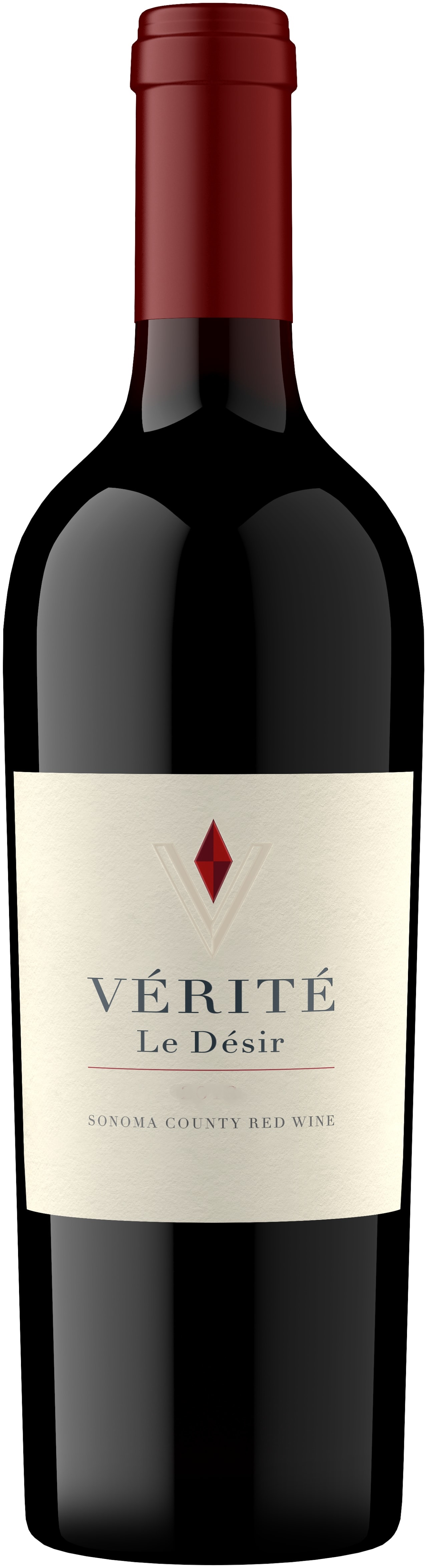
| Country: | United States |
| Regions: | California California (Sonoma County) |
| Winery: | Verite |
| Grape Type: | Cabernet Franc |
| Vintage: | 2018 |
| Bottle Size: | 750 ml |
Verite Le Desir Red is made from 82% Cabernet Franc, 12% Merlot, 6% Malbec.
The 2018 Le Désir has a dark inky appearance with a violet hue that extends to the rim. The compelling characteristics of Cabernet Franc are expressed on the nose and palate with flavors of crunchy cranberry, ripe raspberry, red currant, dried sage, crushed mint, and cinnamon bark; followed by spice cake, subtle vanilla liquor, and singed toast. The persistent finish and bright acidity suggest the wine will continue to evolve in the cellar for many years to come.
Review:
The Cabernet Franc blend of the trio, the 2018 Le Desir is 82% Cabernet Franc, 12% Merlot, and 6% Malbec, and as with all these wines, it was brought up in new barrels. Ruby/purple and not completely opaque, it offers up a classic Cabernet Franc nose of mostly red fruits, spring flowers, damp earth, cedary spices, and truffle. Medium to full-bodied on the palate, it shines for its incredible elegance and purity more than outright power, yet it still brings plenty of richness. With ultra-fine tannins, perfect balance, and one heck of a great finish, it's another great, great wine from this estate.
Jeb Dunnuck 98+ Points
Jess Jackson (1930–2011) was already the founder of one of the most successful family-owned wine companies in the United States when he met Pierre Seillan during a visit to France in the 1990s.
A true visionary, Jackson’s lengthy career, which spanned more than 30 years, was driven by a passion for producing extraordinary wine from California’s best vineyards. Jackson had longed to create a wine that would be just as good as the world’s best wines and was confident that the terroir in Sonoma County had that potential.
A friendship developed between the Jackson family in California and the Seillan family in Bordeaux. When Pierre Seillan visited California in 1997, he too saw the potential and did not hesitate when Jackson asked him to come to Sonoma County to realize this dream together. And so, Vérité was born.
Pierre Seillan has spent the past five decades perfecting his micro-cru philosophy to create world-class wines. His passion lies in crafting wines from diverse terroirs, using the same approach to capture the unique expressions of Sonoma County, Bordeaux, and Tuscany in each vintage.
Seillan’s career in the wine industry began at Bellevue, his family's estate in Gascony, France, where he learned to grow Cabernet Sauvignon, Merlot, Cabernet Franc, and several white varieties. Later he focused on Cabernet Franc at Château de Targé in the Loire Valley. Seillan then spent two decades in Bordeaux making wine at several châteaux for Raoul and Jean Quancard. While working across eight different appellations, he quickly discovered the many nuances within various vineyard sites. This became the backbone of his micro-cru philosophy and allowed him to build the elegant and complex architecture of his wines.
Verite La Joie Red is made from 84% Cabernet Sauvignon, 7% Merlot, 5% Cabernet Franc, and 4% Petit Verdot, .
The 2018 La Joie displays a brilliant violet core with a thin rim of bright ruby. Generous fruit-for- ward aromas of ripe black currant and black cherry are followed by earthy notes of fresh conifer, dried mushroom, black olive, dusty clay, anise and clove. The palate is rich and structured; possessing similar flavors of the nose, refined tannins, well-balanced acidity and a complex, luscious finish.
Review:
A blend of 84% Cabernet Sauvignon, 7% Merlot, 5% Cabernet Franc, and 4% Petit Verdot, the 2019 La Joie is deep garnet-purple in color. It has a wonderfully flashy and flamboyant nose of blackcurrant cordial, redcurrant jelly, plum preserves, and potpourri with hints of chocolate mint, tilled soil, chalk dust, and forest floor. The medium to full-bodied palate is very taut and muscular with tons of bright, crunchy black fruits and wonderful tension, finishing with tons of earthy nuances. 2,500 cases were made.
-The Wine Independent 100 Points
The 2019 La Joie is an elegant expression that offers power, freshness and expressive, floral character. A blend of 84% Cabernet Sauvignon, 7% Merlot, 5% Cabernet Franc and 4% Petit Verdot, it has a deep ruby color and opens slowly from black cherries and blueberries to accents of violets, ground coffee and licorice. The full-bodied palate has generous, grainy tannins, detailed, perfumed flavors and bright acidity, finishing with an alluring iron character.
Robert Parker 99 Points
Verite La Joie Red is made from 76% Cabernet Sauvignon, 9% Merlot, 7% Cabernet Franc,5% Petit Verdot, 3% Malbec.
The 2018 La Joie displays a brilliant violet core with a thin rim of bright ruby. Generous fruit-for- ward aromas of ripe black currant and black cherry are followed by earthy notes of fresh conifer, dried mushroom, black olive, dusty clay, anise and clove. The palate is rich and structured; possessing similar flavors of the nose, refined tannins, well-balanced acidity and a complex, luscious finish.
Review:
Blackberries, black mushrooms, violets, flowers, and dark tobacco. Black truffle, too. Full-bodied, yet in check and pretty. The fine tannins frame the wine perfectly. Really long and focused. Seamless. Elegance with power. This will age incredibly well, but already so gorgeous to try. 76% cabernet sauvignon, 9% merlot, 7% cabernet franc, 5% petit verdot and 3% malbec. Try after 2026, but attractive now.
-James Suckling 99 Points
Verite Le Desir Red is made from 83% Cabernet Franc, 8% Merlot, 5% Malbec, 4% Cabernet Sauvignon.
2019 Le Désir has a rich violet hue, ringed by a slender rim of incandescent purple-ruby color. Beautifully characteristic of Cabernet Franc, the aromatics of this wine are expressive and exotic, showing fresh rose petal perfume, fresh cherry blossom, California bay laurel, crushed pomegranate, blackberry coulis, and well-integrated French oak aromas of ground cinnamon, and brown buttered toast. On the palate, a robust structure defined by powdery tannins and lively acidity delivers a very fine balance, with an exceptionally long finish.
Review:
Sublime cabernet franc aromas of currants, flowers and citrus. Full-bodied with incredible purity of fruit and length. You don’t feel the tannins, but they are there. The acidity gives you dynamic reality and perfect length. A truly great wine. 83% cabernet franc, 8% merlot, 5% malbec, and 4% cabernet sauvignon. Best from 2026.
-James Suckling 100 Points
The 2019 Le Désir is just as stunning as the first time I tasted it from bottle. It's pure and layered, with alluring scents of Morello cherries, dried mushrooms, cigars, sage and aniseed wafting from the glass. The palate strikes a fine balance of concentrated fruit, loads of powdery tannins, and energetic bursts of fresh acidity. It has a deep core of concentrated, perfumed fruit with the first faint touches of umami character and a long finish driven by floral and iron tones. I can't get enough of this wine!
Robert Parker's Wine Advocate 100 Points
Verite La Joie Red is made from 76% Cabernet Sauvignon, 9% Merlot, 7% Cabernet Franc,5% Petit Verdot, 3% Malbec.
The 2018 La Joie displays a brilliant violet core with a thin rim of bright ruby. Generous fruit-for- ward aromas of ripe black currant and black cherry are followed by earthy notes of fresh conifer, dried mushroom, black olive, dusty clay, anise and clove. The palate is rich and structured; possessing similar flavors of the nose, refined tannins, well-balanced acidity and a complex, luscious finish.
Review:
Blackberries, black mushrooms, violets, flowers, and dark tobacco. Black truffle, too. Full-bodied, yet in check and pretty. The fine tannins frame the wine perfectly. Really long and focused. Seamless. Elegance with power. This will age incredibly well, but already so gorgeous to try. 76% cabernet sauvignon, 9% merlot, 7% cabernet franc, 5% petit verdot and 3% malbec. Try after 2026, but attractive now.
-James Suckling 99 Points
Verite La Joie Red is made from 84% Cabernet Sauvignon, 7% Merlot, 5% Cabernet Franc, and 4% Petit Verdot, .
The 2018 La Joie displays a brilliant violet core with a thin rim of bright ruby. Generous fruit-for- ward aromas of ripe black currant and black cherry are followed by earthy notes of fresh conifer, dried mushroom, black olive, dusty clay, anise and clove. The palate is rich and structured; possessing similar flavors of the nose, refined tannins, well-balanced acidity and a complex, luscious finish.
Review:
A blend of 84% Cabernet Sauvignon, 7% Merlot, 5% Cabernet Franc, and 4% Petit Verdot, the 2019 La Joie is deep garnet-purple in color. It has a wonderfully flashy and flamboyant nose of blackcurrant cordial, redcurrant jelly, plum preserves, and potpourri with hints of chocolate mint, tilled soil, chalk dust, and forest floor. The medium to full-bodied palate is very taut and muscular with tons of bright, crunchy black fruits and wonderful tension, finishing with tons of earthy nuances. 2,500 cases were made.
-The Wine Independent 100 Points
The 2019 La Joie is an elegant expression that offers power, freshness and expressive, floral character. A blend of 84% Cabernet Sauvignon, 7% Merlot, 5% Cabernet Franc and 4% Petit Verdot, it has a deep ruby color and opens slowly from black cherries and blueberries to accents of violets, ground coffee and licorice. The full-bodied palate has generous, grainy tannins, detailed, perfumed flavors and bright acidity, finishing with an alluring iron character.
Robert Parker 99 Points
Justin Isosceles Proprietary Red Paso Robles is made from 83% Cabernet Sauvignon, 9% Merlot, 8% Cabernet Franc.
In 1987, we made our first vintage of a wine styled after the famous First Growth producers of Bordeaux, created with the same uncompromising care as the Grands Vins of those venerable chateaux. For more than 30 vintages, ISOSCELES has been our flagship wine and quality benchmark for this style of wine here on the Central Coast of California. A blend based on Cabernet Sauvignon supported by Cabernet Franc and Merlot, the 2018 ISOSCELES shows why Paso Robles is such a great place to grow these varieties.
Full-bodied, with ripe black fruit, complex baking spice and amazingly ready to drink right out of the gate, you can try a bottle or two now, but make sure to save a few to enjoy this wine as it continues to evolve after some time in the cellar.
Appearance: Deep ruby/purple core with black secondary color, lighter toward the rim with moderate plus viscosity and slow forming, moderately stained tears.
Aroma: Very aromatic and complex with ripe black cherry and cassis fruit, vanilla, cinnamon and licorice spice with sweet tobacco, cedar, leather and camphor notes.
Palate: Full-bodied with ripe black cherry and blackcurrant fruit complemented with baking spice and oak notes on entry. Sustained fruit and spice are joined by savory autumn leaf, cedar and leather on the mid-palate with mouth filling, fine tannins that lead into a long, complex and balanced finish with attractive fruit, spice, cedar and subtle camphor notes.
Try it with a classic herb crusted roasted rack of lamb, a grilled prime ribeye steak, or the exquisite cheeseburgers with tomato, arugula, bacon jam and chive aioli from The Restaurant at JUSTIN.
Review:
A stunning Bordeaux blend with smooth, intense flavors of plum, toast, and chocolate. Dense, layered, and balanced, with a long, concen- trated finish.
-Tasting Panel 95 Points
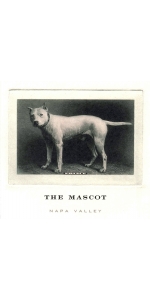
Mascot is a small-production label founded by Will Harlan in Napa Valley. The wines under this label are made from the younger vines of Harlan Estate, BOND, and Promontory, but The Mascot bottles share an exclusive preview at the development of their estates. Founded as an initial experiment to see what the young vines were capable of producing, the wines were initially only shared with close friends and family. By 2008, Will officially released the first vintage to the public since production had increased significantly. They create just one wine made from Cabernet Sauvignon, and the bottle is aged for five years before release. Assembled into a single, youthful expression, this wine shares a glimpse into the evolution and pedigree of its parent estates.
Tasting Notes:
Following a vintage full of changing conditions and demanding decision points, the steady and pleasant progress of the 2018 vintage left our team, at times, in limbo. Contradictory as it may seem, the dramas that sometimes punctuate the definitive months for the growing season help to frame the winegrowing team’s course of action; yet the tranquil succession of weeks that emerged between spring and fall in 2018 left almost entirely open the question of when to harvest. Healthy rainfall in March and April preceded a benevolent summer, whose mildness was interrupted only briefly by a few warming periods. The fruit of the young vines maintained a measured balance that gave the team little indication that harvest was imminent. Fog and temperate days followed in September, when—relying more on instinct than empirical cues—we began to pick. This judgment—as well as the gentle nature of the season—is confirmed in the subtle, ethereal power of the vintage, which reveals itself first in the deep, brooding aromas of dark fruit, black tea, and herbal notes. The texture expands around a lifted structure, as powdery tannins gently resolve. This diffused, enigmatic softness is anchored on the mid-palate by a gratifying density, which prepares the senses for a flourish of hidden energy and vivid detail that illuminates the finish.
-150x300.jpg "Lambrusco Amabile Bruscus San Valentino Red 2018")
Lambrusco Amabile Bruscus San Valentino Red is 100% Lambrusco from grapes grown in the province of Modena and Reggio Emilia.
Traditional vinification methods combined with modern technology to produce wines of guaranteed quality. After the grapes are pressed, they are transferred to fermentation tanks where the must is racked off in an average of 70 hours. The wine then completes its first rapid fermentation process and passes to the slower fermentation phase, during which time it is racked off several times to improve its clarity. The wine is placed in an autoclave at strictly controlled temperatures wherein it undergoes a second fermentation. This is known as the Charmat Method. The temperature is controlled for full development of the bouquet and for the lively and natural sparkle so characteristic of this wine.
Deep ruby red with violet reflections and a fine perlage.
Intense vinous bouquet with hints of ripe red fruits.
Lively, fresh, sweet and inviting with bright fruit and a delightful sparkle.
Excellent by itself or with desserts of dark chocolate, gorgonzola, cheesecakes.
Ghost Hull Cabernet Sauvignon is made of 100 percent Cabernet Sauvignon.
Aromas of blackberry, elderberry and ripe plum are accentuated by notes of mocha, fresh tarragon, vanilla and oak. The palate is full-bodied and offers a lovely balance of acidity and tannins accompanied by rich flavors of dark fruit and black currant, ending with a juicy and lingering finish
Burgo Viejo Rioja Crianza is made from 90% Tempranillo & 10% Graciano.
Red ruby colored wine with violet tones; well-balanced, black fruit, vanilla and coconut flavors. Powerful, complex and silky smooth...classic old style Rioja at a bargain price.



