
" We don't sell the wine without touching the vine "
Two Englishmen, William Burgoyne and John Jackson opened offices in northern Portugal as Burgoyne & Jackson - initially a general trading company, exporting wines, olive oil and fruit, as well as importing dried cod and English woollen goods. In 1703 the Matthew conferred additional rights to non-Portuguese merchants and the partnership was formalized.
Over time, the company admitted new partners and its name changed accordingly; in 1718, Mr. John Clark married to Miss Prudence Burgoyne. Following his marriage, the firm traded as John Clark, by 1723 it was known as Clark & Thornton and finally in 1729, it became Messrs. Clark, Thornton & Warre, with the arrival of the first Warre in Portugal. This was William Warre, born in India (1706), where his parents and grandparents were long established members of the East India Company.
By the close of the 18th century, Warre’s had become one of the leading companies as illustrated by the total shipments of Port for 1791. In that year, 21 companies exported a little over 30,000 pipes of Port, of which Warre & Sons accounted for 2,937 pipes, i.e. 10% of the total.
On arriving in Portugal in 1729 William Warre (1706 - 1773) was to start a family Port dynasty that would make a unique and unmatched contribution to Port and to the life of its adopted city and country. In 1745, he married Elizabeth Whitehead, sister of John Whitehead, the distinguished British Consul responsible for designing and building the magnificent British Factory House (1790).
Their eldest son, also William, would himself serve as His Majesty’s Consul. The 5th sibling, James Warre, became a prominent figure in the Port trade for over 50 years and would father the most illustrious member of the family, another William Warre (1784 - 1853).
This William was destined to have an outstanding military career which was to mark him as one of the most distinguished and historically important figures to come out of the many Port families in the long annals of the Port trade.
For 350 years Warre’s has been a pioneer in the Port trade, from advances in the winery to viticultural research. It was one of the first Port houses to build a lodge in Vila Nova de Gaia in the 18th century, where – to this day - its wines age undisturbed until it’s time for bottling.
This pioneering spirit, combined with a deep respect for heritage and tradition, form a unique combination that places Warre’s firmly at the heart of the history of the Port trade as it celebrates its 350th anniversary.
No products found
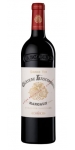
Chateau Lascombes Margaux is made from 67% Cabernet Sauvignon, 30% Merlot, 3% Petit Verdot and Cabernet Franc.
An Earth Mother, with velvet-lined blackberry, Bay leaf, graphite, and roasted coffee bean. Chalky tannins grip the teeth, with a dusty grip. From its backbone and vibrant acidity, to its notes of dried violets on the finish, we bow to its elegant nature.
- The Somm Journal, Apr/May 2025 97 Points
Precise, brilliant and engaging, a three-dimensional wine that shows itself in all its splendor. Notes of black cherries, mixed plums, mixed flowers and bergamot describe the secondary scene. Lemon peel and ginger the secondary one. Full body, perfectly extracted tannins and a vertical finish of infinite presence. Better from 2029.
-WineCritics.com 97 Points
Based on 67% Cabernet Sauvignon, 30% Merlot and the rest Petit Verdot and Cabernet Franc, the 2022 Château Lascombes pulls from 40% of the total production and was aged 18 months mostly in barrels (60% new) with a small portion in foudre. This inky hued beauty boasts a rich, concentrated, full-bodied, well-oaked style as well as pure cassis and darker berry fruits, some graphite, scorched earth, and licorice nuances, terrific overall balance, and a great finish.
-Jeb Dunnuck 96+ Points
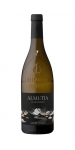
Xavier Vignon Almutia Clair-Obscur Châteauneuf-du-Pape Blanc is 40% Grenache Noir, 25% Mouvedre, 10% Roussane, 10% Grenache gris, 10% Grenache blanc & 5% Syrah.
Worn in the Middle Ages, an Aumuce was a purple cap that served as a cloak for clergymen as a way of concealing their whiteness, just as the black skin of the grape conceals its white juices. In Latin, this cape is called en Almutia. A blend of black and white grape varieties.
Almutia is the definition of vivacity, liveliness, expressed through the pulp of mainly black grape varieties. The multi-vintage approach has been choosen to bring complexity to the wine.
Pale yellow and translucent with tangy notes of apple and pear on the nose. The palate is lively and ample, revealing aromas of citrus and honeysuckle.
The grapes were harvested early, in mid-August, i.e. one month before the harvest intended for the production of red wines.
The grapes are then destemmed and crushed, then placed in vats for draining followed by settling for severals days to sediment the pigments.
Fermentation in stainless steel tanks
No ageing in wood and no stirring of the lees to maintain the perfect level of acidity.
Pairs best with scallop or lobter risotto, soft cheeses & truffle.



