
" We don't sell the wine without touching the vine "
| BUY MORE! SAVE MORE! | ||||||||||||||||||||
|
| Country: | France |
| Region: | Burgundy |
| Winery: | Pernot Belicard |
| Grape Type: | Chardonnay |
| Organic: | Yes |
| Vintage: | 2024 |
| Bottle Size: | 750 ml |
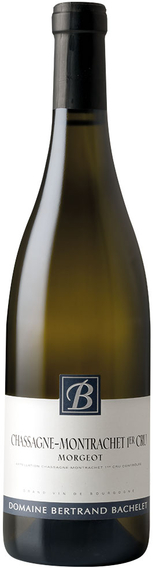
Bachelet Bertrand Chassagne Montrachet Blanc Premier Cru Morgeot is made from 100 percent Chardonnay.
The Chassagne-Montrachet appellation is located in the southern part of the Côte de Beaune and produces mainly white wines. 'Morgeot' is located in the south of the village, characterized by compact limestone soil containing iron oxide, which gives the soil its particular red-brown color.
The wine offers a golden color, a subtle nose of white flowers and honey notes. Full-bodied and well-structured on the palate.
The softness of the Chardonnay on the palate makes an interesting pairing with cooked foie gras; it also sits well with lobster, spiny lobster, or even morel mushroom dumplings or Bresse chicken in a cream sauce.
This small six-hectare domaine located in the heart of Puligny-Montrachet is making rapid strides. Philippe Pernot (a scion of the Paul Pernot dynasty) launched the Pernot-Belicard label in 2009 after marrying Miss Belicard, daughter of Mr Belicard (who owned vineyards in Puligny-Montrachet). In the vineyards, Philippe cultivates the soils, de-buds aggressively and takes pains to retain his old vines in good health. The grapes are harvested by hand, with Philippe typically among the earlier pickers in the village. Since 2014, there's more sorting, the grapes passing over a shaker table before being whole cluster pressed. Initially, the wines were bottled to make room for the new vintage, but Philippe, evidently an inquiring mind, felt that something was missing: now, the wines stay in barrel until August, but spend an additional three to six months in temperature controlled stainless steel tanks with the fine lees. The result are wines that are more integrated and complete. These are already very good wines, and Philippe possesses some enviable parcels, but it is his desire to refine and improve that marks this out as an estate to watch.

Gagliasso Barolo Riserva Oak Box is made from 100% Nebbiolo
Complex and intense aromas of red fruits intermixed with licorice, prune, leather, smoke and notes of toasty oak and vanilla. Full-bodied on the palate with loads of ripe dried and candied fruits, pepper and mocha.
After malolattic fermentation the wine stays for 10 months in French barrels, 10% new oak and 90% different years; after this period all barrels are blended ( 50% Torriglione and 50% Rocche dell’Annunziata) in old barrels for 48 months again. The wine is bottled and refined for 24 months.
There's a gritty, sandy quality to the tannins that would cut through roast pork stuffed with prunes.

Salvaterra Amarone della Valpolicella Classico is made from 65% Corvina, 20% Corvinone, 10% Rondinella, 5% Oseleta.
Perfume of cherries, cocoa, tobacco and black pepper. On the palate it is complex and deep, elegant and robust at the same time, harmonious and with an excellent tannin.
Amarone della Valpolicella Classico is "the essence of the territory", structured but also fresh at the same time.
Pairs with red meats, aged cheese, dark chocolate, cigars.
Review:
-Decanter 96 Points

Salvadori Chianti Riserva DOCG 2017 is made from Sangiovese 90% , Merlot 10

Bachelet Bertrand Maranges Blanc Premier Cru Fussiere is made from 100 percent Chardonnay.
The Maranges appellation is the youngest of the Côte de Beaune family, making its debut in May 1989. It spans three villages, namely Dezize-lès-Maranges, Cheilly-les-Maranges and Sampigny-les-Maranges. Several hills and slopes make up this appellation, all south/south-east-facing, at an altitude of between 200 and 400 metres. The Maranges 1ers Crus are spread over seven distinct villages.
'La Fussière' is the main village of the Maranges appellation and is located in the Cheilly and Dezize-les-Maranges areas.
This wine has a pale gold robe, with plenty of sparkle. At first, the nose evokes notes of white flowers, like acacias, then the second nose delivers a flinty, slightly buttery aspect. Plenty of versatility and subtlety on the palate, with floral notes.
A good accompaniment to a cold starter or fish. Try with a slightly sharp hard cheese, such as Cantal or Gouda, to draw out its natural vivacity.

Bachelet Bertrand Saint-Aubin Premier Cru En Remilly is made from 100 percent Chardonnay.
Saint-Aubin is situated in the heart of the Côte des Blancs, between Chassagne-Montrachet and Puligny-Montrachet; both white and red wines are produced here but Chardonnay remains predominant. The Saint-Aubin appellation covers a wide area, with an altitude ranging from 300 to 450 meters, and with very varied expositions and soils, which makes each climat unique.
Saint-Aubin En Remilly is located in the south-east of Gamay, a hamlet near the village of Saint Aubin and next to the Puligny-Montrachet and Chassagne-Montrachet appellations. This area benefits from a south-western exposition.
The wine offers a pale yellow color, with gold nuances; a mineral nose, a dense texture on the palate, bringing together substance and tension.
Perfect as an aperitif, pairs very well with firm-textured fish or with shellfish.

Bertrand Bachelet Chassagne Montrachet Premier Cru Morgeot is made from 100 percent Chardonnay.
The Chassagne-Montrachet appellation is located in the southern part of the Côte de Beaune and produces mainly white wines.
'Morgeot' is located in the south of the village, characterized by compact limestone soil containing iron oxide, which gives the soil its particular red-brown color.
The wine offers a golden color, a subtle nose of white flowers and honey notes. Full-bodied and well-structured on the palate.
The softness of the Chardonnay on the palate makes an interesting pairing with cooked foie gras; it also sits well with lobster, spiny lobster, or even morel mushroom dumplings or Bresse chicken in a cream sauce.

Bachelet Bertrand Maranges Rouge Premier Cru Clos Roussots is made from 100 percent Pinot Noir.
The Maranges appellation is the youngest of the Côte de Beaune family, making its debut in May 1989. It spans three villages: Dezize-lès-Maranges, Cheilly-les-Maranges and Sampigny-les-Maranges. Several hills and slopes make up this appellation, that are south/south-east-facing.
'Les Clos Roussots' is a Premier Cru vineyard in Cheilly-les-Maranges, producing wines with depth and structure.
The wine offers deep ruby color with purple highlights. Aromatic nose of dark berries, spice, and a mineral edge. The palate is full-bodied with firm yet silky tannins and a long finish.
Pairs well with roasted meats, game, and aged cheeses.

Bachelet Bertrand Maranges Rouge Premier Cru Fussiere is made from 100 percent Pinot Noir.
The Maranges appellation is the youngest of the Côte de Beaune family, making its debut in May 1989. It spans three villages, namely Dezize-lès-Maranges, Cheilly-les-Maranges and Sampigny-les-Maranges. Several hills and slopes make up this appellation, all south/south-east-facing.
'La Fussière' is one of the Premier Cru vineyards of the Maranges appellation, known for producing wines of great elegance and finesse.
The wine displays a beautiful ruby color with garnet hints. The nose offers aromas of red fruits, cherries, and subtle earthy notes. On the palate, the wine is elegant with fine-grained tannins and good length.
Excellent with grilled meats, duck, or mushroom-based dishes.
-150x300.jpg "Bachelet Bertrand Maranges Blanc Premier Cru Fussiere 2023")
Bertrand Bachelet Maranges Blanc 1er Cru La Fussiere is made from 100 percent Chardonnay.
The Maranges appellation is the youngest of the Côte de Beaune family, making its debut in May 1989. It spans three villages, namely Dezize-lès-Maranges, Cheilly-les-Maranges and Sampigny-les-Maranges. Several hills and slopes make up this appellation, all south/south-east-facing, at an altitude of between 200 and 400 metres. The Maranges 1ers Crus are spread over seven distinct villages.
'La Fussière' is the main village of the Maranges appellation and is located in the Cheilly and Dezize-les-Maranges areas.
This wine has a pale gold robe, with plenty of sparkle. At first, the nose evokes notes of white flowers, like acacias, then the second nose delivers a flinty, slightly buttery aspect. Plenty of versatility and subtlety on the palate, with floral notes.
A good accompaniment to a cold starter or fish. Try with a slightly sharp hard cheese, such as Cantal or Gouda, to draw out its natural vivacity.

The Special Club concept started in 1971. A dozen wine growers from some old families of Champagne had an idea to familiarize people with the originality of the “Champagne de Vigneron” (Champagne of wine grower), thanks to prestigious vintages.
In the beginning, they created an association called the “Club des Viticulteurs Champenois” and chose a bottle with a special shape, created exclusively for them & used only by then. In 1988, they changed the bottle and the label. In 1999, the Club changed its name to “Club Trésor of Champagne.”
The Club Trésors comprises 28 artisan wine makers, selected from the finest areas of the Champagne region, each one recognized for the quality of their work. The Club Trésors is the only organization in Champagne to select its members according to a set of unrelenting quality standards:
Roland Champion's Special Club selection has rich and structured aromas. Very pleasant and generous roundness, nice length in mouth. Golden color with buttery and fruity aromas. All the expression of a magnificent terroir for your most pleasurable moments.

Thorn Clarke Terra Barossa Shiraz is made from 100 percent Shiraz
Deep purple red. Aromas of ripe plums, cherries and earth with subtle notes of vanilla and cloves. The aromas follow through onto the palate with a fruit focus, subtle oak notes and soft, rounded tannins. The wine walks the line between medium and full bodied with a plush mouthfeel.
The grapes are crushed and de-stemmed into fermenters. Yeast is added immediately once in fermenter and the ferments are pumped over twice daily to maximise colour, tannin and flavour extraction. Cooling is used to ensure ferment temperatures remain in the 22-25 degree celcius range which will allow the fruit to display maximum fruit expression. Pressing then occurs approximately seven days after crushing and the wine is then put into predominately American oak to mature.




