
" We don't sell the wine without touching the vine "
| Country: | Germany |
| Region: | Mosel |
| Winery: | Weingut Bastgen |
| Grape Type: | Riesling |
| Vintage: | 2017 |
| Bottle Size: | 750 ml |
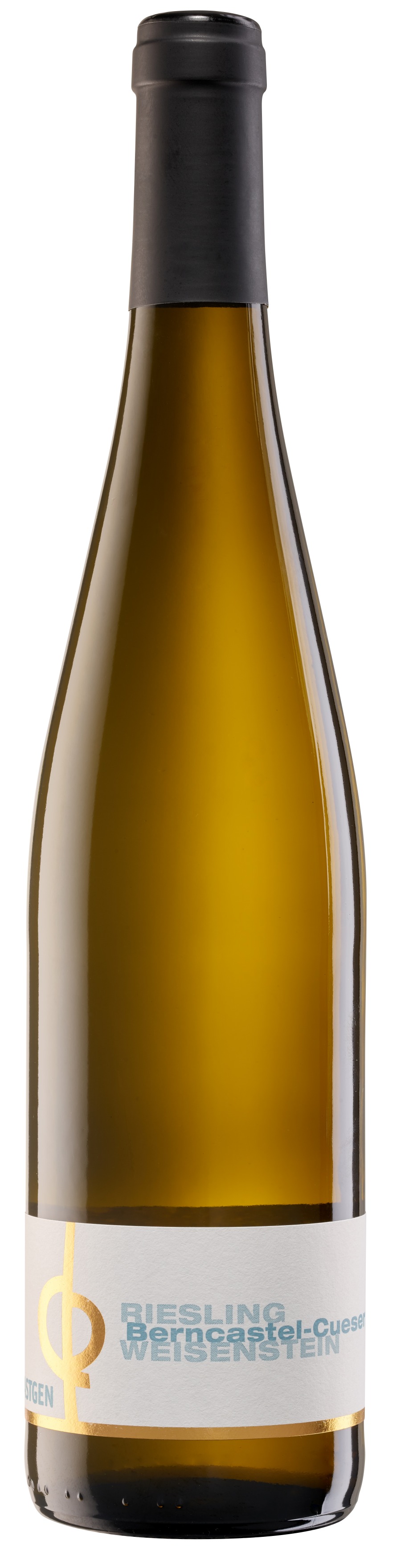
Bastgen Berncastel-Cueser Weisenstein Riesling Spatlese Trocken is made from 100 percent Riesling.
Bright, clean, fresh and zesty. Grapefruit like flavors. Fruity aromas and a nice minerality, typical of the Riesling grape grown on blue slate soil. Round, rich and a very long finish. The grapes for this wine are vigorously selected. Botrytis is not tolerated. At harvest the grapes are fully ripened, have a golden color, and a soft tartness. After a long spontaneous fermentation in a traditional 1000L barrel, the wine just reaches the dry stage. This gives the wine a creamy structure that interplays with ripe yellow and exotic fruit aromas.
They meticulously tend 4.5 ha (11.11 acres) of which 80% is Riesling. The soil is made of slate. Their vineyards are located in Kesten and Brauneberg, on a steep terrace, and planted to 50-year old vines. Fortunately for Bastgen, they own part of the famous Brauneberger Juffer Sonnenuhr. The vines produce very small, ripe berries that are very tasty.
Bastgen Berncastel-Cueser Weisenstein Riesling Spatlese Trocken is made from 100 percent Riesling.
Bright, clean, fresh and zesty. Grapefruit like flavors. Fruity aromas and a nice minerality, typical of the Riesling grape grown on blue slate soil. Round, rich and a very long finish. The grapes for this wine are vigorously selected. Botrytis is not tolerated. At harvest the grapes are fully ripened, have a golden color, and a soft tartness. After a long spontaneous fermentation in a traditional 1000L barrel, the wine just reaches the dry stage. This gives the wine a creamy structure that interplays with ripe yellow and exotic fruit aromas.
They meticulously tend 4.5 ha (11.11 acres) of which 80% is Riesling. The soil is made of slate. Their vineyards are located in Kesten and Brauneberg, on a steep terrace, and planted to 50-year old vines. Fortunately for Bastgen, they own part of the famous Brauneberger Juffer Sonnenuhr. The vines produce very small, ripe berries that are very tasty.
Bastgen Kestener Paulinshofberg Riesling Spatlese is 100 percent Riesling.
Yellow color with green highlights.
Beautiful peach aromas on the nose, rich and ripe fruits on the mouth with a refreshing acidity and honey notes. A very pleasing wine.
They meticulously tend 4.5 ha (11.11 acres) of which 80% is Riesling. The soil is made of slate. Their vineyards are located in Kesten and Brauneberg, on a steep terrace, and planted to 50-year old vines. Fortunately for Bastgen, they own part of the famous Brauneberger Juffer Sonnenuhr. The vines produce very small, ripe berries that are very tasty.
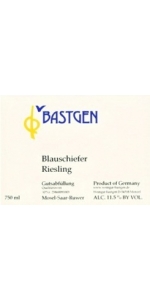
Bastgen Blauschiefer Riesling is 100 percent Riesling.
Bright, clean, fresh and zesty. Grapefruit like flavors. Fruity aromas and a nice minerality, typical of the Riesling grape grown on blue slate soil. Round, rich and a very long finish.
They meticulously tend 4.5 ha (11.11 acres) of which 80% is Riesling. The soil is made of slate. Their vineyards are located in Kesten and Brauneberg, on a steep terrace, and planted to 50-year old vines. Fortunately for Bastgen, they own part of the famous Brauneberger Juffer Sonnenuhr. The vines produce very small, ripe berries that are very tasty.
Review:
"Very enticing nose of ripe pear with some white peach and floral aromas! All the elegance and delicacy we expect from high-quality Mosel riesling, but this light-bodied and dry beauty is only an entry-level wine! Long, refreshing and delicate finish. This will be a bargain in all the markets it reaches. From organically grown grapes. Drink now. Screw cap. "
- James Sucking (November 2023), 92 pts
Bastgen Blauschiefer Riesling is 100 percent Riesling.
Bright, clean, fresh and zesty. Grapefruit like flavors. Fruity aromas and a nice minerality, typical of the Riesling grape grown on blue slate soil. Round, rich and a very long finish.
They meticulously tend 4.5 ha (11.11 acres) of which 80% is Riesling. The soil is made of slate. Their vineyards are located in Kesten and Brauneberg, on a steep terrace, and planted to 50-year old vines. Fortunately for Bastgen, they own part of the famous Brauneberger Juffer Sonnenuhr. The vines produce very small, ripe berries that are very tasty. Excellent with oysters, seafood and deliciously refreshing on it's own.
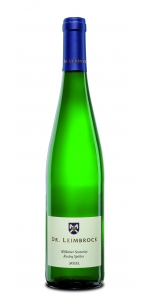
Dr. Leimbrock Mulheimer Sonnenlay Riesling Spatlese is made from 100 percent Riesling.
A classic in the residual sweet range that impresses with filigree fruit and mineral spiciness.
The circulating mountain "Mülheimer Sonnenlay" represents a geographical feature of the Moselle. Due to the strong meandering of the Moselle, the mountain was surrounded by the course of the river in geological development in such a way that a so-called circulating mountain arose from it. Located in the northeast-southwest direction, vines are cultivated on both sides of the mountain. The site name "Sonne" and "Lay" (Mosel Franconian for slate) combines the most important prerequisites for the cultivation of Riesling vines. Soils are skeletal-rich, weathered clay-ish shale enriched with sand, stones, and clay. At the beginning of the 1930s, the Mülheim winegrowers proudly pointed out that the local wine was served in the elegant restaurant of the airship "Graf Zeppelin" on its world trips and was obviously very popular.
Pair with spicy dishes, soft cheese, cakes.
Bastgen Berncastel-Cueser Weisenstein Riesling Spatlese Trocken is made from 100 percent Riesling.
Bright, clean, fresh and zesty. Grapefruit like flavors. Fruity aromas and a nice minerality, typical of the Riesling grape grown on blue slate soil. Round, rich and a very long finish.
The grapes for this wine are vigorously selected. Botrytis is not tolerated. At harvest the grapes are fully ripened, have a golden color, and a soft tartness. After a long spontaneous fermentation in a traditional 1000L barrel, the wine just reaches the dry stage. This gives the wine a creamy structure that interplays with ripe yellow and exotic fruit aromas. A delicate wine that yet has power and fullness, predestined to go with food. 111 cases made.
Review:
"Fragrant yellow peach and melon notes are accented by earthy whiffs of crushed mineral and slate in this full bodied, luscious Riesling. Ripe yellow peach and apple flavors are rich and penetrating, offset by brisk acidity and a sleek, stony finish. A hedonistic wine to enjoy now through 2030. - Anna Lee C. Iijima"
- Wine Enthusiast Magazine (February 1st, 2019), 92 points
The Weingut Bastgen Estate
The property was founded in 1850 and is located in the tiny hamlet of Monzel, along the middle Mosel. The current owners are Armin Vogel (husband) and Mona Bastgen (wife) who began working in the winery in 1993. The average total production is 3,300 cases. They export mainly to Germany, Switzerland, U.K and the U.S. Their wines are bottled in screwcaps.
The Weingut Bastgen Vineyard
They meticulously tend 4.5 ha (11.11 acres) of which 80% is Riesling. The soil is made of slate. Their vineyards are located in Kesten and Brauneberg, on a steep terrace, and planted to 50-year old vines. Fortunately for Bastgen, they own part of the famous Brauneberger Juffer Sonnenuhr. The vines produce very small, ripe berries that are very tasty.
Double Gold Medal, San Francisco International Wine Competition Silver, Sommelier Challenge International Wine Competition
Tasting Notes: Our Chardonnay is both fresh and creamy and has notes of citrus, green apple, white peach, and vanilla. Enjoy with roasted chicken, salads, fresh seafood, and cream sauces.
Castelmaure Corbieres Vin-Gris (Rose) is made from 80% Grenache, 10% Carignan, 10% Cinsault.
Pale pink rose color, a classic gris de gris wine with salmon hues.
Delicate strawberry nose, seamless and fine pointed.
Delicious as an aperitif, it is also great when paired with seafood, salads, Asian-Thai cuisine, grilled fish and tajines.



