
" We don't sell the wine without touching the vine "
| Country: | Germany |
| Region: | Mosel |
| Winery: | Weingut Bastgen |
| Grape Type: | Riesling |
| Vintage: | 2017 |
| Bottle Size: | 750 ml |

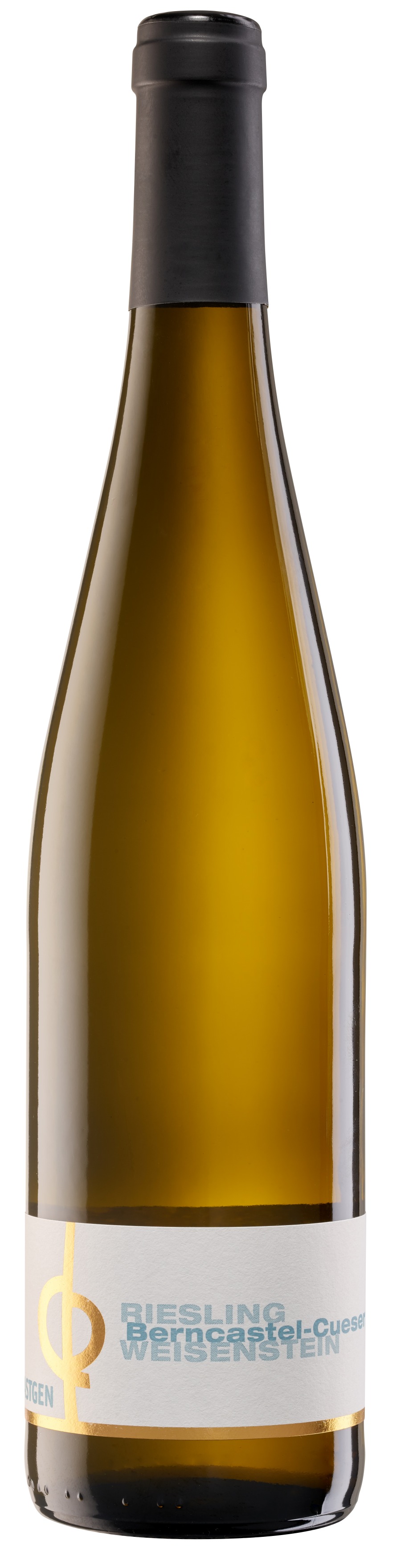
Bastgen Berncastel-Cueser Weisenstein Riesling Spatlese Trocken is made from 100 percent Riesling.
Bright, clean, fresh and zesty. Grapefruit like flavors. Fruity aromas and a nice minerality, typical of the Riesling grape grown on blue slate soil. Round, rich and a very long finish. The grapes for this wine are vigorously selected. Botrytis is not tolerated. At harvest the grapes are fully ripened, have a golden color, and a soft tartness. After a long spontaneous fermentation in a traditional 1000L barrel, the wine just reaches the dry stage. This gives the wine a creamy structure that interplays with ripe yellow and exotic fruit aromas.
They meticulously tend 4.5 ha (11.11 acres) of which 80% is Riesling. The soil is made of slate. Their vineyards are located in Kesten and Brauneberg, on a steep terrace, and planted to 50-year old vines. Fortunately for Bastgen, they own part of the famous Brauneberger Juffer Sonnenuhr. The vines produce very small, ripe berries that are very tasty.
Review:
"This dry Mosel riesling is GG in all but name! Complex nose of white peach and red-fleshed vineyard peach with herb garden notes. Very elegant and polished this glides over your palate, the precision of flavor on the medium-bodied palate is very impressive. Then comes the wet stone and red berry finish that doesn’t want to stop. From organically grown grapes. Drink or hold."
- James Suckling (November 2023), 95 pts
Bastgen Berncastel-Cueser Weisenstein Riesling Spatlese Trocken is made from 100 percent Riesling.
Bright, clean, fresh and zesty. Grapefruit like flavors. Fruity aromas and a nice minerality, typical of the Riesling grape grown on blue slate soil. Round, rich and a very long finish. The grapes for this wine are vigorously selected. Botrytis is not tolerated. At harvest the grapes are fully ripened, have a golden color, and a soft tartness. After a long spontaneous fermentation in a traditional 1000L barrel, the wine just reaches the dry stage. This gives the wine a creamy structure that interplays with ripe yellow and exotic fruit aromas.
They meticulously tend 4.5 ha (11.11 acres) of which 80% is Riesling. The soil is made of slate. Their vineyards are located in Kesten and Brauneberg, on a steep terrace, and planted to 50-year old vines. Fortunately for Bastgen, they own part of the famous Brauneberger Juffer Sonnenuhr. The vines produce very small, ripe berries that are very tasty.

Bastgen Blauschiefer Riesling is 100 percent Riesling.
Bright, clean, fresh and zesty. Grapefruit like flavors. Fruity aromas and a nice minerality, typical of the Riesling grape grown on blue slate soil. Round, rich and a very long finish.
They meticulously tend 4.5 ha (11.11 acres) of which 80% is Riesling. The soil is made of slate. Their vineyards are located in Kesten and Brauneberg, on a steep terrace, and planted to 50-year old vines. Fortunately for Bastgen, they own part of the famous Brauneberger Juffer Sonnenuhr. The vines produce very small, ripe berries that are very tasty.
Bastgen Blauschiefer Riesling is 100 percent Riesling.
Bright, clean, fresh and zesty. Grapefruit like flavors. Fruity aromas and a nice minerality, typical of the Riesling grape grown on blue slate soil. Round, rich and a very long finish.
They meticulously tend 4.5 ha (11.11 acres) of which 80% is Riesling. The soil is made of slate. Their vineyards are located in Kesten and Brauneberg, on a steep terrace, and planted to 50-year old vines. Fortunately for Bastgen, they own part of the famous Brauneberger Juffer Sonnenuhr. The vines produce very small, ripe berries that are very tasty.
Review:
"Very enticing nose of ripe pear with some white peach and floral aromas! All the elegance and delicacy we expect from high-quality Mosel riesling, but this light-bodied and dry beauty is only an entry-level wine! Long, refreshing and delicate finish. This will be a bargain in all the markets it reaches. From organically grown grapes. Drink now. Screw cap. "
- James Sucking (November 2023), 92 pts

Bastgen Blauschiefer Riesling is 100 percent Riesling.
Bright, clean, fresh and zesty. Grapefruit like flavors. Fruity aromas and a nice minerality, typical of the Riesling grape grown on blue slate soil. Round, rich and a very long finish.
They meticulously tend 4.5 ha (11.11 acres) of which 80% is Riesling. The soil is made of slate. Their vineyards are located in Kesten and Brauneberg, on a steep terrace, and planted to 50-year old vines. Fortunately for Bastgen, they own part of the famous Brauneberger Juffer Sonnenuhr. The vines produce very small, ripe berries that are very tasty. Excellent with oysters, seafood and deliciously refreshing on it's own.

Bastgen Kestener Paulinshofberg Riesling Kabinett is 100 percent Riesling.
Kesten is a small village right by the Mosel surrounded by steep vineyards called Paulinsberg (=hills of Saint Paul). The vines grow on bridle clay slate near the river - a classic terroir that has been cultivated with vines ever since Roman times. Riesling is the most typical grape of the Mosel region that produced a fruity Kabinett with beautiful peach aromas on the nose, rich and ripe fruits on the mouth with honeyed notes and a refreshing acidity. This is a very pleasing wine.
They meticulously tend 4.5 ha (11.11 acres) of which 80% is Riesling. The soil is made of slate. Their vineyards are located in Kesten and Brauneberg, on a steep terrace, and planted to 50-year old vines. Fortunately for Bastgen, they own part of the famous Brauneberger Juffer Sonnenuhr. The vines produce very small, ripe berries that are very tasty.
The grapes are strongly selected, only minimal amounts of botrytis are tolerated. At time of the harvest the grapes are fully ripened with a golden color and tart acidity. After a natural sedimentation process the fermentation occurs in stainless steel tanks under cool conditions. The wine remains on the lees until April, then is gently filtered once, and bottled.
Review:
"This prototypical Mosel Kabinett has depth and vibrancy all packed into a light-bodied frame. Not super-sleek, but enormously refreshing with super-expressive white peach, yellow apple and honeysuckle aromas. Super-crisp finish. Delicious now, but excellent aging potential too! From organically grown grapes. Drink or hold. Screw cap."
- James Suckling (November 2023), 94 pts
Bastgen Berncastel-Cueser Weisenstein Riesling Spatlese Trocken is made from 100 percent Riesling.
Bright, clean, fresh and zesty. Grapefruit like flavors. Fruity aromas and a nice minerality, typical of the Riesling grape grown on blue slate soil. Round, rich and a very long finish.
The grapes for this wine are vigorously selected. Botrytis is not tolerated. At harvest the grapes are fully ripened, have a golden color, and a soft tartness. After a long spontaneous fermentation in a traditional 1000L barrel, the wine just reaches the dry stage. This gives the wine a creamy structure that interplays with ripe yellow and exotic fruit aromas. A delicate wine that yet has power and fullness, predestined to go with food. 111 cases made.
Review:
"Fragrant yellow peach and melon notes are accented by earthy whiffs of crushed mineral and slate in this full bodied, luscious Riesling. Ripe yellow peach and apple flavors are rich and penetrating, offset by brisk acidity and a sleek, stony finish. A hedonistic wine to enjoy now through 2030. - Anna Lee C. Iijima"
- Wine Enthusiast Magazine (February 1st, 2019), 92 points
The Weingut Bastgen Estate
The property was founded in 1850 and is located in the tiny hamlet of Monzel, along the middle Mosel. The current owners are Armin Vogel (husband) and Mona Bastgen (wife) who began working in the winery in 1993. The average total production is 3,300 cases. They export mainly to Germany, Switzerland, U.K and the U.S. Their wines are bottled in screwcaps.
The Weingut Bastgen Vineyard
They meticulously tend 4.5 ha (11.11 acres) of which 80% is Riesling. The soil is made of slate. Their vineyards are located in Kesten and Brauneberg, on a steep terrace, and planted to 50-year old vines. Fortunately for Bastgen, they own part of the famous Brauneberger Juffer Sonnenuhr. The vines produce very small, ripe berries that are very tasty.

Hickinbotham Trueman Cabernet Sauvignon is made from 100 percent Cabernet Sauvignon.
Trueman represents Cabernet in Clarendon at its best. Its purity, its elegant style, its supple, polished nature ... it’s a wine of its own.Distinct in character, this is not like Cabernet from the Vales below or the hills to the east. From its pretty, delicate florals and musk, through to its silky blackcurrant and kalamata juice and down to its dark carbon soul - Trueman is a modern Cabernet that encapsulates all the toil and antiquity of Clarendon. Echoing the unearthed prose of wine writer Ebenezer Ward from 1886 on theCabernet sown from this very land – Trueman is “an excelled wine, of very marked flavor and bouquet”.
Review:
Deep garnet/purple, the 2012 Cabernet Sauvignon Hickinbotham Vineyard has a classic nose showing pronounced fresh blackcurrant and blackberry highlighted by cloves, menthol, pencil shavings and earth notes. Medium to full-bodied, taut and muscular, the palate has grainy tannins, nice freshness and a long finish.
-Wine Advocate 93 Points

Importer Sale!
Produced from 100% Tempranillo grapes, which are hand harvested from the Montebuena vineyard.
Brilliant deep ruby red color, fruity aromas .
Montebuena Red has a spicy vanilla bouquet and is smooth and fruity in the mouth with some well-integrated secondary nuances, full-flavored and a persistent pleasant finish. Pairs well with beef & lamb dishes, stews & cheeses.



