
" We don't sell the wine without touching the vine "
| Country: | Germany |
| Region: | Mosel |
| Winery: | Weingut Bastgen |
| Grape Type: | Riesling |
| Vintage: | 2018 |
| Bottle Size: | 750 ml |
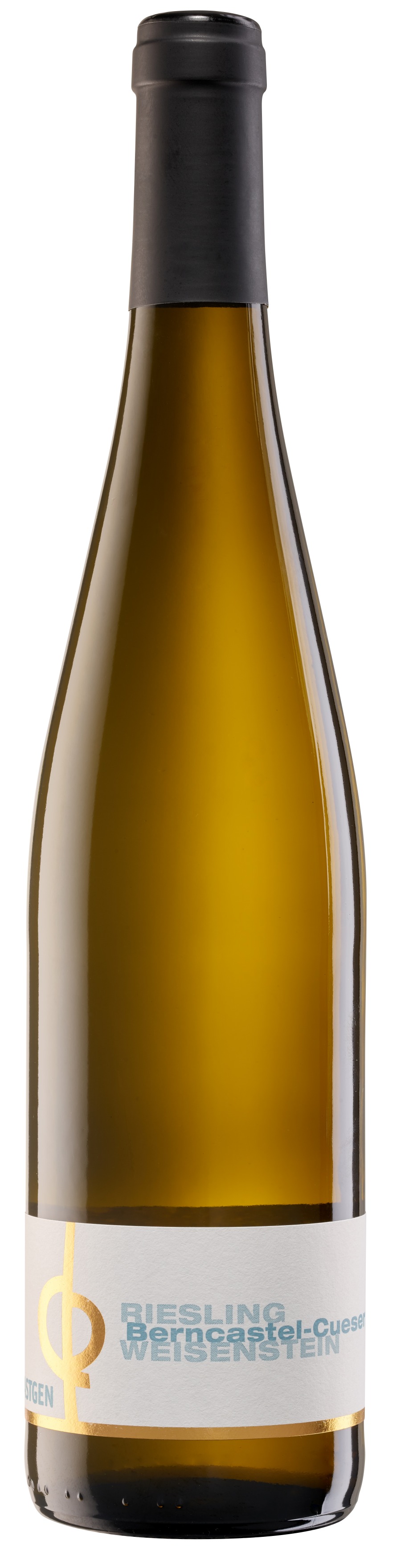
Bastgen Berncastel-Cueser Weisenstein Riesling Spatlese Trocken is made from 100 percent Riesling.
Bright, clean, fresh and zesty. Grapefruit like flavors. Fruity aromas and a nice minerality, typical of the Riesling grape grown on blue slate soil. Round, rich and a very long finish. The grapes for this wine are vigorously selected. Botrytis is not tolerated. At harvest the grapes are fully ripened, have a golden color, and a soft tartness. After a long spontaneous fermentation in a traditional 1000L barrel, the wine just reaches the dry stage. This gives the wine a creamy structure that interplays with ripe yellow and exotic fruit aromas.
They meticulously tend 4.5 ha (11.11 acres) of which 80% is Riesling. The soil is made of slate. Their vineyards are located in Kesten and Brauneberg, on a steep terrace, and planted to 50-year old vines. Fortunately for Bastgen, they own part of the famous Brauneberger Juffer Sonnenuhr. The vines produce very small, ripe berries that are very tasty.
Bastgen Berncastel-Cueser Weisenstein Riesling Spatlese Trocken is made from 100 percent Riesling.
Bright, clean, fresh and zesty. Grapefruit like flavors. Fruity aromas and a nice minerality, typical of the Riesling grape grown on blue slate soil. Round, rich and a very long finish. The grapes for this wine are vigorously selected. Botrytis is not tolerated. At harvest the grapes are fully ripened, have a golden color, and a soft tartness. After a long spontaneous fermentation in a traditional 1000L barrel, the wine just reaches the dry stage. This gives the wine a creamy structure that interplays with ripe yellow and exotic fruit aromas.
They meticulously tend 4.5 ha (11.11 acres) of which 80% is Riesling. The soil is made of slate. Their vineyards are located in Kesten and Brauneberg, on a steep terrace, and planted to 50-year old vines. Fortunately for Bastgen, they own part of the famous Brauneberger Juffer Sonnenuhr. The vines produce very small, ripe berries that are very tasty.
Bastgen Kestener Paulinshofberg Riesling Spatlese is 100 percent Riesling.
Yellow color with green highlights.
Beautiful peach aromas on the nose, rich and ripe fruits on the mouth with a refreshing acidity and honey notes. A very pleasing wine.
They meticulously tend 4.5 ha (11.11 acres) of which 80% is Riesling. The soil is made of slate. Their vineyards are located in Kesten and Brauneberg, on a steep terrace, and planted to 50-year old vines. Fortunately for Bastgen, they own part of the famous Brauneberger Juffer Sonnenuhr. The vines produce very small, ripe berries that are very tasty.
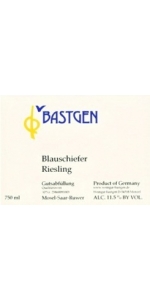
Bastgen Blauschiefer Riesling is 100 percent Riesling.
Bright, clean, fresh and zesty. Grapefruit like flavors. Fruity aromas and a nice minerality, typical of the Riesling grape grown on blue slate soil. Round, rich and a very long finish.
They meticulously tend 4.5 ha (11.11 acres) of which 80% is Riesling. The soil is made of slate. Their vineyards are located in Kesten and Brauneberg, on a steep terrace, and planted to 50-year old vines. Fortunately for Bastgen, they own part of the famous Brauneberger Juffer Sonnenuhr. The vines produce very small, ripe berries that are very tasty.
Review:
"Very enticing nose of ripe pear with some white peach and floral aromas! All the elegance and delicacy we expect from high-quality Mosel riesling, but this light-bodied and dry beauty is only an entry-level wine! Long, refreshing and delicate finish. This will be a bargain in all the markets it reaches. From organically grown grapes. Drink now. Screw cap. "
- James Sucking (November 2023), 92 pts
Bastgen Blauschiefer Riesling is 100 percent Riesling.
Bright, clean, fresh and zesty. Grapefruit like flavors. Fruity aromas and a nice minerality, typical of the Riesling grape grown on blue slate soil. Round, rich and a very long finish.
They meticulously tend 4.5 ha (11.11 acres) of which 80% is Riesling. The soil is made of slate. Their vineyards are located in Kesten and Brauneberg, on a steep terrace, and planted to 50-year old vines. Fortunately for Bastgen, they own part of the famous Brauneberger Juffer Sonnenuhr. The vines produce very small, ripe berries that are very tasty. Excellent with oysters, seafood and deliciously refreshing on it's own.
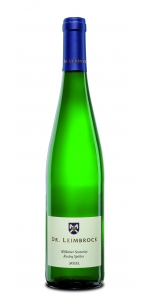
Dr. Leimbrock Mulheimer Sonnenlay Riesling Spatlese is made from 100 percent Riesling.
A classic in the residual sweet range that impresses with filigree fruit and mineral spiciness.
The circulating mountain "Mülheimer Sonnenlay" represents a geographical feature of the Moselle. Due to the strong meandering of the Moselle, the mountain was surrounded by the course of the river in geological development in such a way that a so-called circulating mountain arose from it. Located in the northeast-southwest direction, vines are cultivated on both sides of the mountain. The site name "Sonne" and "Lay" (Mosel Franconian for slate) combines the most important prerequisites for the cultivation of Riesling vines. Soils are skeletal-rich, weathered clay-ish shale enriched with sand, stones, and clay. At the beginning of the 1930s, the Mülheim winegrowers proudly pointed out that the local wine was served in the elegant restaurant of the airship "Graf Zeppelin" on its world trips and was obviously very popular.
Pair with spicy dishes, soft cheese, cakes.
Bastgen Berncastel-Cueser Weisenstein Riesling Spatlese Trocken is made from 100 percent Riesling.
Bright, clean, fresh and zesty. Grapefruit like flavors. Fruity aromas and a nice minerality, typical of the Riesling grape grown on blue slate soil. Round, rich and a very long finish. The grapes for this wine are vigorously selected. Botrytis is not tolerated. At harvest the grapes are fully ripened, have a golden color, and a soft tartness. After a long spontaneous fermentation in a traditional 1000L barrel, the wine just reaches the dry stage. This gives the wine a creamy structure that interplays with ripe yellow and exotic fruit aromas.
They meticulously tend 4.5 ha (11.11 acres) of which 80% is Riesling. The soil is made of slate. Their vineyards are located in Kesten and Brauneberg, on a steep terrace, and planted to 50-year old vines. Fortunately for Bastgen, they own part of the famous Brauneberger Juffer Sonnenuhr. The vines produce very small, ripe berries that are very tasty.
The Weingut Bastgen Estate
The property was founded in 1850 and is located in the tiny hamlet of Monzel, along the middle Mosel. The current owners are Armin Vogel (husband) and Mona Bastgen (wife) who began working in the winery in 1993. The average total production is 3,300 cases. They export mainly to Germany, Switzerland, U.K and the U.S. Their wines are bottled in screwcaps.
The Weingut Bastgen Vineyard
They meticulously tend 4.5 ha (11.11 acres) of which 80% is Riesling. The soil is made of slate. Their vineyards are located in Kesten and Brauneberg, on a steep terrace, and planted to 50-year old vines. Fortunately for Bastgen, they own part of the famous Brauneberger Juffer Sonnenuhr. The vines produce very small, ripe berries that are very tasty.
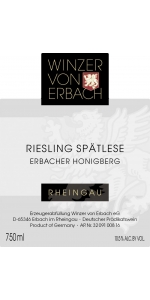
Honeyed style, rich minerality and luscious creaminess. Flavors of baked pineapple and pear. Fresh and juicy on the finish.
From the famous Erbacher Honigberg vineyard. Average of the vines is 20 years old.
Cool fermentation, matured on the lees for 2 months before bottling, with a slight filtration.
Riesling Rheingau Erbacher Honigberg Spatlese goes well with Indian Curry and blue Cheese
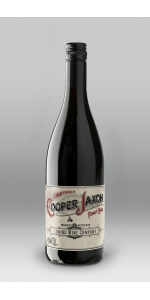
Loring Cooper Jaxon Pinot Noir is made from 100% Pinot Noir
Aged 10 Months in French Oak (15% New)
A special blend in honor of Cooper Jaxon Loring - the next generation of Loring. We don't limit the wine to any
specific AVA, but rather look for a blend that is big, bold, and super tasty!
Juicy and vibrant, with aromas of raspberry puree, blackberry and spring flowers.
Vines are planted on Arroyo Seco Sandy Loam soils on the following vineyard sites: Rancho La Viña, Kessler-Haak, Clos Pepe, John Sebastiano, Aubaine, Rosella's and Sierra Mar.
Vinification is traditionnal with minimal intervention.
Wine went thought Malo-Lactic fermentation and was bottled without filtration.
pH 3.61
Clones: Pisoni, 113, 115, 667, 777, 23
Pairs well with steak and lamb, spicy foods & mild cheeses.
Review:
"This fun and whimsical label from Brian Loring delivers his rich style of Pinot Noir at an affordable price, offering aromas of black cherry, forest herbs, damp sage and crushed slate. The palate is earthy, offering flavors of dark berry, fennel frond, roasted meat and clove. Matt Kettmann"
- Wine Enthusiast (June 2019), 92 pts - Editors' Choice
-75x150.jpg "Philippe Milan Bourgogne Blanc 2022")
Philippe Milan Bourgogne Blanc is made from 100% Chardonnay
The wine is produced from vines planted in the commune of Chassey le Camp at high elevation, which brings freshness to this Chardonnay. Ripe fruit is nicely balanced with delicate notes of oak and a hint of citrus on the finish. Full flavored and complex.
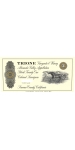
Winemaking: This wine is a classic Bordeaux blend of 78% Cabernet Sauvignon, 10% Malbec, 8% Merlot, 2% Cabernet Franc, 2% Petit Verdot .
Block 21 Cabernet is a single vineyard selection from the Trione Cloverdale Ranch, located on the western flank of the Mayacamas Mountains, in the northern portion of Alexander Valley. The vines, planted in 2001 with Bordeaux clone 337, grow in clay and sandy loam soils underlain with a high percentage of gravel. Cabernet Sauvignon grown in this ideal terroir develops deep, concentrated flavors and fine, smooth tannins.
The Trione Block 21 Cabernet Sauvignon is deep, dark, and foreboding. The wine is rich with black currant and dark chocolate aromas and flavors. Inhale, close your eyes and envision an old saddle, favorite wallet or baseball glove, those rustic leather notes are prominent. The structure is tight but has length and verbosity. This wine is age worthy and will continue to develop for 10 years and beyond. Cheers!



