
" We don't sell the wine without touching the vine "
| BUY MORE! SAVE MORE! | ||||||||||||||||||||
|
| Country: | Germany |
| Region: | Mosel |
| Winery: | Weingut Bastgen |
| Grape Type: | Riesling |
| Vintage: | 2023 |
| Bottle Size: | 750 ml |
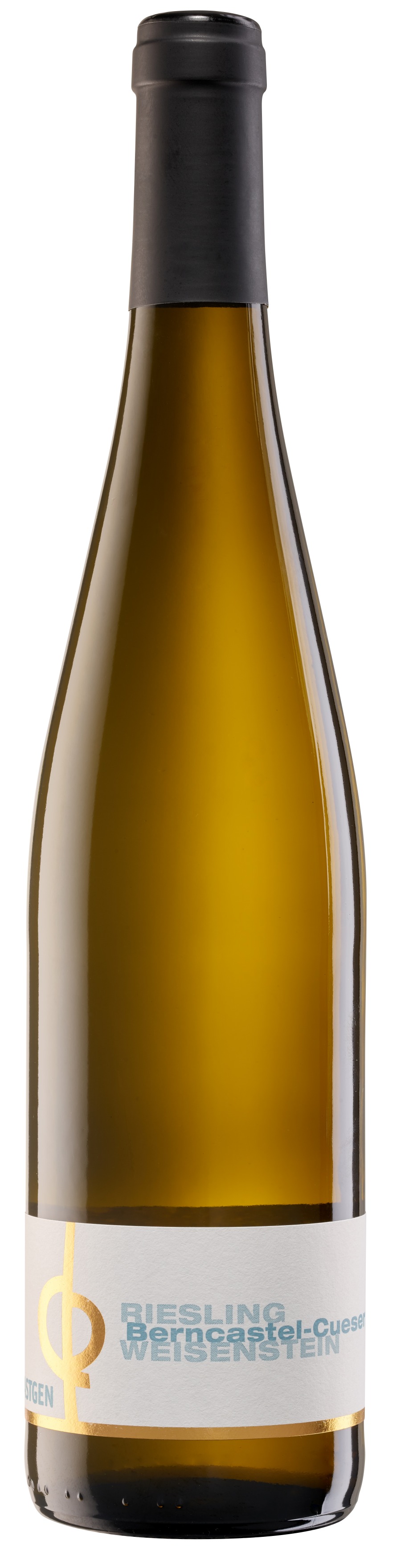
Bastgen Berncastel-Cueser Weisenstein Riesling Spatlese Trocken is made from 100 percent Riesling.
Bright, clean, fresh and zesty. Grapefruit like flavors. Fruity aromas and a nice minerality, typical of the Riesling grape grown on blue slate soil. Round, rich and a very long finish. The grapes for this wine are vigorously selected. Botrytis is not tolerated. At harvest the grapes are fully ripened, have a golden color, and a soft tartness. After a long spontaneous fermentation in a traditional 1000L barrel, the wine just reaches the dry stage. This gives the wine a creamy structure that interplays with ripe yellow and exotic fruit aromas.
They meticulously tend 4.5 ha (11.11 acres) of which 80% is Riesling. The soil is made of slate. Their vineyards are located in Kesten and Brauneberg, on a steep terrace, and planted to 50-year old vines. Fortunately for Bastgen, they own part of the famous Brauneberger Juffer Sonnenuhr. The vines produce very small, ripe berries that are very tasty.
The Weingut Bastgen Estate
The property was founded in 1850 and is located in the tiny hamlet of Monzel, along the middle Mosel. The current owners are Armin Vogel (husband) and Mona Bastgen (wife) who began working in the winery in 1993. The average total production is 3,300 cases. They export mainly to Germany, Switzerland, U.K and the U.S. Their wines are bottled in screwcaps.
The Weingut Bastgen Vineyard
They meticulously tend 4.5 ha (11.11 acres) of which 80% is Riesling. The soil is made of slate. Their vineyards are located in Kesten and Brauneberg, on a steep terrace, and planted to 50-year old vines. Fortunately for Bastgen, they own part of the famous Brauneberger Juffer Sonnenuhr. The vines produce very small, ripe berries that are very tasty.

Baron Aime Cremant de Bourgogne Brut is made from 40% Chardonnay, 30% Pinot Noir, 30% Aligote.
Light yellow with bright reflections. The nose is fresh and lemony with subtle floral aromas, apple and citrus fruits. The mouth is fresh, delicate, tight and precise with fine bubbles that stimulate the palate nicely.
A delicious aperitif and a great match with shellfish.
Review:
Golden straw color. Aromas and flavors of brioche, green and yellow apple, dried pineapple, and lemon oil with a supple, vibrant, finely carbonated, dry medium body and a smooth, engaging, medium-long finish displaying impressions of croissant with salted butter and tart pear jam, white tea, and grapefruit peel with no oak flavor. A lovely and racy apéritif that will pair splendidly with a cheese and bread course."
- Beverage Testing Institute 93 pts - GOLD MEDAL - BEST BUY

Camus Graves Blanc is made from 50% Sauvignon Blanc and 50% Semillon.
A beautiful, brilliant color, this wine offers a great aromatic balance with complex and mineral notes, Offering white fruit (peach and pear), citrus (grapefruit and lemon), and a toasty finish with a delicate oak presence. The mouthfeel is rich and complex with a great minerality, freshness, structure, and a good length to the finish.
Pairs with poultry, fish, and shellfish.

Cave Carod Clairette de Die is made from 75% Muscat Petits Grains and 25% Clairette. Clairette de Die is produced with the ancestral dioise method.
The grapes are rapidly pressed after the harvest and then placed in vats at low temperatures (replicating the process used by the Voconces in ancient times who kept the jars in the icy waters of their local rivers). The half-fermented must is bottled and fermentation continues in the bottle, giving a naturally sparkling wine. Disgorging occurs at least six months after bottling, while the wine still contains sugar and has reached an alcohol content of 7 to 9 %.
This is a sparkling wine with very fine bubbles, light in alcohol (8°), and containing residual sugar (incomplete fermentation). Clairette de Die has been known since ancient times (dates back to 77 A.D.). Clairette brings delicacy and lightness to the wine whereas Muscat gives its typical sweet flavor. The wine displays intense aromas, a refreshing balance of fruit and acidity with peach, orange and white flowers flavors.
This is an ideal wine for all desserts and ice creams, and is very interesting with foie gras. It is especially suitable for daytime meetings and cocktail parties. A great breakfast wine!
Wine to be consumed young, to conserve the full fruity and floral flavors. To be stored flat in a cool room away from light.
GOLD MEDAL - Effervescents du Monde 2010
GOLD MEDAL - Concours General Agricole de Paris 2012
SILVER MEDAL - Concours General Agricole de Paris 2011

Bastgen Berncastel-Cueser Weisenstein Riesling Spatlese Trocken is made from 100 percent Riesling.
Bright, clean, fresh and zesty. Grapefruit like flavors. Fruity aromas and a nice minerality, typical of the Riesling grape grown on blue slate soil. Round, rich and a very long finish. The grapes for this wine are vigorously selected. Botrytis is not tolerated. At harvest the grapes are fully ripened, have a golden color, and a soft tartness. After a long spontaneous fermentation in a traditional 1000L barrel, the wine just reaches the dry stage. This gives the wine a creamy structure that interplays with ripe yellow and exotic fruit aromas.
They meticulously tend 4.5 ha (11.11 acres) of which 80% is Riesling. The soil is made of slate. Their vineyards are located in Kesten and Brauneberg, on a steep terrace, and planted to 50-year old vines. Fortunately for Bastgen, they own part of the famous Brauneberger Juffer Sonnenuhr. The vines produce very small, ripe berries that are very tasty.

Bastgen Kestener Paulinshofberg Riesling Spatlese is 100 percent Riesling.
Yellow color with green highlights.
Beautiful peach aromas on the nose, rich and ripe fruits on the mouth with a refreshing acidity and honey notes. A very pleasing wine.
They meticulously tend 4.5 ha (11.11 acres) of which 80% is Riesling. The soil is made of slate. Their vineyards are located in Kesten and Brauneberg, on a steep terrace, and planted to 50-year old vines. Fortunately for Bastgen, they own part of the famous Brauneberger Juffer Sonnenuhr. The vines produce very small, ripe berries that are very tasty.

Bastgen Blauschiefer Riesling is 100 percent Riesling.
Bright, clean, fresh and zesty. Grapefruit like flavors. Fruity aromas and a nice minerality, typical of the Riesling grape grown on blue slate soil. Round, rich and a very long finish.
They meticulously tend 4.5 ha (11.11 acres) of which 80% is Riesling. The soil is made of slate. Their vineyards are located in Kesten and Brauneberg, on a steep terrace, and planted to 50-year old vines. Fortunately for Bastgen, they own part of the famous Brauneberger Juffer Sonnenuhr. The vines produce very small, ripe berries that are very tasty.
Review:
"Very enticing nose of ripe pear with some white peach and floral aromas! All the elegance and delicacy we expect from high-quality Mosel riesling, but this light-bodied and dry beauty is only an entry-level wine! Long, refreshing and delicate finish. This will be a bargain in all the markets it reaches. From organically grown grapes. Drink now. Screw cap. "
- James Sucking (November 2023), 92 pts

Bastgen Blauschiefer Riesling is 100 percent Riesling.
Bright, clean, fresh and zesty. Grapefruit like flavors. Fruity aromas and a nice minerality, typical of the Riesling grape grown on blue slate soil. Round, rich and a very long finish.
They meticulously tend 4.5 ha (11.11 acres) of which 80% is Riesling. The soil is made of slate. Their vineyards are located in Kesten and Brauneberg, on a steep terrace, and planted to 50-year old vines. Fortunately for Bastgen, they own part of the famous Brauneberger Juffer Sonnenuhr. The vines produce very small, ripe berries that are very tasty. Excellent with oysters, seafood and deliciously refreshing on it's own.

Scents and flavors of peach and yellow plum, citrus and mineral notes. Extremely long, white peach finish.
This wine is a 100 case Cuvee produced from the steepest part of the Paulinschofberger vineyard, 65 % slope. Vine age is 105 years old. "Grosses Gewachs" Großes Gewächs: (great growth = Grand cru), a designation used by VDP members in all regions except Mosel and Rheingau to designate top-level dry wines from selected sites (the highest level of quality). Dry means dry on the palate. The maximum yield is 50 hl/ha, from a classified vineyard. The natural minimum density of must is around 90° Oechsle. The wines are produced using exclusively traditional production methods. The wines are tested and approved by a test body before and after bottling. Hand Harvest (no machine harvest). The wine must not be released before September the year after it was made.
Review:
"In spite of the abundant yellow fruit aromas (think Mirabelle plums more than peaches), this is a very cool and sleek style of Mosel GG with great herbal freshness. Although this has excellent concentration, it definitely needs time to give its best due to the bone-dry style. Quite a steely, tightly wound finish, but very long. Drinkable now, but best from 2026. - Stuart PIGOTT (Senior Editor)" - James Suckling (August 30th 2024), 95 pts

Dr. Leimbrock Mulheimer Sonnenlay Riesling Spatlese is made from 100 percent Riesling.
A classic in the residual sweet range that impresses with filigree fruit and mineral spiciness.
The circulating mountain "Mülheimer Sonnenlay" represents a geographical feature of the Moselle. Due to the strong meandering of the Moselle, the mountain was surrounded by the course of the river in geological development in such a way that a so-called circulating mountain arose from it. Located in the northeast-southwest direction, vines are cultivated on both sides of the mountain. The site name "Sonne" and "Lay" (Mosel Franconian for slate) combines the most important prerequisites for the cultivation of Riesling vines. Soils are skeletal-rich, weathered clay-ish shale enriched with sand, stones, and clay. At the beginning of the 1930s, the Mülheim winegrowers proudly pointed out that the local wine was served in the elegant restaurant of the airship "Graf Zeppelin" on its world trips and was obviously very popular.
Pair with spicy dishes, soft cheese, cakes.

Force Majeure Epinette is made from 79% Merlot, 8% Cabernet Sauvignon, 8% Cabernet Franc, and 5% Petit Verdot .
Epinette is Force Majeure's Right-bank Bordeaux-inspired blend, and was named after an avenue in Libourne (France) that leads to Pomerol and Saint-Émilion, the home of Merlot and Cabernet Franc. Epinette is also the name of a musical instrument akin to a piano, as well as a word for pine tree, which is a fitting nod to their home in Washington state.
The wine itself is a blend of primarily Merlot and Cabernet Franc, with smaller amounts of Cabernet Sauvignon and Petit Verdot, proportions of which change depending on the vintage. The Merlot and Cabernet Franc are grown in lower areas of the vineyard with deep, well-drained soils, much less rocky than the soils of our Rhone varietals.
Review:
The 2018 Epinette is the Merlot-dominated release from this team, and it's 79% Merlot, 8% Cabernet Sauvignon, 8% Cabernet Franc, and 5% Petit Verdot, all from the estate vineyard on Red Mountain. Lots of smoky black cherry and darker currant fruits as well as notes of chocolate, graphite, lead pencil, and chalky minerality emerge from the glass, and this full-bodied beauty is beautifully textured, with a stacked mid-palate, velvety tannins, and a blockbuster finish. It's up with the finest Merlots in the New World and will drink brilliantly for at least a decade, if not longer.
Previously known as Grand Reve, Force Majeure has skyrocketed to the top of the pyramid in Washington State, in no small part due to their talented winemaker, Todd Alexander, who moved from Bryant Family in Napa to Washington State to focus on this estate. While the focus is on their Red Mountain Vineyard, they make a bevy of world-class wines from throughout the Columbia Valley. Anyone doubting the quality coming from Washington State these days owes it to themselves to try these wines.
-Jeb Dunnuck 97 Points

Avennia Arnaut Syrah is made of 100% Syrah
For our taste, no one grows finer Syrah in the state than Dick Boushey. We named this wine after the Provencal Troubadour Arnaut Daniel, who invented the Sestina poem form, thus creating a connection between our two flagship efforts.
"Deep, dark Syrah notes on the nose, with dark blackberry, blueberry reduction, grilled meat, crushed olive, black licorice, camphor, pen ink, and cracked black pepper. The palate is super concentrated and dense, tightly focused, and deeply complex. Savory blueberry, pan drippings, a hint of orange essence, and hand-rubbed sage come through on the extremely long and nuanced finish. A compelling wine that will age for a couple decades at least." - Chris Peterson, Winemaker
We make this wine with minimal manipulation, using native yeasts and bottling unfined and unfiltered, to allow the "place" to shine through.
AVA: Yakima Valley
Blend: 100% Boushey Vineyard Syrah
Winemaking: 15% whole cluster, native yeast, 15% new French oak, aged 16 months, bottled unfined & unfiltered.
Review:
The totally dazzling 2032 ‘Arnaut’ Syrah comes from the Boushey Vineyard and is 100% varietal and native yeast fermented. The wine was stored in nearly all neutral French oak before bottling. It can benefit from a one hour decant and once aroused this exudes class with bacon fat and green peppercorns on the nose alongside tar, Cuban cigar and shades of black licorice. The palate is silky and refined with serious texture and underlying verve. Dense and rich, as well as very savory, enjoy now and over the next fifteen years to come.
Owen Bargreen 96 Points



