
" We don't sell the wine without touching the vine "
| BUY MORE! SAVE MORE! | ||||||||||||||||||||
|
| Country: | Germany |
| Region: | Mosel |
| Winery: | Weingut Bastgen |
| Grape Type: | Riesling |
| Vintage: | 2023 |
| Bottle Size: | 750 ml |
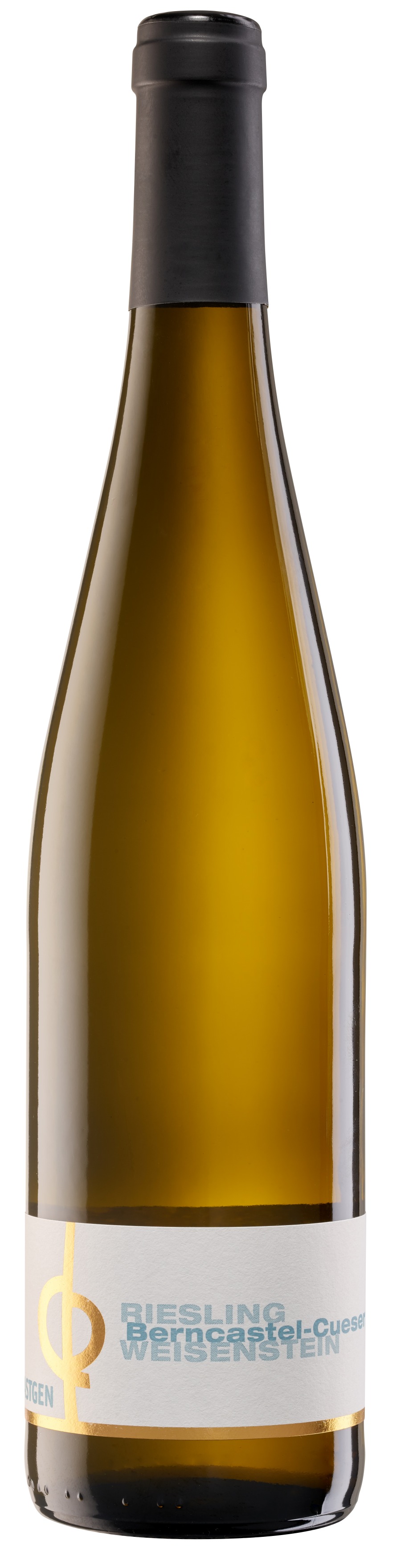
Bastgen Berncastel-Cueser Weisenstein Riesling Spatlese Trocken is made from 100 percent Riesling.
Bright, clean, fresh and zesty. Grapefruit like flavors. Fruity aromas and a nice minerality, typical of the Riesling grape grown on blue slate soil. Round, rich and a very long finish. The grapes for this wine are vigorously selected. Botrytis is not tolerated. At harvest the grapes are fully ripened, have a golden color, and a soft tartness. After a long spontaneous fermentation in a traditional 1000L barrel, the wine just reaches the dry stage. This gives the wine a creamy structure that interplays with ripe yellow and exotic fruit aromas.
They meticulously tend 4.5 ha (11.11 acres) of which 80% is Riesling. The soil is made of slate. Their vineyards are located in Kesten and Brauneberg, on a steep terrace, and planted to 50-year old vines. Fortunately for Bastgen, they own part of the famous Brauneberger Juffer Sonnenuhr. The vines produce very small, ripe berries that are very tasty.
The Weingut Bastgen Estate
The property was founded in 1850 and is located in the tiny hamlet of Monzel, along the middle Mosel. The current owners are Armin Vogel (husband) and Mona Bastgen (wife) who began working in the winery in 1993. The average total production is 3,300 cases. They export mainly to Germany, Switzerland, U.K and the U.S. Their wines are bottled in screwcaps.
The Weingut Bastgen Vineyard
They meticulously tend 4.5 ha (11.11 acres) of which 80% is Riesling. The soil is made of slate. Their vineyards are located in Kesten and Brauneberg, on a steep terrace, and planted to 50-year old vines. Fortunately for Bastgen, they own part of the famous Brauneberger Juffer Sonnenuhr. The vines produce very small, ripe berries that are very tasty.

Baron Aime Cremant de Bourgogne Brut is made from 40% Chardonnay, 30% Pinot Noir, 30% Aligote.
Light yellow with bright reflections. The nose is fresh and lemony with subtle floral aromas, apple and citrus fruits. The mouth is fresh, delicate, tight and precise with fine bubbles that stimulate the palate nicely.
A delicious aperitif and a great match with shellfish.
Review:
Golden straw color. Aromas and flavors of brioche, green and yellow apple, dried pineapple, and lemon oil with a supple, vibrant, finely carbonated, dry medium body and a smooth, engaging, medium-long finish displaying impressions of croissant with salted butter and tart pear jam, white tea, and grapefruit peel with no oak flavor. A lovely and racy apéritif that will pair splendidly with a cheese and bread course."
- Beverage Testing Institute 93 pts - GOLD MEDAL - BEST BUY

Camus Graves Blanc is made from 50% Sauvignon Blanc and 50% Semillon.
A beautiful, brilliant color, this wine offers a great aromatic balance with complex and mineral notes, Offering white fruit (peach and pear), citrus (grapefruit and lemon), and a toasty finish with a delicate oak presence. The mouthfeel is rich and complex with a great minerality, freshness, structure, and a good length to the finish.
Pairs with poultry, fish, and shellfish.

Cave Carod Clairette de Die is made from 75% Muscat Petits Grains and 25% Clairette. Clairette de Die is produced with the ancestral dioise method.
The grapes are rapidly pressed after the harvest and then placed in vats at low temperatures (replicating the process used by the Voconces in ancient times who kept the jars in the icy waters of their local rivers). The half-fermented must is bottled and fermentation continues in the bottle, giving a naturally sparkling wine. Disgorging occurs at least six months after bottling, while the wine still contains sugar and has reached an alcohol content of 7 to 9 %.
This is a sparkling wine with very fine bubbles, light in alcohol (8°), and containing residual sugar (incomplete fermentation). Clairette de Die has been known since ancient times (dates back to 77 A.D.). Clairette brings delicacy and lightness to the wine whereas Muscat gives its typical sweet flavor. The wine displays intense aromas, a refreshing balance of fruit and acidity with peach, orange and white flowers flavors.
This is an ideal wine for all desserts and ice creams, and is very interesting with foie gras. It is especially suitable for daytime meetings and cocktail parties. A great breakfast wine!
Wine to be consumed young, to conserve the full fruity and floral flavors. To be stored flat in a cool room away from light.
GOLD MEDAL - Effervescents du Monde 2010
GOLD MEDAL - Concours General Agricole de Paris 2012
SILVER MEDAL - Concours General Agricole de Paris 2011

Bastgen Berncastel-Cueser Weisenstein Riesling Spatlese Trocken is made from 100 percent Riesling.
Bright, clean, fresh and zesty. Grapefruit like flavors. Fruity aromas and a nice minerality, typical of the Riesling grape grown on blue slate soil. Round, rich and a very long finish. The grapes for this wine are vigorously selected. Botrytis is not tolerated. At harvest the grapes are fully ripened, have a golden color, and a soft tartness. After a long spontaneous fermentation in a traditional 1000L barrel, the wine just reaches the dry stage. This gives the wine a creamy structure that interplays with ripe yellow and exotic fruit aromas.
They meticulously tend 4.5 ha (11.11 acres) of which 80% is Riesling. The soil is made of slate. Their vineyards are located in Kesten and Brauneberg, on a steep terrace, and planted to 50-year old vines. Fortunately for Bastgen, they own part of the famous Brauneberger Juffer Sonnenuhr. The vines produce very small, ripe berries that are very tasty.

Bastgen Kestener Paulinshofberg Riesling Spatlese is 100 percent Riesling.
Yellow color with green highlights.
Beautiful peach aromas on the nose, rich and ripe fruits on the mouth with a refreshing acidity and honey notes. A very pleasing wine.
They meticulously tend 4.5 ha (11.11 acres) of which 80% is Riesling. The soil is made of slate. Their vineyards are located in Kesten and Brauneberg, on a steep terrace, and planted to 50-year old vines. Fortunately for Bastgen, they own part of the famous Brauneberger Juffer Sonnenuhr. The vines produce very small, ripe berries that are very tasty.

Bastgen Blauschiefer Riesling is 100 percent Riesling.
Bright, clean, fresh and zesty. Grapefruit like flavors. Fruity aromas and a nice minerality, typical of the Riesling grape grown on blue slate soil. Round, rich and a very long finish.
They meticulously tend 4.5 ha (11.11 acres) of which 80% is Riesling. The soil is made of slate. Their vineyards are located in Kesten and Brauneberg, on a steep terrace, and planted to 50-year old vines. Fortunately for Bastgen, they own part of the famous Brauneberger Juffer Sonnenuhr. The vines produce very small, ripe berries that are very tasty.
Review:
"Very enticing nose of ripe pear with some white peach and floral aromas! All the elegance and delicacy we expect from high-quality Mosel riesling, but this light-bodied and dry beauty is only an entry-level wine! Long, refreshing and delicate finish. This will be a bargain in all the markets it reaches. From organically grown grapes. Drink now. Screw cap. "
- James Sucking (November 2023), 92 pts

St. Nikolaus Brauneberger Juffer-Sonnenuhr Riesling Spatlese is made from 100 percent Riesling.
"Sonnenuhr" means sundial. The vineyard is facing the small town of Brauneberg formerly Dusemond. It's a steep slate slope on the Mosel, with a south-southeast exposure.
Full-bodied Riesling with typical Devonian slate qualities. Luscious fruit; nice minerality, length and acidity.

Bastgen Blauschiefer Riesling is 100 percent Riesling.
Bright, clean, fresh and zesty. Grapefruit like flavors. Fruity aromas and a nice minerality, typical of the Riesling grape grown on blue slate soil. Round, rich and a very long finish.
They meticulously tend 4.5 ha (11.11 acres) of which 80% is Riesling. The soil is made of slate. Their vineyards are located in Kesten and Brauneberg, on a steep terrace, and planted to 50-year old vines. Fortunately for Bastgen, they own part of the famous Brauneberger Juffer Sonnenuhr. The vines produce very small, ripe berries that are very tasty. Excellent with oysters, seafood and deliciously refreshing on it's own.

Scents and flavors of peach and yellow plum, citrus and mineral notes. Extremely long, white peach finish.
This wine is a 100 case Cuvee produced from the steepest part of the Paulinschofberger vineyard, 65 % slope. Vine age is 105 years old. "Grosses Gewachs" Großes Gewächs: (great growth = Grand cru), a designation used by VDP members in all regions except Mosel and Rheingau to designate top-level dry wines from selected sites (the highest level of quality). Dry means dry on the palate. The maximum yield is 50 hl/ha, from a classified vineyard. The natural minimum density of must is around 90° Oechsle. The wines are produced using exclusively traditional production methods. The wines are tested and approved by a test body before and after bottling. Hand Harvest (no machine harvest). The wine must not be released before September the year after it was made.
Review:
"In spite of the abundant yellow fruit aromas (think Mirabelle plums more than peaches), this is a very cool and sleek style of Mosel GG with great herbal freshness. Although this has excellent concentration, it definitely needs time to give its best due to the bone-dry style. Quite a steely, tightly wound finish, but very long. Drinkable now, but best from 2026. - Stuart PIGOTT (Senior Editor)" - James Suckling (August 30th 2024), 95 pts

The aging is as Mounir ages his Burgundies: extremely long, never racked, no fining, no filtration. It would be easy to say that we expected the experience running one of Burgundy’s leading producers, Lucien Le Moine, would show in Mounir’s wines. But the actual results need to be tasted to be believed and understood: a wine with beguiling fruit and savory richness, yet extraordinary finesse and detail.
Mounir Saouma likes to describe Châteauneuf-du-Pape as a mosaic, with all the wild traditions and differences together making for very different interpretations. Omnia, Latin for “all,” is his attempt to encompass the entire region’s terroir and winemaking history (and perhaps future) in one glass. The fruit comes from 9 vineyard parcels across all 5 of the Châteauneuf communes, Châteauneuf-du-Pape, Courthezon, Sorgues, Bedarrides and Orange (in early vintages, when the Saoumas did not have all the vineyards they have today, they would purchase fruit; today, Rotem & Mounir Saouma is 100% Estate). The wine is then vinified and aged in foudres, cement and 500 liter barrels – a little bit of everything.
2019 was another warm and dry vintage in the southern Rhône, marked by insistent drought and repeated heat waves during the season. With little disease pressure or frost, the crop was close to normal size, but bunch and berry-size was reduced during the growing season by the lack of water. The grapes were thus concentrated and rich in sugar and acidity, although potential alcohol levels were often quite high. Vineyards at higher elevations – Châteauneuf du Pape and Gigondas in particular — handled the heat better, and the wines from those AOPs are rich yet also remarkably fresh and energetic. Despite the initial concerns about the growing season, 2019 looks to be a watershed vintage in the Southern Rhône, producing rich wines with exceptional concentration and aging potential
Inviting aromas of sliced strawberries, red cherries and rose. Full-bodied with vibrant acidity and succulent fruit. Fine, structured tannins are vertically aligned with the fruit. More dark-fruited than the nose lets on and entirely delicious. I love the subtle spice here.
-James Suckling 94 Points
Very refined, with silky and fine-grained structure carrying alluring bergamot, rooibos tea, incense, dried cherry and lightly mulled raspberry notes along. A long sanguine thread weaves through the finish. Hard to resist now with so much charm, but this will benefit from cellaring. Grenache, Syrah and Mourvèdre.
-Wine Spectator 94 Points

Filippino Elio Barolo Riserva is made from 100 percent Nebbiolo.
This 100% Nebbiolo offers a fruity, floral and spicy bouquet of red roses, raspberry, cinnamon and cocoa. It is generous, enveloping and elegant in the mouth, yet intense and full-bodied.
The grapes undergo a soft crushing and destemming leading to a clear must. This must ferments in steel tanks at a controlled temperature of 26°C and macerates for 20-25 days. After racking, the wine undergoes a lengthy maturation in oak barrels, which is continued with a lengthy bottle-ageing. Bottle-ageing confers the wine’s final character, at which time the wine is sent to market and from there to consumer tables.



