" We don't sell the wine without touching the vine "
| Country: | Germany |
| Region: | Mosel |
| Winery: | Weingut Bastgen |
| Grape Type: | Riesling |
| Vintage: | 2018 |
| Bottle Size: | 750 ml |

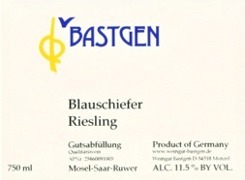
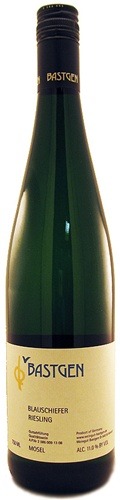
Bastgen Blauschiefer Riesling is 100 percent Riesling.
Bright, clean, fresh and zesty. Grapefruit like flavors. Fruity aromas and a nice minerality, typical of the Riesling grape grown on blue slate soil. Round, rich and a very long finish.
They meticulously tend 4.5 ha (11.11 acres) of which 80% is Riesling. The soil is made of slate. Their vineyards are located in Kesten and Brauneberg, on a steep terrace, and planted to 50-year old vines. Fortunately for Bastgen, they own part of the famous Brauneberger Juffer Sonnenuhr. The vines produce very small, ripe berries that are very tasty.
Bastgen Blauschiefer Riesling is 100 percent Riesling.
Bright, clean, fresh and zesty. Grapefruit like flavors. Fruity aromas and a nice minerality, typical of the Riesling grape grown on blue slate soil. Round, rich and a very long finish.
They meticulously tend 4.5 ha (11.11 acres) of which 80% is Riesling. The soil is made of slate. Their vineyards are located in Kesten and Brauneberg, on a steep terrace, and planted to 50-year old vines. Fortunately for Bastgen, they own part of the famous Brauneberger Juffer Sonnenuhr. The vines produce very small, ripe berries that are very tasty.
Review:
"Very enticing nose of ripe pear with some white peach and floral aromas! All the elegance and delicacy we expect from high-quality Mosel riesling, but this light-bodied and dry beauty is only an entry-level wine! Long, refreshing and delicate finish. This will be a bargain in all the markets it reaches. From organically grown grapes. Drink now. Screw cap. "
- James Sucking (November 2023), 92 pts

Bastgen Blauschiefer Riesling is 100 percent Riesling.
Bright, clean, fresh and zesty. Grapefruit like flavors. Fruity aromas and a nice minerality, typical of the Riesling grape grown on blue slate soil. Round, rich and a very long finish.
They meticulously tend 4.5 ha (11.11 acres) of which 80% is Riesling. The soil is made of slate. Their vineyards are located in Kesten and Brauneberg, on a steep terrace, and planted to 50-year old vines. Fortunately for Bastgen, they own part of the famous Brauneberger Juffer Sonnenuhr. The vines produce very small, ripe berries that are very tasty. Excellent with oysters, seafood and deliciously refreshing on it's own.

Bastgen Berncastel-Cueser Weisenstein Riesling Spatlese Trocken is made from 100 percent Riesling.
Bright, clean, fresh and zesty. Grapefruit like flavors. Fruity aromas and a nice minerality, typical of the Riesling grape grown on blue slate soil. Round, rich and a very long finish. The grapes for this wine are vigorously selected. Botrytis is not tolerated. At harvest the grapes are fully ripened, have a golden color, and a soft tartness. After a long spontaneous fermentation in a traditional 1000L barrel, the wine just reaches the dry stage. This gives the wine a creamy structure that interplays with ripe yellow and exotic fruit aromas.
They meticulously tend 4.5 ha (11.11 acres) of which 80% is Riesling. The soil is made of slate. Their vineyards are located in Kesten and Brauneberg, on a steep terrace, and planted to 50-year old vines. Fortunately for Bastgen, they own part of the famous Brauneberger Juffer Sonnenuhr. The vines produce very small, ripe berries that are very tasty.
Review:
"This dry Mosel riesling is GG in all but name! Complex nose of white peach and red-fleshed vineyard peach with herb garden notes. Very elegant and polished this glides over your palate, the precision of flavor on the medium-bodied palate is very impressive. Then comes the wet stone and red berry finish that doesn’t want to stop. From organically grown grapes. Drink or hold."
- James Suckling (November 2023), 95 pts
Bastgen Berncastel-Cueser Weisenstein Riesling Spatlese Trocken is made from 100 percent Riesling.
Bright, clean, fresh and zesty. Grapefruit like flavors. Fruity aromas and a nice minerality, typical of the Riesling grape grown on blue slate soil. Round, rich and a very long finish. The grapes for this wine are vigorously selected. Botrytis is not tolerated. At harvest the grapes are fully ripened, have a golden color, and a soft tartness. After a long spontaneous fermentation in a traditional 1000L barrel, the wine just reaches the dry stage. This gives the wine a creamy structure that interplays with ripe yellow and exotic fruit aromas.
They meticulously tend 4.5 ha (11.11 acres) of which 80% is Riesling. The soil is made of slate. Their vineyards are located in Kesten and Brauneberg, on a steep terrace, and planted to 50-year old vines. Fortunately for Bastgen, they own part of the famous Brauneberger Juffer Sonnenuhr. The vines produce very small, ripe berries that are very tasty.

Bastgen Kestener Paulinshofberg Riesling Kabinett is 100 percent Riesling.
Kesten is a small village right by the Mosel surrounded by steep vineyards called Paulinsberg (=hills of Saint Paul). The vines grow on bridle clay slate near the river - a classic terroir that has been cultivated with vines ever since Roman times. Riesling is the most typical grape of the Mosel region that produced a fruity Kabinett with beautiful peach aromas on the nose, rich and ripe fruits on the mouth with honeyed notes and a refreshing acidity. This is a very pleasing wine.
They meticulously tend 4.5 ha (11.11 acres) of which 80% is Riesling. The soil is made of slate. Their vineyards are located in Kesten and Brauneberg, on a steep terrace, and planted to 50-year old vines. Fortunately for Bastgen, they own part of the famous Brauneberger Juffer Sonnenuhr. The vines produce very small, ripe berries that are very tasty.
The grapes are strongly selected, only minimal amounts of botrytis are tolerated. At time of the harvest the grapes are fully ripened with a golden color and tart acidity. After a natural sedimentation process the fermentation occurs in stainless steel tanks under cool conditions. The wine remains on the lees until April, then is gently filtered once, and bottled.
Review:
"This prototypical Mosel Kabinett has depth and vibrancy all packed into a light-bodied frame. Not super-sleek, but enormously refreshing with super-expressive white peach, yellow apple and honeysuckle aromas. Super-crisp finish. Delicious now, but excellent aging potential too! From organically grown grapes. Drink or hold. Screw cap."
- James Suckling (November 2023), 94 pts
Bastgen Blauschiefer Riesling is 100 percent Riesling.
Bright, clean, fresh and zesty. Grapefruit like flavors. Fruity aromas and a nice minerality, typical of the Riesling grape grown on blue slate soil. Round, rich and a very long finish.
They meticulously tend 4.5 ha (11.11 acres) of which 80% is Riesling. The soil is made of slate. Their vineyards are located in Kesten and Brauneberg, on a steep terrace, and planted to 50-year old vines. Fortunately for Bastgen, they own part of the famous Brauneberger Juffer Sonnenuhr. The vines produce very small, ripe berries that are very tasty.
The Weingut Bastgen Estate
The property was founded in 1850 and is located in the tiny hamlet of Monzel, along the middle Mosel. The current owners are Armin Vogel (husband) and Mona Bastgen (wife) who began working in the winery in 1993. The average total production is 3,300 cases. They export mainly to Germany, Switzerland, U.K and the U.S. Their wines are bottled in screwcaps.
The Weingut Bastgen Vineyard
They meticulously tend 4.5 ha (11.11 acres) of which 80% is Riesling. The soil is made of slate. Their vineyards are located in Kesten and Brauneberg, on a steep terrace, and planted to 50-year old vines. Fortunately for Bastgen, they own part of the famous Brauneberger Juffer Sonnenuhr. The vines produce very small, ripe berries that are very tasty.

Every now and then, in life and in wine, we are presented with unique opportunities to express ourselves and create something truly remarkable.
When rare opportunities arise, we need to capture, nurture and develop them so that their potential is fulfilled. So when Torbreck was given the opportunity to work with one of the most famous vineyards in the Barossa Valley, it became almost inevitable that the resulting wine would be truly remarkable.
In 2003, Torbreck growers and fourth generation descendants of the Seppelt family, Malcolm and Joylene Seppelt, asked our winemakers to create for them a small batch of Shiraz from their old Gnadenfrei vineyard in the sub-region of Marananga.
Planted in 1958, the five acre vineyard is traditionally dry grown and comes from an original Barossa clonal source. South facing, on the eastern side of a ridge separating the Seppeltsfield and Marananga appellations, these aged vines have been meticulously hand tended, traditionally farmed and pruned by a grower with a lifetime’s experience on Western Barossa soils of very dark, heavy clay loam over red friable clay. The resulting low yields of small, concentrated Shiraz berries make the vineyard the envy of all winemakers in the Barossa.
We looked longingly at the wine when it was returned to the Seppelts, knowing that it was the best we had ever made. In 2005 we convinced the Seppelts to sell Torbreck the fruit and The Laird was born. In 2013 Torbreck purchased the Gnadenfrei vineyard, securing The Laird’s reputation as one of the world’s great single vineyard Shiraz wines.
Torbreck is the name of a forest near Inverness, Scotland and you’ll find more than a passing nod to the Celts in our wine naming conventions. The Laird of the Estate in Scotland is the Lord of the Manor and master of all he surveys.
Review:
I poured the 2017 The Laird, set it aside and got about doing other jobs for 45 minutes or so, to give it some room to breathe. And it does breathe. It has its own pulse and beat and life, and it flexes and moves in the mouth. This is incredibly enveloping, with aromas reminiscent of campfire coals, charred eucalyptus, lamb fat, roasted beetroot, black tea and a prowling sort of countenance. In the mouth, the wine is bonded and cohesive and seamless, there are no gaps between anything, no space between fruit, oak and tannin; it all comes as one. While this is a singular wine, it is so big and concentrated that it needs no accompaniment other than some fresh air and a good mate. It's denser than osmium and is impenetrable at this stage.

Jip Jip Rocks Shiraz-Cabernet is made from 55% Shiraz, 45% Cabernet Sauvignon
The Jip Jip vineyard is planted in some of the world’s oldest mineral rich soils and in the most temperate of maritime climates. It consistently produces excellent fruit quality from low yielding vines. Great attention to detail with the integration of fruit flavors and fine oak barrels helps produce classic handcrafted wine styles.
Deep purple. Boysenberry and mulberry aromas with a hint of cedar and pepper. Similar berry fruits show through on the opulent, textured palate, with a lingering finish.