
" We don't sell the wine without touching the vine "
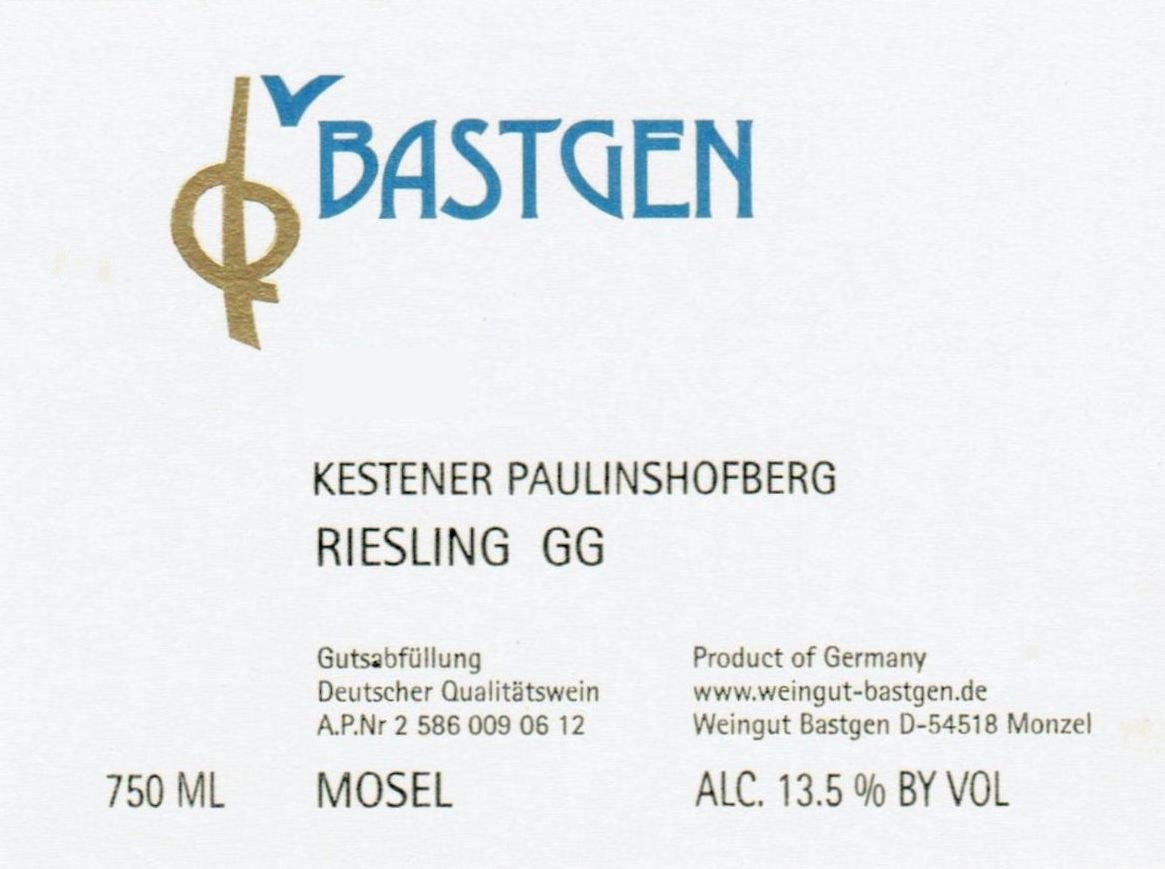
| Country: | Germany |
| Region: | Mosel |
| Winery: | Weingut Bastgen |
| Grape Type: | Riesling |
| Vintage: | 2020 |
| Bottle Size: | 750 ml |
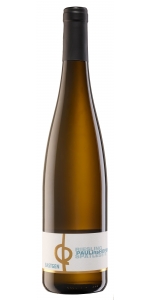
Bastgen Kestener Paulinshofberg Riesling Spatlese is 100 percent Riesling.
Yellow color with green highlights.
Beautiful peach aromas on the nose, rich and ripe fruits on the mouth with a refreshing acidity and honey notes. A very pleasing wine.
They meticulously tend 4.5 ha (11.11 acres) of which 80% is Riesling. The soil is made of slate. Their vineyards are located in Kesten and Brauneberg, on a steep terrace, and planted to 50-year old vines. Fortunately for Bastgen, they own part of the famous Brauneberger Juffer Sonnenuhr. The vines produce very small, ripe berries that are very tasty.
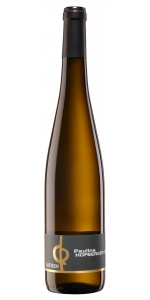
Scents and flavors of peach and yellow plum, citrus and mineral notes. Extremely long, white peach finish.
This wine is a 100 case Cuvee produced from the steepest part of the Paulinschofberger vineyard, 65 % slope. Vine age is 105 years old. "Grosses Gewachs" Großes Gewächs: (great growth = Grand cru), a designation used by VDP members in all regions except Mosel and Rheingau to designate top-level dry wines from selected sites (the highest level of quality). Dry means dry on the palate. The maximum yield is 50 hl/ha, from a classified vineyard. The natural minimum density of must is around 90° Oechsle. The wines are produced using exclusively traditional production methods. The wines are tested and approved by a test body before and after bottling. Hand Harvest (no machine harvest). The wine must not be released before September the year after it was made.
Review:
"In spite of the abundant yellow fruit aromas (think Mirabelle plums more than peaches), this is a very cool and sleek style of Mosel GG with great herbal freshness. Although this has excellent concentration, it definitely needs time to give its best due to the bone-dry style. Quite a steely, tightly wound finish, but very long. Drinkable now, but best from 2026. - Stuart PIGOTT (Senior Editor)" - James Suckling (August 30th 2024), 95 pts
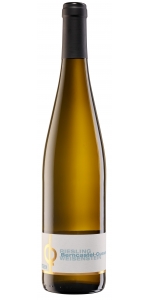
Bastgen Berncastel-Cueser Weisenstein Riesling Spatlese Trocken is made from 100 percent Riesling.
Bright, clean, fresh and zesty. Grapefruit like flavors. Fruity aromas and a nice minerality, typical of the Riesling grape grown on blue slate soil. Round, rich and a very long finish. The grapes for this wine are vigorously selected. Botrytis is not tolerated. At harvest the grapes are fully ripened, have a golden color, and a soft tartness. After a long spontaneous fermentation in a traditional 1000L barrel, the wine just reaches the dry stage. This gives the wine a creamy structure that interplays with ripe yellow and exotic fruit aromas.
They meticulously tend 4.5 ha (11.11 acres) of which 80% is Riesling. The soil is made of slate. Their vineyards are located in Kesten and Brauneberg, on a steep terrace, and planted to 50-year old vines. Fortunately for Bastgen, they own part of the famous Brauneberger Juffer Sonnenuhr. The vines produce very small, ripe berries that are very tasty.
Bastgen Berncastel-Cueser Weisenstein Riesling Spatlese Trocken is made from 100 percent Riesling.
Bright, clean, fresh and zesty. Grapefruit like flavors. Fruity aromas and a nice minerality, typical of the Riesling grape grown on blue slate soil. Round, rich and a very long finish. The grapes for this wine are vigorously selected. Botrytis is not tolerated. At harvest the grapes are fully ripened, have a golden color, and a soft tartness. After a long spontaneous fermentation in a traditional 1000L barrel, the wine just reaches the dry stage. This gives the wine a creamy structure that interplays with ripe yellow and exotic fruit aromas.
They meticulously tend 4.5 ha (11.11 acres) of which 80% is Riesling. The soil is made of slate. Their vineyards are located in Kesten and Brauneberg, on a steep terrace, and planted to 50-year old vines. Fortunately for Bastgen, they own part of the famous Brauneberger Juffer Sonnenuhr. The vines produce very small, ripe berries that are very tasty.
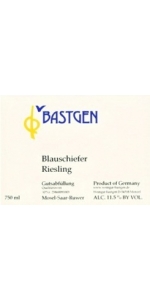
Bastgen Blauschiefer Riesling is 100 percent Riesling.
Bright, clean, fresh and zesty. Grapefruit like flavors. Fruity aromas and a nice minerality, typical of the Riesling grape grown on blue slate soil. Round, rich and a very long finish.
They meticulously tend 4.5 ha (11.11 acres) of which 80% is Riesling. The soil is made of slate. Their vineyards are located in Kesten and Brauneberg, on a steep terrace, and planted to 50-year old vines. Fortunately for Bastgen, they own part of the famous Brauneberger Juffer Sonnenuhr. The vines produce very small, ripe berries that are very tasty.
Review:
"Very enticing nose of ripe pear with some white peach and floral aromas! All the elegance and delicacy we expect from high-quality Mosel riesling, but this light-bodied and dry beauty is only an entry-level wine! Long, refreshing and delicate finish. This will be a bargain in all the markets it reaches. From organically grown grapes. Drink now. Screw cap. "
- James Sucking (November 2023), 92 pts
Bastgen Blauschiefer Riesling is 100 percent Riesling.
Bright, clean, fresh and zesty. Grapefruit like flavors. Fruity aromas and a nice minerality, typical of the Riesling grape grown on blue slate soil. Round, rich and a very long finish.
They meticulously tend 4.5 ha (11.11 acres) of which 80% is Riesling. The soil is made of slate. Their vineyards are located in Kesten and Brauneberg, on a steep terrace, and planted to 50-year old vines. Fortunately for Bastgen, they own part of the famous Brauneberger Juffer Sonnenuhr. The vines produce very small, ripe berries that are very tasty. Excellent with oysters, seafood and deliciously refreshing on it's own.
Bastgen Kestener Paulinshofberg Riesling Kabinett is 100 percent Riesling.
Kesten is a small village right by the Mosel surrounded by steep vineyards called Paulinsberg (=hills of Saint Paul). The vines grow on bridle clay slate near the river - a classic terroir that has been cultivated with vines ever since Roman times. Riesling is the most typical grape of the Mosel region that produced a fruity Kabinett with beautiful peach aromas on the nose, rich and ripe fruits on the mouth with honeyed notes and a refreshing acidity. This is a very pleasing wine.
They meticulously tend 4.5 ha (11.11 acres) of which 80% is Riesling. The soil is made of slate. Their vineyards are located in Kesten and Brauneberg, on a steep terrace, and planted to 50-year old vines. Fortunately for Bastgen, they own part of the famous Brauneberger Juffer Sonnenuhr. The vines produce very small, ripe berries that are very tasty.
The grapes are strongly selected, only minimal amounts of botrytis are tolerated. At time of the harvest the grapes are fully ripened with a golden color and tart acidity. After a natural sedimentation process the fermentation occurs in stainless steel tanks under cool conditions. The wine remains on the lees until April, then is gently filtered once, and bottled.
The Weingut Bastgen Estate
The property was founded in 1850 and is located in the tiny hamlet of Monzel, along the middle Mosel. The current owners are Armin Vogel (husband) and Mona Bastgen (wife) who began working in the winery in 1993. The average total production is 3,300 cases. They export mainly to Germany, Switzerland, U.K and the U.S. Their wines are bottled in screwcaps.
The Weingut Bastgen Vineyard
They meticulously tend 4.5 ha (11.11 acres) of which 80% is Riesling. The soil is made of slate. Their vineyards are located in Kesten and Brauneberg, on a steep terrace, and planted to 50-year old vines. Fortunately for Bastgen, they own part of the famous Brauneberger Juffer Sonnenuhr. The vines produce very small, ripe berries that are very tasty.

All older vintage wines have been purchased from a single collectors cellar. Pictures can be requested before shipment.
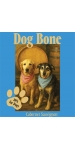
Dog Bone is a serious wine with a fun label!
We wanted to make a great wine at a fair price and help dogs across the country. 10% of all profits will go to Humane Societies in places we sell Dog Bone. Sales of this wine are also helping North Coast Grape farmers by finding a home for their excess grapes.
The nose has classic Cabernet notes of Graphite, Blackberry Blossom, and Black Olive Tapenade. The palate has loads of tannin structure, Blackberry, and Almond Wood. The wine is very structured and will age beautifully. It drinks like a young Pauillac from a classic vintage like 2005 or 2009. This is a balanced wine with great purity.
We make our Cabernets with structure and balance. We source from hillside sites that are cooler and allow us to make wines with beautiful fruit and good acidity.
pH: 5.7g/L
TA: 3.80
ABV: 14.5%



