
" We don't sell the wine without touching the vine "
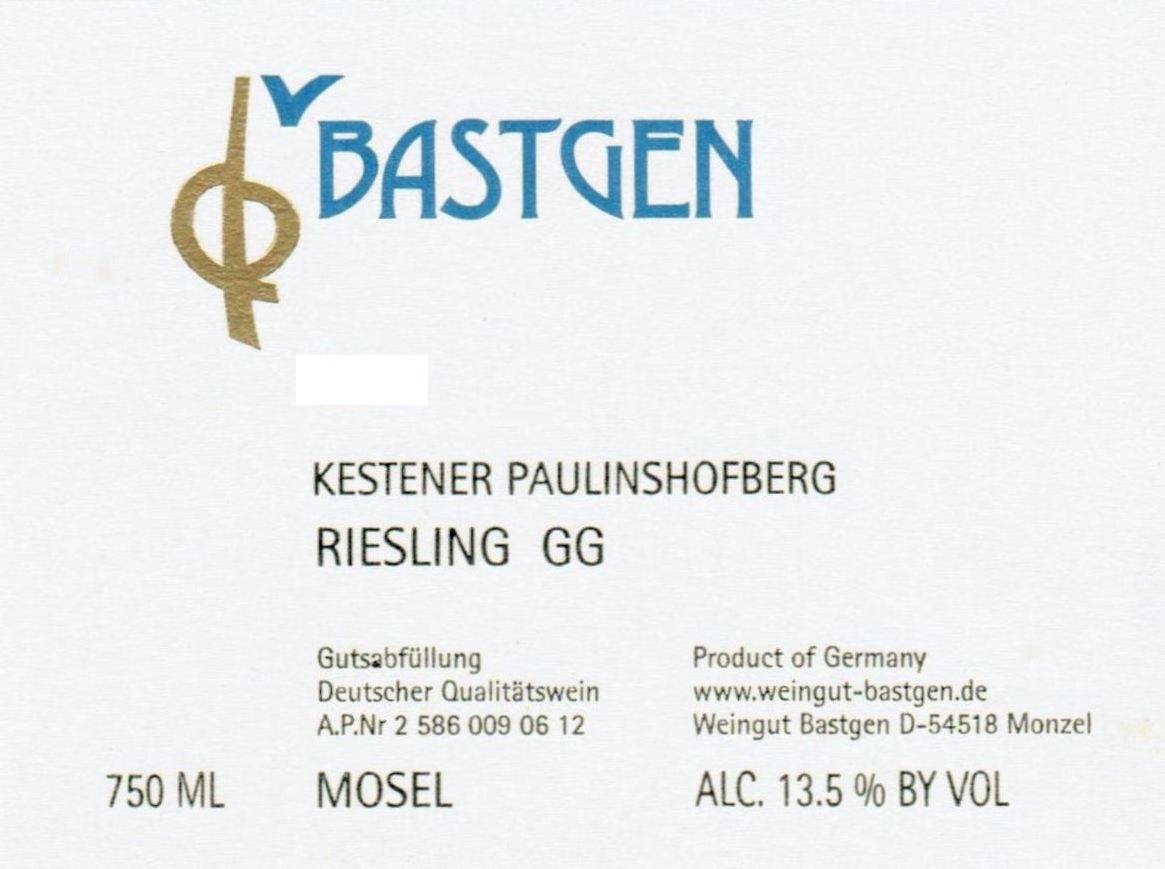
| Country: | Germany |
| Region: | Mosel |
| Winery: | Weingut Bastgen |
| Grape Type: | Riesling |
| Vintage: | 2013 |
| Bottle Size: | 750 ml |
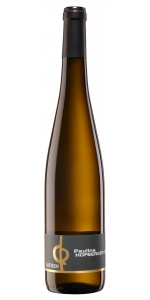
Scents and flavors of peach and yellow plum, citrus and mineral notes. Extremely long, white peach finish.
This wine is a 100 case Cuvee produced from the steepest part of the Paulinschofberger vineyard, 65 % slope. Vine age is 105 years old. "Grosses Gewachs" Großes Gewächs: (great growth = Grand cru), a designation used by VDP members in all regions except Mosel and Rheingau to designate top-level dry wines from selected sites (the highest level of quality). Dry means dry on the palate. The maximum yield is 50 hl/ha, from a classified vineyard. The natural minimum density of must is around 90° Oechsle. The wines are produced using exclusively traditional production methods. The wines are tested and approved by a test body before and after bottling. Hand Harvest (no machine harvest). The wine must not be released before September the year after it was made.
Review:
"Very smoky nose of sealing wax and candied citrus. This medium-bodied dry riesling is strikingly original and has good balance on the impressively structured palate, but it does lack a bit of charm. Long, firm finish. May well show better after further bottle age. From organically grown grapes. Drink or hold. - Stuart PIGOTT (Senior Editor)" - James Suckling (November 9th 2023), 91 pts
Scents and flavors of peach and yellow plum, citrus and mineral notes. Extremely long, white peach finish.
This wine is a 100 case Cuvee produced from the steepest part of the Paulinschofberger vineyard, 65 % slope. Vine age is 105 years old. "Grosses Gewachs" Großes Gewächs: (great growth = Grand cru), a designation used by VDP members in all regions except Mosel and Rheingau to designate top-level dry wines from selected sites (the highest level of quality). Dry means dry on the palate. The maximum yield is 50 hl/ha, from a classified vineyard. The natural minimum density of must is around 90° Oechsle. The wines are produced using exclusively traditional production methods. The wines are tested and approved by a test body before and after bottling. Hand Harvest (no machine harvest). The wine must not be released before September the year after it was made.
Scents and flavors of peach and yellow plum, citrus and mineral notes. Extremely long, white peach finish.
This wine is a 100 case Cuvee produced from the steepest part of the Paulinschofberger vineyard, 65 % slope. Vine age is 105 years old. "Grosses Gewachs" Großes Gewächs: (great growth = Grand cru), a designation used by VDP members in all regions except Mosel and Rheingau to designate top-level dry wines from selected sites (the highest level of quality). Dry means dry on the palate. The maximum yield is 50 hl/ha, from a classified vineyard. The natural minimum density of must is around 90° Oechsle. The wines are produced using exclusively traditional production methods. The wines are tested and approved by a test body before and after bottling. Hand Harvest (no machine harvest). The wine must not be released before September the year after it was made.
Review:
"In spite of the abundant yellow fruit aromas (think Mirabelle plums more than peaches), this is a very cool and sleek style of Mosel GG with great herbal freshness. Although this has excellent concentration, it definitely needs time to give its best due to the bone-dry style. Quite a steely, tightly wound finish, but very long. Drinkable now, but best from 2026. - Stuart PIGOTT (Senior Editor)" - James Suckling (August 30th 2024), 95 pts
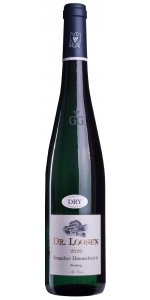
A heavenly, full-bodied dry Riesling with forceful minerality from 100-year-old vines grown in the blue slate soil of Graach.
Graach is a small village in the Mosel valley. It’s steep slate slopes produce wines that combine elegance with rustic strength. Grosses Gewächs (GG) is the designation for an estate’s best dry wine from a Grosse Lage (grand cru) vineyard. This limited-production wine was fermented with indigenous yeasts and kept in the barrel, on the full lees, for a year before bottling. The extended maturation time allows the wine to develop greater texture and a deeper natural harmony. This is a fully ripe wine, with vibrant aromatics and a pronounced acidity that gives it a brilliant structural precision.
Review:
Convincing proof that 2020 is an excellent vintage for dry GG on the Mosel! Cool and stony with delicate white-peach and white-currant aromas. Really takes off at the intensely slatey and racy finish.
-James Suckling 95-96 Points
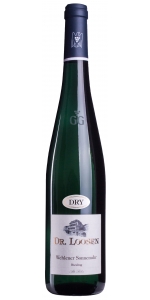
Dr. Loosen Wehlener Sonnenuhr Alte Reben Riesling Grosses Gewachs is made from 100 percent Riesling.
This is one of the greatest vineyards in the Middle Mosel. This precipitously steep, rocky vineyard consistently yields some of the most elegant and sophisticated white wines in the world. Citrus and white peach flavors predominate when the wines are young, turning to a pure expression of the mineral soil as they age.
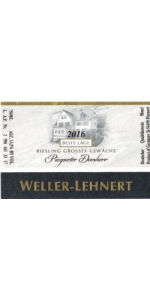
Weller-Lehnert Piesporter Domherr Grosses Gewachs Riesling is made from 100 percent Riesling.
Made in accordance with the stringent production criteria of the classification of the Bernkasteler Ring, wines with the designation “Grosses Gewächs Bernkasteler Ring” represent the premium line of the association’s dry wines. These Grand Crus can only come from the best sites of the steep slopes and are distinguished by their exceptional aging potential. To be awarded the status of “Grosses Gewächs”, selective hand-harvesting, a restriction of yields to 50 hl/ha and the passing of a stringent sensory examination by a highly qualified professional panel are required.
Piesporter Domherr is the ancient and original Piesporter Goldtröpfchen. It lies in the heart of Piesporter Goldtröpfchen right by the Mosel River. It consists of 4 hectares that are south-southeast facing.
The locatio on the river creates a mirror effect, offering optimum conditions for the production of outstanding mineral wine with fine, fruity elegance. Because of its prolonged vegetation period, Riesling (frequently referred to as the “queen of white varieties”) is often capable of expressing the characteristics of its terroir like no other.
Scents and flavors of peach and yellow plum, citrus and mineral notes. Extremely long, white peach finish.
This wine is a 100 case Cuvee produced from the steepest part of the Paulinschofberger vineyard, 65 % slope. Vine age is 105 years old. "Grosses Gewachs" Großes Gewächs: (great growth = Grand cru), a designation used by VDP members in all regions except Mosel and Rheingau to designate top-level dry wines from selected sites (the highest level of quality). Dry means dry on the palate. The maximum yield is 50 hl/ha, from a classified vineyard. The natural minimum density of must is around 90° Oechsle. The wines are produced using exclusively traditional production methods. The wines are tested and approved by a test body before and after bottling. Hand Harvest (no machine harvest). The wine must not be released before September the year after it was made.
The Weingut Bastgen Estate
The property was founded in 1850 and is located in the tiny hamlet of Monzel, along the middle Mosel. The current owners are Armin Vogel (husband) and Mona Bastgen (wife) who began working in the winery in 1993. The average total production is 3,300 cases. They export mainly to Germany, Switzerland, U.K and the U.S. Their wines are bottled in screwcaps.
The Weingut Bastgen Vineyard
They meticulously tend 4.5 ha (11.11 acres) of which 80% is Riesling. The soil is made of slate. Their vineyards are located in Kesten and Brauneberg, on a steep terrace, and planted to 50-year old vines. Fortunately for Bastgen, they own part of the famous Brauneberger Juffer Sonnenuhr. The vines produce very small, ripe berries that are very tasty.
Wine Gift Set Includes:
Review:
"The brioche and cooked-apple and cream character really comes through here. Full-bodied and round with fine bubbles. Flavorful and intense. Vivid, bread-dough finish. This is four years on lees. 55% Chardonnay and the rest Pinot."
- James Suckling 93 Points
Despite its relative youth, Zweigelt is actually an Austrian classic. This variety was created in 1922, when Dr. Fritz Zweigelt crossed two grapes - St Laurent and Blaufränkisch. Originally, it was intended for the new variety to be called Rotburger, referring to the place where it was born, Klosterneuburg. But this name never took hold, and instead, Zweigelt was named after the man who was the key in its development.
Today, Zweigelt is the most widely planted red variety in Austria, growing in nearly 9% of this country's vineyards. It is a robust grape, highly resistant to dryness, frost and various diseases.
The wine boasts a pale rosé color, it has plenty of fruity aromas, with red cherry and wild strawberry flavors. It is medium-bodied, but it still have a nice long and pleasant finish with a light cinnamon type of spice to it.
Only the best grapes are harvested with a lot of experience and know-how and further processed. The grapes are fermented directly gently pressed and cooled. The fermentation takes place exclusively in stainless steel tanks.
Perfectly at home on any picnic, delicious with fried chicken, and tames the heat when paired with spicy dishes. There is also a slight watermelon note that makes it perfect for spring and summer. A great pairing with barbecued shrimp.



