
" We don't sell the wine without touching the vine "

| Country: | United States |
| Region: | Washington (Columbia Valley) |
| Winery: | Betz Family Wines |
| Grape Types: | Cabernet Sauvignon Merlot |
| Vintage: | 2010 |
| Bottle Size: | 750 ml |
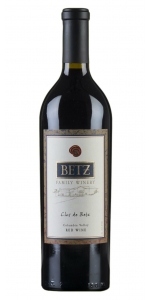
Betz Family Clos de Betz is 67 % Merlot, 27% Cabernet Sauvignon, 6% Petit Verdot
Review:
Full, dark ruby-red. Black fruit and licorice aromas are complicated by a mineral element. Wonderfully sappy, concentrated and ripe, with well-delineated Merlot-dominated flavors of black fruits, licorice and bitter chocolate conveying sexy sweetness. Finishes with plush tannins and excellent length. A superb vintage for this wine, clearly more concentrated and ripe than the 2016. Winemaker Skinner told me that the Petit Verdot element from Olsen vineyard is somewhat Pinot-like and actually softens this wine's tannins. And he noted that the cool late-season temperatures in 2017 allowed for easy picking. (aged until June of '18 in 60% new oak before being moved to neutral barrels for nearly another year of aging)
- Stephen Tanzer 93 Points
A blend of Merlot, Cabernet Sauvignon and Petit Verdot, the 2017 Clos de Betz has a vibrant expression on the nose, with plush, generous fruit aromas and an underlying brooding tightness. Full-bodied on the palate, the fleshy, plump fruit tones deliver a velvety lushness over the mid-palate, then the wine becomes more dusty and rigid on the finish, ending with oak spices that linger. I will revisit this swine in 36 months, as I suspect it will show better at a later date. This will easily last a decade and more. 750 cases produced.
-Wine Advocate 94 Points
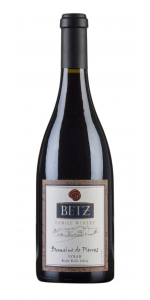
Betz Family Domaine de Pierres Syrah is made from 100% Syrah.
With our long history of making single site syrah's in Washington, it made sense for us to venture into the Rocks District of Milton Freewater in the Walla Walla Valley to bring you our newest syrah, "Domaine de Pierres."
The Rocks AVA produces syrah that shows a distinct character, separating it from any other site in Washington State. One thing in particular that has drawn people here is the gallet stones present throughout the valley. They are very similar to the pudding stones that are found in Châteauneuf-du-Pape, and can be anywhere from golf ball size, to softball size or larger. Since we purchased the vineyard in 2014 we have been tilling the earth multiple times every season to expose these rocks. The gallet stones act like a heat sink, giving a little extra push to help ripen syrah in an area with marginal heat accumulation.
In the glass, Domaine de Pierres stands out from our other syrah's because of its incredibly savory profile. Notes of roasted meat, fresh herbs, olive tapenade, tobacco and graphite are supported by dark fruit, espresso, and lavendar. The wine has a lower acidity and higher PH than our other wines, which contributes to a velvety, full bodied mouthfeel. Even in the cellar, we immediately noticed a difference in the color, aromatics and flavor that these syrah grapes were able to express.
The other big reason that we are so excited about the wine from this particular AVA, is that the history of the Rocks is happening right now! Our vineyard, “Ancient Stones,” has only been planted there since 2007, and the beginning of the Rocks as a wine growing region only really started in the 1990's. There is a lot of energy and exploration going on, and it has been a fun experience for our team to be a part of it. We still have so much to learn about this region and it is very exciting to feel like we are on the upward swing!
Review:
"This red offers a steely core of crushed rock and vibrant acidity framed by handsome blackberry, cherry, green olive and licorice flavors that build tension toward medium-grained tannins. The name of this wine—French for "Field of Stones"—is apt. Drink now through 2032. - Tim FISH."
- Wine Spectator's Insider (July 6th 2022), 94 pts
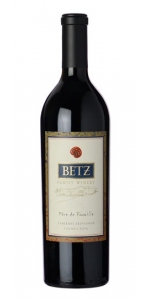
Betz Family Cabernet Sauvignon Pere de Famille is 88% Cabernet Sauvignon, 10% Petit Verdot and 2% Merlot
Review:
"This is a wine for the ages. Aromas of thyme, the blackest of cherries, licorice, bay leaf and spice are followed by outright delicious, plump fruit flavors. There's a whole lot of primary fruit, with ample structure to hang it all on, along with plenty of depth and intensity. The finish is near endless. It flat-out impresses, with remarkable intensity. Best from 2028 to 2038. - SEAN P. SULLIVAN."
- Wine Enthusiast (September 2021), 95 pts
"A firm, polished red with aromas of blackberry, iodine, tobacco leaf, cocoa and cedar. It’s medium-to full-bodied with firm, chewy tannins. Structured, layered and focused. Lots going on, with a long finish. Try from 2023."
- James Suckling (May 2021), 95 pts
"Incorporating 10% Petit Verdot and 2% Merlot from a mix of sites in the Columbia Valley, the 2018 Cabernet Sauvignon Père De Famille reveals a healthy ruby/purple hue to go with beautiful cassis fruits interwoven with notions of dried rose petals, violets, cedary spice, and chalky minerality. Medium to full-bodied, reasonably well concentrated, yet elegant and beautifully balanced, it opens up nicely with time in the glass and will benefit from 2-4 years of bottle age and keep for 20 years."
- Jeb Dunnuck (May 2021), 95 pts
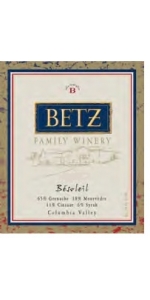
Betz Family Besoleil is made from 55% Grenache, 23% Mourvèdre, 11% Syrah and the rest Cinsault,
Grenache speaks loudly in the Bésoleil with notes of pomegranate, red raspberry, and strawberry leaf. The Counoise and Cinsualt bring bing cherry fruit and blueberry notes to the table, complicated by pepper and garrique. Mourvedre donates a wild meatiness to the blend, and a purple hue. Syrah rounds things out, adding texture, and flesh to the palate.
Review:
"Attractively complex aromas of cherries, kirsch, white pepper, spice, potpourri and licorice, it's medium to full-bodied, sappy and succulent, with velvety structuring tannins and bright acids." 94 pts - Robert Parkers Wine Advocate
"Bright raspberry and red-plum fruits with attractive depth and freshness. This has all you want in a Rhône-style blend. Good depth of flavor and focused structure." 93 pts - James Suckling
"Moving more and more from Olsen Vineyard, which is 20 miles northwest of Red Mountain (where they love working with the grower, who is proactive and responsive), the medium ruby/purple-colored 2016 Besoleil is 55% Grenache, 23% Mourvèdre, 11% Syrah and the rest Cinsault, all aged in a mix of neutral barrels. It offers beautiful notes of red plums, blueberries, white and black pepper and herbs de Provence, medium to full-bodied richness, a silky, elegant style, and integrated acidity. It's another beautiful vintage of this wine that will keep for a decade." 92 pts. - Jeb Dunnuck
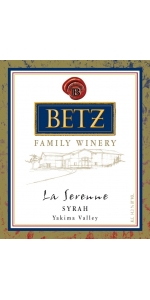
Betz Family La Serenne Syrah is 100% Syrah
La Serenne is the most reflective of the site/vintage dynamic of our three single-site 2012 Syrahs. Lovers of this wine know that its source, the Boushey Vineyard, is the highest altitude of the three vineyards and is typically the latest harvested. This cool site was accentuated by the cooler season and the results reflect the seriousness of this vineyard and its care.
An extraordinary, nearly impenetrable black purple color leads to a concentrated, inky aromatic impression: smoky black cherry and wild blackberry dominate, but a litany of supporting aromas is already emerging: smoke, violet, mushroom, roasted meat, Chinese 5 spice and minerals. It has a full attack on entry and a big, rich mouthfeel that goes on and on.
Review:
Aromas of blackberries, black raspberries, violets, black and white peppercorns and stones. It’s medium-bodied with fine, tightly knit tannins. Seamless and transparent with a silky texture. Very bright and pure with layers of wild berries and minerals. Tar and dark tobacco, too. Drink or hold.
-James Suckling 95 Points
Blending Detail:
Grenache speaks loudly in the Bésoleil with notes of pomegranate, red raspberry, and strawberry leaf. The Counoise and Cinsualt bring bing cherry fruit and blueberry notes to the table, complicated by pepper and garrique. Mourvedre donates a wild meatiness to the blend, and a purple hue. Syrah rounds things out, adding texture, and flesh to the palate.
Review:
The first vintage where they’ve pushed the bottling back to give the cuvee 16-18 months in barrel, the 2015 Besoleil is a dead ringer for a high-quality Chateauneuf du Pape and offers perfumed notes of herbes de Provence, kirsch, licorice and sweet spice. It’s medium to full-bodied, textured and fruit-forward, with a hedonistic yet elegant profile that’s going to evolve gracefully.
Robert Parker 91-93 Points
Betz Family Clos de Betz 2010 is made from 65 percent Merlot and 35 percent Cabernet.
The Clos de Betz still shows the dense color saturation from core to edge of the glass. Then the aroma takes center stage, with pure, vibrant black cherries, camphor, cocoa and a slight kirsch essence. Its foundation is a classic, complex expression of Washington Merlot, but since 40% of the blend is made from Petite Verdot and Cabernet Sauvignon, the aroma takes on additional dimension of anise, rose petal and baking spice. My tasting notes reflect an on-going satisfaction at the sense of complete ripeness for a cooler vintage: thank you, Washington Merlot. It enters very supple and plush, with a jolt of black cherry and red berries that stays true to the aroma. Dried herbs, chocolate and a touch of smoky oak play supporting roles. The finish dances with a combination of refined tannin and vibrant fruit, the signs of a successful future in the cellar.
Diversely-sourced - its Merlot blended with 35% Cabernet Sauvignon- the Betz 2010 Clos de Betz emphasizes black pepper, pungently resinous herbs, and arbor vitae, characteristics I imagine are in part a reflection of its 7% of Petit Verdot, that grape being demonstrably (I'm tempted to say notoriously ) efficacious. Cassis, huckleberry, and walnut offer bitter-edged but sappy fruit satisfaction; a crushed stone undertone adds a sense of intrigue; and mineral salts savory saliva-inducement in a gripping, palate-staining finish. This ought to be worth following for at least the better part of a decade.
Wine Advocate David Schildknecht, December 2012 93 Points
Fresh and vibrant, focusing the juicy currant and plum flavors into a bright beam that propels the lingering finish.
Shades of crème fraîche and white pepper add interest. Merlot, Cabernet Sauvignon and Petit Verdot. Best from
2014 through 2020. 800 cases made.—H.S. 93 Point Wine Spectator
Since our first vintage in 1997 we’ve had a single minded goal of crafting compelling wines with individual character that are approachable and ageworthy, and which showcase Washington as a distinguished wine region of the world.
By carving out specific vineyard blocks and being meticulous in the vineyard and cellar we are able to achieve the quality we aspire to.
As importantly over the years our winery culture has become a way of life in which everyone – our growers, winery team and customers are family.
Today, Betz family Winery is headed by our two families, both committed to be true to our heritage, our family members, and true to what Betz winery embodies: wines of dimension and pleasure, wines that allow the character of Washington to shine through. They are a blend of the best elements of the new and the old worlds; full ripe fruit and yet structured for longevity.
We believe our best wines are yet to come.
Our Values
Washington’s Columbia Valley is one of the world’s blessed sites to grow classic wine grapes.
Dominus Napa Valley Red Blend is made from 88% Cabernet Sauvignon, 7% Cabernet Franc, 5% Petit Verdot.
The historic Napanook Vineyard, a 124-acre site west of Yountville, was planted in 1838. This vineyard was the source of fruit for some of the finest Napa Valley wines. Estate-bottled in the spirit of the Bordeaux châteaux, Dominus Estate is dry-farmed to allow natural stress and good concentration of fruit. Grape clusters are crop-thinned to allow sun and air to pass in between, helping to achieve full maturation and soften the tannins. Only 20% to 40% new French oak barrels are used in order to limit the extraction of oak notes. To express the unique terroir, the classic Bordeaux grape varietals of Cabernet Sauvignon, Merlot, Cabernet Franc and Petit Verdot are planted with different root stocks best suited for the varying soil composition of gravel, heavy clay and loam.
Reviews:
One of the legendary Dominus, the 2021 Cabernet Sauvignon is unquestionably in the same league as the 2018, 2016, 2015, 2013, 2010, and 1991, and to my mind, wine simply doesn't get any better. Sporting a dense purple hue as well as an incredible perfume of blackcurrants, crushed stone, cedar pencil, smoke tobacco, and baking spices, it s rich, full-bodied, and voluptuously textured, with ripe yet building tannins. It reminds me slightly of the 2010 (maybe the 2013), and I suspect it will have a similar evolution. Hide bottles for 7-8 years, and it will evolve gracefully for 30+ years. Hats off to the team of Christian Moueix and director Tod Mostero.
Jeb Dunnuck 100 Points
Cap Cette Picpoul de Pinet is made from 100 percent Picpoul de Pinet
A very popular, traditional local variety planted on sun-drenched hillsides called "costières" (coastal region) in the Mediterranean garrigue, near the Etang de Thau - a coastal lagoon situated between the port of Sète and Marseillan.
The color is a superb pale yellow with bright hues. The nose is elegant, with aromas of fresh fruit and citrus fruit especially grapefruit. Well-balanced with typical focusing and zesty acidity. A pure expression of the grape varietal, the wine shows how good Picpoul can be when grown on its favorite terroir.
It will complement a vast array of dishes such as Asian cuisine, sushi, spicy fare and all sorts of seafood and grilled fish. Enjoy!



