
" We don't sell the wine without touching the vine "
| Country: | United States |
| Regions: | Washington Washington (Walla Walla) |
| Winery: | Betz Family Wines |
| Grape Type: | Syrah |
| Vintage: | 2019 |
| Bottle Size: | 750 ml |

Delas Freres Cote Rotie La Landonne Rouge is made from 100 percent Syrah.
This very ancient region dates back to the Roman Era and is located on the right bank of the Rhône. It is said that during the Middle Ages, “The Seigneur de Maugiron” gave a hillside to each of his two daughters - one was brunette and the other fair - thus, were born the names of “Côte Brune” and “Côte Blonde.” Wines from the Côte Blonde tend to be more delicate and lighter in character than the fuller wines of the Côte Brune. Together, they make a wine of style and substance. This cuvée is a vineyard plot selection. The grapes come exclusively from a plot within the named slope of “La Landonne.”
This cuvée‘s first vintage was 1997. The wine is only made in the very best years. Its highly limited production never exceeds 2,500 bottles per year.
The steep, terraced hillsides along the river produce wines that are among the "biggest" reds of France. The Delas Côte-Rôtie is primarily Syrah with an addition of up to 10 to 20% of Viognier grapes in the crop. The soils of the northern part of the Côte Brune vineyard consists of extremely steep, terraced slopes of ferruginous mica schists which are covered with schist sand (arzel). The Côte Blonde has a varied geology with gneiss and granite predominating at the most southern side of the appellation. The area has dry, hot summers with regular rainfalls during other seasons. The grapes for the “La Landonne” cuvée are picked by hand at maximum maturity. Fermentation takes place in traditional open-topped concrete tanks, following three days of pre-fermentation cold maceration. Before fermentation, the maceration process continues under controlled temperatures of 82°F to 86°F. Daily cap pushing down and pumping over are carried out for about 10 days with total vatting time of up to 20 days. The wine is aged for 14 to 16 months in new or one year old oak casks. The barrels are topped up regularly.
Food Pairing: This wine pairs wonderfully with fine meats, roasted beef, water games, truffles and spicy stews. The bottle should be opened 1 to 3 hours before drinking. This wine needs at least 3 years cellaring before it can open up its complexity. In such case it is strongly recommended to decant before serving.
Tasting Notes: The wine‘s deep color is underscored by plummy hues. A complex nose shows deep, fruity aromas with hints of licorice and roasted coffee. Endowed with a dense and silky tannic structure, this is a full, fleshy wine that provides an ample and generous palate. Its lasting finish speaks of considerable ageing potential.
Reviews:
This is dark and still a bit reticent, with a cast iron cloak around the core of dark currant, plum and blackberry paste flavors, showing lots of sweet bay leaf, anise and singed apple wood notes in the background. There's serious grip through the finish. For the cellar.
-Wine Spectator 96 Points
Very open, spicy and fresh on the nose, you could almost open this now. Struck flint notes assist in teasing out notes of leaf tea, tobacco, rosemary and rose. Very full-bodied, generous but powerful on the palate, tense and mineral. Mouthcoating ripe, sweet tannin and robust amounts of sweet baking spices, along with more tobacco and black fruit on the palate. Has depth, length, power and impressive balance despite the high alcohol. Drink from now into 2022, or from 2031 to 2040. Lieu-dit La Landonne, from the Brune side (mica schist bedrock). Matured in new and one-year-old barrels for 14 months.
-Decanter 96 Points
The 2019 Côte Rôtie La Landonne comes from one of the greatest sites for Syrah in the world, the La Landonne lieu-dit located close to the center of the appellation, on the Côte Brune side. It reveals a deeper purple hue (it's slightly more opaque than the Seigneur de Maugiron) and offers a brilliant nose of ripe cassis, black raspberries, scorched earth, smoked herbs, and seared meat. Full-bodied and powerful on the palate, this is a deep, spicy, concentrated Côte Rôtie with a plush, layered mouthfeel, sweet tannins, beautiful balance, and a great, great finish. This puppy brings the fruit, opulence, and texture of the vintage yet still has a classic Côte Rôtie character.
-Jeb Dunnuck 96 Points
Fresh aromatic layers of mint sit atop crushed red cherries and wild strawberries, with light clove and thyme on the nose. The palate is rich and enticing with black cherries, plums, rhubarb, pomegranate seeds, black olives and freshly picked rosemary leaves. Tremendous texture, structure, and refreshing acidity carry this wine to a robust finish of orange zest and black tea leaves. Maisons Marques & Domaines USA.
- Wine Enthusiast 96 Points
This very ancient region dates back to the Roman Era and is located on the right bank of the Rhône. It is said that during the Middle Ages, “The Seigneur de Maugiron” gave a hillside to each of his two daughters - one was brunette and the other fair - thus, were born the names of “Côte Brune” and “Côte Blonde.” Wines from the Côte Blonde tend to be more delicate and lighter in character than the fuller wines of the Côte Brune. Together, they make a wine of style and substance. This cuvée is a vineyard plot selection. The grapes come exclusively from a plot within the named slope of “La Landonne.”
This cuvée‘s first vintage was 1997. The wine is only made in the very best years. Its highly limited production never exceeds 2,500 bottles per year.
The steep, terraced hillsides along the river produce wines that are among the "biggest" reds of France. The Delas Côte-Rôtie is primarily Syrah with an addition of up to 10 to 20% of Viognier grapes in the crop. The soils of the northern part of the Côte Brune vineyard consists of extremely steep, terraced slopes of ferruginous mica schists which are covered with schist sand (arzel). The Côte Blonde has a varied geology with gneiss and granite predominating at the most southern side of the appellation. The area has dry, hot summers with regular rainfalls during other seasons. The grapes for the “La Landonne” cuvée are picked by hand at maximum maturity. Fermentation takes place in traditional open-topped concrete tanks, following three days of pre-fermentation cold maceration. Before fermentation, the maceration process continues under controlled temperatures of 82°F to 86°F. Daily cap pushing down and pumping over are carried out for about 10 days with total vatting time of up to 20 days. The wine is aged for 14 to 16 months in new or one year old oak casks. The barrels are topped up regularly.
Tasting Notes
The wine‘s deep color is underscored by plummy hues. A complex nose shows deep, fruity aromas with hints of licorice and roasted coffee. Endowed with a dense and silky tannic structure, this is a full, fleshy wine that provides an ample and generous palate. Its lasting finish speaks of considerable ageing potential.
Food Pairing
This wine pairs wonderfully with fine meats, roasted beef, water games, truffles and spicy stews. The bottle should be opened 1 to 3 hours before drinking. This wine needs at least 3 years cellaring before it can open up its complexity. In such case it is strongly recommended to decant before serving.
"Immediately this has the darkness and aromatic austerity of La Landonne. Very full-bodied, expansive on the palate with mouthcoating flavour and tannin but not heavy. This is seriously tannic, but it's not tough. Great character, great power and perfect balance. Alcohol is just a little raised, but this is a blockbuster. Around 3,000 bottles made. Fermented in open-top concrete tanks for 20 days, then matured in new and one-year-old barrels for 14 months."
-Decanter World Wine Awards 97 Points

Delas Hermitage Domaine des Tourettes is made from Syrah.
Sourced from Delas' holdings on the Hermitage hill, this 2021 has a deep, brilliant red hue. The nose is powerful and complex, expressing blackberries, spices and leather. On the palate the wine is firm but silky, with the tightly-knit tannic structure that is the hallmark of wines with a long future.
Pair this wine with rare or medium-cooked game, marinated meats and spicy stews. We recommend opening this bottle between one and three hours before drinking.
Reviews:
Some weight of fruit here underneath the measured clove oak. Smooth, ripe, with well-balanced acidity, this has a good sense of balance and elegance. Fresh, with plentiful cinnamon spice and forest berry fruit that's just-ripe, neither over nor under. A fairly compact, early-drinking Hermitage, not a powerful one, but one that has some natural class.
-Decanter 93 Points
Very complex nose with notes of candied orange, cocoa powder and spice. Remarkably harmonious for the vintage with almost silky tannins, then comes an intense flinty character that gives the slightly sweet finish so much excitement. Matured entirely in oak barrels with about one quarter new, but only for 12 months.
-James Suckling 93 Points
"In der Nase verhalten aber vielversprechend. Mit herbalen und waldig anmutenden Noten, auch Bohnerwachs und Pfeffer, ein Hauch von Waldbeeren. Im Gaumen vielschichtig ausgewogen, auch zupackend, mit feinkörnigem Tannin und einer angepassten saftigen Säure. Gute Länge. sehr gehaltvoll."
-Vinum Wine Magazine 95 Points

Delas Hermitage Les Grandes Vignes Ligne de Crete is made from Syrah.
The nose discloses aromas of spice and leather intertwined with deep berry aromas (blackberry, redcurrant) and heady floral notes, liquorice and incense. Its richness, complexity and elegance are by no means a contradiction. The finest granite soils of the Hermitage hillside are to thank for this wine's incredible minerality and finesse. The wine is rich and dense on entry to the palate, where it shows an elegant, broad and flavorsome character. The ripe, smooth and well-integrated tannins contribute to the wine's powerful yet harmonious structure. The palate reveals the same aromas as those found on the nose with nuances of blueberry, raspberry, violet and bitter chocolate. Ligne de Crête is characterized by its exceptional structure, harmony and balance.
This remarkably smooth and elegant wine makes the perfect partner for a pigeon pie, beef tartare ravioli or a roast fillet of deviled duckling with cranberries. It also makes an excellent choice for woodcock, hare "à la Royale" or even a roast rack of lamb in a herb crust.
Review:
-Josh Raynolds (Vinous) 98 Points
-Wine Enthusiast 97 Points
-Vinous 97 Points
-Jeb Dunnuck 95 Points

Domaine de la Janasse has been in the Sabon family since 1967, today run by siblings Christophe and Isabelle. Their Châteauneuf-du-Pape Blanc — Roussanne-led, with Grenache Blanc and Clairette — is consistently one of the finest whites in the appellation, combining richness with purity and the ability to age for two decades.
Review:
Based on 70% Roussanne and 15% each Grenache Blanc and Clairette and aged 12 months in 20% new French oak with the balance in used barrels and concrete. It has a medium gold hue and delivers remarkable intensity in its ripe stone fruits, fresh croissant, honeyed flowers, and orange blossom nuances. It's medium to full-bodied, has a pure, seamless, layered mouthfeel, beautiful balance, and a fabulous finish that will evolve for 20+ years if well stored. Drink 2025-2045.
Jeb Dunnuck 98 Points

Domaine de la Janasse Chateauneuf-du-Pape Cuvee Chaupin is made from 100 percent Grenache.
Chaupin is Domaine de la Janasse's single-parcel expression of old-vine Grenache, drawn mostly from the sandy-soiled Chapouin lieu-dit with smaller parts from La Crau and Janasse, some of the oldest vines planted in the early twentieth century. The Sabon family has run the estate near Courthezon since 1967 - today the brother-and-sister team of Christophe and Isabelle - and Janasse stands among Chateauneuf-du-Pape's benchmark producers. Partially destemmed and aged twelve months in foudre and demi-muids, Chaupin is the purest, most perfumed side of Grenache in its homeland.
Review:
All Grenache sourced mostly from the Chapouin lieu-dit with a splash from Janasse, the 2023 Châteauneuf Du Pape Cuvée Chaupin shows a medium ruby hue followed by a pretty, perfumed, remarkably elegant profile. It has a core of sweet red and black berry fruits, absolutely heavenly Provençal aromatics of herbes de Provence, black olive, pepper, and flowers, plus ripe, velvety tannins, flawless balance, and a great finish. Partially destemmed and aged 12 months in 70% foudre and 30% demi-muids, this heavenly 2023 will drink beautifully over the coming two decades. There are roughly 1,500 cases produced. Drink 2025-2045.
-Jeb Dunnuck 99 Points

Domaine de la Janasse Chateauneuf-du-Pape Cuvee Vieilles Vignes is made from 65% Grenache, 20% Mourvèdre, 10% Syrah, 5% divers.
In contrast to Chaupin, which is made from old-vine Grenache on sandy soils, the cuvée Vieilles Vignes is from old vines of Grenache, Mourvedre, Syrah along with smaller percentages of other permitted varieties that are grown in these old vineyards. The wine is sourced from 4 terroirs: pebbly clay, sand, gravelly red clay and sandy limestone. Vieilles Vignes is always the most powerful and concentrated Châteauneuf-du-Pape cuvée made at Domaine de la Janasse.
Review:
-Jeb Dunnuck 98 Points
-Joe Czerwinski 98 Points
-Falstaff 98 Points
-Decanter World Wine Awards 97 Points
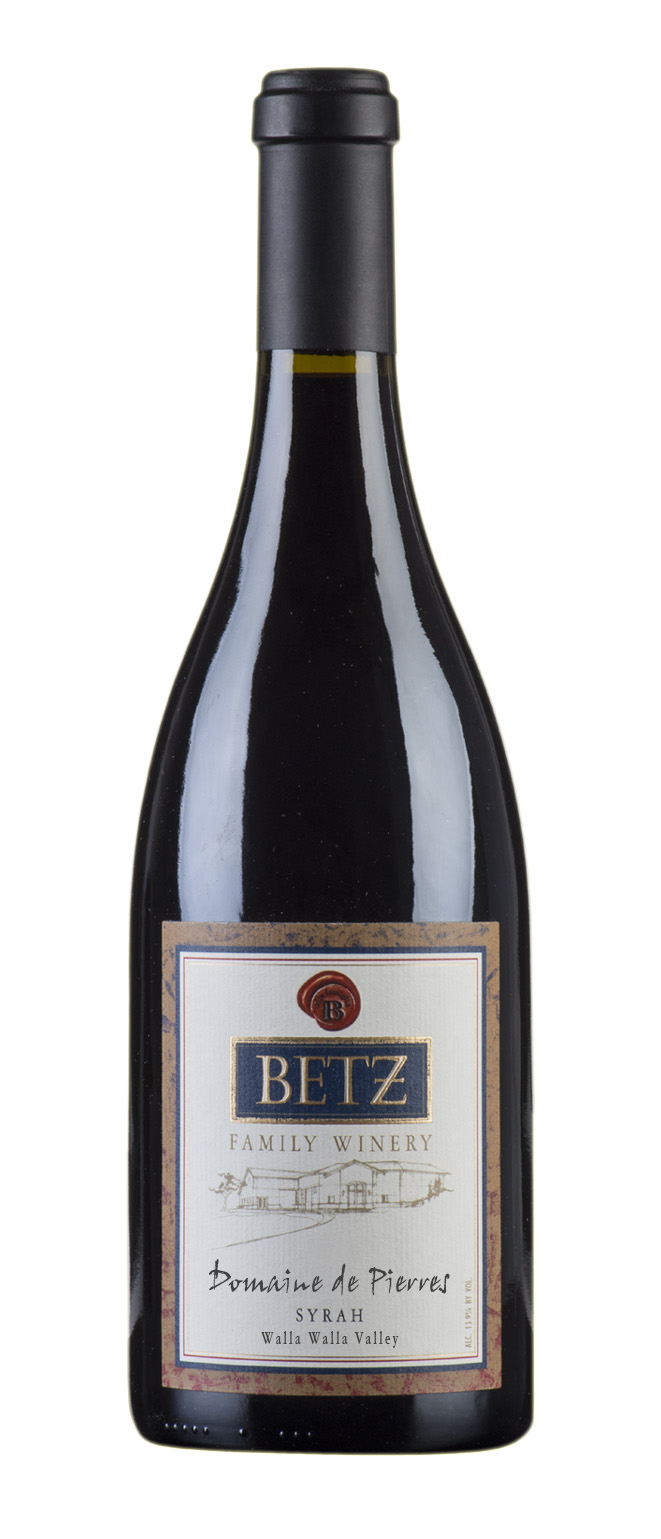
Betz Family Domaine de Pierres Syrah is made from 100% Syrah.
With our long history of making single site syrah's in Washington, it made sense for us to venture into the Rocks District of Milton Freewater in the Walla Walla Valley to bring you our newest syrah, "Domaine de Pierres."
The Rocks AVA produces syrah that shows a distinct character, separating it from any other site in Washington State. One thing in particular that has drawn people here is the gallet stones present throughout the valley. They are very similar to the pudding stones that are found in Châteauneuf-du-Pape, and can be anywhere from golf ball size, to softball size or larger. Since we purchased the vineyard in 2014 we have been tilling the earth multiple times every season to expose these rocks. The gallet stones act like a heat sink, giving a little extra push to help ripen syrah in an area with marginal heat accumulation.
In the glass, Domaine de Pierres stands out from our other syrah's because of its incredibly savory profile. Notes of roasted meat, fresh herbs, olive tapenade, tobacco and graphite are supported by dark fruit, espresso, and lavendar. The wine has a lower acidity and higher PH than our other wines, which contributes to a velvety, full bodied mouthfeel. Even in the cellar, we immediately noticed a difference in the color, aromatics and flavor that these syrah grapes were able to express.
The other big reason that we are so excited about the wine from this particular AVA, is that the history of the Rocks is happening right now! Our vineyard, “Ancient Stones,” has only been planted there since 2007, and the beginning of the Rocks as a wine growing region only really started in the 1990's. There is a lot of energy and exploration going on, and it has been a fun experience for our team to be a part of it. We still have so much to learn about this region and it is very exciting to feel like we are on the upward swing!
Review:
"This red offers a steely core of crushed rock and vibrant acidity framed by handsome blackberry, cherry, green olive and licorice flavors that build tension toward medium-grained tannins. The name of this wine—French for "Field of Stones"—is apt. Drink now through 2032. - Tim FISH."
- Wine Spectator's Insider (July 6th 2022), 94 pts
Since our first vintage in 1997 we’ve had a single minded goal of crafting compelling wines with individual character that are approachable and ageworthy, and which showcase Washington as a distinguished wine region of the world.
By carving out specific vineyard blocks and being meticulous in the vineyard and cellar we are able to achieve the quality we aspire to.
As importantly over the years our winery culture has become a way of life in which everyone – our growers, winery team and customers are family.
Today, Betz family Winery is headed by our two families, both committed to be true to our heritage, our family members, and true to what Betz winery embodies: wines of dimension and pleasure, wines that allow the character of Washington to shine through. They are a blend of the best elements of the new and the old worlds; full ripe fruit and yet structured for longevity.
We believe our best wines are yet to come.
Our Values
Washington’s Columbia Valley is one of the world’s blessed sites to grow classic wine grapes.

James Goddard was an ancestor of the Clarke family. Born in West Sussex, England in 1823, James spent his 74 years as a sailor, a whaler, a bullock driver, farmer, prospector, miner and hotel keeper. From an illiterate runaway living rough on the streets of London, he became a rich, successful and admired pillar of South Australian society.
James arrived in Adelaide in 1839 as a 16-year-old sailor. Twelve years later, his life changed forever with the news of gold findings. For the next 20 years, James roamed the country learning the geology that improved his chances of prospecting.
James Goddard Shiraz is made from 100 percent Shiraz.
In 1870, he tried his luck near his farm in the Barossa Valley and discovered the region’s first gold deposits, creating the prosperous Lady Alice Mine. The Lady Alice Mine, though it is no longer operational, was & still is the most successful gold mine in South Australia. From these roots, the Thorn-Clarke family has been connected to the region for the last 150 years.
James Goddard Shiraz is a blend Shiraz sourced from the Milton Park vineyard in the north of Eden Valley, and the St Kitts vineyard in the far northern area of the Barossa. Fruit is harvested in the cool of the night to maintain maximum flavour and freshness and it is fermented for 8 days. The ferment is pumped over twice daily to extract the colour and flavour from the fruit. Once finished fermentation the wine was then matured in a blend of French and American oak for a period of 10 to 12 months depending on the vintage.
Deep vibrant red with purple hues to the rim. The nose shows lifted plums, vibrant purple berries and a delicate spice note. The palate has concentrated satsuma plum, blackberry with lovely charry oak in the background. Long, juicy and even with plush fruit on the finish.
Review:
“Blended from two estate vineyards, St. Kitts and Milton Park, this shiraz offers its richness without any aggression or overt perfume. It’s just lush and delicious, a friendly embrace of firm tannins and purple-red fruit. The texture and flavor combine in a saturated meatiness, for Korean barbecue.”
- Wine & Spirits Magazine, 92 points

The Cotes du Rhone Reserve from Domaine Grand Veneur — the Alain Jaume family's estate in Orange — is a Grenache-led blend with Syrah, Cinsault and Mourvedre off the appellation's limestone, sand and red-clay terraces. Vinified in tank and bottled young, it's all wild raspberry, blackcurrant and blackberry with a lick of licorice and pepper: a supple, everyday southern Rhone red. Shown here in the 375ml half-bottle.



