
" We don't sell the wine without touching the vine "
| BUY MORE! SAVE MORE! | ||||||||||||||||||||
|
| Country: | France |
| Regions: | Rhone Chateauneuf du Pape |
| Winery: | La Janasse |
| Grape Type: | Grenache |
| Vintage: | 2021 |
| Bottle Size: | 750 ml |
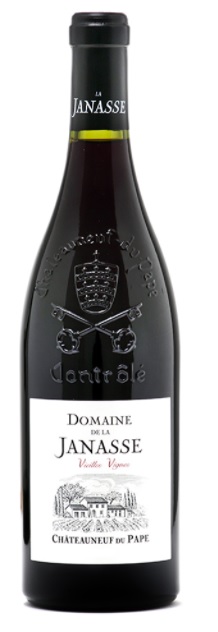
Domaine de la Janasse Chateauneuf-du-Pape Cuvee Vieilles Vignes is made from 65% Grenache, 20% Mourvèdre, 10% Syrah, 5% divers.
In contrast to Chaupin, which is made from old-vine Grenache on sandy soils, the cuvée Vieilles Vignes is from old vines of Grenache, Mourvedre, Syrah along with smaller percentages of other permitted varieties that are grown in these old vineyards. The wine is sourced from 4 terroirs: pebbly clay, sand, gravelly red clay and sandy limestone. Vieilles Vignes is always the most powerful and concentrated Châteauneuf-du-Pape cuvée made at Domaine de la Janasse.
Review:
The advantages of old vines are perhaps most evident in the more difficult vintages (whether hot and dry or cool and rainy). The 2021 Chateauneuf du Pape Vieilles Vignes is a strong effort, delivering supple, velvety waves of ripe black cherries and black raspberries. Medium to full-bodied, it's rich and concentrated without seeming at all heavy or unbalanced, finishing long and juicy. It's approximately 75% Grenache, 15% Mourvèdre, 5% Syrah and 5% other varieties, keeping in mind that up to 15% of the old Grenache vines are actually Clairette Rose.
-Wine Advocate 96 Points
Aimé, the founder
In 1967, Aimé Sabon came back from his military service. He took over his father’s vines, who used to take his grapes to the wine cooperative. In 1973, Aimé built his own cellar. Domaine de la Janasse was born and named after the family farm that was in Courthézon, in the locality of “La Janasse”. Aimé was ambitious. He knew he had fabulous soil and he wanted to expand the estate by acquiring new plots. From 15 hectares at the very beginning, La Janasse has now reached more than 90 hectares.
From father to children
In 1991, after a technical diploma in viticulture and oenology in Beaune, and another one in marketing in Mâcon, Christophe Sabon –Aimé’s eldest son– came back to La Janasse where he was given the keys to the cellar. From then different cuvees were developed, new markets conquered. In 2001, Isabelle –Aimé’s daughter– graduated as an oenologist from the University of Toulouse, and joined the team. With Hélène, Aimé’s wife, the family was reunited again in La Janasse.

Boizel Grand Vintage Brut is made from 50% Chardonnay, 50% Pinot Noir.
BACKGROUND
In 1834 the Boizel House was established in Épernay, the heart of Champagne, by a family passionate about the wines of its region. Intimate knowledge of the Champagne region, passed on through the generations, and access to grapes from the finest cru sites, are the essential elements behind the Boizels’ elegant portfolio. Working with Chardonnay and Pinot Noir sourced only from Champagne’s most coveted Grands and Premiers Crus blended with the best crus of Pinot Meunier, Boizel’s intimate knowledge of each village and hillside coupled with longstanding grower relationships allows them the ability to select the finest quality grapes for their Champagnes.
TERROIR & VINTAGE NOTES
Pinot Noir and Chardonnay grapes for the production of the Grand Vintage wines are sourced from Grands and Premiers Cru vineyards within the villages of La Montagne de Reims (Pinot Noir) and the Côte des Blancs (Chardonnay). Pinot Meunier is sourced from the best sites within the Vallée de la Marne.
All wines are aged sur lie in Boizel’s historic chalk cellars beneath the Avenue de Champagne for a minimum of 3 years, climbing to 15 years and above for the best vintages.
WINEMAKING & AGEING
A unique expression of the vintage, the Grand Vintage is only produced in the best years. This cuvée is a blend of 50% Chardonnay from the Côte des Blancs (Mesnil sur Oger, Oger, Avize, Vertus) and 50% Pinot Noir from the Montagne de Reims (Mailly, Bisseuil, Chigny les Roses).
The wine was aged 8 months in stainless steel vats. Post second fermentation, the wine was aged for 8 years on its lees.
TASTING NOTES
Due to the long lees aging, almond, frangipane, candied orange and brioche aromas are rich and balanced. The palate is complex and mature, with the silky perlage supplying acidity and lift. Elegant pastry notes rounds out the finish.
Review:
Disgorged in October 2014, this smooth, now mature, wine has flavors of yeasty toastiness and a tight, mineral structure. Sliced apple and lemon zest still give freshness. Behind the fruit, crisp texture and a steely edge await. It is beautifully balanced, rich while dry and ready to drink. ROGER VOSS
-Wine Enthusiast 94 Points

Boroli Barolo Brunella is made from 100 percent Nebbiolo.
A clear ruby red color, with very light orange reflections. A net aroma in which liquorice stands out at first, immediately followed by a fruity scent; the aroma makes you scent it again and again to discover different and pleasant facets. The fruity aroma magnificently prevails after a few minutes in the glass. A very enveloping, fresh and harmonious taste, with a delicate and tasty presence of wood. A long lasting taste that invites to sip it slowly again and again.
Tasting Notes
Brunella is distinguished by a careful selection of grapes, perfect destemming, long macerations with submerged cap. The barrels for Brunella are specifically chosen by the winemaker.
Wine Production
Brunella is one of the most historic single vineyard sites of all of Castiglione Falletto, however it hasn’t ever been bottled singularly under the Menzione Geografica Aggiuntiva BRUNELLA until 2013. The Brunella vineyard occupies the western crest of the Villero hillside and complete surrounds the Boroli winery. The vineyard is a monopole—owned entirely by Boroli and is the most prestigious wine in the lineup. As it occupies the best exposed section of the Villero hillside, La Brunella expresses power, drive, complexity, and extraordinary length and ageability.
About the Vineyard
The Boroli family is a family of entrepreneurs, with roots in Piedmont dating back to 1831. The family started their winemaking business in1997, when Silvano and Elena Boroli felt an ardent desire to step away from the pressures of their publishing business and reconnect to nature. Silvano and Elena grew the company until their son, Achille, stepped in to run the wine-growing and production business in 2012.
With the 2012 grape harvest Achille decided to radically change the methods used in vineyards and wineries, aiming for the highest quality in Barolo and its crus. He cut production levels, updated the winemaking technology, and focused on low intervention methods to raise the quality of the Boroli wines be on par with the finest Barolo wines.
Review:
Ripe red cherries and blood oranges, as well as herbs and roses on the nose, leading to a juicy and flavorful palate that has a swathe of bright, juicy red-fruit flavor. Drinking well now.
-James Suckling 93 Points

Charles Heidsieck Vintage Brut is made from 57% Pinot Noir, 43% Chardonnay.
A beautiful golden robe offers glints of green accentuated by a delicate, dynamic effervescence. The initial nose introduces intense toasted and smoky notes along with ripe fruit. When swirled in the glass, the nose takes on a heartier dimension with touches of apricot and vineyard peaches. The aromatic concentration, due to a heat wave of several weeks, is reminiscent of the summer sun. The attack is taut and decisive. the creamy texture, the crisp fruitiness and spiced notes of cinnamon, licorice and pepper are the hallmark of the House style.
Review:
Aged for eight years on the lees before disgorgement, the Champagne is deliciously toasty with acidity and fine dryness.
-Wine Enthusiast 96 Points
Disgorged in January of 2023, the 2013 Champagne Millésime Brut was the last vintage from the cellar master for Heidsieck prior to Cyril Brun. The 2013 Champagne Millésime Brut is a bright straw yellow color and is based on the crus of Les Mesnil, Avize, Averney, and Aÿ. It’s fresh with aromas of wet stones, fresh quince, and fresh jasmine flowers. It has a chalky and focused texture, with ripeness to balance it out, and a long, graceful finish. At this stage, it feels more forward with 57% Pinot Noir and the rest Chardonnay. A more mineral-tinged expression, it has a lot of charm and the promise of longevity over the coming two decades. Drink 2024-2044. It will be interesting to see how the Pinot shows itself over time. 8 grams per liter dosage.
-Jeb Dunnuck 95 Points

Chateau Vermont L'Ame Grand Vin de Bordeaux is made from 40% Merlot, 30% Cabernet Franc and 30% Petit Verdot.
L'AME de Vermont represents the culmination of 10 years of dedicated work, derived from select grapes of Chateau Vermont's best parcels, chiseled to be the ultimate extraction of their terroir and Spirit. This cuvée is the Winemaker's soul. It is a reflection of the requirements, precise work and desire to achieve perfection.
A rare and confidential wine, vinified and matured in new oak barrels. Fine wine, elegant and well-balanced, with vanilla notes coming from the oak aging and subtle scents of ripe black and red fruits. A beautiful structure and great aging potential.

Cheurlin Thomas 'Celebrite' Blanc de Blancs Extra Brut
An elegant soft gold color with a refined ring of bubbles. The nose reveals fruity aromas of a complex wine. The mouth is fresh and balanced with a woody finish. A great character with a perfect balance.
Cuvee harvested on the south facing land. The limestone base of the seat is emphasized by a thin bed of Kimmeridgian marl leaving a grayish underground, earth colored by white marl, ground vineyards par excellence. The wine is matured in oak barrel and pipe, second fermentation in the bottle with a minimum of 18 months aging. Reflects the white varieties of the Barrois hillsides.
Cheurlin Thomas Célébrité has rewritten the definition of excellence in Blanc de Blanc Champagnes. As authentic a champagne as can be crafted, the exceptional taste of this Grower’s prestige cuvée is re-writing wine books the world over. An exclusive champagne, produced in limited quantities, Cheurlin Thomas Célébrité is made solely from white grapes varieties and zero added sugar. Célébrité is all natural juice.

Aalto P.S. Pagos Seleccionados Tinto is made from 100 percent Tempranillo.
Climatic conditions
The farming year began with a mild autumn and little precipitation. A very dry winter started with -9ºC reaching at the end higher temperatures than normal for that time of the year. Spring and summer characterized by little rain, only some rain showers in July and late August avoided the hydric stress of the vines. The vegetative cycle of the vine developed with big variations of temperatures, alternating warm and atypical low temperatures of 4ºC for mid-June. The ripening of the grapes happened under very good conditions and the harvest started on 24th September 2019.
100% Tinto Fino (Tempranillo) primarily from very old vines – 60 to 90 years old – from selected plots in La Horra and La Aguilera. The harvest was done by hand, in small boxes of 15 kilos that are thoroughly inspected, bunch by bunch, on the selection table.
Tasting notes
Review:
Color: dark cherry, Aroma: toasty, spicy, fine cocoa, black fruit, Mouth: tasty, toasty, fine bitterness, ripe tannins
Guia Penin 94 Points

Domaine de la Janasse Chateauneuf-du-Pape Cuvee Vieilles Vignes is made from 65% Grenache, 20% Mourvèdre, 10% Syrah, 5% divers.
In contrast to Chaupin, which is made from old-vine Grenache on sandy soils, the cuvée Vieilles Vignes is from old vines of Grenache, Mourvedre, Syrah along with smaller percentages of other permitted varieties that are grown in these old vineyards. The wine is sourced from 4 terroirs: pebbly clay, sand, gravelly red clay and sandy limestone. Vieilles Vignes is always the most powerful and concentrated Châteauneuf-du-Pape cuvée made at Domaine de la Janasse.
Review:
The 2020 Châteauneuf Du Pape Vieilles Vignes also saw some stems (the estate started keeping some stems with the 2016 vintage) and was 75% destemmed, with the blend being 70% Grenache, 20% Mourvèdre, and the rest Syrah, Cinsault, and Terret Noir. As usual, it’s a more powerful, black-fruited wine comparted to the Cuvée Chaupin and has lots of crème de cassis, liquid violet, crushed stone, woodsmoke, and peppery herbs. It displays the vintage’s purity and freshness yet brings the concentration as well as the structure. I’ll be shocked if it’s not in the handful of top wines in the vintage.
-Jeb Dunnuck 96-98 Points

Domaine de Beaurenard Chateauneuf-du-Pape Blanc is made from Clairette blanche & Rose, Grenache Blanc & Gris, Bourboulenc, Roussanne, Picpoul and Picardan.
Gold bright green color. Expressive nose with pear and stone fruits aromas (peach, apricot) with jasmine and roasted almonds notes. The mouth is smooth and fleshy like stone fruit we can smell, with a long a nice finish.
Review:
Always terrific, the 2023 Châteauneuf Du Pape Blanc is no exception, and readers who love vibrant, age-worthy Rhône whites can safely buy this cuvée in just about every vintage. Based on 30% Clairette, 20% Grenache Blanc, 25% Bourboulenc, 22% Roussanne, and splashes of Picardan and Picpoul Blanc, the 2023 reveals a medium gold hue as well as textbook aromatics of pear and orchard fruits intermixed with honeyed flowers, chalky minerality, and subtle green almond nuances. This balanced, medium-bodied, vibrant white is very much in the fresh, focused, yet still textured, approachable style of the vintage.
-Jeb Dunnuck 93 Points

All older vintage wines have been purchased from a single collectors cellar. Pictures can be requested before shipment.
All older vintage wines have been purchased from a single collectors cellar. Pictures can be requested before shipment.

Domaine La Maionnette Rose Cotes de Provence is made from 60% Syrah, 20% Cinsault and 20% Grenache.
The plots of Domaine de la Maïonnette benefit from a clay-limestone soil and are located on a plateau surrounded by hundred-year-old oaks. Bordered by the Provencal scrubland, the vineyard enjoys a dry climate typical of the region.
An emblematic cuvée of the estate, this Cotes de Provence rosé reveals concentrated aromas of citrus fruits and white flowers, and a beautiful structure. The fresh palate brings out sweet candy notes, gooseberry and litchi, and delivers bright acidity and ample length on the finish.

Grand Veneur Chateauneuf Du Pape Vieilles Vignes is made from 50% Grenache, 40% Mourvedre, 10% Syrah
Matured in concrete vats (40%) and oak casks (60%)
It boasts an inky/purple color in addition to a gorgeous perfume of crushed rocks, jammy black fruits, charcoal and graphite. Blackberry aroma with an air of dates pressed in alongside – this is sweet-noted. It is easy to appreciate, a sleek and stylish start. The palate holds excellent fruit that runs well and has kick. Its tannins move round freely and a minted finale comes forward. Its dark fruit is tasty, darkens on the finish, where tar and char from its oak enter. It is all very much together, a bundle of harmony, and will gain local attributes as it ages.
An outstanding Chateauneuf du Pape which display the best of its terroir.
The vines are 50 to 100+ year old. They are planted on red clay soils covered with pebble stones.
Harvest is destemmed and crushed. Fermentation temperature is controlled at 30°C. Vatting period of 18 to 20 days. Matured in concrete vats (40%) and oak casks (60%).
The vines are 50 to 100+ year old. They are planted on red clay soils covered with pebble stones.
Harvest is destemmed and crushed. Fermentation temperature is controlled at 30°C. Vatting period of 18 to 20 days. Matured in concrete vats (40%) and oak casks (60%).
The vineyards are located in the north of Châteauneuf du Pape. GRAND VENEUR «Vieilles Vignes» cuvee is produced from the older vines. Thanks to time and an organic growing, roots go very deep in the soil. Yields are naturally low and grapes highly concentrated.
Winemaking and aging
Pair with venisson, duck, braised lamb or strong cheese.
Review:
"The 2021 Châteauneuf Du Pape Vieilles Vignes is even more powerful, with a dense purple color as well as serious notes of blackberries, currants, ground pepper, graphite, chocolate, and violets. I love its mid-palate density, it's medium to full-bodied, has building tannins, and a great finish. It's going to need short-term cellaring, but it’s one heck of an impressive 2021."
- Jeb Dunnuck (November 2021),94-96 pts

All older vintage wines have been purchased from a single collectors cellar. Pictures can be requested before shipment.

The Cordero di Montezemolo Barolo Enrico VI is a deep red garnet in color. Delicately spiced bouquet with notes of eucalyptus, licorice and menthol, and mature fruit on the palate invoking liqueur soaked cherries, blackberries and prunes with hints of violets and medicinal herbs. Powerful on the palate with a lasting finish.
Review:
The rose flower, violet, dark berry and cedar aromas are impressive on the nose. Full-bodied with chewy tannins that are powerful and muscular. Excellent length. Classic Barolo that needs at least four or five years to soften. From organically grown grapes. Try after 2027.
-James Suckling 96 Points



