
" We don't sell the wine without touching the vine "
| BUY MORE! SAVE MORE! | ||||||||||||||||||||
|
| Country: | United States |
| Regions: | California California (Paso Robles) |
| Winery: | Booker |
| Grape Type: | Syrah |
| Vintage: | 2020 |
| Bottle Size: | 750 ml |
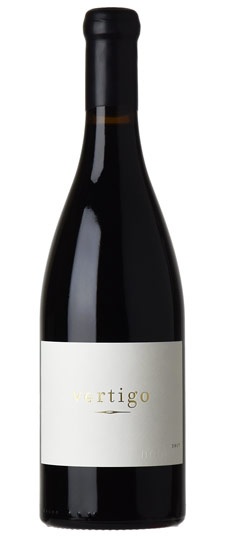
Booker Vertigo Red Blend is made from 7% Syrah, 32% Mourverde, 9% Grenache, 7% Petite Syrah, 5% Tannat.
Vertigo is our Syrah-heavy "G-S-M". It is spicy, structured, and always performs. The name is a nod to the steepness of the hillside on our estate where we grow the fruit for this wine. Starts with aromas of spice, dark chocolate and soft purple fruits on the nose. The palate surprises you with a touch of cayenne amongst juicy ripe fruit. We recommend making this your BBQ staple. Pair with pork ribs, bourbon chicken, or “bring on the bacon” to quote our tasting room team!
Review:
-James Suckling 95 Points
The name Booker comes from the two orphan brothers, Claude and Dick Booker, who had purchased the land in the late 1920’s. By the turn of the century the Booker brothers had acquired over 1,200 acres on Paso's Westside. The Booker brothers were Paso's favorite sons, dedicating their lives to being great farmers and humanitarians. Aside from lending their farming knowledge and manual labor to neighbors and those in need, they were the area's biggest philanthropists, leaving 100% of their estate to charity when they passed, Dick in 1990 and Claude in 2000.Eric and Lisa Jensen purchased 100 acres of the property in 2001 with the intent of growing the best fruit for some of the best wineries in the area. After making wine with Justin Smith (of Saxum) for five years and Stephan Asseo (of L'Aventure Wines) for two years the Jensens decided it was time to create their own expression with Booker Vineyard. The 2005 Vintage was Booker Vineyard's first release with the wines being made by owner Eric Jensen.
My Favorite Neighbor began as an homage to our original favorite neighbor, Stephan Asseo of L’Aventure, and has since grown to include a handful of others who surround us on Paso Robles’ west side. Stephan is a close friend and mentor to Eric. For the entire first year they were friends, each time Stephan called he would refer to himself as Eric’s “favorite neighbor”, as if there was any doubt about who would be calling with such a thick French accent! The title was a self-fulfilling prophecy and in 2006 Eric crafted Cabernet-based wine to honor his friend Stephan and his Bordeaux roots.
For many vintages, My Favorite Neighbor was made exclusively from our own estate grown fruit as a part of our Booker portfolio, limiting its production to extremely small quantities. Our team has a great passion for the wines we bottle and over time Eric’s desire grew to share them with wine-lovers everywhere. Our 2016 vintage of MFN was the first step towards that new goal. Today, My Favorite Neighbor is its own Cabernet-based brand producing a variety of wines. Some at a friendly price-point like Harvey and Harriet, an approachable blend named after Eric’s hard-working parents, and others still in limited production like our single vineyard designates offered to club members only.

Sainte-Marie Bourgogne Blanc Vieilles Vignes is made from 100 percent Chardonnay.
The wine has a perfect light yellow color with green hues. Nose of white flower, sweet spice and bitter orange. Fresh and delicious attack. It shows roundness and a slight buttery note with a very saline finish that makes you slightly salivate.
Excellent with Seafood, grilled fish, clams and oysters of course. Also great with goat cheese or Comté cheese.
Aged on lees for 6 months in stainless steel vats. Adjustment of sulphites at the end of MLF and before bottling. Filtration on earth then on 1.2µ cartridge after bonding with bentonite.Machine harvest, and direct pressing with a pneumatic horizontal press. Static settling. Alcoholic and malolactic fermentation in stainless steel vats with native yeast and bacteria.
This wine is declassified Chablis, due to exceeding the volume limit per hectare it could not be labeled Chablis. They call it “over-production” Burgundy, but we call it an outstanding value. This exact same juice is selling for three times as much under the Chablis AOC label!

Grand Veneur Chateauneuf Du Pape Blanc La Fontaine is made from 100% Roussane.
Yellow-gold color. The nose is rich in aromas of citrus fruit, tropical fruit, quince and honey, with a touch of vanilla. On the palate, the same aromas appear together with a fatness combining exotic fruit and vanilla : the wine is rich, generous and elegant, with extraordinary length. "La Fontaine" is often considered to be one of the best Châteauneuf du Pape white, and it is by definition a superb gastronomy wine.
Best between 1 and 8 years.
Review:
-Jeb Dunnuck 98 Points
-Decanter 95 Points

Grand Veneur Chateauneuf du Pape Blanc Le Miocene is made from 60% Clairette, 40% Roussanne
Pale yellow colour with hints of green, aromas of white flowers (may blossom, honeysuckle).
The palate is pleasantly balanced between liveliness and roundness, which brings out characteristics of dried apricot, honey and elderberry. A Châteauneuf du Pape white displaying a great finesse.
Best between 1 and 8 years.
Soil type Coming from the single vineyard named “La Fontaine”, the plot is facing north.It is made of clay-sand and limestone. Thanks to the northern orientation, it is always very well aired. This sector allow the Roussane and Clairette to mature in great conditions without losing freshness, which we believe is key point. Winemaking & ageing Whole-bunch pressing. Vinification in stainless-steel tanks. Fermentation temperature controlled at 15°C.
Review:
-Nicolas Greinacher (Vinous) 92 Points

Fragrant aromas of yellow peach and ripe melon are found on the nose, interspersed with bright citrus notes. These continue on the palate with notes of creamy vanilla and buttery nuances on the long finish. Rombauer's signature bright acidity is evident throughout each sip, balancing the softness of the midpalate.
Pairings for this wine include crab cakes, barley risotto, and strawberry shortcake.
Review:
"Layers of citrus, yellow apples, pastry and stone fruit with an underlying smoky, saline edge, showing freshness underneath the power. The rich palate offers a rounded mouthfeel and a bright line of acidity that cuts through the generous texture. Full-throttle with weight and depth, but very enjoyable old-vine character from 1982. Drink or hold."-James Suckling 93 Points

Mordoree Lirac Blanc Reine des Bois is made from 30% Grenache, 20% Clairette, and 15% each Viognier, Roussanne, and Marsanne, as well as splashes of Picpoul and Bourboulenc.
Color : green gold
Aromas : white fruits, peach, apricot, pear, violet.
Palate : rounded, long finish, highly flavoured.
Ageing Potential : 4-5 years.
Surface : 4 Ha. Yield : 35 Hl./Ha. Vineyard age : 30 years Terroir : Clay / chalk with pebble stones. Harvest : by hand Vinification : skin maceration and direct pressing with temperature control. Fermentation : oak barrel fermentation for 25% of the total volume
Pairs well with appetizers, fish, seafood.
Review:
-Yohan Castaing (Robert Parker) 92 Points

Lismore Estate Syrah is made from 100 percent Syrah.
A careful selection of the best of the vintage that exemplifies the extraordinary terroir of Lismore.
An exotic experience which shifts your mind to another place. Cassis, brambles and succulent cherry. White pepper, classic garrigue and the strong floral perfume of crushed violets. Light and elegant, but structured with a fresh acidity. To experience the best this wine has to offer, decanting is suggested.
The grapes were fermented 40% whole bunch in a 5000 litre wooden fermenter with gentle pigeage throughout. The process allowed for a long extraction period which lends to the fruit expression of this wine. The wine was left for a 30 day extended maceration on the skins and then pressed in a traditional baskets press. Matured in 500 litre barrels for 10 months (35% new). Time in the bottle will allow integration, the deepening of layers and full expression of the fruit.
Review:
The 2022 Syrah Estate Reserve was dry-farmed on steep shale slopes with long hang-time on the vine. This vintage includes 50% whole bunch and aged in 500- and 700-liter barrels. It has an intense nose with black cherry, raspberry, Provençal herbs and wild thyme. The harmonious palate has a slightly powdery texture and wonderful backbone, reminiscent of a Côte-Rôtie, with white pepper and subtle fennel notes toward the nish. It feels quite linear at the moment, perhaps holding something back for later? Fabulous. - Neal Martin" - Antonio Galloni's Vinous (August 2024), 95 pts "Dominated by grapes from Elgin, with a smaller Stanford component, this is the sort of Syrah that you want to drink by the bottle. Fifty per cent whole bunches add some perfume and texture to a palate of subtle vanilla spice from 15% new oak and layers of white pepper, bramble, liquorice and red cherry. 2025-30" - Tim Atkin (SA Special Report 2024), 93 pts "In a tricky stage when I tasted it twice in the Cape, this needs more time in bottle to show at its best. Aromas of earth, beetroot, fynbos and blood usher you into a palate that's dense, compact and firm, with muscular tannins, redcurrant and damson fruit, plenty of acidity and minerality and well-integrated oak. 2025-30"
-Tim Atkin 94 Points
"The 2022 Syrah comes from a selection of vineyards, mostly from Elgin but with some fruit from Stanford. It includes 50% whole cluster and was aged in large oak barrels. This has an open, complex bouquet with red cherries, bergamot and light ferrous scents, gaining mineralité in the glass. Hints of violet emerge with time. Fresh and saline, the palate is medium-bodied with fine-grained tannins, revealing a dash of white pepper and clove toward the precise finish. Superb. - Neal Martin" - Antonio Galloni's Vinous (August 2024), 94 pts
Booker Vineyard Oublie Red is made from 33% Syrah, 30% Grenache, 28% Mourvèdre, 5% Tannat, 4% Petite Sirah
Oublié's blend is always Grenache, Syrah and Mourvèdre – the California version of a Châteauneuf du Pape. The namesake is a play on the French term for "forgotten." Rhône varietals grow beautifully on the estate and Booker believes that they are far-too-often forgotten when you think of a California wine. Deep ruby/purple in color, this hearty expression of a Paso GSM boasts confident notes of boysenberry, licorice and cedar on the nose. On the palate, the taster is rewarded with lively flavors of raspberry coulis mingled with blonde roast coffee and chocolate ganache. For lovers of Mourvèdre, this vintage of Oublié will show off. It drinks bolder than prior vintages, mostly because the Mourvèdre was so special in '19.
Oublié is traditionally one of Booker's most food-friendly wines and should pair well with most dishes.
Review:
-Wine Advocate 97 Points

Mascot is a small-production label founded by Will Harlan in Napa Valley. The wines under this label are made from the younger vines of Harlan Estate, BOND, and Promontory, but The Mascot bottles share an exclusive preview at the development of their estates. Founded as an initial experiment to see what the young vines were capable of producing, the wines were initially only shared with close friends and family. By 2008, Will officially released the first vintage to the public since production had increased significantly. They create just one wine made from Cabernet Sauvignon, and the bottle is aged for five years before release. Assembled into a single, youthful expression, this wine shares a glimpse into the evolution and pedigree of its parent estates.
Tasting Notes:
A mild winter with scant rainfall introduced the 2020 growing season. Conditions remained pleasantly even-keeled throughout the spring, except for some light precipitation in March. It is worth noting that decades of research and steady viticultural progress have enabled our vines to begin achieving tannin and textural ripeness earlier in the season, and this fact—along with the drought conditions experienced in preceding years—led to one of the earliest picking windows in our history. This development proved crucial to the 2020 vintage, when we were fortunate to have fully completed our harvest before the Glass Fire began in late September. A vibrant purity manifests within this vintage’s generosity, which advances without excess of weight or volume. Aromas of gentle red fruit give way, eventually, to a savory darkness and finely wrought core. An effortless, structural tension transforms into a silky softness on the palate that envelopes The Mascot’s inner depth and dimension. The 2020 vintage resonates rather than roars: its intricate threads of tannin, acidity, and nuance interweave to form a complete expression that shimmers with sensory detail.

La Despensa Boutique Field Blend is made from 45% Grenache, 35% Syrah, 15% Mourvedre and 5% Roussanne.
This is La Despensa's flagship Rhône-blend, produced from grapes from their own, organic vineyard in Colchagua. Their passion is to produce very high-quality grapes - it’s the vineyard work that they love the most. So this blend is always a little different year after year, as they make whatever the vineyard gives them. In 2020 they incorporated a little Roussanne to the blend, which adds some mouthfeel and a tiny background note of tropical fruit, to accompany the fresh fruit and structure that the other varieties bring out.
Review:
-James Suckling 92 Points

Pioneiro Red Wine Vinho Regional Peninsula de Setubal is made from 60% Castelao (also known as Periquita), 30% Aragones and 10% Syrah
Aged 5 months in French oak barrels
The story of this wines begun more than a century ago, with the pioneering dream of Venâncio da Costa Lima: to bring good wines to every corner of Portugal. Pioneiro wine brand was created to pay homage to his vision.
What's Unique? Pioneiro (meaning “pioneer” in Portuguese) wine vintage style label pay homage to the founder’s dream, dating back to 1914. But in a relaxed, casual way, typical of this wine producer mood.
Intense garnet color, complex nose with touches of ripe fruit, jam and spices, full-bodied flavor and a very balanced finish.
Castelao: as the most widely-grown red grape variety in Portugal it is still often referred to in Portuguese as "Periquita" or "Joao de Santarem", although that name is legally owned by José Maria da Fonseca in the Setúbal Peninsula outside of Lisbon. It is highly adaptable to different climatic conditions and its remarkable versatility enables winemakers to make a range of wines – from the easy drinking and quaffable reds and rosados to the powerful and intense reds perfectly suited to lengthy cellaring. Castelão comes into its own and is most expressive in the Sétubal Peninsula, where it makes meaty and intense wines with aromas of red berries and blue flowers that marry well with the deft use of oak.
Made from 15 year old vines planted on sandy soils.
Classic vinification at controlled temperature (25 °C) with prolonged maceration for phenolic extraction. Wine went through malolactic fermentation.
It was aged 5 months in French Oak barrels.
Wine was slightly filtered before bottling to avoid sedimentation in the bottle and to ensure stability.
Pasta, Cheese, red meat and game.

Viejo Isaias Elegido Cabernet Sauvignon is made from 50% Malbec and 50% Cabernet Sauvignon.
Viejo Isaias Elegido shows a vibrant red color. The highly viscous tear with reddish tints invites you to discover the warm sensuality that embraces this great wine. A wine of great complexity with deep aromas of pepper, cassis, fig, tabaco and chocolate. This is full-bodied, round red with silky tannins, good acidity and a long and persistent finish.

Avennia Justine Red Blend 61% Grenache, 21% Mourvèdre, and 18% Syrah.
Justine reflects our belief that Washington is capable of producing world class blends of grape varieties traditional to the Southern Rhone region of France. The name is inspired by one of the great heroines of recent literature, who also sprung from the imagination of the Mediterranean. Dark, seductive, complex, with a chasm of depth: The Justine is a great reflection of Avennia's mission of expression, and Washington's generous terroir.
Tasting Note: Big black cherry, blackberry, hints of orange peel, fresh herbs and loam on the nose. Plush and round on the palate. Dark earthy fruits from the Mourvedre, along with citrus high notes, mountain flowers, jasmine, and savory herbs. Balanced and complex without forgetting its hedonistic roots in the Southern Rhone.
Review:
-Owen Bargreen 95 Points

Aalto P.S. Pagos Seleccionados Tinto is made from 100 percent Tempranillo.
Climatic conditions
The farming year began with a mild autumn and little precipitation. A very dry winter started with -9ºC reaching at the end higher temperatures than normal for that time of the year. Spring and summer characterized by little rain, only some rain showers in July and late August avoided the hydric stress of the vines. The vegetative cycle of the vine developed with big variations of temperatures, alternating warm and atypical low temperatures of 4ºC for mid-June. The ripening of the grapes happened under very good conditions and the harvest started on 24th September 2019.
100% Tinto Fino (Tempranillo) primarily from very old vines – 60 to 90 years old – from selected plots in La Horra and La Aguilera. The harvest was done by hand, in small boxes of 15 kilos that are thoroughly inspected, bunch by bunch, on the selection table.
Tasting notes
Review:
Color: dark cherry, Aroma: toasty, spicy, fine cocoa, black fruit, Mouth: tasty, toasty, fine bitterness, ripe tannins
Guia Penin 94 Points
"A red made exclusively from Tempranillo, from vineyards 60 to 90 years old, grown in the pagos of La Horra and La Aguilera, with 21 months of aging in new French oak barrels. Captivating in aroma and flavor, it shows ripe red and black fruit alongside floral, herbal and sweet-spice notes, which carry onto the palate, where its good acidity and firm, very fine-grained tannins lend support to the oak and balance to the whole. It has a full, very long finish, with reductive, earthy touches of cassis, blackberry, violet and licorice. It follows the house's powerful style, yet shows itself more fluid, tense and vertical. A fine example that concentration, opulence, precision and finesse can go hand in hand. Be patient with it in the glass or in the bottle, as it is still young and has everything it needs to get even better over the next 20 years. Alcohol 15%."
-Revista Adega 95 Points
-75x150.jpg "Valminor Albarino Rias Baixas 2025")
Valminor Albarino Rias Baixas is made from 100% Albarino.
Albariño is native to the Miño River region, which separates Galicia and the Rias Baixas DO from Portugal; it is prized for its characteristic citrus aroma and high acidity. Valminor Albarino presents a yellow-straw color. On the nose it shows a wide fruity range, with notes of fresh grapefruit, apricot and melon. In the mouth it combines fruity flavors and freshness with a rounded acidity, resulting in a balanced wine with an opulent taste and a slight spritziness.



