
" We don't sell the wine without touching the vine "
| Country: | United States |
| Regions: | California California (Napa) |
| Winery: | Bootleg |
| Grape Type: | Petite Sirah |
| Organic: | Yes |
| Vintage: | 2019 |
| Bottle Size: | 750 ml |

Robert Mondavi Winery Napa Red Blend is made from 74% Cabernet Sauvignon, 13% Cabernet Franc, 9% Merlot, 4% Petit Verdot.
Robert Mondavi’s vision was to elevate Napa to the world stage. In celebration of his achievement, our Napa Tier wines are sourced from distinctive vineyards throughout the Napa Valley and truly emulate a classic Napa Valley style.
Nearly half of this year’s blend is sourced from the deep, well-drained soils of Oakville, which provides gorgeously dark, supple wines with fine tannins. Stags Leap District, Oak Knoll, Yountville, and Rutherford also find their place in the bottle, with the varying mesoclimates and soils of these vineyards integrating seamlessly into a 100% Napa Valley blend.
Review:
"Dominated by 80% Cabernet Sauvignon with smaller percentages of the other Bordeaux red grapes, this wine speaks of heritage and prestige. Broad, silky, and powerful, the graceful liquid is enhanced by dark chocolate, white pepper, black plum, violets, and sweet earth."
-Meridith May, Tasting Panel, January/February 2023 Pts. Tasting Panel

Robert Mondavi Winery The Estates Red Blend is made from 49% Cabernet Franc, 47% Cabernet Sauvignon, 4% Petit Verdot.
Robert Mondavi’s vision was to elevate Napa to the world stage. In celebration of his achievement, our Napa Tier wines are sourced from distinctive vineyards throughout the Napa Valley and truly emulate a classic Napa Valley style.
Aromas of blackberry, cherry, toasted almond, bay leaf and mocha. Luscious ripe cherry and cassis, with savory notes of dried herbs and toast. Rich, weighty, and mouth-coating, with classic fine To Kalon tannins.
Review:
This has a pretty fragrance of violets, green peppercorns, salted olives, blackcurrants and black raspberries. Creamy, salted dark chocolate and praline to follow. Medium-to full-bodied with fine-grained tannins. Delicious and superbly balanced. 50% cabernet franc, 47% cabernet sauvignon and 3% petit verdot.
-James Sucking 94 Points
The 2019 Red Blend Estate comes all from the To Kalon Vineyard and is close to an even split of Cabernet Franc and Cabernet Sauvignon. It's a clear step up over the base Red Blend and offers terrific, full-bodied aromas and flavors of darker fruits, dark chocolate, violets, and a kiss of spring flowers. With silky tannins, terrific balance, and outstanding length, it's going to evolve for 15 years or so.
-Jeb Dunnuck 94 Points

Andrew Will Winery Sorella 2019 is made from 80% Cabernet Sauvignon, 8% Merlot, 8% Cabernet Franc, 4% Petite Verdot.
Sorella means sister in Italian and was named after Chris Camarda late sister Jane Camarda. This first vintage was from 1994. This wine is made from 100% Champoux Vineyard fruit and represents the nature of the vineyard by highlighting the Cabernet Sauvignon, which is considered some of the best in Washington State. The picture on the label is a portrait of Annie Camarda (Chris’s late wife).
Review:
Flirting with triple digits, and perhaps the best Sorella yet, the 2019 Sorella explodes from the glass with a fantastic mineral essence that sways between dark red fruit tones, oak essence and freshly opened flowers. Medium to full-bodied, the wine is impeccably balanced with a silky-smooth mid-palate that bestows a stunningly beautiful wine with gobs of complexity and a ripe frame of glossy black raspberry and blackberry fruit tones. Unwinding across the finish, the wine unpacks gorgeous layers that seduce me for a second, third and fourth sip and finally begs me to finish the glass. Buy this ASAP!
-Wine Advocate 99 Points

A dramatic, ridgetop landscape — rising 1500 feet above Lake Hennessey, staring west over Pritchard Hill — persistently influenced by a push/pull draw between The Valley’s floor and Lake Berryessa. This wild, untamed, eastern frontier of Napa Valley, produces singular, terroir-driven wines of captivating beauty, power and lift. An unseasonably wet and cool springtime produced significant shatter at Sage Ridge in 2019, reducing our yields by 50%, leading to a particularly flamboyant edition of this wine.
An incomparable expression of Cabernet Sauvignon — massively pure red fruit character, delivered on a ribbon of ultra-suave tannins and gorgeously seductive high tones. The palate never relents its come-hither posture. Aromatically, puts forth an intriguing botanical complexity that is unmistakably site-specific. As our experience with this one-of-a-kind terroir deepens, we remain endlessly excited for the potential of these unique ridgetop vineyards. Get your hands on a bottle and pull the cork…a wine built for immense near-term gratification.
Review:
"Deep garnet-purple colored, the 2019 Cabernet Sauvignon Sage Ridge Vineyard opens with open-knit notes of plum preserves, baked blackberries and boysenberry jam, leading to a core of crème de cassis, mocha, camphor and Indian spices with a touch of unsmoked cigars. The palate is full-bodied, concentrated and dense with black fruit preserves, framed by soft tannins and seamless freshness, finishing very long and very spicy. Only 75 cases were made. - Lisa Perrotti-Brown"
- Robert Parker's Wine Advocate (November 2021), 95 pts

Cardinale Napa Valley Cabernet Sauvignon is made from 91% Cabernet Sauvignon, 9% Merlot.
Super structured and with minerality to spare, this Cabernet Sauvignon offers a real presence on the palate from start to finish. Generous notes of dark chocolate balance beautifully with a blue and black fruit flavor explosion, finishing with a subtle whisper of rose petal.
Reviews:
- James Suckling 98 Points

Checkerboard Kings Row Red is made from Cabernet Sauvignon, Merlot, Petit Verdot.
2019 Checkerboard Kings Row is produced from grapes grown in the Aurora Vineyard which is located in a small valley midway up Diamond Mountain on a large knoll at an elevation of 1,200 feet. The knoll projects off the mountainside, giving the vineyard full southern exposure, open light from the east and west, and protection from Napa Valley’s summer fog. Six acres are planted in the knoll’s rich, volcanic soils that are riddled with basalt cobble and loamy clay. The remaining six acres are planted in a deep gravely mix of white volcanic ash and chips of decomposed Rhyolite that were washed down from the steep, rocky crags of Diamond Mountain above. 2019 Checkerboard Kings Row is a complex wine showcasing the Bordeaux varietals grown in the Aurora Vineyard. The nose is a swirl of dark red fruits, baking spice, and sandalwood. On the palate, the fruit dominates and offers hints of dried crushed herbs, black pepper, and freshly pressed espresso. There’s a juicy core which is persistent from the approach through to the finish.
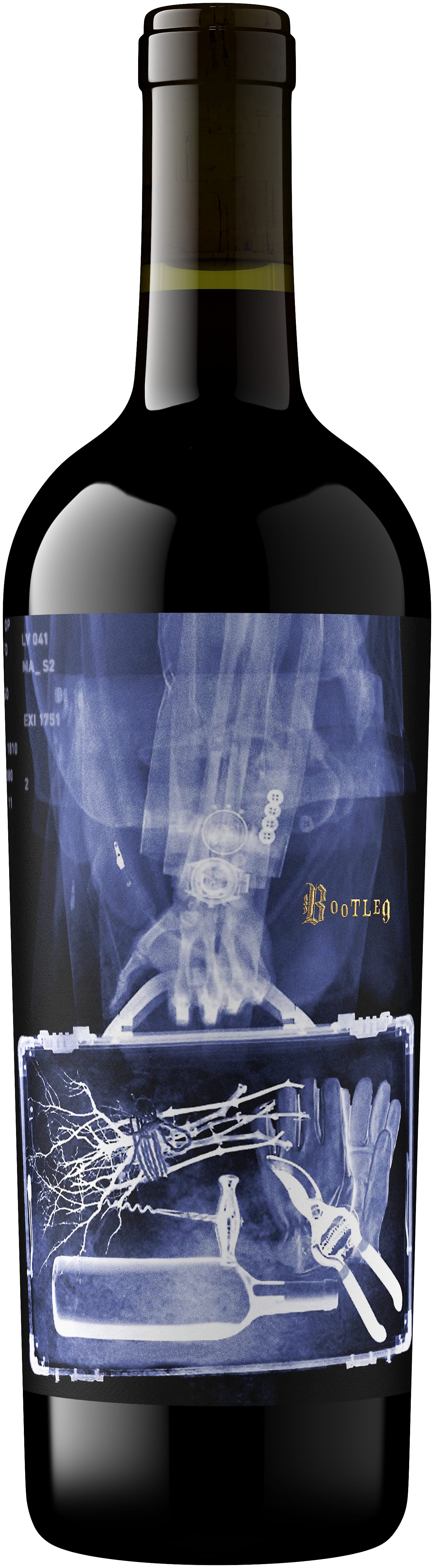
Bootleg Red Wine Napa County is made from 53% Petite Sirah, 41% Merlot, 4% Cabernet Sauvignon, 1.4% Cabernet Franc, 0.6% Petit Verdot.
The 2019 Bootleg blends Petite Sirah, Merlot, Cabernet Sauvignon blend from several appellations within Napa. The result is a dark red crimson color with aromas of raspberry, black cherry, barrel spice and tobacco and mocha. On the palate the wine is fruit forward with round structured tannins leading to a long finish.
Review:
Moving to a darker expression, the 2019 Bootleg Red Blend pours an inky black hue and offers up aromas of pencil shaving, boysenberry preserve, and sweet tobacco. Full-bodied, with full, ripe tannins, it reveals notes of preserved black plum, crushed purple flowers, and turned soil.
-Jeb Dunnuck 92 Points
At Bootleg we pay tribute to the devotion and daring that inspired our forefathers: the winegrowing rogues, who smuggled vine cuttings from renowned French vineyards and replanted them in California to elevate American wine to world class status.
In their spirit, we embrace “unconstrained winemaking,” awarding our winemaker the freedom to create the ultimate expression of each vintage—outside the bounds of a given varietal, appellation, or winemaking tradition. Without rules or expectations comes the opportunity to redefine the game.
Though the recipe may change from year to year, Bootleg’s exuberant, bold and complex blends challenge convention while remaining anchored in celebrated vineyards throughout Napa and Sonoma.
Born and raised in California, during college Gabriel understandably found he preferred California wines for their clean, fruit-forward flavors, supple tannins, and long finishes; components which would soon define his own winemaking style. After graduating from UC Davis with a degree in Viticulture and Enology, Gabriel worked with winemaking teams at notable wineries such as R.H. Phillips, Napa Wine Company, Hall Wines, and Rack & Riddle before joining Bootleg in 2019. He attributes his successes as a winemaker to skill sets obtained from his diverse experiences and from the hard work and ‘team-first’ values instilled in him by the Marine Corps.
As Bootleg winemaker, Gabriel listens to each lot of grapes and adjusts all facets of the winemaking process to bring out each component and its best expression to the blend. He crafts wines that are complex, enjoyable and not overpowered by any single note.

Dark fruit with hints of blackberry cobbler, graphite, and sandalwood. Mostly grown on warmer sites of the Walla Walla Valley including our estate, Bob Healy Vineyard. Beautiful tannins that are lush and have a strong core that broadens out last minute to an ultra-long finish. A really pleasing and luxurious wine.
Review:
Ripe blue and blackberry notes with floral quality, minty cherries and elegant oak spices undertones. Chocolatey texture on the palate, dense and concentrated, rounded. Dense core of dark plummy fruit supported by a refreshing acidity.
-Decanter 97 Points

Michel Thomas Sancerre Blanc is 100% Sauvignon Blanc (40% Caillottes, 40% Grosses Terres, 20% Silex)
The wine displays an exotic nose with a touch of smoke and licorice. On the palate, peach and watermelon dominate with citrus zest and chalk notes.



