
" We don't sell the wine without touching the vine "
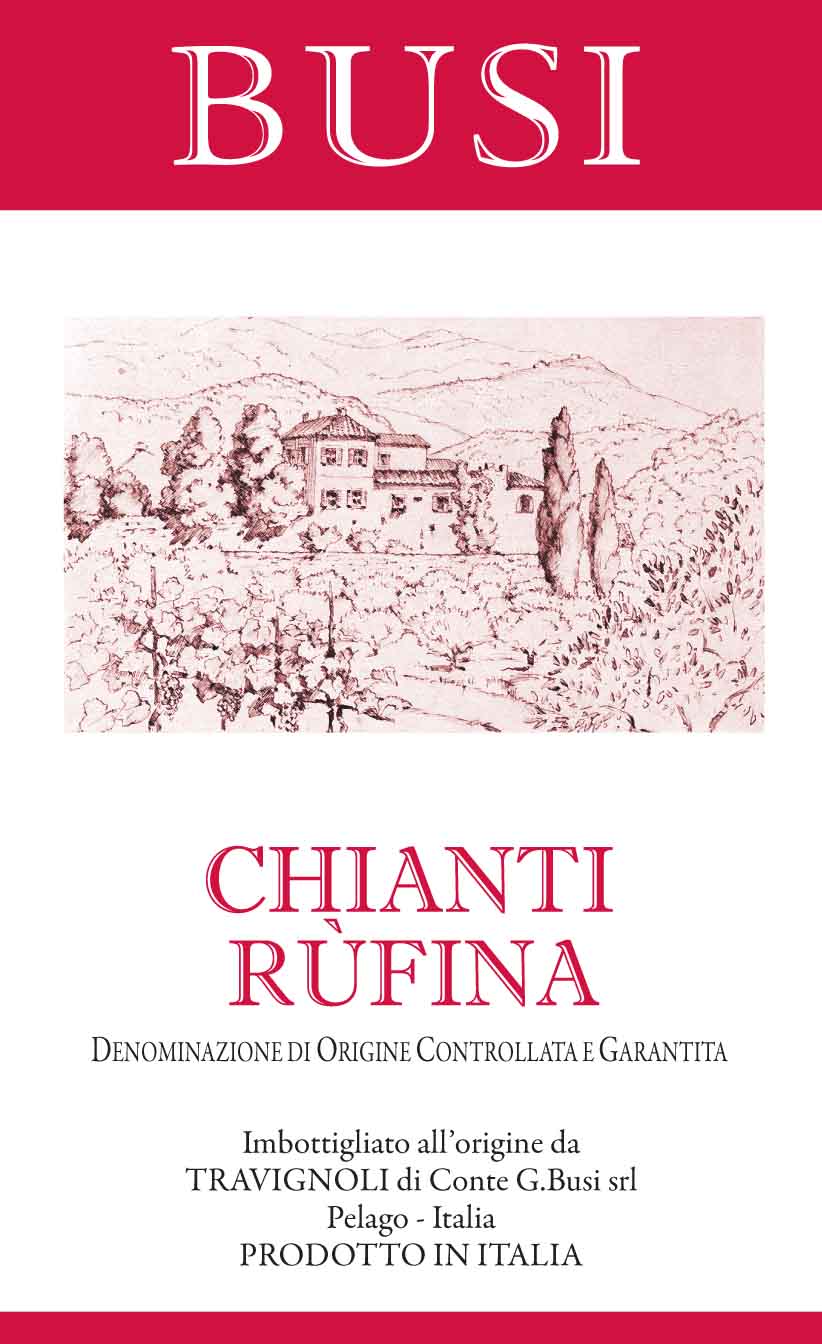
| Country: | Italy |
| Regions: | Tuscany Chianti |
| Wineries: | Busi Travignoli |
| Grape Type: | Sangiovese |
| Vintage: | 2013 |
| Bottle Size: | 750 ml |
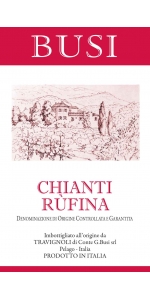
Busi Chianti Rufina is made from 100% 100% Sangiovese
Fresh, fruity, with classic tart cherry.
Appearance: ruby-red in color.
Aroma: clean, floral notes.
Flavor: well structured and harmonic on the palate; easy drinking with a soft and lingering finish. Ageing potential: 10/15 years.
Adapts well to both light and more substantial dishes.
Producer Information: Villa Travignoli Travignoli, a name which literally means “Tra Vignoli” (between the vineyards), is located in the middle of Frescobaldi’s Nipozzano vineyard, in the heart of the Rufina zone. Aged six months in wood and six months in stainless steel. Pairs well with salamis, pastas, grilled or roasted meats, dishes flavored with mushrooms, or rosemary. Excellent with polenta dishes.
Busi Chianti Rufina (Half Bottle) is made from 100% Sangiovese.
Fresh, fruity, with classic tart cherry.
Appearance: ruby-red in color.
Aroma: clean, floral notes.
Flavor: well structured and harmonic on the palate; easy drinking with a soft and lingering finish. Ageing potential: 10/15 years.
Production area: amidst the hills of Pelago in the Chianti Rufina D.O.C.G. area, with a soil composition of marly, calcareous clay as typically found in the Arno valley east of Florence.
Aspect: south-facing.
Altitude: 200/350 m above sea level.
Cultivation method: spurred cordon.
Harvest period: from the 20th of September until the middle of October.
Vinification: the grapes are fermented in stainless steel tanks at a controlled temperature (26/28°C) for 10 days before racking and malolactic fermentation in stainless steel. After fermentation the wine is put into wooden barrels.
Fermentation in stainless steel at controlled temperatures for 7 to 8 days, with an additional 3 to 4 days on the skins. The wine is then racked and goes through malolactic. It is then racked again and stays another 7 months in stainless steel.
Adapts well to both light and more substantial dishes.
Busi Chianti Rufina Riserva is made from 100% Sangiovese
Vineyards: Travignoli, a name which literally means “Tra Vignoli” (between the vineyards) is located in the middle of Frescobaldi’s Nipozzano vineyard in the heart of the Rufina zone. There is documented evidence that wine was first produced there in the 5th C BC by the Etruscans who called it “Nectar of the Gods”. The Church acquired the land and constructed the cellars in 1100.
Count Busi and his family acquired the estate in the 1800’s. Overall, 91
hectares belong to the estate. The 60 hectares of vineyards are excellently
position on the slopes with a southerly exposure at an elevation between 270 to 370 meters. Clay, marl and calcareous soil with a large percentage of rocks and stones for good drainage. Vines are an average of 10–25 years old.
Harvest: October– by hand.
Yield per hectare: 40 Quintals per hectare
Vinification: Fermentation in stainless steel at controlled temperatures for 7 to 8 days with an additional 7 to 8 days on the skins. The wine is then racked and goes through malolactic. It is then racked again and stays another 3 months in stainless steel.
Aging: 25 to 30 hectoliter barrels of Slavonian oak for 18 months and 3 months in Allier barriques. There is a period of refinement of 4 to 5 months in the bottle.
Alcohol: 13% by vol.
Color: Ruby red with garnet reflections.
Bouquet: Intense, ethereal bouquet with hints of leather, tar and ripe cherry fruit.
Taste: The flavor is full of mature fruit with nuances of leather and liquorice. The taste is complex and round and rich with character. The finish is persistent and satisfying.
Foods: Grilled, braised or roasted meats, dishes flavored with mushrooms, or rosemary. Excellent with polenta dishes.
Total Production: 3,300 cases
Enologist: Mauro Orsoni
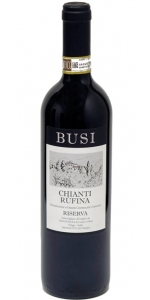
Busi Vin Santo del Chianti Rufina Riserva is made from 100% Sangiovese.
This is a Riserva level Chianti showing prestige and elegance, being powerful and elegant at the same time.
Color: Ruby red with garnet reflections.
Aromas: Intense, ethereal bouquet with hints of leather, tar and ripe cherry fruit.
Flavors: Full of ripe fruit with nuances of leather and liquorice. The taste is complex and round and rich with character. The finish is persistent and satisfying.
Pair with grilled, braised or roasted meats, dishes flavored with mushrooms, or rosemary. Excellent with polenta dishes.
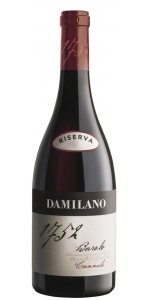
“1752” is the name of the Damilano Barolo Cannubi Riserva, in honor of the year in which the historic bottle was first marked “Cannubi”. It still exists today perfectly conserved by the Manzone family in Bra, close to Barolo. The bottle is clearly marked as being of “1752” vintage, indicating that Cannubi historically precedes Barolo.
About the Vineyard:
The Cannubi Cru is in found within one of the 6 core zones which comprise a UNESCO heritage site in Italy. A mixture of Tortonian and Helvetian calcareous marl gives the grapes intense aromas of cherry, plum and tobacco, rose and violet in sequence. Its low potassium and high calcium/magnesium content offer the wine a fine and polished touch. The vineyard is located at about 270 m. a.s.l. and has a south-east sun exposure. Barolo Riserva Cannubi 1752 It is a small plot of about 2 hectares of Nebbiolo vines, currently between 30 and 50 years of age.
Tasting Notes:
Garnet ruby red in color, the bouquet is intense and balanced, with notes of violet, red fruit, cherry and plum, spices, liquorice, cocoa, leather and tobacco. Dry, robust, full-bodied, very persistent, rich and velvety
Food Pairing:
This wine is excellent with typical piedmontes pasta (tajarin, ravioli); perfect with red meat, braised and roast meat, game and absolutely ideal with all types of cheeses.
Review:
The purity of this wine is pretty phenomenal with blackberries, strawberries, fresh flowers and licorice. Hints of tar. It’s full-bodied, yet composed and compact with ultra fine tannins and a long, flavorful finish. Very structured. Try after 2024.
-James Suckling 97 Points

All older vintage wines have been purchased from a single collectors cellar. Pictures can be requested before shipment.
Fresh, fruity, with classic tart cherry.
Appearance: ruby-red in color.
Aroma: clean, floral notes.
Flavor: well structured and harmonic on the palate; easy drinking with a soft and lingering finish. Ageing potential: 10/15 years.
Adapts well to both light and more substantial dishes.
Production area: amidst the hills of Pelago in the Chianti Rufina D.O.C.G. area, with a soil composition of marly, calcareous clay as typically found in the Arno valley east of Florence. Aspect: south-facing. Altitude: 200/350 m above sea level. Cultivation method: spurred cordon. Harvest period: from the 20th of September until the middle of October. Vinification: the grapes are fermented in stainless steel tanks at a controlled temperature (26/28°C) for 10 days before racking and malolactic fermentation in stainless steel. After fermentation the wine is put into wooden barrels. Fermentation in stainless steel at controlled temperatures for 7 to 8 days, with an additional 3 to 4 days on the skins. The wine is then racked and goes through malolactic. It is then racked again and stays another 7 months in stainless steel.
The Busi Estate
The winery was founded in the 1700’s and has been operated by the Busi family since the 1800s. Grapes have been grown on the property since the 1400’s. The property is partially surrounded by the vineyards of Frescobaldi, in the heart of the Rufina zone where wine has been produced since the 15th century.
The farm also produces olive oil within the confines of the group Laudemio, which is olive oil that is extra virgin in quality, vintage date, and less than .02% acid (normal extra virgin is .05% acid).
Giovani Busi is the winemaker with the advice of internationally enologist Giacomo Tachis. The cellars date backt to the 12th century but equipped with the latest technology.
The Busi Vineyard
Total farm size 90 hectares (222.3 acres): 60 hectares of vines (148.2 acres), 25 hectares of olive trees. The vineyard surface is broken down as follow:
A. 50.5 ha Chianti Rufina
B. 8.0 ha Cabernet Sauvignon
C. 1.0 ha Chardonnay
D. 0.5 ha Merlot
Chianti Rufina, the smallest Chianti area, is located northeast of Florence on the sandy calcareous lower slopes of the Apennines. It is said to be "one of Tuscany's most priviliged vineyard areas where Chianti reaches heights of size and longevity rivalled only on privileged parts of Classico".
The Chianti Rufina vineyard is planted on clay, marl and calcareous soil with a large percentage of rocks stones for good drainage. The vines are an average of 10-25 years old.
Mascot is a small-production label founded by Will Harlan in Napa Valley. The wines under this label are made from the younger vines of Harlan Estate, BOND, and Promontory, but The Mascot bottles share an exclusive preview at the development of their estates. Founded as an initial experiment to see what the young vines were capable of producing, the wines were initially only shared with close friends and family. By 2008, Will officially released the first vintage to the public since production had increased significantly. They create just one wine made from Cabernet Sauvignon, and the bottle is aged for five years before release. Assembled into a single, youthful expression, this wine shares a glimpse into the evolution and pedigree of its parent estates.
Tasting Notes:
Following a vintage full of changing conditions and demanding decision points, the steady and pleasant progress of the 2018 vintage left our team, at times, in limbo. Contradictory as it may seem, the dramas that sometimes punctuate the definitive months for the growing season help to frame the winegrowing team’s course of action; yet the tranquil succession of weeks that emerged between spring and fall in 2018 left almost entirely open the question of when to harvest. Healthy rainfall in March and April preceded a benevolent summer, whose mildness was interrupted only briefly by a few warming periods. The fruit of the young vines maintained a measured balance that gave the team little indication that harvest was imminent. Fog and temperate days followed in September, when—relying more on instinct than empirical cues—we began to pick. This judgment—as well as the gentle nature of the season—is confirmed in the subtle, ethereal power of the vintage, which reveals itself first in the deep, brooding aromas of dark fruit, black tea, and herbal notes. The texture expands around a lifted structure, as powdery tannins gently resolve. This diffused, enigmatic softness is anchored on the mid-palate by a gratifying density, which prepares the senses for a flourish of hidden energy and vivid detail that illuminates the finish.
The Barossa has a core of traditional growers of German Silesian descent, dating back five generations, staunchly continuing on the traditions of their forebears. Occasionally one or two parcels of fruit of overwhelming quality come over the weighbridge; this is such an example. This wine is sourced from up to 70-year-old, low-yielding shiraz vines from a selection of historical grower vineyards at Tappa Pass and Light Pass, growing in low-fertility Neoproterozoic soils more than 542 million years old, that range from red-brown earths to terra rossa. These vineyards provide shiraz fruit from both the Eden and Barossa Valleys of the Barossa zone, vinified in traditional open-top fermenters. Matured in 24% new and 76% seasoned French hogsheads for 18 months prior to blending and bottling.
Deep crimson with violet hues. Vibrant aromas of blueberry, blackberry, Satsuma plum and raspberry with hints of anise, crushed marjoram, cardamom, violets and cedar. The palate is rich, plush, and complex, with juicy blueberry and mulberry, spicy blackberry paste, and layers of fine velvety tannins creating incredible depth and length.
Review:
This was an excellent vintage in the Barossa and this exceptional wine from 70-year-old low yielding vines is a beautiful expression of the season. Dark plummy dark chocolate characters with a dry dusty complexity. The palate is sublimely integrated and balanced, exhibiting poise and style. The sweet fruit on the middle palate is complemented by the minerally oyster shell edge. Terrific wine.
-Wine Pilot 96 Points



