
" We don't sell the wine without touching the vine "
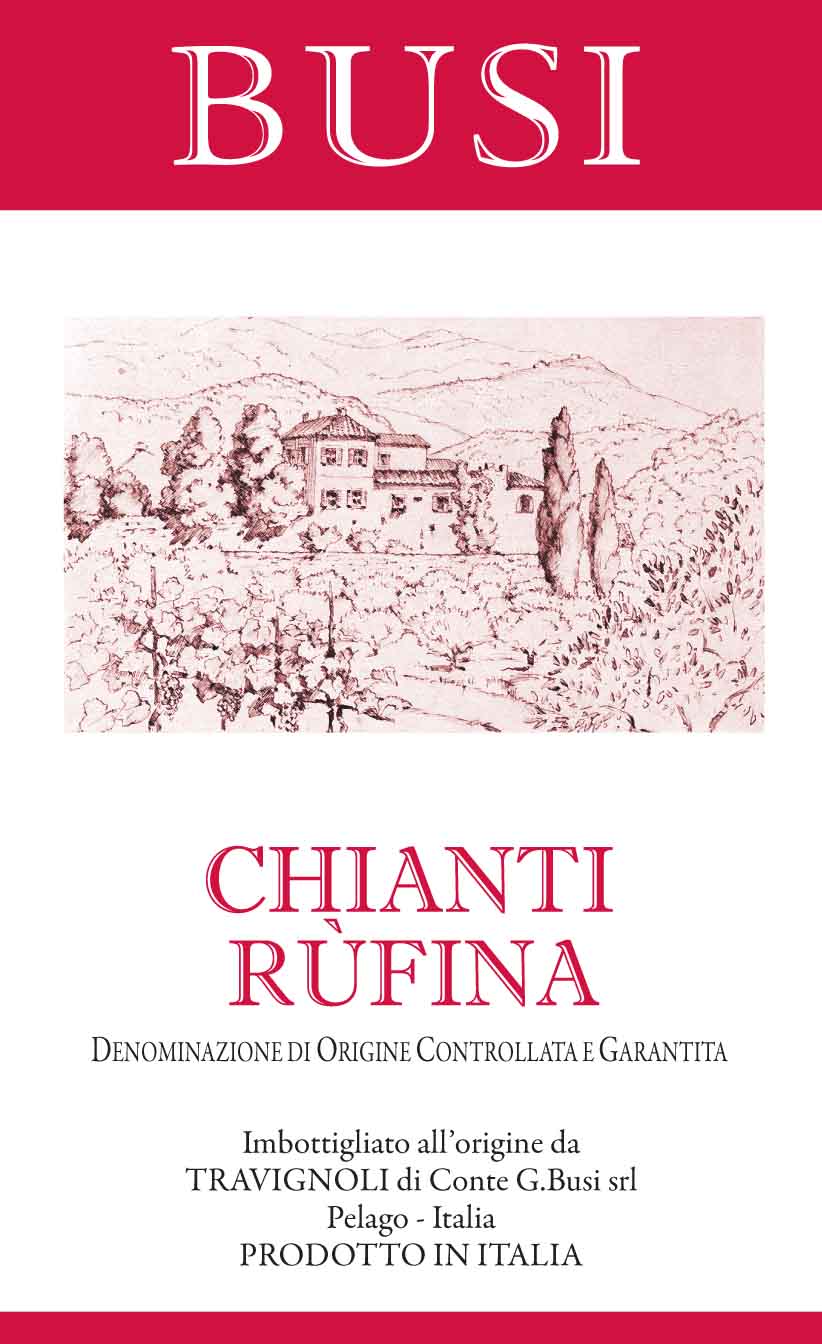
| Country: | Italy |
| Regions: | Tuscany Chianti |
| Wineries: | Busi Travignoli |
| Grape Type: | Sangiovese |
| Vintage: | 2017 |
| Bottle Size: | 750 ml |
Busi Chianti Rufina is made from 100% 100% Sangiovese
Fresh, fruity, with classic tart cherry.
Appearance: ruby-red in color.
Aroma: clean, floral notes.
Flavor: well structured and harmonic on the palate; easy drinking with a soft and lingering finish. Ageing potential: 10/15 years.
Adapts well to both light and more substantial dishes.
Producer Information: Villa Travignoli Travignoli, a name which literally means “Tra Vignoli” (between the vineyards), is located in the middle of Frescobaldi’s Nipozzano vineyard, in the heart of the Rufina zone. Aged six months in wood and six months in stainless steel. Pairs well with salamis, pastas, grilled or roasted meats, dishes flavored with mushrooms, or rosemary. Excellent with polenta dishes.
Busi Chianti Rufina Riserva is made from 100% Sangiovese
Vineyards: Travignoli, a name which literally means “Tra Vignoli” (between the vineyards) is located in the middle of Frescobaldi’s Nipozzano vineyard in the heart of the Rufina zone. There is documented evidence that wine was first produced there in the 5th C BC by the Etruscans who called it “Nectar of the Gods”. The Church acquired the land and constructed the cellars in 1100.
Count Busi and his family acquired the estate in the 1800’s. Overall, 91
hectares belong to the estate. The 60 hectares of vineyards are excellently
position on the slopes with a southerly exposure at an elevation between 270 to 370 meters. Clay, marl and calcareous soil with a large percentage of rocks and stones for good drainage. Vines are an average of 10–25 years old.
Harvest: October– by hand.
Yield per hectare: 40 Quintals per hectare
Vinification: Fermentation in stainless steel at controlled temperatures for 7 to 8 days with an additional 7 to 8 days on the skins. The wine is then racked and goes through malolactic. It is then racked again and stays another 3 months in stainless steel.
Aging: 25 to 30 hectoliter barrels of Slavonian oak for 18 months and 3 months in Allier barriques. There is a period of refinement of 4 to 5 months in the bottle.
Alcohol: 13% by vol.
Color: Ruby red with garnet reflections.
Bouquet: Intense, ethereal bouquet with hints of leather, tar and ripe cherry fruit.
Taste: The flavor is full of mature fruit with nuances of leather and liquorice. The taste is complex and round and rich with character. The finish is persistent and satisfying.
Foods: Grilled, braised or roasted meats, dishes flavored with mushrooms, or rosemary. Excellent with polenta dishes.
Total Production: 3,300 cases
Enologist: Mauro Orsoni
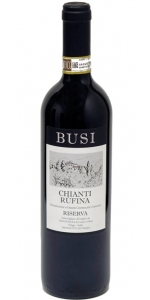
Busi Vin Santo del Chianti Rufina Riserva is made from 100% Sangiovese.
This is a Riserva level Chianti showing prestige and elegance, being powerful and elegant at the same time.
Color: Ruby red with garnet reflections.
Aromas: Intense, ethereal bouquet with hints of leather, tar and ripe cherry fruit.
Flavors: Full of ripe fruit with nuances of leather and liquorice. The taste is complex and round and rich with character. The finish is persistent and satisfying.
Pair with grilled, braised or roasted meats, dishes flavored with mushrooms, or rosemary. Excellent with polenta dishes.
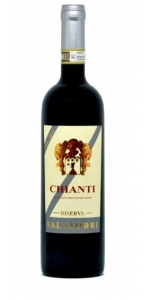
Salvadori Chianti Riserva DOCG 2017 is made from Sangiovese 90% , Merlot 10

All older vintage wines have been purchased from a single collectors cellar. Pictures can be requested before shipment.
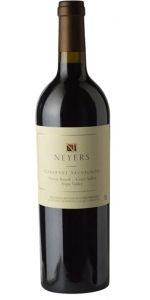
Neyers Cabernet Sauvignon Neyers Ranch is made from 100 percent Cabernet Sauvignon.
"We harvested the 2017 Cabernet Sauvignon crop from our Conn Valley Ranch in the first week of October, a week later than we picked the same vineyard the prior year. The size of the crop was about 20% smaller in 2017 as well, mostly due to the cold, wet weather we experienced in spring during flowering. Grapevines are self-pollinating, and cold, windy or damp weather interferes with this process, a problem known the French call coulure. Ironically, the harsh spring weather of 2017 had a huge impact on the size of our crop. Still, this smaller crop ripened fully and evenly, and at harvest time we picked beautiful, dark-colored clusters under near-perfect conditions. The finished wine was immediately remarkable for its flavor and complexity, and the wine looks to be one that will improve for many years. During my career in the Napa Valley wine business, I’ve learned to expect the best wines from cold years like 2017. These are vintages that are viewed initially with lowered expectations, but my experience has been just the opposite. Going back to my first Napa Valley harvest in 1971, these ‘colder years’ invariably result in wines with brighter, more attractive flavors, and the wines age longer and more gracefully.
Following harvest, the wine was fermented using wild, native yeast in an temperature-controlled stainless steel tank. After 45 days or so, the tank was drained and the pomace pressed, and the wine transferred to 60-gallon French oak barrels, 25% of them new. During the first year, we racked the wine off of the yeast lees three times, and by May 2019 it had been sufficiently clarified to bottle without fining or filtration. I am especially impressed by its bright ruby hue, a color so commanding it reminded me of the 1995 red Bordeaux wines I tasted from barrel during my trip to France in the Spring of 1996. It’s loaded with flavors that range from wild cherry to chocolate, enhanced by the lovely hint of tobacco leaf and mint. Each aromatic component has its own individual fascination, but all of them together provide a remarkable experience. Here’s a complete Napa Valley Cabernet Sauvignon that we expect it to improve for 20 years. It's a from a very small crop that will provide decades of pleasure." - Bruce Neyers
Review:
Attractive aromas of blueberries and lavender follow through to a medium body, firm and silky tannins and a slightly chewy finish. Needs a couple of years to soften. Better after 2022.
-James Suckling 93 Points
Busi Chianti Rufina is made from 100% 100% Sangiovese
Fresh, fruity, with classic tart cherry.
Appearance: ruby-red in color.
Aroma: clean, floral notes.
Flavor: well structured and harmonic on the palate; easy drinking with a soft and lingering finish. Ageing potential: 10/15 years.
Adapts well to both light and more substantial dishes.
Production area: amidst the hills of Pelago in the Chianti Rufina D.O.C.G. area, with a soil composition of marly, calcareous clay as typically found in the Arno valley east of Florence. Aspect: south-facing. Altitude: 200/350 m above sea level. Cultivation method: spurred cordon. Harvest period: from the 20th of September until the middle of October. Vinification: the grapes are fermented in stainless steel tanks at a controlled temperature (26/28°C) for 10 days before racking and malolactic fermentation in stainless steel. After fermentation the wine is put into wooden barrels. Fermentation in stainless steel at controlled temperatures for 7 to 8 days, with an additional 3 to 4 days on the skins. The wine is then racked and goes through malolactic. It is then racked again and stays another 7 months in stainless steel.
The Busi Estate
The winery was founded in the 1700’s and has been operated by the Busi family since the 1800s. Grapes have been grown on the property since the 1400’s. The property is partially surrounded by the vineyards of Frescobaldi, in the heart of the Rufina zone where wine has been produced since the 15th century.
The farm also produces olive oil within the confines of the group Laudemio, which is olive oil that is extra virgin in quality, vintage date, and less than .02% acid (normal extra virgin is .05% acid).
Giovani Busi is the winemaker with the advice of internationally enologist Giacomo Tachis. The cellars date backt to the 12th century but equipped with the latest technology.
The Busi Vineyard
Total farm size 90 hectares (222.3 acres): 60 hectares of vines (148.2 acres), 25 hectares of olive trees. The vineyard surface is broken down as follow:
A. 50.5 ha Chianti Rufina
B. 8.0 ha Cabernet Sauvignon
C. 1.0 ha Chardonnay
D. 0.5 ha Merlot
Chianti Rufina, the smallest Chianti area, is located northeast of Florence on the sandy calcareous lower slopes of the Apennines. It is said to be "one of Tuscany's most priviliged vineyard areas where Chianti reaches heights of size and longevity rivalled only on privileged parts of Classico".
The Chianti Rufina vineyard is planted on clay, marl and calcareous soil with a large percentage of rocks stones for good drainage. The vines are an average of 10-25 years old.
In 1992 the Hill-Smith family counted themselves amongst those fortunate enough to own a vineyard upon the famous Coonawarra terra rossa soil over limestone. Experimentation, innovation, minimalist intervention and small batch winemaking has resulted in The Menzies’ reputation as a wine of longevity, elegance and structure.
Situated in the heart of Coonawarra’s terra rossa strip, The Menzies Estate vineyard lies on a flat plain, approximately 70km from the coast. Given the terrain and influence of the cooling Bonney upwelling, Coonawarra is an ideal location to grow premium Cabernet Sauvignon. Our soil is red sandy loam over limestone, which is classic Cabernet Sauvignon country. The grapes for The Menzies 2017 are from vines planted in 1994 and 1996. Bunches are usually small with small berries, giving concentration via an ideal skin to juice ratio favouring the making of fullbodied reds.
Experimentation, innovation, minimalist intervention, and small batch winemaking has resulted in The Menzies' reputation as a wine of longevity, elegance, and structure.
Aromas of fresh rosemary, mulberry, violets and exotic spices. Take a sip and you will feel the poise and tension for which great Cabernet is renowned. A wine of great complexity with flavors of blackcurrant, bitter chocolate, and mulberries, wrapped in divine tannins and a lovely sweet, dark fruit finish. With decanting in its youth, it is enjoyable as an elegant full-bodied red wine.
Review:
The 2017 The Menzies Cabernet Sauvignon is looking good next to the 2016 tasted beside it. It is fresh and vibrant, with layers of complexing dark earth characters, with cigar box, black olive brine, cassis, bramble, milk chocolate and cracked black pepper. This is very good, and it has what I am coming to recognize as a "Yalumba red character": dried herbs, particularly oregano. The juicy splay of fruit through the finish is a highlight.
-Wine Advocate 95 Points
La Parcelle 8 Cabernet Sauvignon presents bold and complex aromas of black fruits, chocolate, and toast alongside earthy, herbal, and floral notes. On the palate, it displays a full body, ripe tannins, and a lasting finish.
La Parcelle 8 Cabernet Sauvignon pairs well with roasted lamb, braised short ribs, mushrooms, or fine cheeses.
Review:
Complex and intense with a rare mineral quality for the hot 2020 vintage. Fresh blueberries, wild herbs, hot stones and graphite. A hint of violet. Tannins are quite chalky and tense on the medium- to full-bodied palate. Extremely long with an ethereal finish. It goes on and on, lasting for two minutes. Effortless intensity and concentration, but almost weightless. This delivers exceptional freshness for this vintage. Harvested from 18th March. Already drinkable now, but it will last. 100% century-old, ungrafted cabernet sauvignon.
-James Suckling 99 Points




