
" We don't sell the wine without touching the vine "
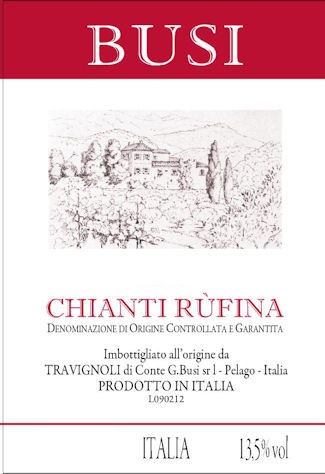
| Country: | Italy |
| Region: | Tuscany |
| Wineries: | Busi Travignoli |
| Grape Type: | Sangiovese |
| Vintage: | 2023 |
| Bottle Size: | 375 ml |
Busi Chianti Rufina (Half Bottle) is made from 100% Sangiovese.
Fresh, fruity, with classic tart cherry.
Appearance: ruby-red in color.
Aroma: clean, floral notes.
Flavor: well structured and harmonic on the palate; easy drinking with a soft and lingering finish. Ageing potential: 10/15 years.
Production area: amidst the hills of Pelago in the Chianti Rufina D.O.C.G. area, with a soil composition of marly, calcareous clay as typically found in the Arno valley east of Florence.
Aspect: south-facing.
Altitude: 200/350 m above sea level.
Cultivation method: spurred cordon.
Harvest period: from the 20th of September until the middle of October.
Vinification: the grapes are fermented in stainless steel tanks at a controlled temperature (26/28°C) for 10 days before racking and malolactic fermentation in stainless steel. After fermentation the wine is put into wooden barrels.
Fermentation in stainless steel at controlled temperatures for 7 to 8 days, with an additional 3 to 4 days on the skins. The wine is then racked and goes through malolactic. It is then racked again and stays another 7 months in stainless steel.
Adapts well to both light and more substantial dishes.
The Busi Estate
The winery was founded in the 1700’s and has been operated by the Busi family since the 1800s. Grapes have been grown on the property since the 1400’s. The property is partially surrounded by the vineyards of Frescobaldi, in the heart of the Rufina zone where wine has been produced since the 15th century.
The farm also produces olive oil within the confines of the group Laudemio, which is olive oil that is extra virgin in quality, vintage date, and less than .02% acid (normal extra virgin is .05% acid).
Giovani Busi is the winemaker with the advice of internationally enologist Giacomo Tachis. The cellars date backt to the 12th century but equipped with the latest technology.
The Busi Vineyard
Total farm size 90 hectares (222.3 acres): 60 hectares of vines (148.2 acres), 25 hectares of olive trees. The vineyard surface is broken down as follow:
A. 50.5 ha Chianti Rufina
B. 8.0 ha Cabernet Sauvignon
C. 1.0 ha Chardonnay
D. 0.5 ha Merlot
Chianti Rufina, the smallest Chianti area, is located northeast of Florence on the sandy calcareous lower slopes of the Apennines. It is said to be "one of Tuscany's most priviliged vineyard areas where Chianti reaches heights of size and longevity rivalled only on privileged parts of Classico".
The Chianti Rufina vineyard is planted on clay, marl and calcareous soil with a large percentage of rocks stones for good drainage. The vines are an average of 10-25 years old.
Busi Chianti Rufina is made from 100% 100% Sangiovese
Fresh, fruity, with classic tart cherry.
Appearance: ruby-red in color.
Aroma: clean, floral notes.
Flavor: well structured and harmonic on the palate; easy drinking with a soft and lingering finish. Ageing potential: 10/15 years.
Adapts well to both light and more substantial dishes.
Producer Information: Villa Travignoli Travignoli, a name which literally means “Tra Vignoli” (between the vineyards), is located in the middle of Frescobaldi’s Nipozzano vineyard, in the heart of the Rufina zone. Aged six months in wood and six months in stainless steel. Pairs well with salamis, pastas, grilled or roasted meats, dishes flavored with mushrooms, or rosemary. Excellent with polenta dishes.
Busi Chianti Rufina Riserva is made from 100% Sangiovese
Vineyards: Travignoli, a name which literally means “Tra Vignoli” (between the vineyards) is located in the middle of Frescobaldi’s Nipozzano vineyard in the heart of the Rufina zone. There is documented evidence that wine was first produced there in the 5th C BC by the Etruscans who called it “Nectar of the Gods”. The Church acquired the land and constructed the cellars in 1100.
Count Busi and his family acquired the estate in the 1800’s. Overall, 91
hectares belong to the estate. The 60 hectares of vineyards are excellently
position on the slopes with a southerly exposure at an elevation between 270 to 370 meters. Clay, marl and calcareous soil with a large percentage of rocks and stones for good drainage. Vines are an average of 10–25 years old.
Harvest: October– by hand.
Yield per hectare: 40 Quintals per hectare
Vinification: Fermentation in stainless steel at controlled temperatures for 7 to 8 days with an additional 7 to 8 days on the skins. The wine is then racked and goes through malolactic. It is then racked again and stays another 3 months in stainless steel.
Aging: 25 to 30 hectoliter barrels of Slavonian oak for 18 months and 3 months in Allier barriques. There is a period of refinement of 4 to 5 months in the bottle.
Alcohol: 13% by vol.
Color: Ruby red with garnet reflections.
Bouquet: Intense, ethereal bouquet with hints of leather, tar and ripe cherry fruit.
Taste: The flavor is full of mature fruit with nuances of leather and liquorice. The taste is complex and round and rich with character. The finish is persistent and satisfying.
Foods: Grilled, braised or roasted meats, dishes flavored with mushrooms, or rosemary. Excellent with polenta dishes.
Total Production: 3,300 cases
Enologist: Mauro Orsoni
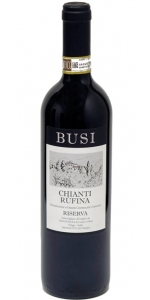
Busi Vin Santo del Chianti Rufina Riserva is made from 100% Sangiovese.
This is a Riserva level Chianti showing prestige and elegance, being powerful and elegant at the same time.
Color: Ruby red with garnet reflections.
Aromas: Intense, ethereal bouquet with hints of leather, tar and ripe cherry fruit.
Flavors: Full of ripe fruit with nuances of leather and liquorice. The taste is complex and round and rich with character. The finish is persistent and satisfying.
Pair with grilled, braised or roasted meats, dishes flavored with mushrooms, or rosemary. Excellent with polenta dishes.
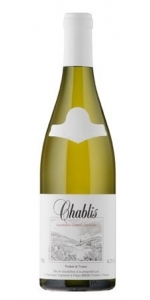
Corinne Perchaud Chablis (half-bottle) is 100 percent Chardonnay.
A classic Chablis with aromas of ripe white fruits and a taste of rich minerals.
The Vineyards The plots are in Chablis located predominantly on the village of Fleys, but also on the common Chichée and Fontenay, their total area is 13 hectares. They are mostly north and north-west oriented. The ground floor is Kimmeridgian marl consisting clay and limestone. The oldest of of the vines is 35 years. Winemaking After a slight settling, the juice is put in stainless tanks to achieve its fermentation both alcoholic and malolactic. There is a long aging on lees to refine the flavors and develop complex flavors. If necessary, we make a collage of Bentonite to remove proteins and a passing cold which eliminates tartar crystals. Then we perform a tangential filtration method friendly to the wine. The wine is bottles between 14 and 21 months after the harvest. 2011 Vintage The relatively high temperatures at the end of winter allowed an early bud vines in early March. With a hot, dry spring flower took place in good conditions. In July, a hailstorm located did some damage to our Fourchaume plot. July and early August, rainy and stormy brought the water needed vineyards. The dry and sunny weather of the second half of August brought the grape good maturity. The harvest began on September 2 under clement skies.
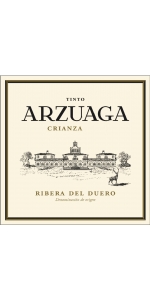
THIS OFFER IS FOR HALF-BOTTLES
Arzuaga Ribera del Duero Crianza 95% Tempranillo and 5% Cabernet Sauvignon.
Dark cherry color with purple highlights. Powerful nose and high aromatic diversity of ripe red and black fruits, spicy and balsamic notes, and a roasted finish. Soft and mellow in the mouth with a great fruitiness and length.
Corinne Perchaud Chablis (half-bottle) is 100 percent Chardonnay.
A classic Chablis with aromas of ripe white fruits and a taste of rich minerals.
The Vineyards The plots are in Chablis located predominantly on the village of Fleys, but also on the common Chichée and Fontenay, their total area is 13 hectares. They are mostly north and north-west oriented. The ground floor is Kimmeridgian marl consisting clay and limestone. The oldest of of the vines is 35 years. Winemaking After a slight settling, the juice is put in stainless tanks to achieve its fermentation both alcoholic and malolactic. There is a long aging on lees to refine the flavors and develop complex flavors. If necessary, we make a collage of Bentonite to remove proteins and a passing cold which eliminates tartar crystals. Then we perform a tangential filtration method friendly to the wine. The wine is bottles between 14 and 21 months after the harvest. 2011 Vintage The relatively high temperatures at the end of winter allowed an early bud vines in early March. With a hot, dry spring flower took place in good conditions. In July, a hailstorm located did some damage to our Fourchaume plot. July and early August, rainy and stormy brought the water needed vineyards. The dry and sunny weather of the second half of August brought the grape good maturity. The harvest began on September 2 under clement skies.

Bastgen Blauschiefer Riesling is 100 percent Riesling.
Bright, clean, fresh and zesty. Grapefruit like flavors. Fruity aromas and a nice minerality, typical of the Riesling grape grown on blue slate soil. Round, rich and a very long finish.
They meticulously tend 4.5 ha (11.11 acres) of which 80% is Riesling. The soil is made of slate. Their vineyards are located in Kesten and Brauneberg, on a steep terrace, and planted to 50-year old vines. Fortunately for Bastgen, they own part of the famous Brauneberger Juffer Sonnenuhr. The vines produce very small, ripe berries that are very tasty.
Review:
"Very enticing nose of ripe pear with some white peach and floral aromas! All the elegance and delicacy we expect from high-quality Mosel riesling, but this light-bodied and dry beauty is only an entry-level wine! Long, refreshing and delicate finish. This will be a bargain in all the markets it reaches. From organically grown grapes. Drink now. Screw cap. "
- James Sucking (November 2023), 92 pts
'Belle Côte', French for “Beautiful Slope”, was named by Sir Peter after the famous ski run in Courchevel, France. The oldest of the four Knights Valley Estate Chardonnay vineyards, ‘Belle Côte’ consistently exemplifies the potential of crafting exceptionally high-quality Chardonnay from our mountain vineyards. Planted at 1,700 to 1,800 feet (518 to 549 meters), Belle Côte has a southeastern exposure and a western border of native trees, which shelter the vines from the hot afternoon sun. These unique attributes create a naturally cool microclimate that provides an extended growing period and slow-ripening fruit, resulting in a later picking schedule that often continues into October (two to three weeks longer than most Chardonnay vineyards in Napa and Sonoma Counties).
The combination of a wet winter with significant rains in December through March and cool weather delayed budbreak nearly a month. Flowering and fruit set were also pushed back and the weather during the later flowering was favorable resulting in decent fruit set and slightly above average yields for the Chardonnay vineyards—a marked improvement over the record-low yielding 2022 vintage. The growing season was temperate without major heat spikes allowing the berries to hold onto their acidity which carried through into the wines. Harvest was almost a month later than normal with the last Belle Côte block coming in on November 2nd.
As the oldest of the four Peter Michael Winery estate Chardonnay blocks, 'Belle Côte' exemplifies the consistent quality of Chardonnay these mountain vineyards produce. Due to the naturally cool climate of the site’s high elevation, and mitigated exposure to the hot afternoon sun by its southeastern exposure and a stand of trees on its western border, the vines are allowed to slowly ripen. The growing season for Belle Côte typically extends into October, two to three weeks longer than most Chardonnay vineyards in Napa and Sonoma Counties.
With highly expressive aromatics of orange blossom, jasmine, candied orange peel, and rose petal, the 2023 'Belle Côte' showcases its unique terroir and thirty-three-year-old vines with a rich, creamy entry, dense, broad, juicy mid-palate and a lengthy, refined finish. There is a seamless quality to this wine that matches power, gras, and intensity with structure and weightlessness. The 2023 'Belle Côte' can be enjoyed in its youth or after many years of cellaring.
Review:
This extraordinary estate-grown wine from a great vintage is super vibrant, energized and tangy, with vital acidity supporting luscious ripe pear and apple flavors on a silky texture. Can't think of anything it lacks. Seamless, layered, yet structured and fresh, boding well for longer-term aging. It has a melts-in-the-mouth quality and an extra long finish. Drinkable now and best from 2030.
-James Suckling 100 Points



