
" We don't sell the wine without touching the vine "
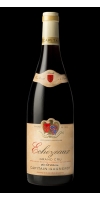
The Domaine Gagnerot was established in 1802. In 1864 Marie, Jean-Baptiste’s unique daughter, marries François Capitain, wine trader, native of Champlitte. Together, Jean-Baptiste and François establish the Domaine Capitain-Gagnerot.
After the phylloxera crisis wich ravaged the Burgundian vineyard from the 1870s the the 1880s, Marie then widowed, decides to keep the domaine and to replant it vines. The succession is since made from father to son.
After the Second World War, Roger Capitain inherits 3 hectares of vineyards and a wine trade. His two sons, Patrice and Michel, take over the domaine upon his retirement.
Today, the domaine comprise 16 hectares of vineyards in full ownership, and it is Pierre-François and Delphine, Patrice’s children, who now oversee its destiny, supported by their spouses.
Terroir
The particularity of Burgundy is to produce on diversified terroirs wines elaborated with a single grape variety, which emphasize the specificity of every appellation : Pinot Noir for red wines, Chardonnay for white wines.
Our terroir refers to the specific characteristics of grounds, subsoil, weather conditions and vines, but it is also the result of man’s work and knowhow, refined over a long history.
Located at the junction of Côte de Beaune and Côte de Nuits, the highly defined vineyard of Ladoix is ideally situated on the Coteau de Corton, the only hillside in Burgundy to produce both white Grand Crus and red Grand Crus.
This famed hillside has a geologic profile which comprises two types of soils:
• Marl limestone convenient for great white wines;
• Clay and limestone, yielding red wines of great finesse.
Winemaking
Our wines are produced in accordance with reasoned culture principles, applying at the same time the principles of integrated farming and as often as the weather conditions allow it, those of biodynamic farming. We work in harmony with the vineyard and its ecosystem, by favoring natural treatment products and by limiting our interventions to the minimum, in order to obtain a healthy harvest.
Vineyards are regularly earthed up and ploughed to ensure that the vines draw in depth the typicality and the expression of their terroir. Plowing also avoids rapid erosion of the soil, therefore ensuring optimal growing conditions for the vines.
A rigorous selection of plants, a thorough pruning and an early thinning out of leaves allow the control of quality and yield. To always obtain the best of each plot, there only remains to select the most favorable harvest date for an optimal maturity and quality. We believe that great wines are born in the vineyard.
Completely hand-harvested, grapes are sorted out and destemmed before being placed in tanks to be vinified.
The fermentation of Pinot Noir is naturally made, in open tank, without yeast addition, during 12 to 15 days following the harvest, in a temperature not exceeding 30 degrees Celsius. The wine is punched-down twice a day at the beginning of wine-making.
Wines are exclusively matured in oak barrels during 12 to 18 months. After the malolactic fermentation and a light filtration, they are bottled.
After racking of the must, our Chardonnay ends its alcoholic fermentation in barrels at a temperature between 20 and 22 degrees Celsius to ensure that it retains all its aromatic freshness.
After a minimum 10 month maturing in cask, wines are racked, filtered and bottled.
To protect the character of our wine and its terroir, we do not use more than 10% of new wood.
We believe that wood is solely a support in making good wine, and a slight touch of it is enough to achieve that goal.
Our viticulture and wine-making reflect our will to make genuinely fresh wines, which are the expression of our rich terroir, and of the elegance of the great grape varieties of Burgundy.
The fermentation of Pinot Noir is naturally made, in open tank, without yeast addition, during 12 to 15 days following the harvest, in a temperature not exceeding 30 degrees Celsius. The wine is punched-down twice a day at the beginning of wine-making.
Wines are exclusively matured in oak barrels during 12 to 18 months. After the malolactic fermentation and a light filtration, they are bottled.
After racking of the must, our Chardonnay ends its alcoholic fermentation in barrels at a temperature between 20 and 22 degrees Celsius to ensure that it retains all its aromatic freshness.
After a minimum 10 month maturing in cask, wines are racked, filtered and bottled.
To protect the character of our wine and its terroir, we do not use more than 10% of new wood.
We believe that wood is solely a support in making good wine, and a slight touch of it is enough to achieve that goal.
Our viticulture and wine-making reflect our will to make genuinely fresh wines, which are the expression of our rich terroir, and of the elegance of the great grape varieties of Burgundy.
No products found
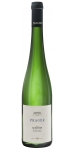
Weingut Prager Achleiten Riesling Smaragd is made from 100 percent Riesling.
Franz Prager, co-founder of the Vinea Wachau, had already earned a reputation for his wines when Toni Bodenstein married into the family. Bodenstein’s passion for biodiversity and old terraces, coupled with brilliant winemaking, places Prager in the highest echelon of Austrian producers.
Smaragd is a designation of ripeness for dry wines used exclusively by members of the Vinea Wachau. The wines must have a minimum alcohol of 12.5%. The grapes are hand-harvested, typically in October and November, and are sent directly to press where they spontaneously ferment in stainless-steel tanks.
Achleiten sits east of Weißenkirchen and is one of the most famous vineyards in the Wachau. The steeply-terraced vineyard existed in Roman times. Some sections have just 40 cm of topsoil over the bedrock of Gföler Gneiss, amphibolitic stone, and slate. “Destroyed soil,” as Toni Bodenstein likes to say.
Tasting Notes:
Austrian Riesling is often defined by elevated levels of dry extract thanks to a lengthy ripening period and freshness due to dramatic temperature swings between day and night. Wines from Achleiten’s highly complex soils are famously marked by a mineral note of flint or gun smoke, are intensely flavored, and reliably long-lived.
Food Pairing:
Riesling’s high acidity makes it one of the most versatile wines at the table. Riesling can be used to cut the fattiness of foods such as pork or sausages and can tame some saltiness. Conversely, it can highlight foods such as fish or vegetables in the same way a squeeze of lemon or a vinaigrette might.
Review:
The 2020 Ried Achleiten Riesling Smaragd offers a well-concentrated, fleshy and spicy stone fruit aroma with crunchy and flinty notes. It needs some time to get rid of the stewed fruit flavors, though. Full-bodied, fresh and crystalline, this is an elegant, complex and finely tannic Riesling that needs some years rather than a carafe to polymerize the tannins and gain some finesse. Tasted at the domain in June 2021.
At Prager, I could not determine that 2020 would be inferior to the 2019 vintage; on the contrary, the 2020 Smaragd wines fascinated me enormously in their clear, cool, terroir-tinged way. A 38% loss had occurred mainly because of the hail on August 22, although predominantly in the Federspiel or Riesling vineyards. There was no damage in the top vineyards such as Ried Klaus, Achleiten or Zwerithaler. "Interestingly, the vines are in agony for about two weeks after the hail. There was no more growth, no development of ripeness and sugar," reports Toni Bondenstein. The Veltliner then recovered earlier, while even picking a Riesling Federspiel in October was still a struggle. "Why Riesling reacted more intensively to the hail, I don't know myself either," says Bodenstein. Whole clusters were pressed to preserve acidity and to compensate for the lower extract, and compared to 2019, the 2020s were left on their lees longer. In June, however, the 20s in particular showed outstanding early shape.
-Wine Advocate 94 Points
Light yellow-green, silver reflections. Yellow stone fruit nuances with a mineral underlay, notes of peach and mango, a hint of tangerine zest, mineral touch. Juicy, elegant, white fruit, acidity structure rich in finesse, lemony-salty finish, sure aging potential.
-Falstaff 95 Points
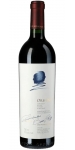
Opus One 2022 is made from 80% Cabernet Sauvignon, 8% Petit Verdot, 6.5% Cabernet Franc, 5% Merlot, 0.5% Malbec
Opus One 2022 exudes charm and sophistication from the glass. Primary aromas of blueberry, cassis, and dried rose petals with underlying notes of olive, cigar box, and graphite create a rich and inviting bouquet. On the palate, bright red-fruit flavors, cocoa, and fresh orange peel waltz together into a harmonious and balanced profile. Long and elegant, the finish delivers touches of wet stone, vanilla, and a hint of coffee. Fine-grained tannins and juicy ripeness signal the promise of a long future in the cellar.
Review:
Chocolate, cherry and rose petal aromas on the nose. Very open and alive - this has a great energy from the aromatics alone with soft cedar shavings, vanilla bean and bramble fruit. Juicy and lively, this is full of fun - fruity and concentrated. The tannins are just wonderful, creamy and slightly grippy, extending the flavours vertically. Tons of juicy, succulent fruit - this feels quite modern but still with that flash of sunshine and ripeness. Long lasting with purity and delicacy that make it so enjoyable. A wonderful creation from Michael Silacci. This is not your typical blockbuster at all, this is a darling of a wine. 0.5% Malbec completes the blend. The Opus team chose to pick early and quickly given the heat spikes in 2022, starting with the Merlot on 24th August. Ageing 18 months in French oak.
-Decanter 97 Points



