" We don't sell the wine without touching the vine "
| BUY MORE! SAVE MORE! | ||||||||||||||||||||
|
| Country: | Italy |
| Region: | Piemonte |
| Winery: | Marco Capra Azienda Agricola |
| Grape Type: | Nascetta |
| Organic: | Yes |
| Vintage: | 2024 |
| Bottle Size: | 750 ml |
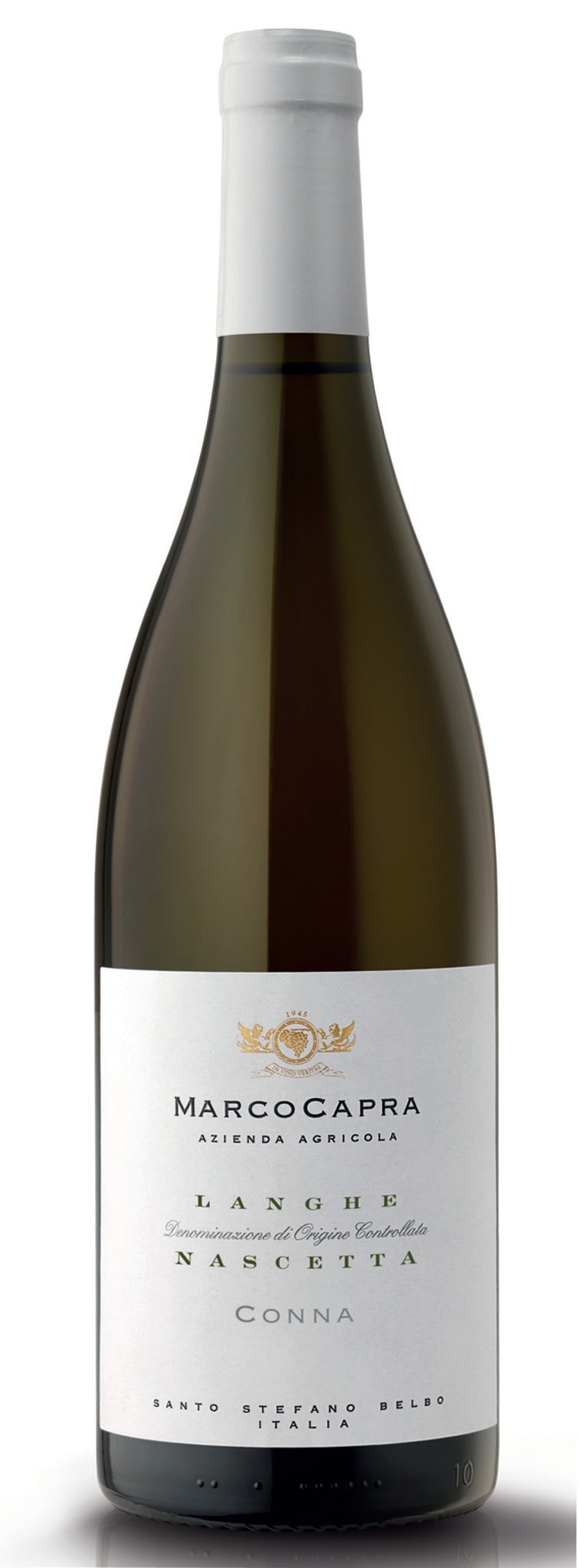
Marco Capra Langhe Nascetta is made from 100% Nascetta - 15 years old - 1.73 acres
Aged 6 months in stainless steel vats
The name "CONNA" is a sweet nickname after his wife Monica.
Bright straw yellow with greenish hues, with an intense and interesting perfume of grapefruit, apple and aromatic herbs. Floral, fresh, focused, good acidity. Refreshing and bright, full bodied with an aromatic persistence, it is savory and tasty on the palate with a smoothness that enhances the rich character of the wine
Altitude: 400 m above sea level.
Soil composition: lime and sand.
Plant density: 5000 vines / hectare.
Cultivation system: traditional Guyot.
Yield per hectare: 6 tons.
After a short period of maceration on skins, the grapes are soft pressed. The clear must obtained ferments slowly in stainless steel vats at a controlled temperature of 16-17°C. The wine spends a long period of time on the fine lees, with frequent “batonnage”
Ideal with apetizers, shellfish and other fish dishes.

Demoiselles Sancerre Blanc is made from 100 percent Sauvignon Blanc.
The name "Les demoiselles" (translate as "The young ladies"), refers to the beautiful migratory birds (Cranes) that fly over the town of Sancerre twice a year (in the Fall going South to spend the winter in the African continent, and in the Spring going back North to spend the Summer in Northern Europe). These graceful birds offer a unique and impressive show when they sometimes land on the banks of the Loire River. The Fleuriet family wanted to highlight this exceptional grace and express an elegant and refined bouquet in this Sancerre Demoiselles cuvée.
The wine shows a bright yellow color with green highlights, a fruity nose with aromas of white flowers and acacia. Light-medium bodied in the mouth, supple and well structured, its concentration and crisp acidity make it a harmonious and food-friendly wine.
Pairs nicely with fresh goat cheeses, oysters with lemon, grilled lemon chicken breasts and Mexican dishes. Serve these whites at 46 °F (8 °C).

Bright fruit on the nose boasts notes of black cherry, black plum, violets, rose, orange, cocoa nibs, tobacco, mushroom and forest floor. On the palate, complex layers of fruit slowly melt into a bold, structured wine that impresses from start to finish. Velvety tannins interact gracefully with the wine’s fruit and acidity, all coming together to create a delightful wine and a beautiful expression of Willamette Valley Pinot Noir.
Review:
The 2021 King Estate ‘Domaine’ Pinot Noir was stored in 26% new French oak before bottling and represents the top one percent of Estate Pinot Noir barrels. Red currants combine with freshly tilled soils, Black cherry and shades of dried herbs. The palate is soft and refined with silky tannins that frame a core of red and dark fruit flavors. Finishing long, with good viscosity, this is already sgiwubg beautifully right now.
Owen Bargreen 94 Points

Mordoree Tavel Rose Reine des Bois is made from Grenache
Nose: Steady rose, brilliant and cristal clear.
Aromas : very complex : from flowers, white fruits and red fruits (strawberries, pomegranate, rapsberry). Slightly mentho-lated
Palate : fresh, classy, elegant, very long.
Aging capacity : 8 to 10 years.
This wine comes from a parcel planted on a pebbled soil covered with stones, whose geology is typical of the grands crus from the Rhone Valley (a base made of marine molasse from the Miocene period covered with an alpine diluvium from the Villafranchian period). 100 % destemming, cold maceration during 48 h., pneumatic pressing, fermentation at 18° C.
To pair with: roasted and or spicy chicken, duck, goose, fish soup, white meat, seafood and a lot of fishes (tuna, John Dorry, red mulet, etc...).Quite all Asian cuisine. Dishes with garlic, dishes with tomatoes.
Review:

Corne Loup Tavel Rose is made from 60% Grenache, 15% Cinsault, 10% Syrah, 15% mix of Mourvèdre, Clairette & Carignan
Elegant, refreshing, food-friendly and versatile, this Tavel offers mouth-watering aromas of strawberry and berry pie.
Corne Loup Tavel represents the pinnacle of the rose pyramid quality wise that can be achieved in the Southern Rhone. The town of Tavel has been famous for its rose wine since the time of the Popes in Avignon (1300's). Tavel is about 2,300 acres in size and produces about 500,000 cases yearly of 9 liter cases, plus can age for 2-3 years, unlike many other roses. Produced from a blend of Grenache, Cinsualt, Syrah, Mourvedre, Cinsault and Carignan, the wine comes from a famous sub-parcel called the Plateau de Vallongue between Tavel and Lirac AOC's.
The 20 hectare-vineyards are located in the hamlets of Oliver, Campet, Vestides and Vallongue. The Tavel from this producer is a blend of all 3 soils types you can find in the AOC:
Dry and lively, it is an ideal wine for barbecues as it makes a wonderful sipper that's also capable of matching with a wide variety of summer foods, including grilled chicken, seafood and summer salads

Corne Loup Cotes du Rhone Blanc is made from 50% Grenache Blanc, 20% Clairette, 15% Roussanne and 15% Viognier.
The wine has a pale straw color with brilliant reflection. In the nose, it displays great aromatics, mainly citrus fruit. The palate is well balanced, with a lot of finesse and persistence.
Delicious when paired with seafood (seashell and fish). It is also great by itself as an aperitif.

After working with the fruit for over a decade, Turkey is proud to present the first single-vineyard bottling for Turley from the Del Barba Vineyard. Contra Costa is a delta where the San Joaquin and Sacramento rivers meet, and these head-trained vines are planted in deep dehli blow sand, made up of decomposed granite coming down from the Sierra Mountains. The resulting wine embodies the best the delta has to offer: silken textures, ultra fine tannin, and dark saline fruits.
Review:
"The 2023 Zinfandel del Barba is ripe, boisterous and super-expressive. Floral overtones and bright acids run through a core of red/purplish fruit. Sandy soils confer lovely aromatic presence to this pure Zinfandel. This is an especially accessible offering from Turley."
-Vinous 91-93 Points

Marco Capra Langhe Nascetta is made from 100% Nascetta - 15 years old - 1.73 acres
Aged 6 months in stainless steel vats
The name "CONNA" is a sweet nickname after his wife Monica.
Bright straw yellow with greenish hues, with an intense and interesting perfume of grapefruit, apple and aromatic herbs. Floral, fresh, focused, good acidity. Refreshing and bright, full bodied with an aromatic persistence, it is savory and tasty on the palate with a smoothness that enhances the rich character of the wine
Altitude: 400 m above sea level.
Soil composition: lime and sand.
Plant density: 5000 vines / hectare.
Cultivation system: traditional Guyot.
Yield per hectare: 6 tons.
After a short period of maceration on skins, the grapes are soft pressed. The clear must obtained ferments slowly in stainless steel vats at a controlled temperature of 16-17°C. The wine spends a long period of time on the fine lees, with frequent “batonnage”
Ideal with apetizers, shellfish and other fish dishes.

Capra Marco Doppiadi Barbera d'Asti is made from 100% Barbera.
Color: very deep bright ruby red with violet hues.
Bouquet: intense and persistent, pleasantly fruity and reminiscent of plums and black cherries.
Flavor: vinous, full, pleasantly fresh and generous.
Suitable as an aperitif with appetisers and sliced meats, it is perfect throughout a meal. it is perfect with pasta dishes featuring tagliatelle and ravioli, as well as with meaty main courses, such as stews and roasts. Interesting with medium-mature cheeses, with Toma and Pecorino.

Capra Marco Sireveris Dolcetto d'Alba is made from 100% Dolcetto.
Color: deep, bright ruby red with violet hues.
Bouquet: vinous, fruity and fragrant, with notes reminiscent of ripe cherries.
Flavour: full, dry flavour with a pleasantly bitter aftertaste, typical of this variety.
A wine for drinking throughout a meal, it is perfect with cured meat and cheese snacks, ideal with rice and pasta dishes or with red meat, all combinations which enhance its delightful suitability for drinking.

Quercia nelle Langhe Gavi is 100% Cortese.
Straw yellow with greenish reflections. The bouquet is fruity with hints of daisy and acacia flowers.
Citrus notes can be detected on the palate; Fruity charming, fresh and elegant taste.
Hand-picked during the first ten days of September.
The grapes are delicately pressed and the stalks are removed.
The must ferments in stainless steel vats at a controlled temperature of 18°–20°C for about 20 days.
After fermentation, the wine is kept in stainless steel vats until the bottling.

GRAPE
100% Arneis
POSITION
Hillside
EXPOSURE
Southwest
COLOR
Straw yellow with greenish reflections
NOSE
The bouquet is fruity with hints of chamomile and acacia
TASTE
Fresh elegant, fruity aromas with floral hints
TEMPERATURE
Ideal serving temperature is 8°/10°C.
ALCOHOL
12.5 % - 13%

Carra Beaujolais-Villages Gamay Noir Non filtré is a new project for 2024.
We wanted a very fruity style of Beaujolais Villages using a good amount of carbonic maceration during the vinification.
The wine has a very nice ruby red color and a very pure and delicate nose of pure strawberries and cream that is very defined and seductive.
The palate is medium-bodied with crisp tannins, lively red cherry fruit and pleasing weight on the finish.
Excellent with charcuterie (garlic sausage, dry sausage, boudin noir), but also delicious with Coq au vin (Chicken cooked in a red wine sauce).
The wine will also goes well with fresh fruit and a splash of Crémant de Bourgogne for a Burgundian Sangria.

Dr. Loosen Riesling Eiswein is made from 100 percent Riesling.
This vibrant, racy dessert wine conjures flavors of densely packed pear, apple and guava, with an intense, nervy edge in the aroma. It is luscious, silky and juicy on the palate, with bright acidity giving it a crisp, dynamic finish.
Review:

Importer Sale!
Produced from 100% Tempranillo grapes, which are hand harvested from the Montebuena vineyard.
Brilliant deep ruby red color, fruity aromas .
Montebuena Red has a spicy vanilla bouquet and is smooth and fruity in the mouth with some well-integrated secondary nuances, full-flavored and a persistent pleasant finish. Pairs well with beef & lamb dishes, stews & cheeses.