
" We don't sell the wine without touching the vine "
| BUY MORE! SAVE MORE! | ||||||||||||||||||||
|
| Country: | United States |
| Regions: | California California (Napa) |
| Winery: | Caymus |
| Grape Type: | Cabernet Sauvignon |
| Organic: | Yes |
| Vintage: | 2018 |
| Bottle Size: | 1500 ml |
Winery Notes:
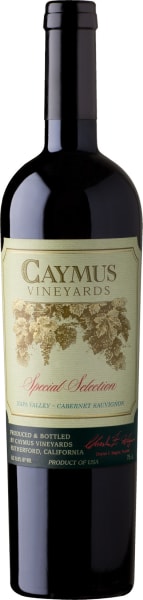
Each year, we set aside the best barrels of our Cabernet Sauvignon from Napa Valley to produce Special Selection. Distinguished by extremely fine, velvety tannins and enjoyable upon release or with aging. A wine of structure with intense concentration of supple flavors and dark fruits. Special Selection is the only wine in the world honored twice as Wine Spectator magazine’s “Wine of the Year.”
In 1971 Charles F. (Charlie) Wagner and his wife Lorna Belle Glos Wagner asked their son Charles J. (Chuck) Wagner, who had just graduated from high school, if he would be interested in joining them in starting up a winery. If Chuck declined the offer, Charlie and Lorna were planning to sell out of their ranch in Napa Valley and move to Australia. Chuck accepted his parents’ offer to launch the winery, Caymus Vineyards.
The Wagners produced their first vintage in 1972, consisting of 240 cases of Cabernet Sauvignon. Since then, Caymus has focused their efforts in the production of quality Cabernet Sauvignon. Today’s production is 65,000 cases.
Caymus Vineyards remains 100% family-owned by the Wagners. Charlie, Lorna Belle, and Chuck worked together as a remarkable team for over 30 years building Caymus Cabernet. Today, Chuck, his two sons, Charlie and Joe, and one daughter, Jenny, have joined the family team. Farming grapes remain the priority with the family farming about 350 acres of choice Napa Valley land.
The Wagners took the name Caymus from the Mexican land grant known as Rancho Caymus, given to George Yount in 1836, which encompassed what eventually became the town of Rutherford and much of the surrounding area.
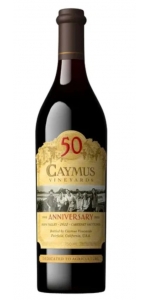
Mark your calendars for June! Caymus 50th Anniversary Napa Valley Cabernet Sauvignon 2022 is a testament to fifty years of exceptional winemaking by the dedicated, passionate, and family-owned Caymus Vineyards. Since 1972, they have remained a beacon of excellence in Napa Valley, staying true to their roots and producing unparalleled Cabernet Sauvignon. This limited edition wine is a celebration of their rich history, tradition, and relentless pursuit of quality across generations.
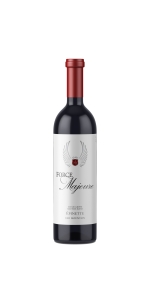
Force Majeure Epinette is made from 46% Merlot, 35% Cabernet Franc, 16% Cabernet Sauvignon, 3% Petit Verdot.
Epinette is Force Majeure's Right-bank Bordeaux-inspired blend, and was named after an avenue in Libourne (France) that leads to Pomerol and Saint-Émilion, the home of Merlot and Cabernet Franc. Epinette is also the name of a musical instrument akin to a piano, as well as a word for pine tree, which is a fitting nod to their home in Washington state.
The wine itself is a blend of primarily Merlot and Cabernet Franc, with smaller amounts of Cabernet Sauvignon and Petit Verdot, proportions of which change depending on the vintage. The Merlot and Cabernet Franc are grown in lower areas of the vineyard with deep, well-drained soils, much less rocky than the soils of our Rhone varietals.
Review:
"I loved the 2016 Epinette from barrel, and it certainly doesn't disappoint from bottle. Sporting a deep purple color as well as a huge bouquet of blackcurrants, black cherries, smoked earth, chocolate, and cedary spice, this flamboyant, powerful beauty hits the palate with loads of fruit, has sweet tannins, no hard edges, building tannins, and a huge finish. It's one seriously pleasure-bent effort that has another 10-15 years of prime drinking." - Jeb Dunnuck (April 2019), 96+ pts
Force Majeure Epinette is made from 46% Merlot, 35% Cabernet Franc, 16% Cabernet Sauvignon, 3% Petit Verdot.
Epinette is Force Majeure's Right-bank Bordeaux-inspired blend, and was named after an avenue in Libourne (France) that leads to Pomerol and Saint-Émilion, the home of Merlot and Cabernet Franc. Epinette is also the name of a musical instrument akin to a piano, as well as a word for pine tree, which is a fitting nod to their home in Washington state.
The wine itself is a blend of primarily Merlot and Cabernet Franc, with smaller amounts of Cabernet Sauvignon and Petit Verdot, proportions of which change depending on the vintage. The Merlot and Cabernet Franc are grown in lower areas of the vineyard with deep, well-drained soils, much less rocky than the soils of our Rhone varietals.
Review:
"The 2018 Epinette is the Merlot-dominated release from this team, and it's 79% Merlot, 8% Cabernet Sauvignon, 8% Cabernet Franc, and 5% Petit Verdot, all from the estate vineyard on Red Mountain. Lots of smoky black cherry and darker currant fruits as well as notes of chocolate, graphite, lead pencil, and chalky minerality emerge from the glass, and this full-bodied beauty is beautifully textured, with a stacked mid-palate, velvety tannins, and a blockbuster finish. It's up with the finest Merlots in the New World and will drink brilliantly for at least a decade, if not longer."
- Jeb Dunnuck (May 2021), 97 pts
Force Majeure Epinette is made from 79% Merlot, 8% Cabernet Sauvignon, 8% Cabernet Franc, and 5% Petit Verdot .
Epinette is Force Majeure's Right-bank Bordeaux-inspired blend, and was named after an avenue in Libourne (France) that leads to Pomerol and Saint-Émilion, the home of Merlot and Cabernet Franc. Epinette is also the name of a musical instrument akin to a piano, as well as a word for pine tree, which is a fitting nod to their home in Washington state.
The wine itself is a blend of primarily Merlot and Cabernet Franc, with smaller amounts of Cabernet Sauvignon and Petit Verdot, proportions of which change depending on the vintage. The Merlot and Cabernet Franc are grown in lower areas of the vineyard with deep, well-drained soils, much less rocky than the soils of our Rhone varietals.
Review:
The 2018 Epinette is the Merlot-dominated release from this team, and it's 79% Merlot, 8% Cabernet Sauvignon, 8% Cabernet Franc, and 5% Petit Verdot, all from the estate vineyard on Red Mountain. Lots of smoky black cherry and darker currant fruits as well as notes of chocolate, graphite, lead pencil, and chalky minerality emerge from the glass, and this full-bodied beauty is beautifully textured, with a stacked mid-palate, velvety tannins, and a blockbuster finish. It's up with the finest Merlots in the New World and will drink brilliantly for at least a decade, if not longer.
Previously known as Grand Reve, Force Majeure has skyrocketed to the top of the pyramid in Washington State, in no small part due to their talented winemaker, Todd Alexander, who moved from Bryant Family in Napa to Washington State to focus on this estate. While the focus is on their Red Mountain Vineyard, they make a bevy of world-class wines from throughout the Columbia Valley. Anyone doubting the quality coming from Washington State these days owes it to themselves to try these wines.
-Jeb Dunnuck 97 Points
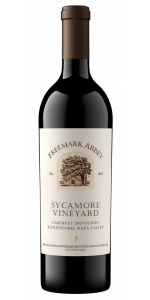
Freemark Abbey Sycamore Cabernet Sauvignon is made from
Wine Profile: Opaque dark ruby describes the color of this Rutherford wine. Black currant and Boysenberry notes dominate the aroma, with dark chocolate truffle, cocoa powder, Worcestershire sauce, cremini mushrooms and forest floor adding to the complexity. The oak adds the ideal amount of complexity with aromatic cedar, cinnamon and clove. The wine has great depth of black fruit flavor, with a strong expression of sweet black cherry. This full-bodied cabernet sauvignon has resolved tannins yet firm structure, with good acidity. Lovely long finish!
Primary Vineyard: Sycamore Vineyard—Rutherford (100%): Small 24-acre vineyard located about 1.2 miles south of Bosche, right up against the Mayacamas Range, this vineyard has a rich clay loam. Sycamore Vineyard produces small berries reminiscent of mountain fruit berries, with intense extract of color and flavor. The color is very dark early in the fermentation, with flavors of black currant and black berry with a forest floor complexity.
Review:
From a vineyard closer to the Mayacamas Mountains and first made in 1980, the 2016 Cabernet Sauvignon Sycamore Vineyards checks in as 88% Cabernet Sauvignon, 7% Merlot, and the rest Petit Verdot and Cabernet Franc. It spent 27 months in 66% new French. It offers more black fruits, earth, tobacco, cedar, and gravelly minerality as well as a touch more burly, masculine style on the palate. Nevertheless, it's still beautifully balanced, has considerable elegance, and a great finish.
-Jeb Dunnuck 95 Points
Deep garnet-purple colored, the 2016 Cabernet Sauvignon Sycamore Vineyards gives up powerful crème de cassis, dark chocolate-covered cherries, mulberries and baked plums scents with hints of lavender, camphor, pencil shavings and dusty soil. Medium to full-bodied, the palate is packed with rich, black fruits plus a beautiful perfumed undercurrent, framed by finely grained tannins and lovely freshness, finishing with a mineral lift. 1,989 cases were made.
-Wine Advocate 95 Points
Herbal, with characteristics of peppercorn, cedar and pencil shavings, this beautiful wine is also dusty and mineral-driven, with demure flavors of red and black currant. Full bodied and well structured, it shows an underlying softness that should continue to soften in the cellar. Enjoy best from 2026–2031.
-Wine Enthusiast 95 Points
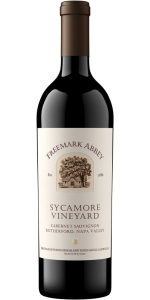
The nose opens with aromas of blackberry, blueberry, black current and boysenberry. The fruit elements are complimented with notes of forest floor, cigar box, dark chocolate and espresso. The wine is rich and balanced and French oak barrels add the ideal amount of complexity with notes of baking spice and warm vanilla. This is a full-bodied wine with integrated tannins that give it a long, lingering finish. Stunning.
Primary Vineyard: Sycamore Vineyard—Rutherford (100%): Small 24-acre vineyard located about 1.2 miles south of Bosche, right up against the Mayacamas Range, this vineyard has a rich clay loam. Sycamore Vineyard produces small berries reminiscent of mountain fruit berries, with intense extract of color and flavor. The color is very dark early in the fermentation, with flavors of black currant and black berry with a forest floor complexity.
Review:
Mint, spearmint, dark-berry and blueberry aromas. Leaves and sage, too. Full-bodied and firm with fantastic depth. Cool fruit with menthol and mint. Spice. Refreshing. Firm tannins. Fantastic 2017. Drink or hold.
-James Suckling 97 Points
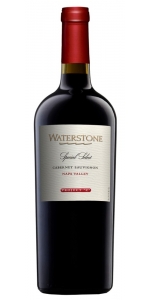
The backbone of this Cabernet Sauvignon is derived from a vineyard in the Atlas Peak AVA of Napa Valley where soils are volcanic in origin and have limited water retention. The balance of fruit is sourced from Coombsville and Oak Knoll. The small berry clusters and intense fruit from low-yielding vines create a wine with full flavor and longevity.
This Cabernet delivers multi-layered aromas of ripe black cherries, toasted oak, dark chocolate, cardamom, vanilla bean, and cedar. A rich medium-bodied wine with plush rounded tannins and juicy blackberries and orange zest that linger on the finish.
TA: 0.72 g/100ml
pH: 3.59
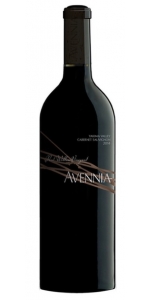
Avennia Red Willow Cabernet Sauvignon is made from 100% Cabernet Sauvignon.
The Red Willow Cabernet is a true blockbuster.
Coming from one specific block of 30 year old vines at this iconic vineyard, then strictly barrel selected, this is the essence of powerful, old vine Washington Cabernet. After all of our efforts promoting the idea of the Bordeaux blend, it would take a pretty compelling argument to suspend that idea and make a 100% varietal Cabernet. In 2016 Red Willow provided us with just that. Each time we tasted it in the barrel, the belief grew that this was something special. Something we can't make every year. In the end we were won over, and decided to make a limited amount of this wine. But don't be fooled, as this too is a blend and a selection. Each year as we are tasting the grapes as harvest approaches, we notice that the vines near the bottom of this long, steep west-facing slope, are a little different. The vines at the bottom are in a little richer soil, and get a little more water, so we pick them separately, sometimes even a week or ten days apart, and keep them separate in barrel.
This wine is all from the top of the vineyard, with its lower yield and poorer soils giving more concentration and interest. Then further, nearly every combination of new and used French oak barrels were trialed to find the best blend. It's not enough just to use the four best barrels, but to trial each combination to see how they complement each other. For a wine with this much mass, 100% new French oak was used for the first time at Avennia. It is a wine that needs a little cellaring to start, but should last a very long time.
Review:
The flagship Cabernet, the 2018 Cabernet Sauvignon Red Willow Vineyard is all varietal, from old vines in a great vineyard in Yakima Valley, that spent 20 months in 80% new French oak. It reveals a deep purple hue as well as a backward, brooding nose of smoked blackcurrants, tobacco, scorched earth, and violets. It has beautiful richness yet takes plenty of coaxing to open up. On the palate, it's medium to full-bodied and has a nicely textured, balanced mouthfeel, plenty of tannins, and outstanding length. It's mostly potential at this point and is going to benefit from at least 4-5 years of bottle age, but my money is on it having 20+ years of prime drinking.
-Jeb Dunnuck 96 Points

Avennia Red Willow Cabernet Sauvignon is made from 100% Cabernet Sauvignon.
The Red Willow Cabernet is a true blockbuster.
Coming from one specific block of 30 year old vines at this iconic vineyard, then strictly barrel selected, this is the essence of powerful, old vine Washington Cabernet. After all of our efforts promoting the idea of the Bordeaux blend, it would take a pretty compelling argument to suspend that idea and make a 100% varietal Cabernet. In 2016 Red Willow provided us with just that. Each time we tasted it in the barrel, the belief grew that this was something special. Something we can't make every year. In the end we were won over, and decided to make a limited amount of this wine. But don't be fooled, as this too is a blend and a selection. Each year as we are tasting the grapes as harvest approaches, we notice that the vines near the bottom of this long, steep west-facing slope, are a little different. The vines at the bottom are in a little richer soil, and get a little more water, so we pick them separately, sometimes even a week or ten days apart, and keep them separate in barrel.
This wine is all from the top of the vineyard, with its lower yield and poorer soils giving more concentration and interest. Then further, nearly every combination of new and used French oak barrels were trialed to find the best blend. It's not enough just to use the four best barrels, but to trial each combination to see how they complement each other. For a wine with this much mass, 100% new French oak was used for the first time at Avennia. It is a wine that needs a little cellaring to start, but should last a very long time.
Review:
"The 2016 Cabernet Sauvignon Red Willow Vineyard is 100% Red Willow Cabernet Sauvignon that will spend roughly 20 months in close to 100% new French oak. Blackcurrants, smoked herbs, chocolate, and graphite notes all give way to a full-bodied, plump, rich, concentrated effort that's going to be better with short-term cellaring and keep for two decades."
- Jeb Dunnuck (April 2018), 94-96 pts
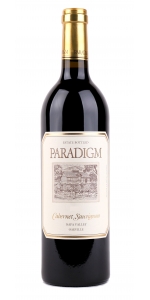
Paradigm Cabernet Sauvignon is made from 90% Cabernet Sauvignon, 8% Merlot, 1% Petit Verdot, 1% Cabernet Franc
20 months in French oak (only about a third of that is new oak) and for 20 more months in bottle before release
Our winemaking "style" is solely determined by this place or terrior we call "Paradigm." Winemaking is agriculture when you own your vineyards and are able to farm them to promote the very best Earth will give you. All of our selections of wines are made from five varietals on the estate. Every wine is 100% farmed and grown by us.
Complexity in our wines supported by luscious fruit and acidity is our hallmark. Our efforts during harvest and barrel cellaring concentrate on maintaining the freshness from the first day we handpicked each vineyard block. Simple winemaking protocols are employed while crucial “timing” oriented winemaking decisions rule each day.
This wine is deeply pigmented with ruby/garnet color. First sniff is Oakville Cabernet all the way. Nice layers of ripe berry and cherrylike fruit with a matching complement of toasty French Oak from an assortment of Coopers and different barrel ages. Gorgeous across the palate with a silky yet dense mouthcoating impression. Ripeness is key and the result is a wine with perfect balance and flow - just plain delicious. It’s a big, beautiful wine now but has tremendous aging potential. — Heidi Barrett
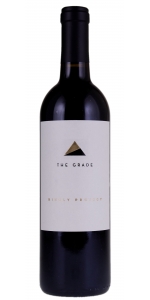
The Grade Cellar Kingly Project Cabernet Sauvignon is made from Napa Valley Cabernet Sauvignon.
"This is a noble expression of Cabernet Sauvignon" in full regalia, with decadent aromas and a mouthfeel viscous and sleek. "This vintage of the Kingly Project Cabernet Sauvignon enters the scene" -- Thomas Rivers Brown
Review:
The 2018 Cabernet Sauvignon Kingly Vineyard is endowed with tremendous richness and concentration. It emerges from the best spots within Block 5, which is a bit more protected from the elements. The 2018 is a bit closed today, but it has a lot of promise. Time in the glass brings out layers of inky dark fruit and the savory, minerally notes that are such signatures. This potent Calistoga Cabernet needs time to shine, but it is impressive today just the same.
-Vinous 96 Points
Mark your calendars for June! Caymus 50th Anniversary Napa Valley Cabernet Sauvignon 2022 is a testament to fifty years of exceptional winemaking by the dedicated, passionate, and family-owned Caymus Vineyards. Since 1972, they have remained a beacon of excellence in Napa Valley, staying true to their roots and producing unparalleled Cabernet Sauvignon. This limited edition wine is a celebration of their rich history, tradition, and relentless pursuit of quality across generations.
Dominique Piron Morgon Cote du Py is made from 100 percent Gamay.
The Morgon Cru is based in the heart of Northern Beaujolais. Côte du Py is the heart of Morgon, a little hill of very old blue stone rocks - the oldest soils of Beaujolais (around 430 millions years old), with a typical blue color.
Côte du Py has been known for centuries for being the best terroir of the village, producing long lived wines with strong structure and flavors.
Wines of the Côte du Py are very dark, profound and dense. Classic aromas of red berries, cherry, kirsh. Fruity, structured and mineral in the mouth with graphite flavors and spicy notes of black and white pepper. Wine can age up to 10 years.
Hand picked grapes are sorted manually and destemmed for 50 to 70%. Fermentation starts in concrete tanks and lasts for 18-25 days with remontages and pigeages. Then after pressurage starts the aging, for 2/3 in concrete tanks, and 1/3 in recent French oak barrels with batonages on fine lies only. After 10 month we do the blending, keeping only the best cuvees and best barrels, and do the bottling.
Pairs well with red meat like beef, duck and game (Hare, Dear, Wild Pork,…), cheses.
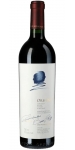
This is a 3 LITER DOUBLE MAGNUM BOTTLE.
Opus One 2022 is made from 80% Cabernet Sauvignon, 8% Petit Verdot, 6.5% Cabernet Franc, 5% Merlot, 0.5% Malbec
Opus One 2022 exudes charm and sophistication from the glass. Primary aromas of blueberry, cassis, and dried rose petals with underlying notes of olive, cigar box, and graphite create a rich and inviting bouquet. On the palate, bright red-fruit flavors, cocoa, and fresh orange peel waltz together into a harmonious and balanced profile. Long and elegant, the finish delivers touches of wet stone, vanilla, and a hint of coffee. Fine-grained tannins and juicy ripeness signal the promise of a long future in the cellar.
Review:
Chocolate, cherry and rose petal aromas on the nose. Very open and alive - this has a great energy from the aromatics alone with soft cedar shavings, vanilla bean and bramble fruit. Juicy and lively, this is full of fun - fruity and concentrated. The tannins are just wonderful, creamy and slightly grippy, extending the flavours vertically. Tons of juicy, succulent fruit - this feels quite modern but still with that flash of sunshine and ripeness. Long lasting with purity and delicacy that make it so enjoyable. A wonderful creation from Michael Silacci. This is not your typical blockbuster at all, this is a darling of a wine. 0.5% Malbec completes the blend. The Opus team chose to pick early and quickly given the heat spikes in 2022, starting with the Merlot on 24th August. Ageing 18 months in French oak.
-Decanter 97 Points



