
" We don't sell the wine without touching the vine "
| Country: | United States |
| Regions: | California California (Napa) |
| Winery: | Caymus |
| Grape Type: | Cabernet Sauvignon |
| Organic: | Yes |
| Vintage: | 2017 |
| Bottle Size: | 750 ml |

Morlet Family Vineyards Mon Chevalier Cabernet Sauvignon is made from 94% Cabernet Sauvignon 6% Cabernet Franc .
Located on the hillsides of Knights Valley, near Calistoga, this vineyard benefits from its proximity to Mount St. Helena, whose warm and windy climate is ideal for the long ripening of the Bordeaux red varietals. Handcrafted by using classical winemaking techniques, this special wine is dedicated to our son, Paul Morlet.
Dark red with a hue of purple. Intense and complex bouquet of red, black and blue berries intermixed with notes of blueberries, minerals (graphite, wet river rocks) licorice, fresh blond tobacco and a hint of lavender. Full bodied, the palate is reminiscent of the nose, with a richly tannic yet round frame and a great intensity. The hillside tannins and the classical aromatic complexity create a harmonious ensemble, leading to a very long and elegant finish. Built to age for decades, this collectible wine opens up after a few years of cellaring and is particularly representative of this special vineyard from the hillside of Knights Valley. Mon Chevalier features the interaction of the loamy, well drained and rocky volcanic soil, the typical sunny mountain climate and the low-interventionistic Morlet winemaking approach.
Propietary Name Mon Chevalier
Name Meaning My Knight Named after our son, Paul Morlet
Type of wine Vineyard designated
Appellation Knights Valley
Vineyard singularity Morlet Family Estate Hillside 1100-1200 feet elevation Rhyolitic, loam & volcanic ash
Typical harvest date End of October
Picking Manual, small lugs, refer truck
Sorting Cluster by cluster, berry per berry
Fermentation Through native yeast Tank and Puncheons
Upbringing 16 months French oak from artisan coopers
Bottling Unfiltered
Cellaring time Decades
Serving Room temperature
Decanting recommended
Review:
-Vinous 96 Points

I feel this wine expresses the greatness of California and its hidden pockets where Cabernet can excel. The cold Pacific Ocean running the entire length of the state presents maritime influences – and with each small distance eastward the climate warms. Stony soils, south facing slopes and moderately warm conditions are the keys to producing dark, rich and good tasting Cabernet.
A small release from Caymus Vineyards, this wine is a California-appellation Cabernet Sauvignon – supple, dark and rich, bearing the signature hallmarks of Caymus. It is sourced from sites throughout the state which feature climatic conditions, soils and topography that are ideally suited to Cabernet. This project stems from excitement over California's diverse vineyard land, often in lesser-known areas, with the potential to produce exceptional Cabernet.

Neyers Cabernet Sauvignon Neyers Ranch is made from 100 percent Cabernet Sauvignon.
"We harvested the 2017 Cabernet Sauvignon crop from our Conn Valley Ranch in the first week of October, a week later than we picked the same vineyard the prior year. The size of the crop was about 20% smaller in 2017 as well, mostly due to the cold, wet weather we experienced in spring during flowering. Grapevines are self-pollinating, and cold, windy or damp weather interferes with this process, a problem known the French call coulure. Ironically, the harsh spring weather of 2017 had a huge impact on the size of our crop. Still, this smaller crop ripened fully and evenly, and at harvest time we picked beautiful, dark-colored clusters under near-perfect conditions. The finished wine was immediately remarkable for its flavor and complexity, and the wine looks to be one that will improve for many years. During my career in the Napa Valley wine business, I’ve learned to expect the best wines from cold years like 2017. These are vintages that are viewed initially with lowered expectations, but my experience has been just the opposite. Going back to my first Napa Valley harvest in 1971, these ‘colder years’ invariably result in wines with brighter, more attractive flavors, and the wines age longer and more gracefully.
Following harvest, the wine was fermented using wild, native yeast in an temperature-controlled stainless steel tank. After 45 days or so, the tank was drained and the pomace pressed, and the wine transferred to 60-gallon French oak barrels, 25% of them new. During the first year, we racked the wine off of the yeast lees three times, and by May 2019 it had been sufficiently clarified to bottle without fining or filtration. I am especially impressed by its bright ruby hue, a color so commanding it reminded me of the 1995 red Bordeaux wines I tasted from barrel during my trip to France in the Spring of 1996. It’s loaded with flavors that range from wild cherry to chocolate, enhanced by the lovely hint of tobacco leaf and mint. Each aromatic component has its own individual fascination, but all of them together provide a remarkable experience. Here’s a complete Napa Valley Cabernet Sauvignon that we expect it to improve for 20 years. It's a from a very small crop that will provide decades of pleasure." - Bruce Neyers
Review:
Attractive aromas of blueberries and lavender follow through to a medium body, firm and silky tannins and a slightly chewy finish. Needs a couple of years to soften. Better after 2022.
-James Suckling 93 Points

Paradigm Cabernet Sauvignon is made from 90% Cabernet Sauvignon, 8% Merlot, 1% Petit Verdot, 1% Cabernet Franc
20 months in French oak (only about a third of that is new oak) and for 20 more months in bottle before release
Our winemaking "style" is solely determined by this place or terrior we call "Paradigm." Winemaking is agriculture when you own your vineyards and are able to farm them to promote the very best Earth will give you. All of our selections of wines are made from five varietals on the estate. Every wine is 100% farmed and grown by us.
Complexity in our wines supported by luscious fruit and acidity is our hallmark. Our efforts during harvest and barrel cellaring concentrate on maintaining the freshness from the first day we handpicked each vineyard block. Simple winemaking protocols are employed while crucial “timing” oriented winemaking decisions rule each day.
Review:
-Wine Enthusiast 94 Points
-Joe Czerwinski (Robert Parker) 92 Points

Avennia Sestina Cabernet Sauvignon is made from 77% Cabernet Sauvignon, 17% Merlot, 6% Cabernet Franc.
The story of this wine - The Sestina is an ancient form of poetry from Medieval France. Just as a modern poet can fill this form with new expressions, Avennia uses the traditional Bordeaux blend to express Washington. Sestina is their vision for an old vine, complex blend where all of the components complement each other. This wine is designed for the cellar, so the emphasis is on structure, balance, and complexity.
Winemaker Tasting Notes - “Good deep ruby/garnet color, with aromas of black cherry, fresh black currant, dark mocha, cigar box, and graphite. The palate is lively and dense with mountain berries, mocha, vanilla honey, damp earth, and wildflowers. The finish shows a distinct chalky minerality and beautiful tension. This is a classically balanced and ageworthy Sestina. Drink 2025-2040.” - Chris Peterson, Winemaker
Review:
-Jeb Dunnuck 95 Points
-Anthony Mueller (Robert Parker) 94 Points
-Stephen Tanzer (Vinous) 93 Points
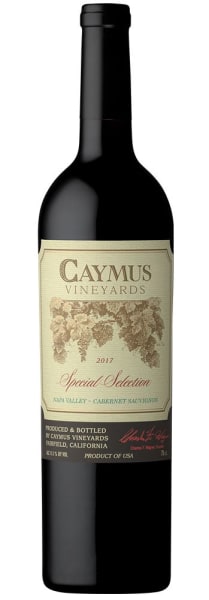
Each year, Caymus sets aside the best barrels of our Cabernet Sauvignon from Napa Valley to produce Special Selection. Distinguished by extremely fine, velvety tannins and enjoyable upon release or with aging. A wine of structure with intense concentration of supple flavors and dark fruits.
In 1971 Charles F. (Charlie) Wagner and his wife Lorna Belle Glos Wagner asked their son Charles J. (Chuck) Wagner, who had just graduated from high school, if he would be interested in joining them in starting up a winery. If Chuck declined the offer, Charlie and Lorna were planning to sell out of their ranch in Napa Valley and move to Australia. Chuck accepted his parents’ offer to launch the winery, Caymus Vineyards.
The Wagners produced their first vintage in 1972, consisting of 240 cases of Cabernet Sauvignon. Since then, Caymus has focused their efforts in the production of quality Cabernet Sauvignon. Today’s production is 65,000 cases.
Caymus Vineyards remains 100% family-owned by the Wagners. Charlie, Lorna Belle, and Chuck worked together as a remarkable team for over 30 years building Caymus Cabernet. Today, Chuck, his two sons, Charlie and Joe, and one daughter, Jenny, have joined the family team. Farming grapes remain the priority with the family farming about 350 acres of choice Napa Valley land.
The Wagners took the name Caymus from the Mexican land grant known as Rancho Caymus, given to George Yount in 1836, which encompassed what eventually became the town of Rutherford and much of the surrounding area.

All older vintage wines have been purchased from a single collectors cellar. Pictures can be requested before shipment.

Clos du Val Napa Valley Cabernet Sauvignon 2023 is made from Cabernet Sauvignon.
The Wine
This is Clos du Val's Napa Valley Cabernet Sauvignon — the house's classically styled, broadly sourced Cabernet drawn from vineyards across the valley floor and surrounding benches. The 2023 is a blend of 75% Cabernet Sauvignon, 10% Merlot, 6% Cabernet Franc, 5% Malbec and 4% Petit Verdot. It pours a deep ruby and opens with pure cassis and black cherry lifted by graphite, tobacco leaf, sweet brown spice and a whisper of cured herbs. Medium- to full-bodied and beautifully balanced, it is firm without ever turning hard, with fine-grained tannins, bright acidity and a long, silky, cocoa-dusted finish. A polished, food-friendly Napa Cabernet that drinks wonderfully now and will hold comfortably into the early 2030s — and, at this price, one of the genuine values in classic Napa Valley Cabernet.
Winery Info
Clos du Val was founded in 1972 in the Stags Leap District of Napa Valley by French-born winemaker Bernard Portet and American proprietor John Goelet. Portet grew up at Château Lafite-Rothschild, where his father was technical director, and he set out to make Napa wines in a restrained, ageworthy Bordeaux idiom rather than the bigger, riper California style of the day. The bet paid off almost at once: at the legendary 1976 Judgment of Paris, Clos du Val's debut 1972 Cabernet was one of only a handful of California reds chosen to stand against first-growth Bordeaux — and in the celebrated ten-year rematch of that tasting, it finished first of all the wines. More than fifty years on, Clos du Val remains one of Napa's benchmark houses, its wines prized for elegance, balance and a graceful capacity to age. The engraving of the Three Graces on the label is a nod to the harmony the family has always chased in the glass.
Review:
Refined and earth-driven, showing tightly wound black-fruit aromas. The palate is focused and pure with finely tuned tannins and a generous yet precise palate. A lovely wine to drink now or cellar.
James Suckling, 94 Points



