
" We don't sell the wine without touching the vine "
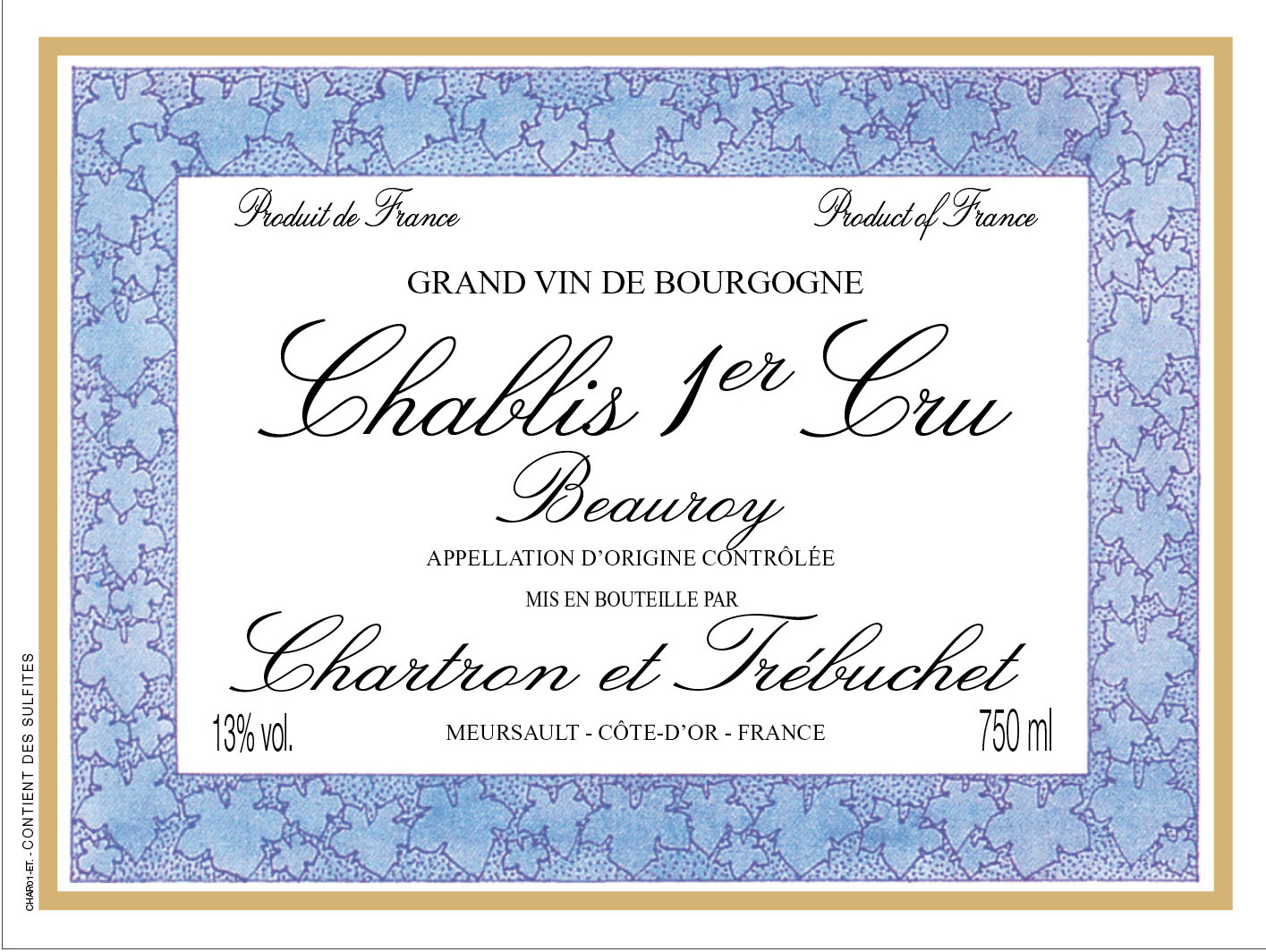
| Country: | France |
| Regions: | Burgundy Chablis |
| Winery: | Chartron et Trebuchet |
| Grape Type: | Chardonnay |
| Vintage: | 2012 |
| Bottle Size: | 750 ml |
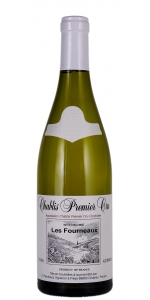
Perchaud Chablis Premier Cru Fourneaux is made from 100 percent Chardonnay.
This is the south facing portion of the slope and very hot, heavy "Fourneaux" or "oven" effect.
The wine is expressive and vivacious with beautiful aromas.
Well-balanced, round and fruity wine with a fine minerality on the finish.
1er Cru Fourneaux is located on the Fleys village and faces the field. the plots are very steep and exposed full south on soil type Kimmeridgian consists of marl clay-limestone with shallow ground and a very stony ground. After a slight settling, the juice starts its fermentation in tank, then ¼ of juice is racked in barrels. Both wines perform their alcoholic fermentation and malolactic and their aging on the lees, separately. The two cuvées are blended six months after harvesting. The wine is then filtered and is bottled 15 months after harvesting. 2013 Conditions and Harvest The relatively high temperatures at the end of winter allowed an early bud vines in early March. With a hot, dry spring flower took place in good conditions. In July, a hailstorm located did some damage to our Fourchaume plot. July and early August, rainy and stormy brought the water needed by the vineyards. The dry and sunny weather of the second half of August brought the grapes to maturity. The harvest began on September 2 under cloudy skies.
Coquille St. Jacques (scallops) with leeks and cream.
Corinne Perchaud Chablis Premier Cru Fourneaux is made from 100 percent Chardonnay.
This is the south facing portion of the slope and very hot, heavy "Fourneaux" or "oven" effect.
The wine is expressive and vivacious with beautiful aromas.
Well-balanced, round and fruity wine with a fine minerality on the finish.
1er Cru Fourneaux is located on the Fleys village and faces the field. the plots are very steep and exposed full south on soil type Kimmeridgian consists of marl clay-limestone with shallow ground and a very stony ground. After a slight settling, the juice starts its fermentation in tank, then ¼ of juice is racked in barrels. Both wines perform their alcoholic fermentation and malolactic and their aging on the lees, separately. The two cuvées are blended six months after harvesting. The wine is then filtered and is bottled 15 months after harvesting. 2013 Conditions and Harvest The relatively high temperatures at the end of winter allowed an early bud vines in early March. With a hot, dry spring flower took place in good conditions. In July, a hailstorm located did some damage to our Fourchaume plot. July and early August, rainy and stormy brought the water needed by the vineyards. The dry and sunny weather of the second half of August brought the grapes to maturity. The harvest began on September 2 under cloudy skies.
Coquille St. Jacques (scallops) with leeks and cream.
Corinne Perchaud Chablis Premier Cru Vaucoupin is 100 percent Chardonnay.
The vineyard The plots are on the Vaucoupin Chichée village. They are very steep and facing south, their average age is 40 years. The total area is 1.45 hectares. The vines are planted on soil Kimmeridgian marl consisting clay and limestone with dominant clay. Winemaking After a slight settling, the juice is put in to achieve its fermentation tank alcoholic and malolactic. It follows a long aging on lees to bring a maximum of complexity of aromas and flavors. If necessary, we make a collage to bentonite to remove proteins and a passing cold which eliminates tartar crystals. Then we perform a tangential filtration is the filtration method most friendly to wine.
The wine will be bottled 16 months after harvest. The relatively high temperatures at the end of winter allowed an early bud vines in early March. With a hot, dry spring flower took place in good conditions. In July, a hailstorm located did some damage to our Fourchaume plot. July and early August, rainy and stormy brought the water needed for the vineyards. The dry and sunny weather of the second half of August brought the grapes to maturity. The harvest began on September 2 under clement skies.
Pairs well with seafood, shellfish.
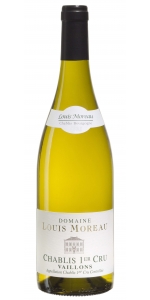
Domaine Louis Moreau Chablis Vaillons Premier Cru is made from 100 percent Chardonnay.
Chablis achieves its highly distinctive mineral character due to its cool northerly climate and its highly calcareous soil. The Domaine Louis Moreau Chablis Vaillons Premier Cru is a generous, fleshy and lively wine that displays a beautiful balance of minerality, fruitiness and elegance.
Chablis, with its steely character and fresh citrus flavor, pairs well with white fish and shellfish and its naturally high acidity can counterbalance cream-based sauces. Unoaked Chablis lends itself well to vegetables, starches, Comté, or fresh goat cheese.
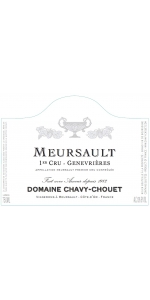
Chavy-Chouet Meursault Premier Cru Les Genevrieres is made from 100 percent Chardonnay.
Fruity flavors and typical nutty nuances. The Genevrières parcels are located in the heart of Meursault's southern premiers crus. "Genevrieres" takes its name from the presence, years ago, of the juniper bushes which covered its slope, and it is sometimes said that the tang of this aromatic berry can be detected in the wine.
The Genevrières parcels are located in the heart of Meursault's southern premiers crus. "Genevrieres" takes its name from the presence, years ago, of the juniper bushes which covered its slope, and it is sometimes said that the tang of this aromatic berry can be detected in the wine.
Fruity flavors and typical nutty nuances.
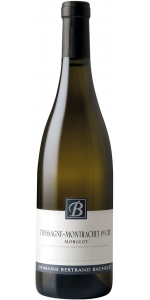
Bertrand Bachelet Chassagne Montrachet Premier Cru Morgeot is made from 100 percent Chardonnay.
The Chassagne-Montrachet appellation is located in the southern part of the Côte de Beaune and produces mainly white wines.
'Morgeot' is located in the south of the village, characterized by compact limestone soil containing iron oxide, which gives the soil its particular red-brown color.
The wine offers a golden color, a subtle nose of white flowers and honey notes. Full-bodied and well-structured on the palate.
The softness of the Chardonnay on the palate makes an interesting pairing with cooked foie gras; it also sits well with lobster, spiny lobster, or even morel mushroom dumplings or Bresse chicken in a cream sauce.
"Offers an appealing mix of rich texture and vibrant acidity, setting the stage for the apple, lemon and flint notes. This is balanced and graceful, leaving a fine aftertaste of citrus and stone. Drink now through 2020. 500 cases made. –BS"
- Wine Spectator (August 31st 2014), 92 pts
The Chartron et Trebuchet Estate
Owners of Premiers and Grands Crus in Puligny-Montrachet since 1859 with the Domaine Jean Chartron, Jean-René Chartron founded the Maison Chartron et Trébuchet in 1984 with Louis Trébuchet, manager of a wine trading company.
Vincent Sauvestre acquired the company in 2004. His objective is to continue to promote the great white wines of Burgundy, whilst respecting and perpetuating the quality work achieved by Jean Chartron and Louis Trébuchet.
The Maison Chartron et Trébuchet specialises in producing great white Burgundy wines. The know-how of the winemakers begins with a radical selection of the very best plots: the highest-quality terroirs of the Côte are chosen and the grapes are carefully monitored throughout the ripening period. Grapes are hand-picked when the balance between acidity and sweetness is at its prime: the fruit must not be too ripe so that the full potential of the terroir is maintained, including its acidity, to ensure that the wines age properly. All of the winemaking is done in casks: the alcoholic fermentation is followed by malolactic fermentation. A proportion of 20 to 40% of new barrels is used, depending on the appellations and the vintage. Wines are left to age for 12 to 18 months depending on the appellations.
The Chartron et Trebuchet Vineyards
Chartron et Trébuchet's vineyards are all planted on Limestone and Clay based soils. In average, the age of the vines is 30 years old.
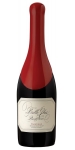
Dark plum in color with abundant aromas of dark chocolate, black cherry, and sun-ripened blackberry with a hint of cedar. Layered flavors of blackberry and raspberry pie filling, accompanied by notes of cinnamon, chocolate, and nutmeg play on the palate. Smooth and focused with refined tannins and a medium finish.
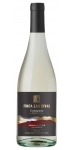
Finca las Divas Torrontes Reserve Cafayate is 100% Torrontes.
Named in honor of different divas because of the detailed attention to each varietal and plot, consequence of the terroir, origin of the Andes slopes.
Intense and bright yellow with gold hues. On the nose it offers delicate aromas, floral notes, orange peel and subtle hints of vanilla resulting from it aging on oak. On the palate it is a wine with character, with exotic and intense flavors, good acidity, with good structure and weight; fresh and balanced with a long persistence.
Pairs with fish, seafood, risotto, pasta, sushi, lamb and hard cheeses.



