" We don't sell the wine without touching the vine "
| Country: | France |
| Region: | Burgundy |
| Winery: | Chartron et Trebuchet |
| Grape Type: | Chardonnay |
| Vintage: | 2018 |
| Bottle Size: | 750 ml |
Chavy-Chouet Meursault Premier Cru Les Genevrieres is made from 100 percent Chardonnay.
Fruity flavors and typical nutty nuances. The Genevrières parcels are located in the heart of Meursault's southern premiers crus. "Genevrieres" takes its name from the presence, years ago, of the juniper bushes which covered its slope, and it is sometimes said that the tang of this aromatic berry can be detected in the wine.
The Genevrières parcels are located in the heart of Meursault's southern premiers crus. "Genevrieres" takes its name from the presence, years ago, of the juniper bushes which covered its slope, and it is sometimes said that the tang of this aromatic berry can be detected in the wine.
Fruity flavors and typical nutty nuances.
Chavy-Chouet Saint-Aubin Premier Cru Les Murgers des Dents de Chien is made from 100 percent Chardonnay.
The wine is produced from 30 year-old vines overlooking the grand crus of Puligny-Montrachet. The vines grow on limestone soils covered with white pebble stones.
The altitude and the poor soil result in a fine, subtle wine with bright acidity. It is a feminine wine that evolves slowly with floral and spicy notes before taking on greater density and revealing its power.
Ageing in oak barrels for 12 months (20% new).100% Chardonnay of 30 years of age.
The vineyard measures 0.17 hectare with a plenting density of 10,000 vines per hectare.
Review:
Jasper Morris - Inside Burgundy 93 Points
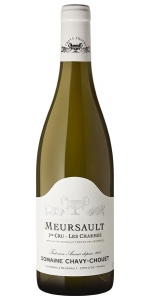
Chavy-Chouet Premier Cru Meursault Les Charmes is made from 100 percent Chardonnay.
This fine and sensual wine, with hints of blossom and roasted hazelnut, has a concentration that makes it discreet in its youth but powerful over time.
Located right next to Puligny-Montrachet, the plot of Les Charmes was planted in 1943 on a sandy clay-limestone soil that produces small, concentrated berries for an intense wine that is perfect for ageing.
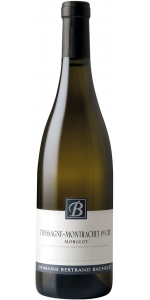
Bertrand Bachelet Chassagne Montrachet Premier Cru Morgeot is made from 100 percent Chardonnay.
The Chassagne-Montrachet appellation is located in the southern part of the Côte de Beaune and produces mainly white wines.
'Morgeot' is located in the south of the village, characterized by compact limestone soil containing iron oxide, which gives the soil its particular red-brown color.
The wine offers a golden color, a subtle nose of white flowers and honey notes. Full-bodied and well-structured on the palate.
The softness of the Chardonnay on the palate makes an interesting pairing with cooked foie gras; it also sits well with lobster, spiny lobster, or even morel mushroom dumplings or Bresse chicken in a cream sauce.
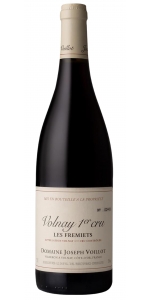
The Domaine Joseph Voillot Volnay Les Fremiets Premier Cru is from a parcel that is up-slope, and the wine is very calcaire, or limestony; you literally taste the stone in this elegant, intensely perfumed wine. Pair with veal filet mignon, squab, beef steak and roast duckling.
Review:
I really like this terroir and the 2021 is an absolutely classic example of this fine premier cru, offering up a refined and pure bouquet of black plums, dark berries, coffee bean, a complex base of dark soil tones, a nice touch of new oak and plenty of upper register smokiness. On the palate the wine is pure, full-bodied and very elegant in profile, with a superb core, lovely soil signature, ripe, suave tannins and a long, vibrant and complex finish. Fine, fine juice. 2033-2080.
93 pts- John Gilman, View from the Cellar #102
Tim Atkin 93 Points
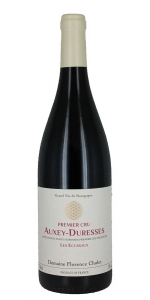
Florence Cholet Auxey-Duresses Rouge Premier Cru Les Ecussaux is made from 100 percent Pinot Noir.
The nose expresses a nice bouquet of black fruits, cherry and violet. The mouth provides a rich and supple wine with a good tannin structure.
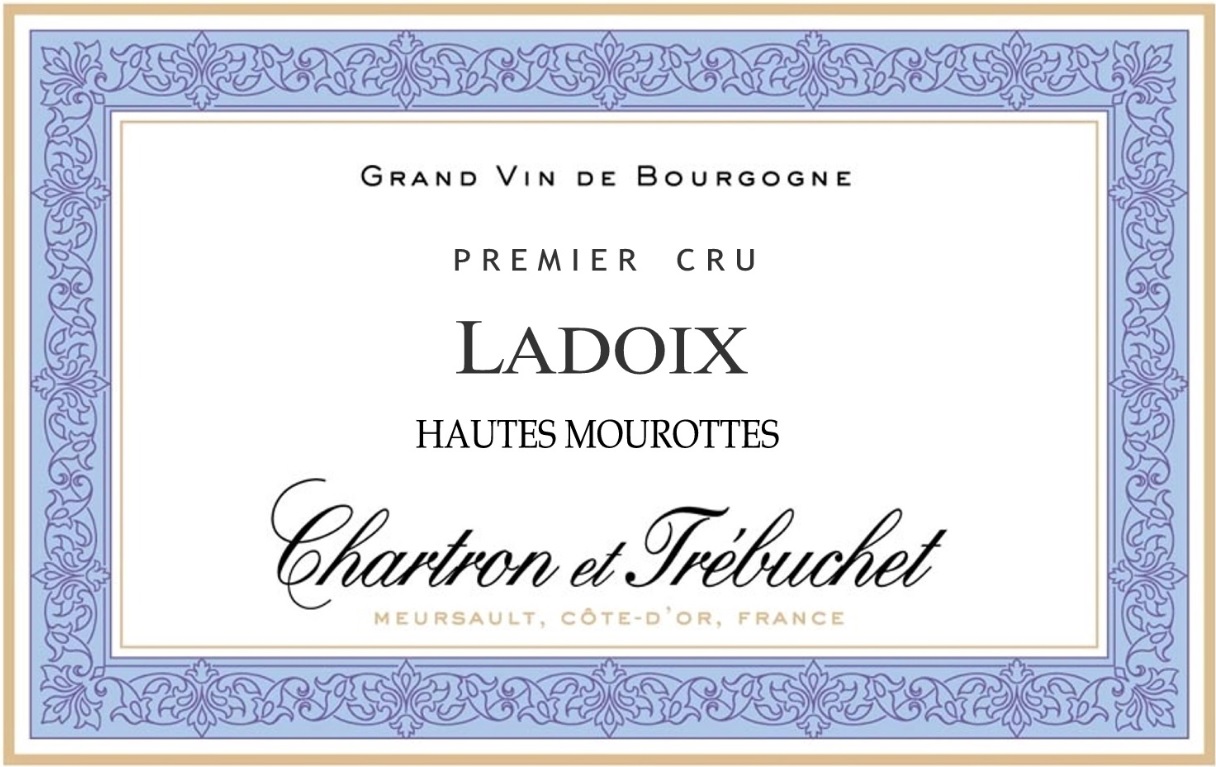
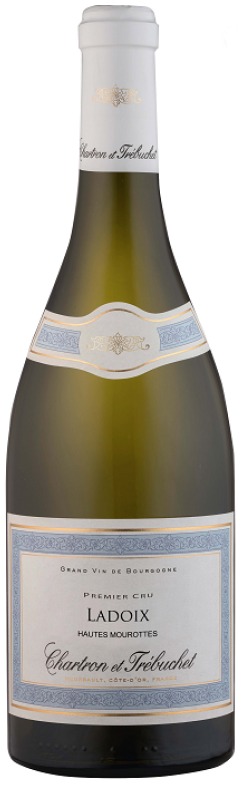
Chartron et Trebuchet Ladoix Premier Cru is made from 100 percent Chardonnay.
Ladoix AOC: This AOC (LADOIX) is about 75 % red and 25 % white wine from the commune of Ladoix-Serrigny (Ladoix is old French for “the source”). 11 premier Cru’s, with a production is 33,000 cases of red to 12,500 cases of Blanc. Location is very near the Grand Cru’s of Corton and Corton-Charlemagne.
Tasting Notes:The white wine here is toasty, smoky, with a complex, mineral and long lemony finish……4-6 year aging wine. Ladoix blanc is somewhat rare, and we are only importing 25 cases …
VINEYARD: Rocky and reddish limestone and enough marl to make it ideal for white wines.
Plantations: ----- vines / hectare.
Yield: -- hectoliters / hectare.
HARVEST: Harvest by hand.
VINIFICATION: Traditional vinification. The grapes are pressed immediately upon arrival at the winery in pneumatic presses. The alcoholic fermentation is carried out in oak barrels, 20% new oak. The wine is aged for 12 months in oak barrels with regular stirring to gain depth and complexity.
AGEING: The wine is aged for 12 months in oak barrels with regular stirring to gain depth and complexity.
Its freshness and finesse allow it to be enjoyed as an aperitif. It also pairs well with white meat and sauce. At the sea side, it will be perfect with a plate of shellfish (lobster, scallops) steamed or poached or noble fish just fried, grilled or steamed. Cheeses: Goat cheese, Beaufort Comté, Emmental...
The Chartron et Trebuchet Estate
Owners of Premiers and Grands Crus in Puligny-Montrachet since 1859 with the Domaine Jean Chartron, Jean-René Chartron founded the Maison Chartron et Trébuchet in 1984 with Louis Trébuchet, manager of a wine trading company.
Vincent Sauvestre acquired the company in 2004. His objective is to continue to promote the great white wines of Burgundy, whilst respecting and perpetuating the quality work achieved by Jean Chartron and Louis Trébuchet.
The Maison Chartron et Trébuchet specialises in producing great white Burgundy wines. The know-how of the winemakers begins with a radical selection of the very best plots: the highest-quality terroirs of the Côte are chosen and the grapes are carefully monitored throughout the ripening period. Grapes are hand-picked when the balance between acidity and sweetness is at its prime: the fruit must not be too ripe so that the full potential of the terroir is maintained, including its acidity, to ensure that the wines age properly. All of the winemaking is done in casks: the alcoholic fermentation is followed by malolactic fermentation. A proportion of 20 to 40% of new barrels is used, depending on the appellations and the vintage. Wines are left to age for 12 to 18 months depending on the appellations.
The Chartron et Trebuchet Vineyards
Chartron et Trébuchet's vineyards are all planted on Limestone and Clay based soils. In average, the age of the vines is 30 years old.
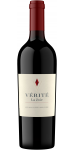
Verite La Joie Red is made from 76% Cabernet Sauvignon, 9% Merlot, 7% Cabernet Franc,5% Petit Verdot, 3% Malbec.
The 2018 La Joie displays a brilliant violet core with a thin rim of bright ruby. Generous fruit-for- ward aromas of ripe black currant and black cherry are followed by earthy notes of fresh conifer, dried mushroom, black olive, dusty clay, anise and clove. The palate is rich and structured; possessing similar flavors of the nose, refined tannins, well-balanced acidity and a complex, luscious finish.
Review:
Blackberries, black mushrooms, violets, flowers, and dark tobacco. Black truffle, too. Full-bodied, yet in check and pretty. The fine tannins frame the wine perfectly. Really long and focused. Seamless. Elegance with power. This will age incredibly well, but already so gorgeous to try. 76% cabernet sauvignon, 9% merlot, 7% cabernet franc, 5% petit verdot and 3% malbec. Try after 2026, but attractive now.
-James Suckling 99 Points

Clear, golden straw, with a slight greenish tinge. The nose is intense with yellow apple, Calamansi lime, apricot, quince, white flowers, flinty minerals, and brioche. The palate is light and quaffable.
Alcohol: 12.5%
Acid TA: 6.34g/L
pH: 3.22