" We don't sell the wine without touching the vine "
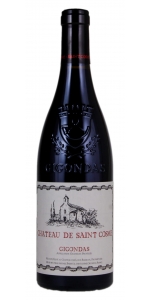
Chateau de Saint Cosme Gigondas is made from 70% Grenache, 15% Mourvèdre, 14% Syrah, 1% Cinsaut.
The wine shows intense blackberry and fig fruit with licorice, violets, and charcoal on the finish. It is remarkably fresh and finessed given the sun and warmth of the southern Rhône. The unique micro-climate combined with 60-year-old vines and traditional winemaking make Château de Saint Cosme Gigondas the benchmark wine of the appellation.
Review:
Leading off the Gigondas, the base 2020 Gigondas has lots of black raspberry, ground pepper, and violets notes as well as a round, supple, silky style on the palate. It should be approachable on release, yet it has plenty of mid-palate depth as well as tannins, and I have no doubt it will evolve for 20 years if properly stored.
-Jeb Dunnuck 91-93 Points

All older vintage wines have been purchased from a single collectors cellar. Pictures can be requested before shipment.
Beatus began with a dream and a friendship. Our dream was to make wine in Châteauneuf du Pape, one of the first regions to inspire the desire to pursue winemaking in general, and of working with Grenache in particular.
We developed a long-standing friendship with Anne-Charlotte Melia-Bachas, Proprietor of Chateau de la Font du Loup, who approached us with the idea to craft a wine together a number of years ago.
This has all come to fruition with Beatus, a wine that we have decided to make ongoing, every year — since tasting the exciting results of the first vintage in barrel.
The vineyard parcel selected for this wine is a single plot of 80-year old Grenache at the top of La Crau in Châteauneuf du Pape, the highest location in the AOC. It sits on a north-facing slope that helps guard against the sometimes intense summer heat that can affect the surrounding areas.
This plot is called “Le Poteau” and has been generously granted to us by Anne-Charlotte as the core of this wine, with supplementation of Syrah and Mourvèdre from surrounding parcels also grown on the Chateau de la Font du Loup estate, to round out the blend.
The winemaking is directed by myself and carried out by Anne-Charlotte, Stéphane Dupuy d’Angeac and their team. It is our hope to bring you one of the finest expressions of Grenache from this special region each and every vintage.
Yields from this block are very small due to the age of the vines, therefore only up to 100 cases of Beatus will be produced each year, depending on the conditions of the vintage.
Our first release was in November of 2022.
– Winemaker Todd Alexander
Review:
Made in collaboration with Chateau de la Font Du Loup, the 2020 Beatus is an extraordinary bottling that rivals some of the top wines of this region. The nose is hugely perfumed with red rose petals, potpourri, sage and shades of red currants. The palate displays the same level of concentration as it does on the bouquet. Beautiful guava and ripe strawberry fruits parade with copious minerals and a sinfully good texture on the palate. Fresh and vibrant, this is just sensational stuff to enjoy in its heady youth.
Owen Bargreen 97 Points
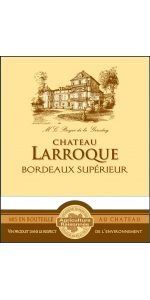
Chateau Larroque Bordeaux Superieur Rouge is a blend of 51% Merlot and 49% Cabernet Sauvignon.
Nose : Red fruits, almond and hazelnut, with a faint vanilla aroma.
Mouth : The silky, velvety attack reveals a pleasant, concentrated and well structured wine. It offers a combination of fruits pastes’ flavors, licorice and toasted notes, and an elegant finish.
The 60-hectare vineyard was rapidly replanted and the château building, which dates from 1348, was restored.
Our family now produces three different-colored wines there: red, white and rosé.
Fermentation : Alcoholic fermentation in thermo-regulated stainless steel vats at around 26°C / 78°F then a gentle vatting for 3 weeks at 30°C / 86°F. Running off and pressing,separation of the press and free-run juice. Malolactic fermentation in thermo-regulated stainless steel vats at around 18°C / 64°F
- 2017 Decanter World Wine Awards Decanter 95 Points
Color : Dark garnet hue
Marie-Christine, the daughter of Henri Ducourt, purchased this prestigious left-bank property in 1979, which lies on the border of the Graves appellation.
Grown on loamy-clay soil.
Macération : Pre-fermentation cold maceration of 24 to 48 hours
Enjoy this wine with charcuterie, roasted meats, BBQ, cheeses.
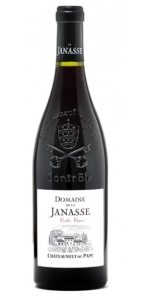
Domaine de la Janasse Chateauneuf-du-Pape Cuvee Vieilles Vignes is made from 65% Grenache, 20% Mourvèdre, 10% Syrah, 5% divers.
In contrast to Chaupin, which is made from old-vine Grenache on sandy soils, the cuvée Vieilles Vignes is from old vines of Grenache, Mourvedre, Syrah along with smaller percentages of other permitted varieties that are grown in these old vineyards. The wine is sourced from 4 terroirs: pebbly clay, sand, gravelly red clay and sandy limestone. Vieilles Vignes is always the most powerful and concentrated Châteauneuf-du-Pape cuvée made at Domaine de la Janasse.
Review:
The 2020 Châteauneuf Du Pape Vieilles Vignes also saw some stems (the estate started keeping some stems with the 2016 vintage) and was 75% destemmed, with the blend being 70% Grenache, 20% Mourvèdre, and the rest Syrah, Cinsault, and Terret Noir. As usual, it’s a more powerful, black-fruited wine comparted to the Cuvée Chaupin and has lots of crème de cassis, liquid violet, crushed stone, woodsmoke, and peppery herbs. It displays the vintage’s purity and freshness yet brings the concentration as well as the structure. I’ll be shocked if it’s not in the handful of top wines in the vintage.
-Jeb Dunnuck 96-98 Points
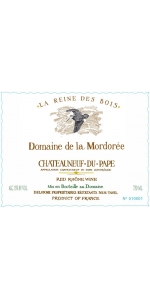
Mordoree Chateauneuf-du-Pape La Reine des Bois is made from Grenache 75 %, Mourvèdre 10%, Syrah 10 % , Counoise 3% & Vaccarese 2%.
This premium cuvee - whose name means "Queen of the Woods" - is from 65-year-old vines, planted on Villafranchian-era terrasses. Yield is 30 hl/ha.
Deep ruby red; opaque. Aromas of red fruits change to wooden touches of leather, black truffles and coffee. Fat, concentrated and full flavored with a very long liquoriced and fruity finish.
Pairs with red meats, sauce dishes, game animals (woodcock, wild boar) and semi mature cheeses.
Review:
"The 2020 Châteauneuf Du Pape La Reine Des Bois is a bigger, richer, more structured wine, which is normal. A blend of 80% Grenache, 10% Mourvedre, and the rest equal parts Syrah and Vaccarese, its deeper ruby/purple hue is followed by a brilliant perfume of blackberries, black raspberries, ground pepper, violets, and new saddle leather. Medium to full-bodied and concentrated, with building tannins and great overall balance, it's another wine that shows the style of the vintage brilliantly. It has plenty of up-front charm, but this beauty will evolve nicely for 15-20 years."
- Jeb Dunnuck (November 2022), 96 pts
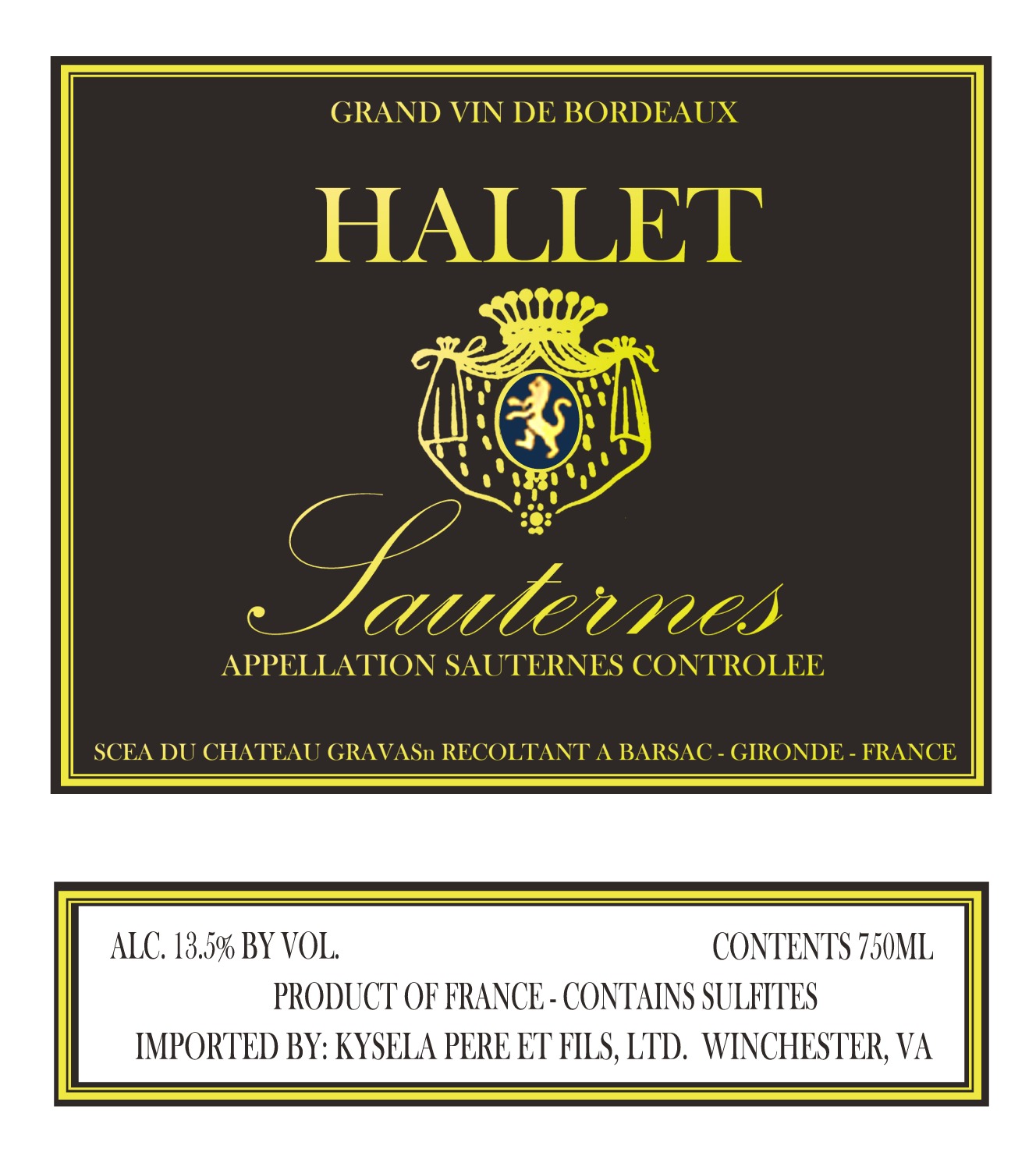
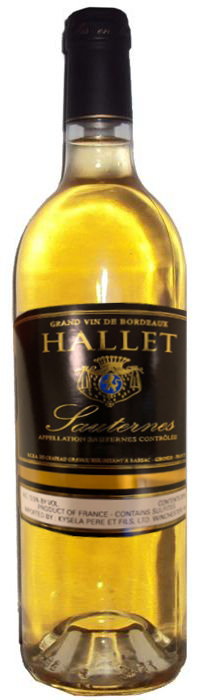
Hallet Sauternes is made from 100% Sémillon.
With delicate aromas of honey, citrus, crystallized fruit and acacia, it makes a good match not only for desserts, but also for foie gras, roasted meats and blue cheeses.
It makes a delicious aperitif when served chilled.
The Hallet Estate
Chateau Hallet is located in Sauternes, and is a Michel Bernard family rental system vineyard. This family also owns Chateau Gravas, Sauternes.
The Hallet Vineyard
The vineyard is 5 hectares (13 acres) total. The soil is a mix of clay and limestone. The 30 year-old vines are harvested by hand: the grapes are picked in successive passes. The wine matures in stainless steel tank and no oak is used.
The production is 1,250 cases / year on average.
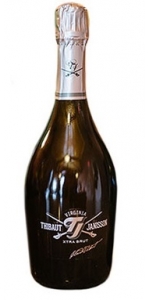
This 100% Chardonnay blend is made from Tête de Cuvée, or first pressing of the grapes, considered superior in quality, with a high percentage of reserve wines for extra complexity, depth and richness, and a low added dosage to preserve purity and freshness.
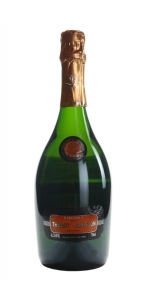
Thibaut-Janisson Blanc de Chardonnay is made from 100% Chardonnay
Appellation 100% Virginia
Winemaking Notes The grapes are handpicked in small baskets late August and are gently pressed as whole clusters. After a settling of 24 hours, the juice is inoculated with selected Champagne yeast and ferments in stainless steel tanks at low temperature. Once the fermentation is over, the wine ages on the fine lees until the spring of the following year. The blend is then put together and cold-stabilized prior to bottling. The bottling occurs in the spring when the cellar temperature is conducive to a second fermentation in the bottle. The now sparkling wine will age on the yeast for over 24 months. At disgorging, a small amount of dosage liquor is added in order to balance the natural acidity.
Clean, crisp and refreshing! With scents of white flowers, apples and pears. This sparkling wine is elegant and complex with vibrant aromas, and fine active streamers. The depth of complexity is elegant and the intricate nuances of the terroir fill the nose and stimulate the palate. It’s full of youthful, bright and alert acidity.
Franz Prager, co-founder of the Vinea Wachau, had already earned a reputation for his wines when Toni Bodenstein married into the family. Bodenstein’s passion for biodiversity and old terraces, coupled with brilliant winemaking, places Prager in the highest echelon of Austrian producers.
Smaragd is a designation of ripeness for dry wines used exclusively by members of the Vinea Wachau. The wines must have minimum alcohol of 12.5%. The grapes are hand-harvested, typically in October and November, and are sent directly to press where they spontaneously ferment in stainless-steel tanks.
Zwerithaler is a sub-site of Buschenberg and sits to the east of Weißenkirchen. The name Zwerithaler, meaning "nestled between the valleys," is a near monopole of Weingut Prager. It has a complex soil of paragneiss with alternating layers of dark and calcareous rock. Zwerithaler Kammergut is a 0.34-hectare parcel planted before WWI. The wine from these ungrafted, 100-year-old vines was bottled separately by Prager for the first time in 2015.
Light greenish yellow, silver reflections. Fine savory, delicate nuances of anise, tobacco notes, delicate yellow fruit, a touch of mango and honey blossom. Full-bodied, juicy white apple fruit, well-integrated, silky acidity structure, finesse and long persistence, saline finish, lingers for minutes, Veltliner at its best.
-Falstaff 99 Points
"The aromas of this old-vine gruner veltliner leap out and shake you to the core. Full-bodied and full of weighty and balanced layers of papayas, mangoes, nectarines, chives, white tea and oranges. Fantastic concentration, giving so much pleasure already, but it will keep blossoming if you give it time. From vines planted in 1907. Sustainable. Drink or hold."
-James Suckling 98 Points
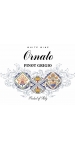
This Pinot Grigio is grown at the foot of the remains of what was once the stunning villa of the della Scala family, one of the most influencial families in Verona from the early 1200's to the late 1300's. The much admired ruler of Verona, Cangrande I della Scala, summered at this villa. Cangrande I was a great warrior, diplomatic prince and an important patron of the arts. He championed the works of Dante, Patrarch and Giotto. He created beautiful architecture throughout the city in the ornate, gothic style of his time. This label is a reproduction of the design taken from a fragment of the ornate and intricate art that once covered the ceilings of the villa. In Italian, Ornato means ornate or adorned. This label celebrates the beautiful, complex taste of the Della Scala family and the Gothic art of that period.
Color: Brilliant straw colored wine with golden reflections.
Bouquet: Fresh and floral bouquet with a hint of pears, apricots and bananas blended with the intense aroma of acacia flowers.
Taste: Fresh and inviting with bright fruit and an easy drinking style with a pleasing hint of almonds in the aftertaste.
Vineyard: Rich in limestone the soil is of alluvial origin. The vineyards are located in the province of Verona. The agricultre is sustainable. No chemical fertilizers, herbicides or pesticides are used. The vineyards are South facing at 300 meters above sea level.
Harvest: September – by hand. The grapes are picked as they ripen to keep the acidity high. The grapes are brought to the cellar and refrigerated within a half hour of picking to keep oxidation to a minimum.
The grapes are soft pressed and the juice is placed in stainless steel along with the skins for a brief maceration of 12 hours at 8-10° C. The must is then racked and lightly filtered. Fermentation then takes place with selected indigenous yeast under controlled temperatures. Of 16-18°C. The fermentation is slow and cool to emhance the natural aromas of the grapes. The finished wine is placed in stainless steel holding tanks until bottled.
Aging: 3-4 months in stainless steel.
Alcohol: 12%
Acidity: 5.30
Seafood dishes, risottos with scampi, spaghetti with clams, sole in white wine.