
" We don't sell the wine without touching the vine "
Concha y Toro’s history begins in 1883 with our founder’s -Melchor Concha y Toro- dream to create the best wines. A tradition persevered over time, inspiring us to work with passion and excellence in our brands.
Concha y Toro is today the most admired wine brand in the world. Our wines deliver rewarding and unique experiences to our consumers around the world. We are present in over 130 countries.
Our brands -such as Casillero del Diablo, Marques de Casa Concha, and Don Melchor- have conquered their outstanding quality and maintain an undisputed leadership position in the competitive world of wine.
This is part of our history.
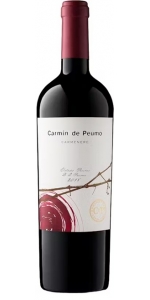
The Peumo Vineyard is located 170 m above sea level and extended along the Cachapoal River, on terraces of hills of the Coastal Mountains. The vines come from pre-phylloxera cuttings and are trellised to vertical shoot position and cordon pruned. The soils are deep with an upper layer of clay that retains moisture, which controls the vines’ vigor and growth and allows them to remain active through late May, when the Carmenere is picked.
Deep, dark red with hints of violet. Elegant and mineral on the nose, with notes of blackberry and a touch of blackcurrant. It fills the palate with underlying mature tannins. Deep, concentrated, with a long aftertaste and distinctive hints of the Peumo terroir. This 2018 vintage is characterized by its elegance and freshness; it is a wine with a lot of Carmenere character. Pairs best with elegant but simply prepared dishes such as juicy, rare roast beef, veal, pork tenderloin with roasted beets and cranberries, duck (con t or magret). Also delightful with squash-stuffed pasta with morel mushrooms or aged goat cheese with figs.
Review:
Carmín made its debut with the 2003 vintage, and since then it has come from a selection from Block 32, a sector of the vineyard in Peumo, on the banks of the Rapel River. Of its 28 hectares, seven are actually used and usually produce about 18,000 liters. The vineyards were planted in 1983 on stony clay soils on the hills that flank the Cachapoal River on its way to Lake Rapel. This was a cool year, and that's evident in the herbal notes and red fruits that fill the nose. The palate is generous in ripe red fruits, as well as in the herbal tones that refresh and add complexity at the same time. The texture is friendly, although it leaves room for a layer of very fine, sharp tannins that contribute tension, while the fruits and herbs continue their private party. We think this is the best version of Carmín that we have tried—far from the first Carmíns, which were tremendously ripe and extracted and far from this balance and elegance. Carmenere at the highest level.
-Patricio Tapia - Descorchados 98 Points
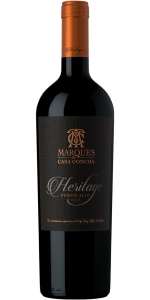
Marques de Casa Concha Heritage is made from 84% Cabernet Sauvignon, 12% Cabernet Franc, & 4% Petit Verdot.
Deep, dark red in color with lush flavors of cherries, blackcurrants, blackberries, cedar, and a bit of black tar. It shows a tremendous concentration of flavors and a smooth, almost silky texture framed by a firm tannic structure that truly stands out at the beginning of the long finish.
This wine pairs beautifully with grilled, roasted, or braised red meats and game in sauces that have a bit of acidity, with tomato or wine or with herbs such as rosemary, thyme, and bay leaf. A perfect wine for most cheeses.
100% estate grown red blend from renowned Puente Alto terroir. Chile’s most acclaimed DO. Upon arriving at the winery, the grapes are destemmed and crushed for fermentation, which takes place in closed stainless steel tanks with daily pump overs throughout the entire 10-day process. The new wine remains in contact with its skins for approximately 10 days, when it is devatted and malolactic fermentation is allowed to take place naturally.
The wine then underwent 16 months in French oak barrels, 40% first use, 60% second use.
El Mariscal vineyard is 600 meters above sea level and is made up of 52.95 hectares, of which 46.23 correspond to Cabernet Sauvignon, 4.52 to Cabernet Franc and 2.20 to Petit Verdot; and it has a density of 5,500 plants/ha, vines that come from mass selection and are mostly on loam. Meanwhile, Don Melchor vineyard is 650 meters above sea level and is made up of 125.96 hectares, of which 112.67 correspond to Cabernet Sauvignon, 1.28 to Cabernet Franc, 2.45% to Merlot, 1.28 to Petit Verdot and 8.28 to ground in rotation. It has a density of 2,000 to 4,000 plants/ha, and the new one (20%), planted between 2004 and 2017 and with a density of 8,000 plants/ha. The vines come from pre-phylloxera mass selection and are on loam. The vineyards are located in the Puente Alto denomination of origin, on the northern bank of the Maipo River, specifically on the river’s third alluvial terrace, which is one of the oldest and that instills great character and elegance to the wines that come from there. The soils are of alluvial origin, rocky, poor in nutrients, and highly permeable due to the amount of gravel in the subsoil, which enables excellent drainage. The climate is semi-arid Mediterranean with a strong influence of the Andes Mountains. This is the coldest part of the Maipo Valley. Its pronounced daily temperature oscillation of approximately 18ºC extends the grape ripening process, concentrating and intensifying its aromas.
Review:
Black pepper and cherry give way to hints of chocolate after some aeration in the glass. The same notes show on the palate and blend with bell pepper. This red comes from the alluvial soils in the D.O. Puente Alto and is full bodied, with a firm structure. Moderate acidity is enough to freshen up the finish.
-Wine Enthusiast 92 Points
Rutherford Ranch Reserve Cabernet Sauvignon
Rich and vibrant with classic Rutherford Cabernet tannins, dark cherry mingled with toasty oak, sweet oak and sweet sage lingering on the palate.
The base for our Reserve Cabernet is from the world-renowned Rutherford appellation, which is home to our Abela and Franklin estate vineyards. Perfect climatic conditions and the region’s deep, loamy, well-drained soils produce dark, intensely flavored Cabernet Sauvignon grapes. Our rich soil sets the foundation for an exquisite, cellar-ready wine that will evolve in character and quality for years to come.
This Reserve Cabernet Sauvignon is a beautiful complement to ribeye steak, rack of lamb or mushroom risotto.
Review:
A flint and gunpowder nose leads to bold graphite, blueberry and tobacco flavors in this full-bodied wine that is laced with a high level of fine-grained tannins. This wine is meant for aging, being so tightly packed with fruits and minerals and having the structure to keep it fresh while more complex flavors develop over time. Best from 2028–2038.
-Wine Enthusiast 93 Points
Boussey Bourgogne Blanc Cote d'Or Vieilles Vignes is made from 100 percent Chardonnay.
The grapes for Bourgogne Blanc Chardonnay Vieilles Vignes are grown on a parcel located within the city of Meursault.
The wine displays a refreshing nose of lime, citrus fruits, flint, honey and a touch of dried fruit. The palate is full of flavors, with honeysuckle, citrus and some salinity with an excellent balance between acidity and roundness.
Pair with cheese, seafood, nems, Spanish tapas and apple tart.



