
" We don't sell the wine without touching the vine "
| BUY MORE! SAVE MORE! | ||||||||||||||||||||
|
| Country: | Chile |
| Region: | Maipo Valley |
| Winery: | Concha y Toro |
| Grape Type: | Cabernet Sauvignon |
| Organic: | Yes |
| Vintage: | 2020 |
| Bottle Size: | 750 ml |
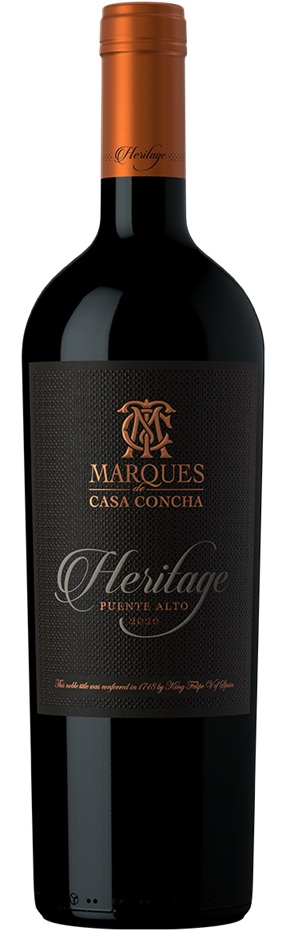
Marques de Casa Concha Heritage is made from 84% Cabernet Sauvignon, 12% Cabernet Franc, & 4% Petit Verdot.
Deep, dark red in color with lush flavors of cherries, blackcurrants, blackberries, cedar, and a bit of black tar. It shows a tremendous concentration of flavors and a smooth, almost silky texture framed by a firm tannic structure that truly stands out at the beginning of the long finish.
This wine pairs beautifully with grilled, roasted, or braised red meats and game in sauces that have a bit of acidity, with tomato or wine or with herbs such as rosemary, thyme, and bay leaf. A perfect wine for most cheeses.
100% estate grown red blend from renowned Puente Alto terroir. Chile’s most acclaimed DO. Upon arriving at the winery, the grapes are destemmed and crushed for fermentation, which takes place in closed stainless steel tanks with daily pump overs throughout the entire 10-day process. The new wine remains in contact with its skins for approximately 10 days, when it is devatted and malolactic fermentation is allowed to take place naturally.
The wine then underwent 16 months in French oak barrels, 40% first use, 60% second use.
El Mariscal vineyard is 600 meters above sea level and is made up of 52.95 hectares, of which 46.23 correspond to Cabernet Sauvignon, 4.52 to Cabernet Franc and 2.20 to Petit Verdot; and it has a density of 5,500 plants/ha, vines that come from mass selection and are mostly on loam. Meanwhile, Don Melchor vineyard is 650 meters above sea level and is made up of 125.96 hectares, of which 112.67 correspond to Cabernet Sauvignon, 1.28 to Cabernet Franc, 2.45% to Merlot, 1.28 to Petit Verdot and 8.28 to ground in rotation. It has a density of 2,000 to 4,000 plants/ha, and the new one (20%), planted between 2004 and 2017 and with a density of 8,000 plants/ha. The vines come from pre-phylloxera mass selection and are on loam. The vineyards are located in the Puente Alto denomination of origin, on the northern bank of the Maipo River, specifically on the river’s third alluvial terrace, which is one of the oldest and that instills great character and elegance to the wines that come from there. The soils are of alluvial origin, rocky, poor in nutrients, and highly permeable due to the amount of gravel in the subsoil, which enables excellent drainage. The climate is semi-arid Mediterranean with a strong influence of the Andes Mountains. This is the coldest part of the Maipo Valley. Its pronounced daily temperature oscillation of approximately 18ºC extends the grape ripening process, concentrating and intensifying its aromas.
Review:
Black pepper and cherry give way to hints of chocolate after some aeration in the glass. The same notes show on the palate and blend with bell pepper. This red comes from the alluvial soils in the D.O. Puente Alto and is full bodied, with a firm structure. Moderate acidity is enough to freshen up the finish.
-Wine Enthusiast 92 Points
Concha y Toro’s history begins in 1883 with our founder’s -Melchor Concha y Toro- dream to create the best wines. A tradition persevered over time, inspiring us to work with passion and excellence in our brands.
Concha y Toro is today the most admired wine brand in the world. Our wines deliver rewarding and unique experiences to our consumers around the world. We are present in over 130 countries.
Our brands -such as Casillero del Diablo, Marques de Casa Concha, and Don Melchor- have conquered their outstanding quality and maintain an undisputed leadership position in the competitive world of wine.
This is part of our history.
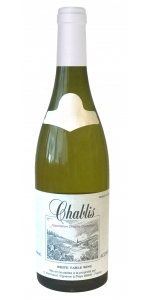
Corinne Perchaud Chablis is 100 percent Chardonnay.
A classic Chablis with aromas of ripe white fruits and a taste of rich minerals.
The Vineyards The plots are in Chablis located predominantly on the village of Fleys, but also on the common Chichée and Fontenay, their total area is 13 hectares. They are mostly north and north-west oriented. The ground floor is Kimmeridgian marl consisting clay and limestone. The oldest of of the vines is 35 years. Winemaking After a slight settling, the juice is put in stainless tanks to achieve its fermentation both alcoholic and malolactic. Ther is a long aging on lees to refine the flavors and develop complex flavors. If necessary, we make a collage of Bentonite to remove proteins and a passing cold which eliminates tartar crystals. Then we perform a tangential filtration method friendly to the wine. The wine is bottles between 14 and 21 months after the harvest.
Pairs well with Oysters or shellfish and Sole Meunière.
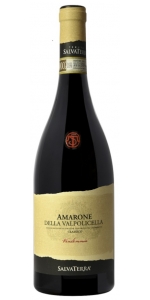
Salvaterra Amarone della Valpolicella Classico is made from 65% Corvina, 20% Corvinone, 10% Rondinella, 5% Oseleta.
Perfume of cherries, cocoa, tobacco and black pepper. On the palate it is complex and deep, elegant and robust at the same time, harmonious and with an excellent tannin.
Amarone della Valpolicella Classico is "the essence of the territory", structured but also fresh at the same time.
Pairs with red meats, aged cheese, dark chocolate, cigars.
Review:
Abundant lively red cherries, plums and mellow milk choolate with a energetic and powerful structure, an elegant frame of velvety tannins and an attractive balsamic finish.
-Decanter 96 Points
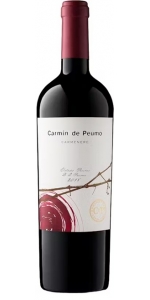
The Peumo Vineyard is located 170 m above sea level and extended along the Cachapoal River, on terraces of hills of the Coastal Mountains. The vines come from pre-phylloxera cuttings and are trellised to vertical shoot position and cordon pruned. The soils are deep with an upper layer of clay that retains moisture, which controls the vines’ vigor and growth and allows them to remain active through late May, when the Carmenere is picked.
Deep, dark red with hints of violet. Elegant and mineral on the nose, with notes of blackberry and a touch of blackcurrant. It fills the palate with underlying mature tannins. Deep, concentrated, with a long aftertaste and distinctive hints of the Peumo terroir. This 2018 vintage is characterized by its elegance and freshness; it is a wine with a lot of Carmenere character. Pairs best with elegant but simply prepared dishes such as juicy, rare roast beef, veal, pork tenderloin with roasted beets and cranberries, duck (con t or magret). Also delightful with squash-stuffed pasta with morel mushrooms or aged goat cheese with figs.
Review:
Carmín made its debut with the 2003 vintage, and since then it has come from a selection from Block 32, a sector of the vineyard in Peumo, on the banks of the Rapel River. Of its 28 hectares, seven are actually used and usually produce about 18,000 liters. The vineyards were planted in 1983 on stony clay soils on the hills that flank the Cachapoal River on its way to Lake Rapel. This was a cool year, and that's evident in the herbal notes and red fruits that fill the nose. The palate is generous in ripe red fruits, as well as in the herbal tones that refresh and add complexity at the same time. The texture is friendly, although it leaves room for a layer of very fine, sharp tannins that contribute tension, while the fruits and herbs continue their private party. We think this is the best version of Carmín that we have tried—far from the first Carmíns, which were tremendously ripe and extracted and far from this balance and elegance. Carmenere at the highest level.
-Patricio Tapia - Descorchados 98 Points
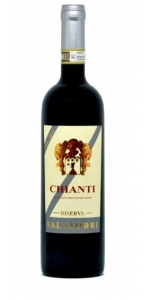
Salvadori Chianti Riserva DOCG 2017 is made from Sangiovese 90% , Merlot 10
The Peumo Vineyard is located 170 m above sea level and extended along the Cachapoal River, on terraces of hills of the Coastal Mountains. The vines come from pre-phylloxera cuttings and are trellised to vertical shoot position and cordon pruned. The soils are deep with an upper layer of clay that retains moisture, which controls the vines’ vigor and growth and allows them to remain active through late May, when the Carmenere is picked.
Deep, dark red with hints of violet. Elegant and mineral on the nose, with notes of blackberry and a touch of blackcurrant. It fills the palate with underlying mature tannins. Deep, concentrated, with a long aftertaste and distinctive hints of the Peumo terroir. This 2018 vintage is characterized by its elegance and freshness; it is a wine with a lot of Carmenere character. Pairs best with elegant but simply prepared dishes such as juicy, rare roast beef, veal, pork tenderloin with roasted beets and cranberries, duck (con t or magret). Also delightful with squash-stuffed pasta with morel mushrooms or aged goat cheese with figs.
Review:
Carmín made its debut with the 2003 vintage, and since then it has come from a selection from Block 32, a sector of the vineyard in Peumo, on the banks of the Rapel River. Of its 28 hectares, seven are actually used and usually produce about 18,000 liters. The vineyards were planted in 1983 on stony clay soils on the hills that flank the Cachapoal River on its way to Lake Rapel. This was a cool year, and that's evident in the herbal notes and red fruits that fill the nose. The palate is generous in ripe red fruits, as well as in the herbal tones that refresh and add complexity at the same time. The texture is friendly, although it leaves room for a layer of very fine, sharp tannins that contribute tension, while the fruits and herbs continue their private party. We think this is the best version of Carmín that we have tried—far from the first Carmíns, which were tremendously ripe and extracted and far from this balance and elegance. Carmenere at the highest level.
-Patricio Tapia - Descorchados 98 Points
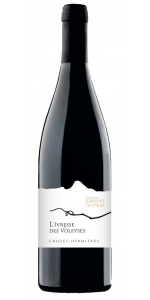
Laurent Veyrat Crozes Hermitage l'ivresse des Voleyses is made from 100% Syrah.
Review:
"Slightly more expensive, the 2020 Crozes-Hermitage L’Ivresse Des Voleyses is similarly purple-hued and has a great nose of ripe red and blue fruits interwoven with plenty of pepper, flowery incense, and spicy nuances. It’s pure, meduim-bodied, and beautifully balanced, with integrated acidity and outstanding length. It’s very much in the style of this classic, balanced vintage and is going to have over a decade of longevity."
-Jeb Dunnuck (2022), 91-93 points
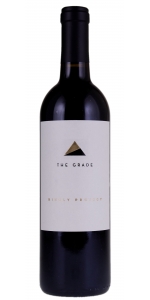
The Grade Cellar Kingly Project Cabernet Sauvignon is made from Napa Valley Cabernet Sauvignon.
"This is a noble expression of Cabernet Sauvignon" in full regalia, with decadent aromas and a mouthfeel viscous and sleek. "This vintage of the Kingly Project Cabernet Sauvignon enters the scene" -- Thomas Rivers Brown
Review:
The 2018 Cabernet Sauvignon Kingly Vineyard is endowed with tremendous richness and concentration. It emerges from the best spots within Block 5, which is a bit more protected from the elements. The 2018 is a bit closed today, but it has a lot of promise. Time in the glass brings out layers of inky dark fruit and the savory, minerally notes that are such signatures. This potent Calistoga Cabernet needs time to shine, but it is impressive today just the same.
-Vinous 96 Points
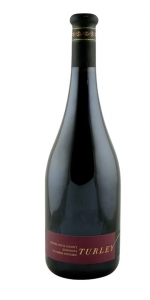
After working with the fruit for over a decade, Turkey is proud to present the first single-vineyard bottling for Turley from the Del Barba Vineyard. Contra Costa is a delta where the San Joaquin and Sacramento rivers meet, and these head-trained vines are planted in deep dehli blow sand, made up of decomposed granite coming down from the Sierra Mountains. The resulting wine embodies the best the delta has to offer: silken textures, ultra fine tannin, and dark saline fruits.
Review:
"The 2023 Zinfandel del Barba is ripe, boisterous and super-expressive. Floral overtones and bright acids run through a core of red/purplish fruit. Sandy soils confer lovely aromatic presence to this pure Zinfandel. This is an especially accessible offering from Turley."
-Vinous 91-93 Points
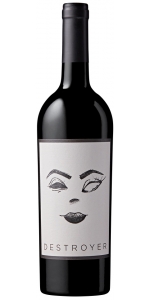
Destroyer North Coast Red is made from 65% Cabernet Sauvignon 20% Merlot 10% Zinfandel 5% Syrah
DESTROYER Red Wine Blend is a whimsical blend of North Coast varieties. We start with Cabernet Sauvignon 65%, and then add Merlot 20%, Zinfandel 10% and finish with Syrah 5%. 65% is grown in Lake County in the Red Hills AVA, the balance is Napa Valley. This wine is aged in French oak for 10 months.
DESTROYER is rich and flavorful. Red and dark fruits are apparent in the nose with Plum, Cherry and Blueberry tones. The aroma is elegant and shows subtle signs of oak nuance. The pallet explodes with deep deliciousness! The finish lingers and invites a second glass or two. Invite your favorite friends to try, and share with your hottest date.
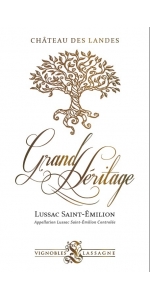
Landes Grand Heritage Lussac Saint Emilion is made from 100 percent Merlot.
First vintage of this wine was 2010 to pay tribute to the founding father of Chateau des Landes - Paul Lassagne. He gave the family a great legacy of terroir, passion and know-how to craft this great cuvee produced from a selection of the finest grapes that are vinified and aged in 600 liter French oak foudres, just like it was done in the old days. The resulting wine is complex and aromatic offering bold aromas and flavors of dark berries, floral tones, spice, oak and vanilla. The palate is onctuous and powerful, well structured with ripe tannins. Well balanced and a complex finish.
Average age of the Vines: 60 years Yield : 50 hectoliters / hectare. Grape picking: harvest by machine. Vats: Stainless steel thermoregulated and computerized. Fermentation: 45 to 50 days with a final 35°C warm steeping. Winemaking: Malolactic fermentation in new oak barrel. Ageing: 16 months in new French Oak barrels from Allier and Limousin. Annual production: 10,000 bottles. (833 cases)
Chavy-Chouet Volnay 1er Cru Sous La Chapelle is made from 100 percent Pinot Noir.
Total acreage for this wine: 0.1 hectare (0.25 acres)Planting density: 10 000 vines per hectares
Age of the vines: 10 years
At the bottom of the slope in the heart of Volnay, this plot lies on clay-sand soil.
Volnay is located on the steep sloping hill of Chaignot in the Côte de Beaune, where the southeast facing vines have been valued for centuries. These vineyards have been valued and exploited for centuries. Long before the French Revolution, the harvests of Volnay went to the Knights of Malta, the Abbeys of Saint-Andoche d’Autun and Maizières, or to the Dukes of Bourgogne and their successors, the Kings of France.
Volnay has a reputation for being among the most delicate, feminine of the Bourgogne wines. Limestone soil dominates the area, with deeper, gravelly soils at the foot of the slope, where Chavy Chouet’s vines are located.
This Volnay is full of character; broad and fruity. Smooth and elegant tannins make it a feminine wine, marked by aromas of black berries and leather.
Chakana Estate Malbec is made from 100 percent Malbec.
hakana is the name of the Southern Cross constellation. Its rotation in the sky throughout the year made it an effective agricultural calendar for the ancient Andean people.
The "yaguarete" (jaguar) on the label was known by the ancient Andean people as the "lord of the starred night"; the wildest known animal.
Chakana Estate Malbec is from Chakana's Altamira (3,200 ft elevation) and Gualtallary (5,500 ft elevation) vineyards.
The color is deep purple, very intense, typical of Malbec. Plum, brambly berries, spices and an iris/violet note are apparent on the nose. Intense, fruity flavors with velvety tannins.
Review:




