
" We don't sell the wine without touching the vine "
| BUY MORE! SAVE MORE! | ||||||||||||||||||||
|
| Country: | France |
| Regions: | Burgundy Chablis |
| Winery: | Corinne Perchaud |
| Grape Type: | Chardonnay |
| Vintage: | 2022 |
| Bottle Size: | 750 ml |
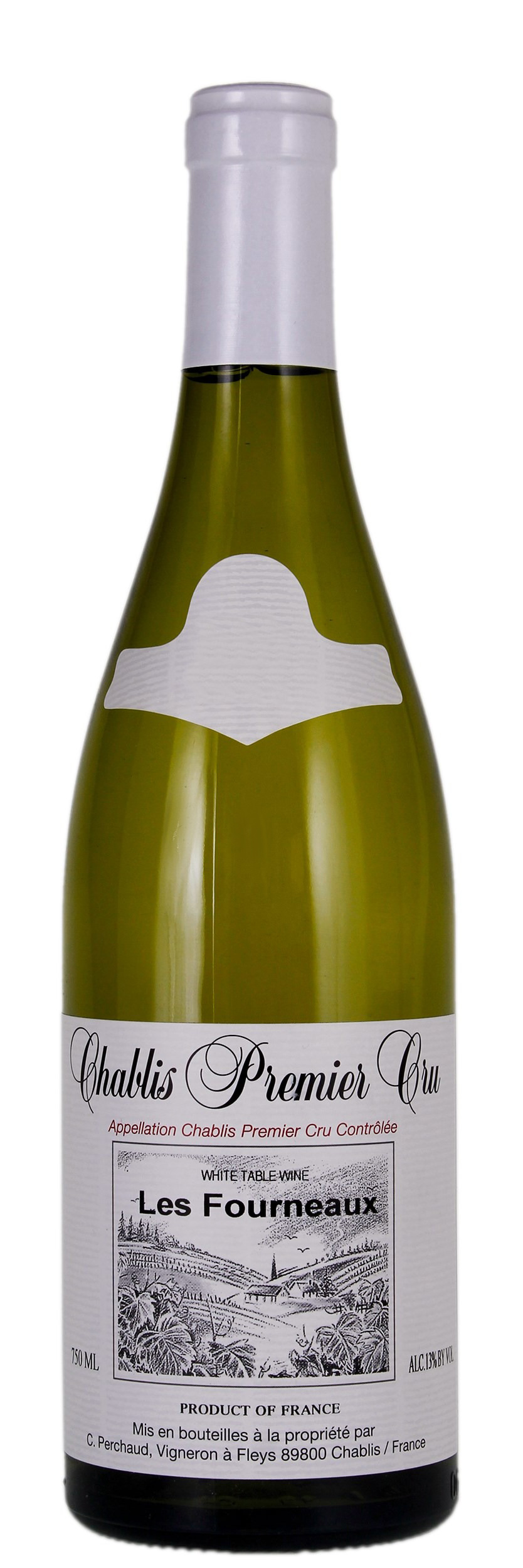
Corinne Perchaud Chablis Premier Cru Fourneaux is made from 100 percent Chardonnay.
This is the south facing portion of the slope and very hot, heavy "Fourneaux" or "oven" effect.
The wine is expressive and vivacious with beautiful aromas.
Well-balanced, round and fruity wine with a fine minerality on the finish.
1er Cru Fourneaux is located on the Fleys village and faces the field. the plots are very steep and exposed full south on soil type Kimmeridgian consists of marl clay-limestone with shallow ground and a very stony ground. After a slight settling, the juice starts its fermentation in tank, then ¼ of juice is racked in barrels. Both wines perform their alcoholic fermentation and malolactic and their aging on the lees, separately. The two cuvées are blended six months after harvesting. The wine is then filtered and is bottled 15 months after harvesting. 2013 Conditions and Harvest The relatively high temperatures at the end of winter allowed an early bud vines in early March. With a hot, dry spring flower took place in good conditions. In July, a hailstorm located did some damage to our Fourchaume plot. July and early August, rainy and stormy brought the water needed by the vineyards. The dry and sunny weather of the second half of August brought the grapes to maturity. The harvest began on September 2 under cloudy skies.
Coquille St. Jacques (scallops) with leeks and cream.
The Corinne Perchaud Estate
Corinne Perchaud and her husband Jean-Pierre Grossot began working in the Domaine in 1980, but the estate was originally founded in 1920. They are the third generation of winemakers at this family estate, located in the village of Fleys, in the heart of the Chablis appellation.
"A very good to excellent Chablis producer making some wines in tank and others in barrel; the former are outstanding" - Anthony Dias Blue's pocket guide to wine 2006
The Corinne Perchaud Vineyard
They farm 18 hectares (44.5 acres) of vines: 13 A.O.C. Chablis and 5 hectares Premier Cru. The wines are only tank fermented, except the Fourneaux that gets 25% barrel fermented wine added into the final blend. The owners take great care to produce exceptional Chablis wine by keeping the lively Chardonnay fruit and the unique mineral quality imparted by the Kimmeridgian soil, the fruity acidity and bouquet in perfect balance. The grapes are harvested by hand and gently pressed in a horizontal pressoir to ensure the fullest extraction and range of flavors and aromas.
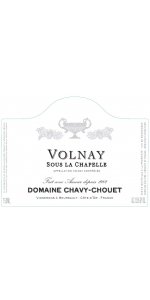
Chavy-Chouet Volnay 1er Cru Sous La Chapelle is made from 100 percent Pinot Noir.
Total acreage for this wine: 0.1 hectare (0.25 acres)Planting density: 10 000 vines per hectares
Age of the vines: 10 years
At the bottom of the slope in the heart of Volnay, this plot lies on clay-sand soil.
Volnay is located on the steep sloping hill of Chaignot in the Côte de Beaune, where the southeast facing vines have been valued for centuries. These vineyards have been valued and exploited for centuries. Long before the French Revolution, the harvests of Volnay went to the Knights of Malta, the Abbeys of Saint-Andoche d’Autun and Maizières, or to the Dukes of Bourgogne and their successors, the Kings of France.
Volnay has a reputation for being among the most delicate, feminine of the Bourgogne wines. Limestone soil dominates the area, with deeper, gravelly soils at the foot of the slope, where Chavy Chouet’s vines are located.
This Volnay is full of character; broad and fruity. Smooth and elegant tannins make it a feminine wine, marked by aromas of black berries and leather.
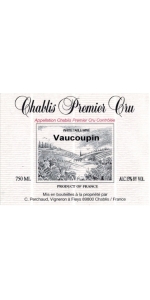
Corinne Perchaud Chablis Premier Cru Vaucoupin is 100 percent Chardonnay.
The vineyard The plots are on the Vaucoupin Chichée village. They are very steep and facing south, their average age is 40 years. The total area is 1.45 hectares. The vines are planted on soil Kimmeridgian marl consisting clay and limestone with dominant clay. Winemaking After a slight settling, the juice is put in to achieve its fermentation tank alcoholic and malolactic. It follows a long aging on lees to bring a maximum of complexity of aromas and flavors. If necessary, we make a collage to bentonite to remove proteins and a passing cold which eliminates tartar crystals. Then we perform a tangential filtration is the filtration method most friendly to wine.
The wine will be bottled 16 months after harvest. The relatively high temperatures at the end of winter allowed an early bud vines in early March. With a hot, dry spring flower took place in good conditions. In July, a hailstorm located did some damage to our Fourchaume plot. July and early August, rainy and stormy brought the water needed for the vineyards. The dry and sunny weather of the second half of August brought the grapes to maturity. The harvest began on September 2 under clement skies.
Pairs well with seafood, shellfish.
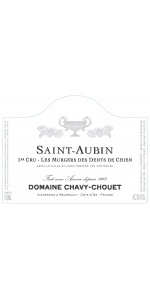
Chavy-Chouet Saint-Aubin Premier Cru Les Murgers des Dents de Chien is made from 100 percent Chardonnay.
The wine is produced from 30 year-old vines overlooking the grand crus of Puligny-Montrachet. The vines grow on limestone soils covered with white pebble stones.
The altitude and the poor soil result in a fine, subtle wine with bright acidity. It is a feminine wine that evolves slowly with floral and spicy notes before taking on greater density and revealing its power.
Ageing in oak barrels for 12 months (20% new).100% Chardonnay of 30 years of age.
The vineyard measures 0.17 hectare with a plenting density of 10,000 vines per hectare.
Review:
Jasper Morris - Inside Burgundy 93 Points
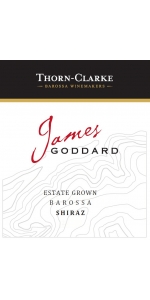
James Goddard was an ancestor of the Clarke family. Born in West Sussex, England in 1823, James spent his 74 years as a sailor, a whaler, a bullock driver, farmer, prospector, miner and hotel keeper. From an illiterate runaway living rough on the streets of London, he became a rich, successful and admired pillar of South Australian society.
James arrived in Adelaide in 1839 as a 16-year-old sailor. Twelve years later, his life changed forever with the news of gold findings. For the next 20 years, James roamed the country learning the geology that improved his chances of prospecting.
James Goddard Shiraz is made from 100 percent Shiraz.
In 1870, he tried his luck near his farm in the Barossa Valley and discovered the region’s first gold deposits, creating the prosperous Lady Alice Mine. The Lady Alice Mine, though it is no longer operational, was & still is the most successful gold mine in South Australia. From these roots, the Thorn-Clarke family has been connected to the region for the last 150 years.
James Goddard Shiraz is a blend Shiraz sourced from the Milton Park vineyard in the north of Eden Valley, and the St Kitts vineyard in the far northern area of the Barossa. Fruit is harvested in the cool of the night to maintain maximum flavour and freshness and it is fermented for 8 days. The ferment is pumped over twice daily to extract the colour and flavour from the fruit. Once finished fermentation the wine was then matured in a blend of French and American oak for a period of 10 to 12 months depending on the vintage.
Deep vibrant red with purple hues to the rim. The nose shows lifted plums, vibrant purple berries and a delicate spice note. The palate has concentrated satsuma plum, blackberry with lovely charry oak in the background. Long, juicy and even with plush fruit on the finish.
Review:
“Blended from two estate vineyards, St. Kitts and Milton Park, this shiraz offers its richness without any aggression or overt perfume. It’s just lush and delicious, a friendly embrace of firm tannins and purple-red fruit. The texture and flavor combine in a saturated meatiness, for Korean barbecue.”
- Wine & Spirits Magazine, 92 points
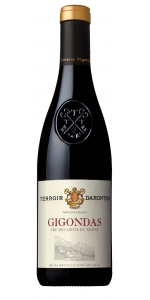
The Gigondas appellation is naturally delimited by the Dentelles de Montmirail to the east and the upper plateaux of the Ouvèze River to the west. The rugged topography of the Dentelles, amazing limestone pyramids, protects the vines from excessive summer heat and the full force of the mistral. Our vines grow on steep terraces up to 400 metres in altitude.
This Cru Gigondas displays a fine balance between freshness and an impression of sweetness due to old Grenache vines planted at high altitude. The wine is big on the palate, with a dense texture of rich, ripe tannin. Its polished personality reflects a top-rate terroir.
Review:
"Very full, rich and luxurious in style with ripe red berries and some rich, meaty fruit coming through on the palate; grainy and gritty tannins, with plenty to chew on. Feels youthful and tight but harmonious. The lovely acid line brings precision and pep. Tapered finish. Very appealing!"
- Decanter WWA 2022, 96 points and Gold Medal
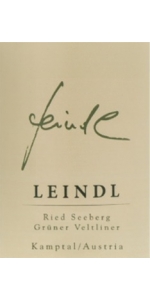
Leindl Gruner Veltliner Seeberg Kamptal is made form 100 percent Gruner Veltiner. Medium yellow green. Fine yellow apple fruit, delicate hint of quince and honey, candied orange zest, highly attractive bouquet. Juicy, good complexity, extract core sweet, silky texture, fine acidity bow, fine and salty minerality, great length, secure aging potential, a very finesse Veltliner-style.
Review:
“Inviting nose, with layers of quince and elegant, aromatic herb leading through to a richly textured palate of opulent fruit and a fine acidity.”
- Decanter World Wine Awards 2023, 96 pts
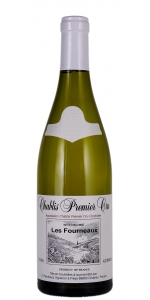
Perchaud Chablis Premier Cru Fourneaux is made from 100 percent Chardonnay.
This is the south facing portion of the slope and very hot, heavy "Fourneaux" or "oven" effect.
The wine is expressive and vivacious with beautiful aromas.
Well-balanced, round and fruity wine with a fine minerality on the finish.
1er Cru Fourneaux is located on the Fleys village and faces the field. the plots are very steep and exposed full south on soil type Kimmeridgian consists of marl clay-limestone with shallow ground and a very stony ground. After a slight settling, the juice starts its fermentation in tank, then ¼ of juice is racked in barrels. Both wines perform their alcoholic fermentation and malolactic and their aging on the lees, separately. The two cuvées are blended six months after harvesting. The wine is then filtered and is bottled 15 months after harvesting. 2013 Conditions and Harvest The relatively high temperatures at the end of winter allowed an early bud vines in early March. With a hot, dry spring flower took place in good conditions. In July, a hailstorm located did some damage to our Fourchaume plot. July and early August, rainy and stormy brought the water needed by the vineyards. The dry and sunny weather of the second half of August brought the grapes to maturity. The harvest began on September 2 under cloudy skies.
Coquille St. Jacques (scallops) with leeks and cream.
Corinne Perchaud Chablis Premier Cru Vaucoupin is 100 percent Chardonnay.
The vineyard The plots are on the Vaucoupin Chichée village. They are very steep and facing south, their average age is 40 years. The total area is 1.45 hectares. The vines are planted on soil Kimmeridgian marl consisting clay and limestone with dominant clay. Winemaking After a slight settling, the juice is put in to achieve its fermentation tank alcoholic and malolactic. It follows a long aging on lees to bring a maximum of complexity of aromas and flavors. If necessary, we make a collage to bentonite to remove proteins and a passing cold which eliminates tartar crystals. Then we perform a tangential filtration is the filtration method most friendly to wine.
The wine will be bottled 16 months after harvest. The relatively high temperatures at the end of winter allowed an early bud vines in early March. With a hot, dry spring flower took place in good conditions. In July, a hailstorm located did some damage to our Fourchaume plot. July and early August, rainy and stormy brought the water needed for the vineyards. The dry and sunny weather of the second half of August brought the grapes to maturity. The harvest began on September 2 under clement skies.
Pairs well with seafood, shellfish.
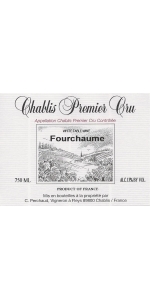
Corinne Perchaud Chablis 1er Cru Fourchaume is made from 100 percent Chardonnay
Elegant citrus aromas. Concentrated and finessed, combining flavors of dried fruit with slight hints of woody notes. Perfect balance between body and acidity, long and persistent finish. This one is drinking great now, but as with all exceptional Chablis, it is possible to pay it down for years to come.
Made from 35 year old vines. The owners take great care to produce exceptional Chablis wine by keeping the lively Chardonnay fruit and the unique mineral quality imparted by the Kimmeridgian soil, the fruity acidity and bouquet in perfect balance. The grapes are harvested by hand and gently pressed in a horizontal pressoir to ensure the fullest extraction and range of flavors and aromas.
Pair with Scallops Jacques cream, roast veal with oyster mushrooms.
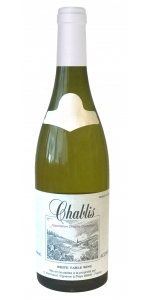
Corinne Perchaud Chablis is 100 percent Chardonnay.
A classic Chablis with aromas of ripe white fruits and a taste of rich minerals.
The Vineyards The plots are in Chablis located predominantly on the village of Fleys, but also on the common Chichée and Fontenay, their total area is 13 hectares. They are mostly north and north-west oriented. The ground floor is Kimmeridgian marl consisting clay and limestone. The oldest of of the vines is 35 years. Winemaking After a slight settling, the juice is put in stainless tanks to achieve its fermentation both alcoholic and malolactic. Ther is a long aging on lees to refine the flavors and develop complex flavors. If necessary, we make a collage of Bentonite to remove proteins and a passing cold which eliminates tartar crystals. Then we perform a tangential filtration method friendly to the wine. The wine is bottles between 14 and 21 months after the harvest.
Pairs well with Oysters or shellfish and Sole Meunière.
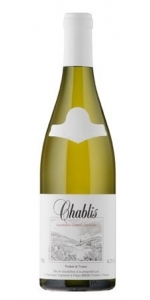
Corinne Perchaud Chablis (half-bottle) is 100 percent Chardonnay.
A classic Chablis with aromas of ripe white fruits and a taste of rich minerals.
The Vineyards The plots are in Chablis located predominantly on the village of Fleys, but also on the common Chichée and Fontenay, their total area is 13 hectares. They are mostly north and north-west oriented. The ground floor is Kimmeridgian marl consisting clay and limestone. The oldest of of the vines is 35 years. Winemaking After a slight settling, the juice is put in stainless tanks to achieve its fermentation both alcoholic and malolactic. There is a long aging on lees to refine the flavors and develop complex flavors. If necessary, we make a collage of Bentonite to remove proteins and a passing cold which eliminates tartar crystals. Then we perform a tangential filtration method friendly to the wine. The wine is bottles between 14 and 21 months after the harvest. 2011 Vintage The relatively high temperatures at the end of winter allowed an early bud vines in early March. With a hot, dry spring flower took place in good conditions. In July, a hailstorm located did some damage to our Fourchaume plot. July and early August, rainy and stormy brought the water needed vineyards. The dry and sunny weather of the second half of August brought the grape good maturity. The harvest began on September 2 under clement skies.
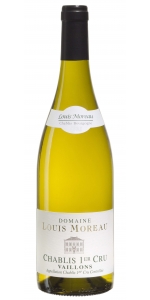
Domaine Louis Moreau Chablis Vaillons Premier Cru is made from 100 percent Chardonnay.
Chablis achieves its highly distinctive mineral character due to its cool northerly climate and its highly calcareous soil. The Domaine Louis Moreau Chablis Vaillons Premier Cru is a generous, fleshy and lively wine that displays a beautiful balance of minerality, fruitiness and elegance.
Chablis, with its steely character and fresh citrus flavor, pairs well with white fish and shellfish and its naturally high acidity can counterbalance cream-based sauces. Unoaked Chablis lends itself well to vegetables, starches, Comté, or fresh goat cheese.
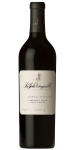
La Jota Howell Mountain Cabernet Franc is made from 100% Cabernet Franc.
The 2019 Cabernet Franc opens with aromas of cassis and graphite when poured in the glass. The firm tannins set the stage on the palate melded with rich flavors of boysenberry and pain de grille with a silky mouthfeel and lingering finish.
Review:
Savory in black pepper, smoked meat and cigar box, this wine is high-toned aromatically, with lovely hints of violet and dried herb, sage and bay leaf. Mountain-sturdy tannins give it structure, power and room to age, with lasting acidity to keep it fresh. Enjoy best from 2029–2039
.-Wine Enthusiast 95 Points
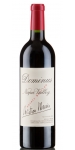
Dominus Napa Valley Christian Moueix Red Blend is made from 87% Cabernet Sauvignon, 9% Cabernet Franc, 4% Petit Verdot.
Dominus Estate is the Napa Valley property of Bordeaux producer Christian Moueix. The wine is bottled from the historic Napanook Vineyard. Located at the foothills of the Mayacamas, the vineyard was planted in 1838 and continues to evolve under the stewardship of Christian Moueix. The estate's Bordeaux varietals benefit from the Yountville microclimate where temperatures are moderated by cool breezes from the San Pablo Bay. The resulting wine is a uniquely refined expression of this special terroir. The 2023 vintage is seductive and deep with notes of cedar, oriental spices, wild berry, and cocoa, followed by a finely etched finish.
Reviews:
Black currant, pencil shaving, subtle sandalwood, wet earth, forest floor and violet aromas follow through to a medium- to full-bodied palate with ultra-fine tannins that integrate perfectly at the end. A polished and caressing texture that goes on for minutes. The balance and drinkability of this Dominus is terrific, and it will age beautifully. A blend of 87% cabernet sauvignon, 9% cabernet franc and 4% petit verdot. From organically grown grapes. Very drinkable now, but will age beautifully.
James Suckling 99 Points



