" We don't sell the wine without touching the vine "
| Country: | France |
| Regions: | Burgundy Maconnais |
| Winery: | Croix Senaillet |
| Grape Type: | Chardonnay |
| Organic: | Yes |
| Vintage: | 2016 |
| Bottle Size: | 750 ml |

Croix Senaillet Saint Veran is made from 100 percent unoaked Chardonnay.
Fresh and fruity with floral, peach and citrus fruit aromas followed by mineral notes. Mineral, citrus and honey flavors. Rich and luscious palate with a long finish.
Produced from a selection of 40 parcels spread over 17 hectares. Some of the parcels include: Maillettes, Bergades, Poncétys, Terres noires, Pommards, Chênes, Surigny, Prâgnes, Bruyère, Chailloux, etc Average age of the vines is 45 years. The soil is made of clay and limestone. South, southeastern exposure - a few plateaux. Careful vinification. Minimal intervention in the vinification process. Modern equipment (pneumatic press, thermo-regulated tanks). Each parcel is harvested at full maturity. Destemming, slow press, slow fermentation, malolactic fermentation, aging on the lees.

Croix Senaillet St. Veran Les Rochats is made from 100 percent Chardonnay.
This Saint Veran Les Rochats is produced from 50-year-old Chardonnay vines, grown organically on Jurassic-era limestone (Entroque limestone), covered by pebbles that act as a filtering soil. The parcel is southeast facing on half hills.
Clear golden color with light green reflections. The wine has a rich and complex bouquet with a wide array of aromas: pear, nougat, wild peach and kiwi. The mouth is rich and dense bringing freshness with a nice volume and finishing on a light exotic note.
Vineyard
Surface area : 1 Ha.
Soil : limestone soil from the Jurassic period, covered by pebbles acting like a filtering soil.
South-east facing parcel on half-hills.
Grape variety : organically-grown Chardonnay.
Plantation density : 8.500 vinestocks per ha.
Age of vines : 50 years.
Mâconnais style pruning quite short, with 10 to 12 buds.
Hand-harvesting at optimal maturity.
Destemming to avoid herbaceous taste.
Slow and gentle pneumatic pressuring guarantees purity of juice and extraction of the finest aromas.
Very slow alcoholic fermentation in stainless still tank.
Malolactic fermentation.
Aging in stainless steel tanks for 9 months with gentle stirring of fine lees.
Pairs well with shrimp risotto, sautéed veal with eggplant.

No Syrah terroir in Sonoma County compares with Sonoma Mountain’s northwest crown—cool fog-affected mornings, sun-bathed afternoons, cooled by persistent coastal breezes, and temperate evenings. The soils in Steiner’s Syrah blocks — ashy and moondust-like, littered with decomposing sea bed — further contribute to the unique nature of this site. After a 3-vintage hiatus, I am thrilled to be back working with Steiner Vineyard’s Syrah. By its nature, this slow-to-ripen, cool-climate site produces fabulously deep, intense, structured wines. Now, raising a big, brawny Syrah is no rare act of alchemy. It is the wonder of Steiner’s terroir — a magical elegance and beauty, informing the inherent power, depth and intensity — that makes this bottling so special. 2016 produced a classic wine that deftly balances massive flavors and texture, while retaining vital freshness, and a palpable sense of cool. Production was low, so get it while you can. Simply a “WOW” wine, not to be missed.
VINEYARD: Steiner Vineyard. Located at 1,100 ft, on the northwest crown of Sonoma Mountain. CRUSH: Early morning harvest by hand, October 1st, cluster and berry sorted, destemmed and crushed. FERMENT: 5-day cold soaks, followed by 14 day native fermentation in open-top bins. AGING: 20 months, French oak, 100% new, mixture of 300L hogsheads and barrique shapes. Never racked prior to bottling. Bottled unfined, unfiltered.
Review:
-Erin Brooks (Robert Parker) 94 Points

Avennia Red Willow Cabernet Sauvignon is made from 100% Cabernet Sauvignon.
The Red Willow Cabernet is a true blockbuster.
Coming from one specific block of 30 year old vines at this iconic vineyard, then strictly barrel selected, this is the essence of powerful, old vine Washington Cabernet. After all of our efforts promoting the idea of the Bordeaux blend, it would take a pretty compelling argument to suspend that idea and make a 100% varietal Cabernet. In 2016 Red Willow provided us with just that. Each time we tasted it in the barrel, the belief grew that this was something special. Something we can't make every year. In the end we were won over, and decided to make a limited amount of this wine. But don't be fooled, as this too is a blend and a selection. Each year as we are tasting the grapes as harvest approaches, we notice that the vines near the bottom of this long, steep west-facing slope, are a little different. The vines at the bottom are in a little richer soil, and get a little more water, so we pick them separately, sometimes even a week or ten days apart, and keep them separate in barrel.
This wine is all from the top of the vineyard, with its lower yield and poorer soils giving more concentration and interest. Then further, nearly every combination of new and used French oak barrels were trialed to find the best blend. It's not enough just to use the four best barrels, but to trial each combination to see how they complement each other. For a wine with this much mass, 100% new French oak was used for the first time at Avennia. It is a wine that needs a little cellaring to start, but should last a very long time.
Review:
-Jeb Dunnuck 96 Points
-Anthony Mueller (Robert Parker) 95 Points

Avennia Valery Red Blend is made from 86% Merlot and 14% Cabernet Franc
Valery is named for the patron saint of wine in the St. Emilion region that inspired it.
We started with old vine Merlot from a stony block in the heart of the Yakima Valley and added complex, aromatic Cabernet Franc from the Horse Heaven Hills. The result is a balanced, complex wine with the elegance and ethereal perfume that this blend of two of Washington’s best varietals are known for.
The nose on this wine is very perfumed, almost exotic with notes of fresh violets, red plum, winter mint, fresh herbs and crushed limestone qualities. The palate is poised and balanced, with red fruits and mocha powder encapsulated in limestone. The finish lingers delicately, with the Cabernet Franc asserting a light tobacco and herb note, giving depth. A compelling wine that will continue to unwind for 7-10 years in the cellar.
Review:
-Jeb Dunnuck 93 Points
-Robert Parker's Wine Advocate 92 Points
-Wine Enthusiast 91 Points

Cavalier Dario Barolo Riserva 2016 is made from Nebbiolo.
This is the flagship of the Cavalier Dario house — a Barolo held back for the extended aging a Riserva demands and released only once it has begun to soften and open. In the glass it shows the deep garnet Nebbiolo takes on with time, with an aromatic profile the estate calls fresh, complex and austere, and a palate that is warm and supple with the balance that separates a serious Barolo from a merely powerful one. A wine for the table: braised beef, game, aged Piedmontese cheeses and slow Sunday cooking.
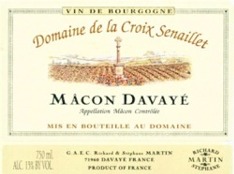
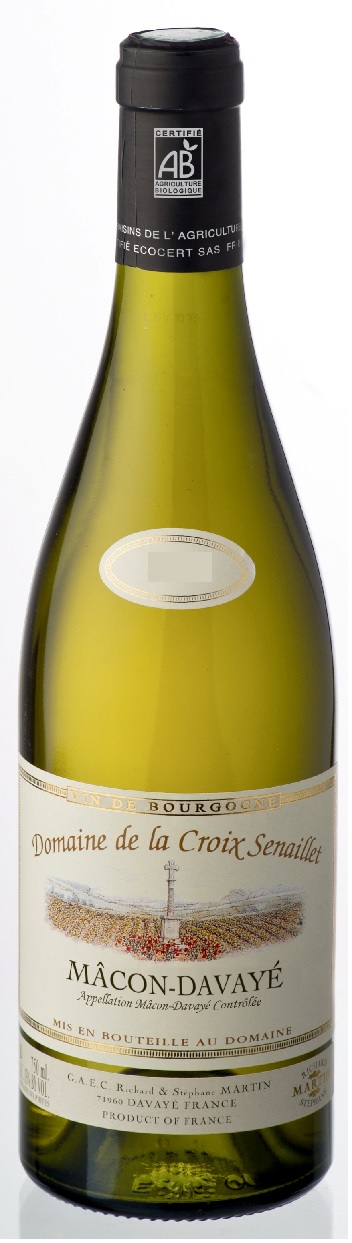
Croix Senaillet Macon-Davaye is 100 percent Chardonnay.
Pale brilliant yellow color. Fresh nose of citrus fruits (lemon, grapefruit). Mineral and salty notes on the palate. Fresh, supple and harmonious in the mouth.
Produced from 7 different parcels of vines spread over 3.77 hectares, planted on clay and limestone based soils. Average age of the vine is 28 years. Careful vinification. Minimal intervention in the vinification process. Modern equipment (pneumatic press, thermo-regulated tanks). Each parcel is harvested at full maturity. Destemming, slow press, slow fermentation, malolactic fermentation, aging on the lees.
Excellent as an aperitif and pairs well with grilled fish and Asian food.
The Domaine de la Croix Senaillet Estate
This second generation old estate is located in the town of Davaye, in southern Burgundy. The winery was founded by Maurice Martin in 1969. His son Richard took it over in 1990 and was joined by his brother Stéphane in 1992. While Richard takes care of the vinification and the sales, Stephane is in charge of the vineyard. They sell 80% of their production in bottle and 20% to negociants. Currently, they export 40% of their wine outside of France.
"Domaine de la Croix Senaillet" takes its name from a cross that had been given by an ancient mayor of the village called Benoit Senaillet. The records show that the mayor donated the cross to Davaye in 1866 to replace the one that was destroyed in 1793 during the French Revolution. According to the common believes, the cross that was blessed in 1867 would protect the inhabitants of the village and everyone that would pass by.
The Domaine de la Croix Senaillet Vineyard
The vineyards are located on the south/southeastern slopes of the Solutre and Vergisson rocks. The estate spreads over 52 parcels in the town of Davayé and measures 22 hectares total (54.3 acres): 17 ha in St Veran, 5 ha in Macon, less than 1 hectare in Pouilly-Fuisse. The soil is both chalk and clay. The vines are 40 years old on average. In order to increase the quality of the grapes, Stephane has decided to use "culture raisonnee", which means that they watch carefully and daily the vineplant, checking for the sanitary level in the vineyard and use very small amount of pesticide and chemical products if necessary.
Saint Veran's AOC represents 696 hectares (1,726 acres) in total.
The total production for the AOC is around 42,775 hectoliters (474,089 twelve-bottle-case equivalent)

Mascot is a small-production label founded by Will Harlan in Napa Valley. The wines under this label are made from the younger vines of Harlan Estate, BOND, and Promontory, but The Mascot bottles share an exclusive preview at the development of their estates. Founded as an initial experiment to see what the young vines were capable of producing, the wines were initially only shared with close friends and family. By 2008, Will officially released the first vintage to the public since production had increased significantly. They create just one wine made from Cabernet Sauvignon, and the bottle is aged for five years before release. Assembled into a single, youthful expression, this wine shares a glimpse into the evolution and pedigree of its parent estates.

Thorn Clarke Terra Barossa Shiraz is made from 100 percent Shiraz
Deep purple red. Aromas of ripe plums, cherries and earth with subtle notes of vanilla and cloves. The aromas follow through onto the palate with a fruit focus, subtle oak notes and soft, rounded tannins. The wine walks the line between medium and full bodied with a plush mouthfeel.
The grapes are crushed and de-stemmed into fermenters. Yeast is added immediately once in fermenter and the ferments are pumped over twice daily to maximise colour, tannin and flavour extraction. Cooling is used to ensure ferment temperatures remain in the 22-25 degree celcius range which will allow the fruit to display maximum fruit expression. Pressing then occurs approximately seven days after crushing and the wine is then put into predominately American oak to mature.