
" We don't sell the wine without touching the vine "
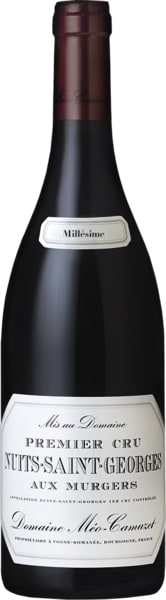
| Country: | France |
| Region: | Burgundy |
| Winery: | Meo-Camuzet |
| Grape Type: | Pinot Noir |
| Organic: | Yes |
| Vintage: | 2020 |
| Bottle Size: | 750 ml |
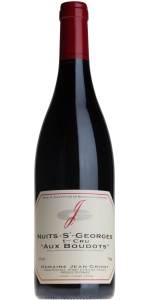
Domaine Jean Grivot Nuits-Saint-Georges Premier Cru Aux Boudots is made from 100 percent Pinot Noir.
Domaine Jean Grivot is among the great names in Burgundian wine. Étienne Grivot and his wife Marielle took over from Étienne’s father Jean Grivot in 1987. The vineyards are densely planted and farmed organically “sans certification” while the aim in the cellar is for balance and clear expression of terroir.
Jean Grivot’s 38.3 acres spread across 22 appellations with vineyards in the communes of Vosne-Romanée, Vougeot, Chambolle-Musigny, and Nuits-Saint-Georges. Besides the three grand crus, there are 8 premier crus including the much lauded Les Beaux Monts and Suchots in Vosne-Romanée. The grapes are completely de-stemmed and fermentation is spontaneous.
Nuits-Saint-Georges Aux Boudots 1er cru lies in the “Zone Vosnoise” or northern end of Nuits-Saint-Georges just below Les Damodes. It borders Vosne-Romanée Aux Malconsorts 1er just to its north. Its position slightly lower on the slope with deep soil full of pebbles results in a richer and fuller wine.
The grapes are destemmed and maceration à froid usually lasts just a day or two. The alcoholic fermentation is spontaneous and malolactic fermentation occurs in barrel. Depending on the vintage, the proportion of new oak is around 30-60% for the premier crus.
The wine shows aromas and flavors of red berries, herbs, and purple flowers. The palate is rich with ripe fruit and medium weight with bright acidity and fine tannins. Aging in 30-60% new Burgundian pièce brings notes of vanilla, toast, and baking spices.
Red Burgundy might be the world’s most flexible food wine. The wine’s high acidity, medium body, medium alcohol, and low tannins make it very food-friendly. Red Burgundy, with its earthy and sometimes gamey character, is a classic partner to roasted game birds, grilled duck breast, and dishes that feature mushrooms, black truffles, or are rich in umami.
Reviews:
‘The 2020 Nuits Saint-Georges Aux Boudots Ter Cru has the best aromatics among Grivat Nuits Saint-Georges with very well defined red berry fruit, briary and lignt sous-bois aromas. The palate is medium-badied with fine-grain tannins, slightly savory on the entry, fresh and saline on the finish. This has real verve and class, though it will benefit from time in bottle
-Vinous 93-95 Points
A wine with the substance and structure to support the generous lashings of new oak used for maturation, and the overall effect is elegant and classic in style. Aux Boudots, where Grivot has 0.85ha, is at the northern edge of Nuits, just over the border from Vosne-Romanée Malconsorts. They began to pick on the 3rd of September – Etienne specified that they are very particular that the tannins are ripe and do what they can to prolong the vegetative cycle. Still, the grapes were picked with an entirely correct pH of around 3.4.
-Decanter 94 Points
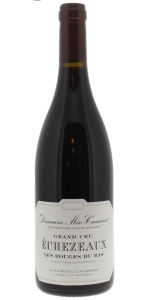
Échezeaux is loyal to its appellation through the finesse of its attack on the palate and its overall balance. But it's also a wine with pronounced acidity, which gives it freshness and structure and bestows upon it a sometimes austere finish.
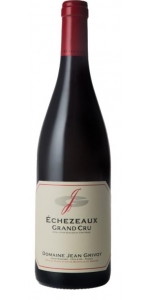
Domaine Jean Grivot Echezeaux Grand Cru is made from 100 percent Pinot Noir.
Domaine Jean Grivot is among the great names in Burgundian wine. Étienne Grivot and his wife Marielle took over from Étienne’s father Jean Grivot in 1987. The vineyards are densely planted and farmed organically “sans certification” while the aim in the cellar is for balance and clear expression of terroir.
Jean Grivot’s 15.5 hectares spread across 22 appellations with vineyards in the communes of Vosne-Romanée, Vougeot, Chambolle-Musigny, and Nuits-Saint-Georges. Besides the three grand crus, there are 8 premier crus including the much lauded Les Beaux Monts and Suchots in Vosne-Romanée. The grapes are completely de-stemmed and fermentation is spontaneous.
About the Vineyard:
Echézeaux grand cru is a large vineyard of 38 hectares divided into 11 individual climats. Grivot’s parcel is in the climat of Les Cruots and lies at the southern end of Echézeaux near the premier cru of Les Suchots. A good Echézeaux should have rich fruit, considerable earthiness, and be very complete on the palate.
Tasting Notes:
The wine shows aromas and flavors of red berries, herbs, and purple flowers. The palate is rich with ripe fruit and medium weight with bright acidity and fine tannins. Aging in 40-70% new Burgundian pièce brings notes of vanilla, toast, and baking spices.
Food Pairing:
Red Burgundy might be the world’s most flexible food wine. The wine’s high acidity, medium body, medium alcohol, and low tannins make it very food-friendly. Red Burgundy, with its earthy and sometimes gamey character, is a classic partner to roasted game birds, grilled duck breast, and dishes that feature mushrooms, black truffles, or are rich in umami.
Review:
A very elegant expression of Echezeaux, with a velvety black plum and rose petal fruit. There is a lovely freshness and so much finesse that the tannin and structure might surprise you at the end. This has the substance to age for decades. Produced from a 0.84ha parcel in Cruots next to Comte Liger-Belair. The vines were planted in 1954 and the destemmed fruit was gently fermented.
This is pure, racy and enticing, hosting aromas and flavors of black currant, blackberry, violet and iron. This is about finesse, grace and precision balance, with saturated fruit flavors persisting on the superlong aftertaste. Needs a decade in the cellar.
-Wine Spectator 97 Points
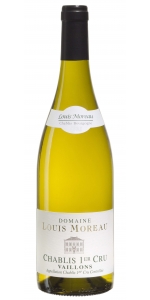
Domaine Louis Moreau Chablis Vaillons Premier Cru is made from 100 percent Chardonnay.
Chablis achieves its highly distinctive mineral character due to its cool northerly climate and its highly calcareous soil. The Domaine Louis Moreau Chablis Vaillons Premier Cru is a generous, fleshy and lively wine that displays a beautiful balance of minerality, fruitiness and elegance.
Chablis, with its steely character and fresh citrus flavor, pairs well with white fish and shellfish and its naturally high acidity can counterbalance cream-based sauces. Unoaked Chablis lends itself well to vegetables, starches, Comté, or fresh goat cheese.
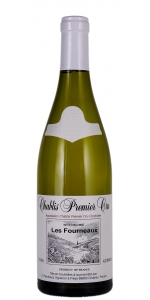
Perchaud Chablis Premier Cru Fourneaux is made from 100 percent Chardonnay.
This is the south facing portion of the slope and very hot, heavy "Fourneaux" or "oven" effect.
The wine is expressive and vivacious with beautiful aromas.
Well-balanced, round and fruity wine with a fine minerality on the finish.
1er Cru Fourneaux is located on the Fleys village and faces the field. the plots are very steep and exposed full south on soil type Kimmeridgian consists of marl clay-limestone with shallow ground and a very stony ground. After a slight settling, the juice starts its fermentation in tank, then ¼ of juice is racked in barrels. Both wines perform their alcoholic fermentation and malolactic and their aging on the lees, separately. The two cuvées are blended six months after harvesting. The wine is then filtered and is bottled 15 months after harvesting. 2013 Conditions and Harvest The relatively high temperatures at the end of winter allowed an early bud vines in early March. With a hot, dry spring flower took place in good conditions. In July, a hailstorm located did some damage to our Fourchaume plot. July and early August, rainy and stormy brought the water needed by the vineyards. The dry and sunny weather of the second half of August brought the grapes to maturity. The harvest began on September 2 under cloudy skies.
Coquille St. Jacques (scallops) with leeks and cream.
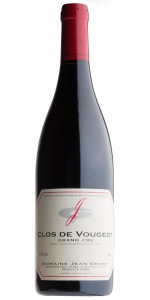
Domaine Jean Grivot Clos de Vougeot Grand Cru is made from 100 percent Pinot Noir.
Domaine Jean Grivot is among the great names in Burgundian wine. Étienne Grivot and his wife Marielle took over from Étienne’s father Jean Grivot in 1987. The vineyards are densely planted and farmed organically “sans certification” while the aim in the cellar is for balance and clear expression of terroir.
Jean Grivot’s 38.3 acres spread across 22 appellations with vineyards in the communes of Vosne-Romanée, Vougeot, Chambolle-Musigny, and Nuits-Saint-Georges. Besides the three grand crus, there are 8 premier crus including the much lauded Les Beaux Monts and Suchots in Vosne-Romanée. The grapes are completely de-stemmed and fermentation is spontaneous.
About the Vineyard:
Clos de Vougeot grand cru was acquired by Étienne’s grandfather, Gaston Grivot, in 1919. The total holding is 4.6 acres from the middle of the vineyard to the lower wall and the average vine age is 40 years old. A good Clos de Vougeot should be a complete wine without any one feature standing out. It is a perfect balance of power, aroma, and flavor.
Wine Production:
The grapes are destemmed and maceration à froid usually lasts just a day or two. The alcoholic fermentation is spontaneous and malolactic fermentation occurs in barrel. Depending on the vintage, the proportion of new oak is around 40-70% percent for the grands crus.
Tasting Notes:
The wine shows aromas and flavors of red berries, herbs, and purple flowers. The palate is rich with ripe fruit and medium weight with bright acidity and fine tannins. Aging in 40-70% new Burgundian pièce brings notes of vanilla, toast, and baking spices.
Food Pairing:
Red Burgundy might be the world’s most flexible food wine. The wine’s high acidity, medium body, medium alcohol, and low tannins make it very food-friendly. Red Burgundy, with its earthy and sometimes gamey character, is a classic partner to roasted game birds, grilled duck breast, and dishes that feature mushrooms, black truffles, or are rich in umami.
Review:
This round version is packed with ripe black cherry, violet, graphite and tobacco flavors. The silky texture and vibrant acidity work in tandem, while refined tannins provide support without getting in the way. There are a few edges to be worked out, yet this is long and concentrated.
-Wine Spectator 95 Points
A clearly pronounced personality: powerful, sometimes wild aromas; a marked acidity, which give it a captivating freshness; a fine roundness, sometimes even opulence. In short, an intense wine which has many cards in its hand to win you over.
Review:
Notes of cherries, cassis, peonies and rich spices preface the 2020 Nuits-Saint-Georges 1er Cru Aux Murgers, a medium to full-bodied, velvety and concentrated wine that's lively and penetrating. Like its 2019 predecessor, it's especially seamless and charming.
-Robert Parker's Wine Advocate 92-94 Points
For more than four centuries, the members of the Méo family have devoted themselves to growing vines and making wines. They came originally from the Burgundy village of Selongey, in the north of Côte d'Or, where today, even if the vines, alas, have disappeared, a pressing house, dating from the year 50 AD, bears witness to the presence there of Gallo-Roman winegrowers.
From the 19th century onwards, the Méo children chose the course of study. The great-grandfather of Jean-Nicolas, for example, was a primary-school teacher, his grandfather graduated from the École Nationale des Ponts et Chaussées (civil engineering) and his father, Jean Méo, was a graduate of the École Polytechnique and an engineer in the Corps des Mines. Jean was later to be elected a Member of the European Parliament and sat on the Council of Paris.
It was thanks to Jean Méo's mother, Marcelle Lamarche-Confuron, originating from an old winegrowing family in Vosne (with already a small activity as négociants), that the Méos came to settle in Vosne-Romanée.
Jean Méo's grandmother was the first cousin of Étienne Camuzet, a very colourful character.
Étienne Camuzet (1867-1946) was a winegrower in Vosne-Romanée, mayor of the village and also an MP for Côte d'Or from 1903 to 1932. In 1920, he had the opportunity to purchase the Château du Clos de Vougeot with some of the vines, but instead of living there, he preferred to lodge his tenant farmers in it (indeed, because of his political activities, he no longer had time, himself, to look after his own vineyards). He was to sell it in November 1944: not surprisingly, the château had suffered during the war. He had (already!) understood the importance for Burgundy to have a "temple” to help promote its wine. Étienne Camuzet thus chose to pass it on to the Confrérie des Chevaliers du Tastevin.
As for the vines, it was the 20 hectares (50 acres) at the top of the Clos that were for sale ... Étienne Camuzet enlisted the help of his fellow winegrowers from Vosne-Romanée to acquire them. He would keep 3 hectares (7.5 acres) himself, immediately below the château.
Following the death of Étienne Camuzet, his daughter, Maria Noirot, inherited the estate from her father and retained the tenant farmers. She had no children, however, and when she died, in 1959, she bequeathed the estate to her nephew, Jean Méo, who at that time had already left Vosne-Romanée, and since 1958 had been a member of General de Gaulle's cabinet. Having been regularly in close contact with his uncle, who had shared with him his passion for the vine, teaching him to respect and love wine, the youngest of the Méos could not allow the winegrowing saga of the family to come to an end. He decided, therefore, to take the estate in hand, with help from his father, Gaston, initially, and then from his mother. In that way, Jean Méo was able to remain with General de Gaulle and to pursue his career in Paris, which would lead him to manage in succession several large companies: ELF, France Soir, Agence Havas, Institut Français du Pétrole and others. He was also elected to the European Parliament and sat on the Council of Paris. Throughout that period, he relied on four tenant farmers, including the great winegrower, Henri Jayer, who was one of the first to control temperatures systematically during vinification, always bringing out the freshness and the fruit, thus making the nose and the texture of the wine more attractive. Jean Méo was to manage the estate from 1959 to1984, after which he called upon the new generation.
In 1981, the Camuzet estate became Méo-Camuzet, and the first wines bottled under that name were those of the 1983 vintage.
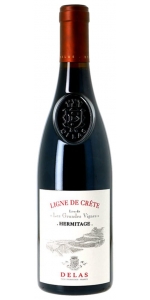
Delas Hermitage Les Grandes Vignes Ligne de Crete is made from Syrah.
The nose discloses aromas of spice and leather intertwined with deep berry aromas (blackberry, redcurrant) and heady floral notes, liquorice and incense. Its richness, complexity and elegance are by no means a contradiction. The finest granite soils of the Hermitage hillside are to thank for this wine's incredible minerality and finesse. The wine is rich and dense on entry to the palate, where it shows an elegant, broad and flavorsome character. The ripe, smooth and well-integrated tannins contribute to the wine's powerful yet harmonious structure. The palate reveals the same aromas as those found on the nose with nuances of blueberry, raspberry, violet and bitter chocolate. Ligne de Crête is characterized by its exceptional structure, harmony and balance.
This remarkably smooth and elegant wine makes the perfect partner for a pigeon pie, beef tartare ravioli or a roast fillet of deviled duckling with cranberries. It also makes an excellent choice for woodcock, hare "à la Royale" or even a roast rack of lamb in a herb crust.
Review:
Whiffs of espresso, ore and charred meat mingle into thunderous flavors of crème de cassis and roasted plums in this wine. A single-site expression of Les Grandes Vignes from a ripe yet fresh vintage, it's a showstopping Syrah marked with a creamy texture and ripe tannins. Hermitage is not known for youthful pleasures but this rare bottling embraces the hedonism of adolescence along with its potential to gain power and complexity far beyond 2050. Anna Lee C. Iijima
-Wine Enthusiast 97 Points
Inky ruby color. Expansive, smoke- and mineral-accented black and blue fruits, licorice, smoky bacon, mocha, violet and licorice on the highly perfumed nose. Appealingly sweet, mineral-accented cassis, boysenberry, fruitcake, floral pastille and vanilla flavors show superb depth and become spicier with aeration. Shows superb detail and mineral lift on the youthfully tannic, extremely persistent and incisive finish, which features resonating floral and exotic spice notes.
-Vinous 97 Points
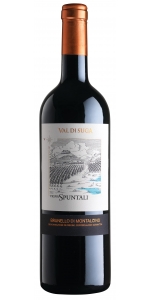
This is a 6 pack with 2 bottles each from vintages from 2013, 2015, and 2016.
***Tenimenti Angelini Val di Suga Vigna Spuntali Brunello di Montalcino 2016:
The 2016 Vigna Spuntali Brunello di Montalcino is the most brooding of the lineup from Val di Suga and is sourced from the southwest of the region on sandy soils. There are aromatics of black raspberry, licorice, menthol, sage, cinnamon, and iron-rich earth. Its Mediterranean influence is felt on the palate with ripe black cherry, dried herbs, and sun-baked earth. This is the fullest bodied and most savory of the Val di Suga lineup, with more roundness and grip. Its structure will benefit from cellaring for several years and will be great drinking over the next 20 years or more. 2026-2040.
-Jeb Dunnuck 96 Points
***Tenimenti Angelini Val di Suga Vigna Spuntali Brunello di Montalcino 2015:
The 2015 Vigna Spuntali Brunello di Montalcino is more introverted on first opening, with notes of black plum, licorice, dried Mediterranean herb, and sun-baked earth. On the palate, it offers a tart dried fruit character, with a building tannin structure that finishes with tomato leaf, and bitter herbs. The most rustic and burly of the wines in the lineup of the 2015 Val di Suga vintage, it will benefit from allowing some time in cellar to see how this matures and its tarriness develops. Drink 2026-2036
-Jeb Dunnuck 94 Points
***Tenimenti Angelini Val di Suga Vigna Spuntali Brunello di Montalcino 2013:
Plenty of spices and fresh herbs on the nose, such as dried rosemary and nutmeg, to match the underlying dried redcurrants and cranberries. Full-bodied with plenty of concentration, but still shows a very sturdy, tannin backbone and punchy acidity, to drive this through to a long finish. Drink in 2021.
-James Suckling 94 Points
Domaine Jean Grivot Nuits-Saint-Georges Premier Cru Aux Boudots is made from 100 percent Pinot Noir.
Domaine Jean Grivot is among the great names in Burgundian wine. Étienne Grivot and his wife Marielle took over from Étienne’s father Jean Grivot in 1987. The vineyards are densely planted and farmed organically “sans certification” while the aim in the cellar is for balance and clear expression of terroir.
Jean Grivot’s 38.3 acres spread across 22 appellations with vineyards in the communes of Vosne-Romanée, Vougeot, Chambolle-Musigny, and Nuits-Saint-Georges. Besides the three grand crus, there are 8 premier crus including the much lauded Les Beaux Monts and Suchots in Vosne-Romanée. The grapes are completely de-stemmed and fermentation is spontaneous.
Nuits-Saint-Georges Aux Boudots 1er cru lies in the “Zone Vosnoise” or northern end of Nuits-Saint-Georges just below Les Damodes. It borders Vosne-Romanée Aux Malconsorts 1er just to its north. Its position slightly lower on the slope with deep soil full of pebbles results in a richer and fuller wine.
The grapes are destemmed and maceration à froid usually lasts just a day or two. The alcoholic fermentation is spontaneous and malolactic fermentation occurs in barrel. Depending on the vintage, the proportion of new oak is around 30-60% for the premier crus.
The wine shows aromas and flavors of red berries, herbs, and purple flowers. The palate is rich with ripe fruit and medium weight with bright acidity and fine tannins. Aging in 30-60% new Burgundian pièce brings notes of vanilla, toast, and baking spices.
Red Burgundy might be the world’s most flexible food wine. The wine’s high acidity, medium body, medium alcohol, and low tannins make it very food-friendly. Red Burgundy, with its earthy and sometimes gamey character, is a classic partner to roasted game birds, grilled duck breast, and dishes that feature mushrooms, black truffles, or are rich in umami.
Reviews:
‘The 2020 Nuits Saint-Georges Aux Boudots Ter Cru has the best aromatics among Grivat Nuits Saint-Georges with very well defined red berry fruit, briary and lignt sous-bois aromas. The palate is medium-badied with fine-grain tannins, slightly savory on the entry, fresh and saline on the finish. This has real verve and class, though it will benefit from time in bottle
-Vinous 93-95 Points
A wine with the substance and structure to support the generous lashings of new oak used for maturation, and the overall effect is elegant and classic in style. Aux Boudots, where Grivot has 0.85ha, is at the northern edge of Nuits, just over the border from Vosne-Romanée Malconsorts. They began to pick on the 3rd of September – Etienne specified that they are very particular that the tannins are ripe and do what they can to prolong the vegetative cycle. Still, the grapes were picked with an entirely correct pH of around 3.4.
-Decanter 94 Points
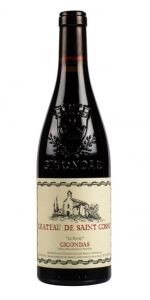
Le Poste’s cool microclimate and limestone soil make it one of Saint Cosme’s most structured, aromatic, and mineral intense wines of the estate. This wine always walks a knife's edge of power and finesse thanks to its deep fruit and precise structure. The wine features aromas and flavors of iodine, violet, pepper, and ash.
Grenache is the pale-colored, red-fruited, and potpourri-scented red grape variety of the southern Rhône and can be paired with both rustic and sophisticated dishes. Full-bodied Grenache-based wines are ideal with stews, braises, and grilled meats, while lighter versions can work well with dark fish and tomato-based dishes such as ratatouille.
Review:
Deep magenta. Expansive, spice- and mineral-tinged black raspberry, kirsch and boysenberry aromas are complicated by suggestions of incense, lavender and smoky minerals. Alluringly sweet and focused in the mouth, offering densely packed red and blue fruit preserve, floral pastille and exotic spice flavors that smoothly balance weight and finesse. This wine shows superb finishing clarity and mineral lift on the penetrating and impressively long finish, which features polished tannins and resonating fruit, floral and mineral notes.
-Vinous 95-97 Points
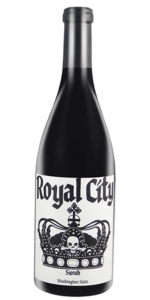
K Vintners Syrah Royal City us made from 100 percent Syrah.
Royal City for REAL. Perfume of great complexity. Camphor, black cherry and forest floor. All spice building on the palate. Suave and full of finesse with cured olive and wet earth. This is where elegance reigns supreme. – Winemaker, Charles Smith
Review:
The 2019 Syrah Royal City is earthy, almost meaty in the glass, as notes of sage and dill accentuate green olive, then evolves to show musky black currants and crushed rocks. This is texturally thrilling, deep and creamy in feel, yet somehow energetic as well, with masses of mineral-tinged black fruits complemented by sweet herbs and tobacco. The 2019 melts away from the palate like molten chocolate, with exotic spices and tangerine to balance. Wow, I can't wait to see what another four to five years of cellaring might reveal here.
Vinous Rating: 97+ Points
Johann Michel Cornas Cuvee Mere Michel is made from 100 percent Syrah.
Cuvee Mère Michel was first introduced in 2016 and is not produced every year. This wine is a tribute to Johann Michel' wife, Emmanuelle, and a nod to the French song, La Mere Michel. This wines comes from Selection Massale (replanting new vineyards with cuttings from exceptional old vines from the same property) cuttings of Serine off the 1947 Yves Cuilleron vineyard at Chavanay. The vineyards are located in the lieu-dit "Les Cotes" at an altitude of 230 meters and benefiting from a southern sun exposure.
Review:
The tiny production 2022 Cornas Mère Michel is 100% Serine that was not destemmed and was aged 14 months in French oak. Tighter and more focused, this beautiful wine reveals ripe red and blue fruits that give way to more spice, leather, graphite, and mineral notes. More medium to full-bodied, with a firm spine of tannins, it's impressive but will need time.
-Jeb Dunnuck 94 Points
Ossian Capitel Verdejo is made from 100% Verdejo.
Ossian Capital represents a particular expression of very old Verdejo vines, taking its potential far finesse, elegance and longevity. It is made in selected years with a selection of extraordinary grapes.
Color: Old golden yellow color with greenish reflections.
Aromas: Surprisingly nuanced and profound.
Flavors: Fresh, full and very light.
Review:
"The 2020 Capitel is pure Verdejo from the oldest vines from the Peña Aguda vineyard in the village of Nieva on slate soils. This is the last vineyard to be bottled and has higher alcohol (14%) than the rest of the vineyards despite now harvesting earlier. The wine has a different aromatic profile but getting closer to the style of Ossian, less opulent than in the past, with more energy, quite fruit-driven with some exotic notes reminiscent of banana skin. The whole clusters were pressed and the juice put to ferment in barrel where the wine matured with the lees and, starting this year, without bâtonnage, because they feel the wines have enough volume and stirring the lees can bring more oxidation to the wine. 2,500 bottles produced. - Luis GUTIERREZ"
- Robert Parker's Wine Advocate (January 31st 2023), 93+ pts
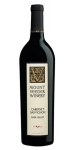
Mount Veeder Winery Cabernet Sauvignon is made from 85% Cabernet Sauvignon, 12% Merlot, 2% Malbec, 1% Cabernet Franc.
The Mount Veeder Winery Cabernet Sauvignon is a deep ruby color. Aromas of black plum, blackberry, fig and ripe cherry, framed by toasted oak and caramel. A hint of dried herb and floral notes. The concentrated fruit flavors and integrated tannins introduce a rich, full-body structure. Sweet fruit is balanced with acidity and savory notes of leather and wet stone, ending with a lengthy finish of dark berry, baking spice, and mocha.
Crafted in celebration of our 50th anniversary, the 2023 Mount Veeder Winery Napa Valley Cabernet Sauvignon is thoughtfully sourced from premier vineyards across Napa Valley, including fruit from our mountain estate. Complex without being cumbersome, this wine has successfully captured the characteristics of the growing season with its intense aromatics and lively acidity.
This vintage reflects our good fortune in working with growers who share our commitment to quality, and we look forward to strengthening these relationships to ensure consistently exceptional wines year after year. Our final blend includes a portion (11%) hailing from our Mount Veeder vineyards, helping link the Napa Valley bottling to the storied past of Mount Veeder Winery.



