
" We don't sell the wine without touching the vine "
Roserock continues the Family’s commitment to Oregon in the newest chapter of the Drouhin story. The Roserock vineyard, purchased in 2013, is an exceptional terroir, marked by volcanic soils, cooler temperatures, and an ideal elevation range. Roserock reflects the singular Drouhin approach, celebrating patience and nuance, elegance and complexity, and above all, finesse.
Poised atop the Dundee Hills, with gentle slopes that capture the breezes and sunshine, our 235-acre estate overlooking the Willamette Valley produces some of the finest Pinot Noir and Chardonnay fruit in the world.
Robert Drouhin’s vision of an Oregon estate winery that could rival the great vineyards of Burgundy has been realized at DDO. From what began as test plantings of cloned Pinot Noir rootstock, Domaine Drouhin now encompasses 124 acres of hillside vineyards. Interspersed with the Pinot Noir vines are 11 acres of Chardonnay, planted at various elevations and, like in Burgundy, planted right alongside rows of Pinot Noir.
Everything planted at DDO is unique to the estate. We also have two large blocks of rootstock planted on the estate, so we can graft the cuttings onto rootstock that we have grown ourselves. We grow and plant rootstocks that we’ve learned are well suited to the specifics of our vineyard sites in terms of site elevation, soil depth, and moisture-holding capacity. In this way we can maintain the highest level of quality control over our plant material.
Our densely planted vines are farmed sustainably, L.I.V.E. certified, and tended to by hand when leaves and fruit are thinned; harvesting is also
done entirely by hand.
Once the grapes have reached full maturity with a perfect balance between brix and acid, and fruit and tannin, they are hand-picked into small 25 pound totes, insuring the arrival of pristine, uncrushed fruit at our four-level gravity-flow winery. Everything we do in the winery is intended to preserve the unique qualities that nature provided for us in the vineyards.
All of our wines are crafted by hand in our four-level gravity flow winery built atop the Drouhin family’s 235 acre estate in the Dundee Hills of Oregon.
Our goal is to craft wines naturally with gentle treatment and minimal manipulation. It is our hope that our Pinot Noir and Chardonnay will be appreciated for their classic finesse, elegance and for the true reflection of their origin; their terroir.
Active fermentations last 7-12 days, during which time the age-old Burgundian techniques of pigeage (punch-down) and remontage (pump-over) are used as means of gentle extraction. Fermentations are long and careful and once complete, the free-run juice is moved via gravity to the third level of our winery, the barrel cellar. Our Pinot Noir is aged in both new (20%) and neutral French Oak barrels. Barrels are custom made for us in Burgundy, using oak from France’s best forests, which we feel allows the character of the wine and vintage to show through. Once the secondary, malolactic, fermentation is complete, the wines are racked off their lees via gravity and back into barrel. After 12-14 months in oak, Véronique selects barrels for each of our three cuvée’s and the wines are then blended and allowed to rest for several months before moving to the final level of the winery, our bottle room. At this final stage, the wines again are moved via gravity into bottle and then allowed to mature 6 to 18 months before release.
No products found
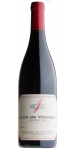
Domaine Jean Grivot Clos de Vougeot Grand Cru is made from 100 percent Pinot Noir.
Domaine Jean Grivot is among the great names in Burgundian wine. Étienne Grivot and his wife Marielle took over from Étienne’s father Jean Grivot in 1987. The vineyards are densely planted and farmed organically “sans certification” while the aim in the cellar is for balance and clear expression of terroir.
Jean Grivot’s 38.3 acres spread across 22 appellations with vineyards in the communes of Vosne-Romanée, Vougeot, Chambolle-Musigny, and Nuits-Saint-Georges. Besides the three grand crus, there are 8 premier crus including the much lauded Les Beaux Monts and Suchots in Vosne-Romanée. The grapes are completely de-stemmed and fermentation is spontaneous.
About the Vineyard:
Clos de Vougeot grand cru was acquired by Étienne’s grandfather, Gaston Grivot, in 1919. The total holding is 4.6 acres from the middle of the vineyard to the lower wall and the average vine age is 40 years old. A good Clos de Vougeot should be a complete wine without any one feature standing out. It is a perfect balance of power, aroma, and flavor.
Wine Production:
The grapes are destemmed and maceration à froid usually lasts just a day or two. The alcoholic fermentation is spontaneous and malolactic fermentation occurs in barrel. Depending on the vintage, the proportion of new oak is around 40-70% percent for the grands crus.
Tasting Notes:
The wine shows aromas and flavors of red berries, herbs, and purple flowers. The palate is rich with ripe fruit and medium weight with bright acidity and fine tannins. Aging in 40-70% new Burgundian pièce brings notes of vanilla, toast, and baking spices.
Food Pairing:
Red Burgundy might be the world’s most flexible food wine. The wine’s high acidity, medium body, medium alcohol, and low tannins make it very food-friendly. Red Burgundy, with its earthy and sometimes gamey character, is a classic partner to roasted game birds, grilled duck breast, and dishes that feature mushrooms, black truffles, or are rich in umami.
Review:
This round version is packed with ripe black cherry, violet, graphite and tobacco flavors. The silky texture and vibrant acidity work in tandem, while refined tannins provide support without getting in the way. There are a few edges to be worked out, yet this is long and concentrated.
-Wine Spectator 95 Points
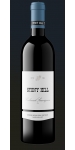
From the volcanic soils in the blocks residing at the summit of Stony Hill's vineyard, their 2019 Cabernet Sauvignon is showing beautifully. 2019 was a warm year with late spring rains and a true, dry fall finish. e late spring rains imbued wines with a characteristic freshness and tension, balanced by a generous fruit profile. Bing cherry, cassis, pomegranate seed, singed bay leaf, and cacao sings from the glass. The palate receives a structure showing breadth and presence with lacey tannins and a delicate, persistent finish.



