
" We don't sell the wine without touching the vine "
| Country: | United States |
| Regions: | California California (Napa) |
| Winery: | Duckhorn |
| Grape Type: | Cabernet Sauvignon |
| Vintage: | 2019 |
| Bottle Size: | 750 ml |

Cardinale Napa Valley Cabernet Sauvignon is made from 91% Cabernet Sauvignon, 9% Merlot.
Super structured and with minerality to spare, this Cabernet Sauvignon offers a real presence on the palate from start to finish. Generous notes of dark chocolate balance beautifully with a blue and black fruit flavor explosion, finishing with a subtle whisper of rose petal.
Reviews:
- James Suckling 98 Points

Dunn Vineyards Napa Valley Cabernet Sauvignon is made from 100 percent Cabernet.
This Napa Valley wine is a blend of their Howell Mountain fruit and a small quantity of valley floor fruit that they purchase. This valley floor fruit contributes to the wine’s earlier approachability and softer tannic structure.
Review:
I loved the 2019 Cabernet Sauvignon Napa Valley, which I think is a step up over the 2018, although both 2019s show a much more elegant profile. Ripe currants, plums, roasted herbs, violets, and incense notes all shine in this medium to full-bodied, ripe, supple, layered beauty, which has fine tannins and a gorgeous finish. Enjoy bottles any time over the coming 15 years.
-Jeb Dunnuck 94 Points

The Grade Cabernet Sauvignon Serpent's Back Napa Valley is made from 100 percent Cabernet Sauvignon.
Review:
The 2019 Cabernet Sauvignon Serpent's Back shows a more aromatic, high-toned side of this site. Bright red/purplish berry fruit, pomegranate, cinnamon and sweet floral accents are all laced together. The Serpent's Back is the most refined of these three Cabernets, but it has plenty of Calistoga punch.
-- Antonio Galloni 95 Points
The Grade Cabernet Sauvignon Serpent's Back Napa Valley is made from 100 percent Cabernet Sauvignon.
Review:
The 2019 Cabernet Sauvignon Serpent's Back shows a more aromatic, high-toned side of this site. Bright red/purplish berry fruit, pomegranate, cinnamon and sweet floral accents are all laced together. The Serpent's Back is the most refined of these three Cabernets, but it has plenty of Calistoga punch.
-- Antonio Galloni 95 Points

A dramatic, ridgetop landscape — rising 1500 feet above Lake Hennessey, staring west over Pritchard Hill — persistently influenced by a push/pull draw between The Valley’s floor and Lake Berryessa. This wild, untamed, eastern frontier of Napa Valley, produces singular, terroir-driven wines of captivating beauty, power and lift. An unseasonably wet and cool springtime produced significant shatter at Sage Ridge in 2019, reducing our yields by 50%, leading to a particularly flamboyant edition of this wine.
An incomparable expression of Cabernet Sauvignon — massively pure red fruit character, delivered on a ribbon of ultra-suave tannins and gorgeously seductive high tones. The palate never relents its come-hither posture. Aromatically, puts forth an intriguing botanical complexity that is unmistakably site-specific. As our experience with this one-of-a-kind terroir deepens, we remain endlessly excited for the potential of these unique ridgetop vineyards. Get your hands on a bottle and pull the cork…a wine built for immense near-term gratification.
Review:
"Deep garnet-purple colored, the 2019 Cabernet Sauvignon Sage Ridge Vineyard opens with open-knit notes of plum preserves, baked blackberries and boysenberry jam, leading to a core of crème de cassis, mocha, camphor and Indian spices with a touch of unsmoked cigars. The palate is full-bodied, concentrated and dense with black fruit preserves, framed by soft tannins and seamless freshness, finishing very long and very spicy. Only 75 cases were made. - Lisa Perrotti-Brown"
- Robert Parker's Wine Advocate (November 2021), 95 pts

The Grade Napa Cabernet Sauvignon Winfield Vineyard is made from Napa Valley Cabernet Sauvignon.
“This wine expresses a focused balancing act of dark, rich black fruit, and a fine tannin structure, illuminated through the core with a laser-like acidity. The wine displays a deep purple-red hue with a cranberry halo. Aromas of cassis, cinnamon, citrus oil, roasted meat, and lilac swell from the glass.
“The palate is marked by a wave of jet-black brambly fruit up front, followed by an exotic spice mid-palate and a long, complex finish that lasts and lasts expressing notes of flowering jasmine, and oolong tea. The silky tannins hold everything together and will certainly allow this wine to evolve in the cellar for at least 7-10 years.” - Thomas River Brown
Review:
The 2019 Cabernet Sauvignon Winfield Vineyard is a blend taken from three blocks in the vineyard. A potent, layered Cabernet, the Winfield is super-expressive today. Dark red cherry, licorice, incense and savory herbs all flesh out in a potent, resonant Calistoga Cabernet that hits all the right notes. This is impressive, to say the least.
-- Antonio Galloni 95 Points
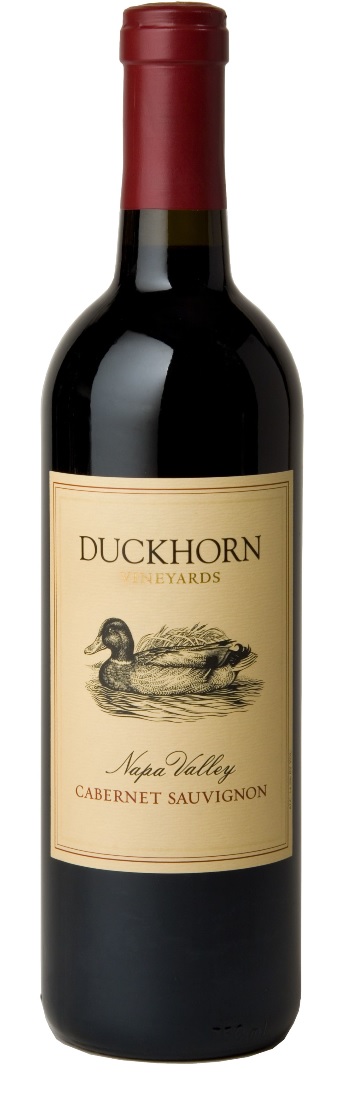
Duckhorn Napa Valley Cabernet Sauvignon is made from 83% Cabernet Sauvignon, 13% Merlot, 2 % Cabernet Franc, 2% Petit Verdot.
Co-founded by Dan and Margaret Duckhorn in 1976, Duckhorn Vineyards has spent forty years establishing itself as one of North America’s premier producers of Napa Valley wines. From its modest inaugural vintage of 800 cases of Cabernet Sauvignon and 800 cases of Merlot in 1978, to its addition of Sauvignon Blanc in 1982, Duckhorn Vineyards has crafted a tradition of quality and excellence that continues today.
1981: Alex Ryan begins working at Duckhorn Vineyards during summer vacations from high school. After university, Alex joins the winery fulltime and comes up through the ranks in the vineyards and production before ultimately becoming CEO and president.
1982: Building on Dan and Margaret’s early passion for Bordeaux-varietal wines, and their desire to make an elegant and enticing white wine, Duckhorn Vineyards produces our first vintage of Napa Valley Sauvignon Blanc using grapes from Marlee’s Vineyard, and a handful of other top winegrowing sites.
1989: Recognizing that the great emerging Napa Valley mountain vineyards are producing wines of exceptional character and quality, we produce our first Howell Mountain appellation-designated wine.
1999: After 20 years of only being open for by-appointment tastings, we break ground on our Duckhorn Vineyards Estate House and Tasting Room adjacent to Marlee’s Vineyard in St. Helena.
2003: Renée Ary joins the Duckhorn Vineyards team under then winemaker, Mark Beringer. Throughout her first decade at Duckhorn Vineyards, Renée learns every detail of production moving from lab manager to enologist to assistant winemaker to associate winemaker in charge of Duckhorn’s Sauvignon Blanc and Monitor Ledge Vineyard wines.
2006: Duckhorn Vineyards crafts its debut vintage of The Discussion. Embodying the depth and complexity of our world-renowned Estate program, The Discussion represents the pinnacle of the Duckhorn Vineyards portfolio and our belief in the timeless union of Cabernet Sauvignon and Merlo
2014: After more than a decade of mastering the Duckhorn Vineyards style, Renée Ary is named the fourth winemaker in the four-decade history of Duckhorn Vineyards. In the years to follow, Renée is recognized for making some of the finest wines in the history of Duckhorn Vineyards.
2015: After four decades of working with its sought-after fruit, we acquire Three Palms Vineyard. Widely recognized as the finest Merlot vineyard in North America, Three Palms becomes the crown jewel of our Estate program.
2017: Duckhorn Vineyards celebrates the milestone of our 40th harvest in Napa Valley with an array of events, and a special 40th Anniversary Harvest logo adorning all 2017 vintage Duckhorn Vineyards wines.

It is hard to imagine with the Lithology range receiving 298 points out of 300 for the three single-vineyard wines, that there could possibly be a wine above them. But there is, and it is our Estate wine. Blended several times very intently by masters of their craft Philippe Melka and Michel Rolland, this is the ultimate expression of our house’s work. Positive, full-bodied, and quite powerful, there’s the expected crème de cassis and blackberry from St. Helena Cabernets, with mineral, herb, subtle tobacco and vanilla, plum skins, and pie crust, purple flowers, forest-conifer notes, and very fine tannic structure. It is a magnificent, and magnificently elegant expression of this house, and when asked recently, Monsieur Rolland stated plainly to me, “oh yes indeed – this is the best one, the best yet…”
Review:
Pure perfection in Cabernet, the 2019 Cabernet Sauvignon Alejandro Bulgheroni is all varietal and comes two-thirds from Oakville with the balance from sites in St. Helena and Rutherford. Aged 20 months in 70% new French oak and put together by Philippe Melka and Michel Rolland, it has an incredibly pure, full-bodied, massive yet weightless style that I suspect couldn’t be achieved anywhere outside of Napa Valley. Cassis, blackberries, leafy herbs, lead pencil shavings, and tobacco leaf are just some of the nuances here, and it’s full-bodied, deep, and concentrated on the palate while maintaining an ethereal, seamless, utterly perfect balance between its fruit, alcohol, tannins, and acidity. As good as it gets, it needs just 2-4 years in the cellar and will evolve gracefully for at least 20-25 years.
-Jeb Dunnuck 100 Points

Milsetentayseis 1076 Ribera del Duero Tinto is made with 95% Tempranillo and 5% other native varieties.
TASTING NOTES: A product of its unique landscape, extreme altitude and mineral-rich soil, 1076 Tinto is a bold wine with a distinct character designed to evolve over time. Its freshness and intensely fruity expression are representative of a modern style, moving away from excess, in search of the elegance, smoothness and balance found in the great wines of the world.
TERROIR: A recently restored vineyard situated at over 3,280 feet of altitude where ancestral vines over 100 years old grow harmoniously together with new, indigenous plantings in varied soil comprised of red clay, sand and mineral deposits of quartz, mica, and feldspar.
WINEMAKING: Hand-harvested from a selection of the best plots in the vineyard then separated into concrete, oak or stainless steel fermentation vats depending on the characteristics of the grape and the soil where it was grown. Its production is defined by the team´s constant vigilance throughout the process and their in-depth knowledge of the region, the soil and the native varieties that thrive there.
Pair with spit-Fire Roasted Suckling Pig.
Reviews:
"Aromas of blackberry jam and clove waft from the glass. This wine's flavors of ripe summer cherry, blueberry pie, clove, white chocolate and caramel are set into a network of durable tannins. The remarkably bright, lingering finish is laced with notes of vanilla and orange zest. - Mike DESIMONE"
- Wine Enthusiast Magazine (July 1st 2023), 96 pts

Patrimony Caves des Lions is made from 65% Cabernet Sauvignon, 35% Cabernet Franc.
With an inky ruby color, the 2020 Caves des Lions offers elegant aromas of chocolate-covered espresso beans with nuanced layers of blueberries, savory notes of charcuterie, pipe tobacco, and woodsmoke. This festival of flavors continues on the palate with notes of fresh fruit, cayenne pepper, plum jam, and pomegranate. The bold tannins seamlessly balance the fresh and rounded acidity leading to an unwavering finish. This full-bodied and flawlessly intricate wine will surprise you now with its elegance, and later with its longevity.
Reviews:
"Inviting aromas of black and blue fruits with violets, cedar, crushed stones and graphite. A little minty, too. The impressive, compact tannin structure gives depth to the wine, so fine and polished with some chalky texture to it. Stony minerality. Power and delicacy, simultaneously. 65% cabernet sauvignon and 35% cabernet franc. Really long and precise."
-James Suckling 97 Points

Thorn Clarke William Randell Cabernet is made from 100 percent Cabernet
The William Randell range of wines were created in honor of the family ancestor - the esteemed pioneer William Richard Randell (1824 - 1911). The wines are sourced solely from grapes grown on the family estate vineyards. Wines in this range are only made in exceptional vintages.
The deep red color with purple hues of this wine draw you in. The nose is brimming with notes of fresh blackcurrant intertwined with complexing savory spice. The palate has an integrated French oak influence with notes of toasty cedar accompanied by further notes of briary fruits. A wine with great depth and drive.



