
" We don't sell the wine without touching the vine "
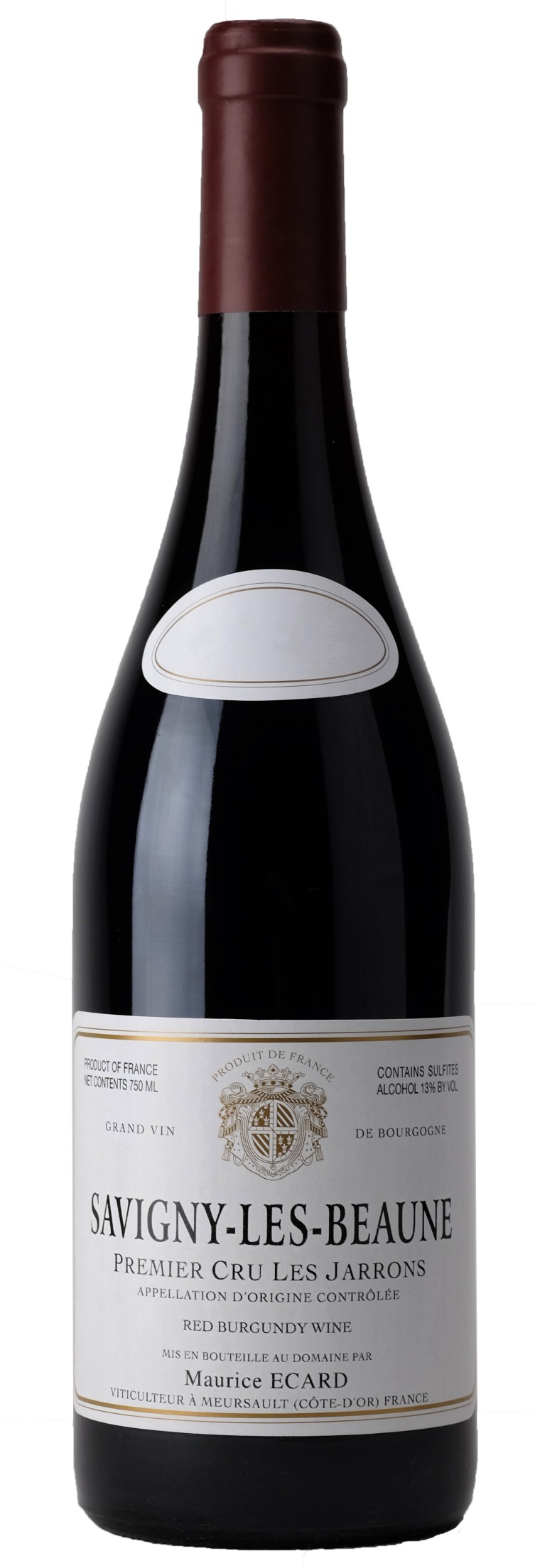
| Country: | France |
| Region: | Burgundy |
| Winery: | Maurice Ecard |
| Grape Type: | Pinot Noir |
| Organic: | Yes |
| Vintage: | 2018 |
| Bottle Size: | 750 ml |
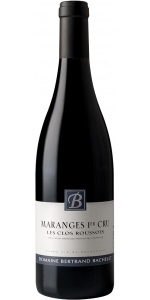
Bertrand Bachelet Maranges Rouge 1er Cru Les Clos Roussots is made from 100 percent Pinot Noir.
The Maranges appellation is the youngest of the Côte de Beaune family, making its debut in May 1989. It spans three villages: Dezize-lès-Maranges, Cheilly-les-Maranges and Sampigny-les-Maranges. Several hills and slopes make up the appellation; they face south/south-east, at an altitude of between 200 and 400 meters. This appellation produces mainly red wines comprising 95% of total production.
The Maranges 1ers Crus are spread over seven distinct terroirs: "Les Clos Roussots", which represents the second largest terroir of the appellation, spans the Cheilly-les-Maranges and Sampigny-les-Maranges areas.
The wine boasts a beautiful bright red color. The nose provides subtle harmony between red and black fruits, spices and vanilla. On the palate, this wine is both solid and fresh, harmonious and bold.
Enjoy with a veal roast and sweet potatoes or matured cheeses.
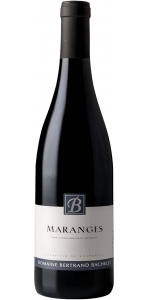
Bertrand Bachelet Maranges Rouge is made from 100 percent Pinot Noir.
The Maranges appellation is the youngest of the Côte de Beaune family, making its debut in May 1989. It spans three villages, namely Dezize-lès-Maranges, Cheilly-les-Maranges and Sampigny-les-Maranges. Several hills and slopes make up this appellation, all south/south-east-facing, at an altitude of between 200 and 400 metres. The Maranges 1ers Crus are spread over seven distinct villages.
'La Fussière' is the main village of the Maranges appellation and is located in the Cheilly and Dezize-les-Maranges areas.
When young, ideal with meat such as a rib of beef or filet mignon; when aged, it pairs wonderfully with dishes in spicy sauces.
Bertrand Bachelet Maranges Rouge is made from 100 percent Pinot Noir.
The Maranges appellation is the youngest of the Côte de Beaune family, making its debut in May 1989. It spans three villages, namely Dezize-lès-Maranges, Cheilly-les-Maranges and Sampigny-les-Maranges. Several hills and slopes make up this appellation, all south/south-east-facing, at an altitude of between 200 and 400 metres. The Maranges 1ers Crus are spread over seven distinct villages.
'La Fussière' is the main village of the Maranges appellation and is located in the Cheilly and Dezize-les-Maranges areas.
When young, ideal with meat such as a rib of beef or filet mignon; when aged, it pairs wonderfully with dishes in spicy sauces.
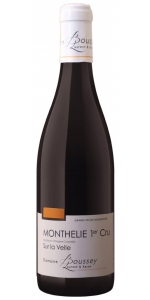
Boussey Monthelie Rouge Premier Cru Sur La Velle is made from 100 percent Pinot Noir.
The grapes for this wine are coming from the parcel located in Monthelie, on the plateau right next to Volnay. They usually produce balanced wines, with a lot of freshness and elegance.
The wine displays aromas of red fruits, with floral notes (violet) and spice. After cellaring for a couple of years, the wine will develop some secondary aromas with truffle and forest flavors.
Delicious with game terrine, sirloin steaks and strong cheese.
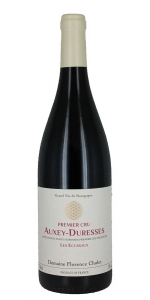
Florence Cholet Auxey-Duresses Rouge Premier Cru Les Ecussaux is made from 100 percent Pinot Noir.
The nose expresses a nice bouquet of black fruits, cherry and violet. The mouth provides a rich and supple wine with a good tannin structure.
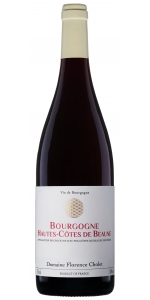
Florence Cholet Hautes Cotes de Beaune Rouge is 100% Pinot Noir.
The nose expresses small red and black fruits, blackcurrant, cherry, raspberry and violet. The mouth provides a rich, supple and elegant wine with a good structure.
Pairs well with Pork, Filet Mignon, Pike Perch, Tomme de Morvan Cheese
Maurice Ecard Savigny Beaune Premier Cru Jarrons is made from 100 percent Pinot Noir
Wine of elegance and good balance. A real complexity with an array of red fruits and a long finish. This is one of our top Burgundy producers and one of his top wines. Any one that takes a chance on this bottle will be rewarded.
The Maurice Ecard Estate
The Domaine dates back to before 1789 and produces some of the best Premiers Crus in Savigny. Owner Maurice Ecard, who is now retired, was considered by many experts to be the father of the appellation.
His wines are now produced by Vincent Sauvestere. Vincent's paternal family has been firmly established in Meursault since the 18th Century. His father and grandfather were both "Maitres de Chais" for one of the most prestigious Wine Houses in the heart of Meursault. Vincent's father, Roger, created his own company in the early fifties with the acquisition of a Wine Merchant founded in 1891. He also had his own vines, inherited from his mother. In 1988, Roger handed over the running of the company to Vincent. When Vincent, born in Nuits Saint Georges in 1961, took control of the Domaine, it consisted of only 6 hectares (14.81 acres) of vines. Today the Domaine covers 40 hectares (98.77 acres) from Chablis to Meursault. In addition, Vincent has acquired other viticultural Domaines in Chablis, the Côte Chalonnaise and recently in the Rhone Valley.
The Domaine is proud to possess two Grand Cru wines, Corton Charlemagne & Corton Marechaudes, as well as twelve Premiers Cru wines. Through his family's traditional winemaking skills, passed down from generation to generation, and his years of oenological studies, Vincent now advocates:
- Expression of the unique terroir characteristics from each individual vineyard by using traditional winemaking methods.
- Well structured and easy drinking Burgundies :
- Pleasing to the eye
- Soft and supple flavors
- Lingering aftertaste with excellent ageing attributes.
Vincent's constant aim is quality and respect for all wines.
The Maurice Ecard Vineyard
Th domaine is cultivated through organic methods and produces wines that purely and distinctly reflect the terroir. The Premiers Crus include: "Narbantons", "Jarrons", "Serpentieres", "Peuillets" and "Les Clous". The yields are never over 35 hl/ha. The vines are pruned and, when fully mature, harvested by manual selection. Vinification involves 75 to 100% destemming, a classic fermentation, pigeage, racking of the gross lees, 15-18 months in oak (15% new from Damy).
Avennia Sestina Cabernet Sauvignon is made from 77% Cabernet Sauvignon, 17% Merlot, 6% Cabernet Franc.
The story of this wine - The Sestina is an ancient form of poetry from Medieval France. Just as a modern poet can fill this form with new expressions, Avennia uses the traditional Bordeaux blend to express Washington. Sestina is their vision for an old vine, complex blend where all of the components complement each other. This wine is designed for the cellar, so the emphasis is on structure, balance, and complexity.
Winemaker Tasting Notes - “Good deep ruby/garnet color, with aromas of black cherry, fresh black currant, dark mocha, cigar box, and graphite. The palate is lively and dense with mountain berries, mocha, vanilla honey, damp earth, and wildflowers. The finish shows a distinct chalky minerality and beautiful tension. This is a classically balanced and ageworthy Sestina. Drink 2025-2040.” - Chris Peterson, Winemaker
Review:
"The Cabernet Sauvignon-dominated release from Peterson, the 2017 Sestina comes from the Red Willow, Bacchus, and Dionysus vineyards. Rocking levels of crème de cassis, sappy herbs, violets, and cedar pencil all flow to a full-bodied, incredibly pure, polished 2017 that offers flawless balance, ripe tannins, and a great, great finish. It's more approachable than normal yet is still going to evolve for 15 to 20 years. The blend is 77% Cabernet Sauvignon, 17% Merlot, and the rest Cabernet Franc, all raised 20 months in 50% new French oak."
- Jeb Dunnuck (April 2020), 95 pts
The Anakota Cabernet Franc Sonoma County 2022 captures the essence of Sonoma's exceptional terroir, offering a bold and elegant expression of the varietal. Crafted with precision, this wine delivers deep flavors, silky texture, and remarkable balance. The Anakota Cabernet Franc Sonoma County 2022 opens with inviting aromas of ripe blackberry, cassis, and violet, layered with hints of fresh herbs and cedar. On the palate, it reveals a complex structure with fine tannins, vibrant acidity, and a lingering finish, making it a perfect representation of Sonoma County’s winemaking excellence.
Experience the sophistication of Anakota Cabernet Franc Sonoma County 2022, a wine that harmoniously blends ripe fruit, earthy undertones, and subtle spice. Its rich flavor profile and polished mouthfeel make it ideal for pairing with roasted meats, gourmet cheeses, or hearty pasta dishes. Whether enjoyed now or cellared for future enjoyment, Anakota Cabernet Franc Sonoma County 2022 stands as a testament to artisanal craftsmanship and the unique character of its origin.
Review:
Sweetness in the aromas and a broad, generous palate make this tempting to drink right away. It is medium-bodied and rich in tannins and black fruit. 15% merlot softens the cabernet franc. Opens with raspberry and red cherry aromas, then transitions to darker black cherries and dried blueberries. A new offering from the Verite winery. Drink now or hold.
-James Suckling 94 Points



