| Country: | Spain |
| Region: | Rias Baixas |
| Winery: | Fefinanes (Palacio de) |
| Grape Type: | Albarino |
| Vintage: | 2019 |
| Bottle Size: | 1500 ml |
The Grade Cabernet Sauvignon Serpent's Back Napa Valley is made from 100 percent Cabernet Sauvignon.
Review:
The 2019 Cabernet Sauvignon Serpent's Back shows a more aromatic, high-toned side of this site. Bright red/purplish berry fruit, pomegranate, cinnamon and sweet floral accents are all laced together. The Serpent's Back is the most refined of these three Cabernets, but it has plenty of Calistoga punch.
-- Antonio Galloni 95 Points
The Grade Cellar Kingly Project Cabernet Sauvignon is made from Napa Valley Cabernet Sauvignon.
"This is a noble expression of Cabernet Sauvignon" in full regalia, with decadent aromas and a mouthfeel viscous and sleek. "This vintage of the Kingly Project Cabernet Sauvignon enters the scene" -- Thomas Rivers Brown
Review:
The 2019 Cabernet Sauvignon Kingly Project is fabulous. A wine of vertical power and thrust, the 2019 soars out of the glass, showing magnificent intensity from start to finish. Black cherry, scorched earth, licorice, plum and chocolate give this substantial Cabernet tons of complexity. I would cellar the 2019 for at least a few years to allow the tannins to soften. -
- Antonio Galloni 97 Points
The Grade Napa Cabernet Sauvignon Winfield Vineyard is made from Napa Valley Cabernet Sauvignon.
“This wine expresses a focused balancing act of dark, rich black fruit, and a fine tannin structure, illuminated through the core with a laser-like acidity. The wine displays a deep purple-red hue with a cranberry halo. Aromas of cassis, cinnamon, citrus oil, roasted meat, and lilac swell from the glass.
“The palate is marked by a wave of jet-black brambly fruit up front, followed by an exotic spice mid-palate and a long, complex finish that lasts and lasts expressing notes of flowering jasmine, and oolong tea. The silky tannins hold everything together and will certainly allow this wine to evolve in the cellar for at least 7-10 years.” - Thomas River Brown
Review:
The 2019 Cabernet Sauvignon Winfield Vineyard is a blend taken from three blocks in the vineyard. A potent, layered Cabernet, the Winfield is super-expressive today. Dark red cherry, licorice, incense and savory herbs all flesh out in a potent, resonant Calistoga Cabernet that hits all the right notes. This is impressive, to say the least.
-- Antonio Galloni 95 Points
G.D. Vajra Bricco Delle Viole Barolo is made from 100 percent Nebbiolo.
The Barolo Bricco delle Viole shows the signature verticality of its vineyard. The wine is beautifully layered and - while restrained as it’s always the case in the youth of Bricco delle Viole - it also shows a complexity of layers with purple flowers, sweet spices and mineral tones. The palate is noble, with a refined acid spine and profound tannins that promise a long aging potential.
Among the historical vineyards of Barolo, Bricco delle Viole is the highest and the closest to the Alps. It rises from 400 to 480 meters above sea level, on the Western ridge of the village. Its name, “Hill of Violets”, originates from the flowers that blossom early here due to the perfect south exposure. Up above the fogs, Bricco delle Viole enjoys the earliest sunrise and the last sunset every day. Thanks to its vines dating back to 1949 and -now- 1931, a dramatic diuturnal temperature range and this pure light, Bricco delle Viole generates a sophisticated and profound Barolo DOCG of bright aromatics, chiseled tannins and subtle minerality. 2018 is a vintage that shows many nuances of Bricco delle Viole: beyond the signature verticality of this site, the wine offers high tones laced with mineral nuances and plenty of energy and youth.
Review:
A juicy Barolo, with vibrant acidity and a fluid profile that exudes cherry, raspberry, mown hay, mineral and eucalyptus aromas and flavors. Tight yet long, with excellent potential.
#26 Wine Spectator Top 100 of 2023
The last wine poured at my tasting at the winery is the G.D. Vajra 2019 Barolo Bricco delle Viole. With its high vantage point in the hills west of Barolo, Bricco delle Viole is a world apart in terms of soils (with Sant'Agata marl and fossils) and even harvest times. Slow and careful ripening like the kind that characterizes fruit in 2019 renders a very delicate and ethereal expression with floral tones, wild mint and licorice. This organic wine is solid in build and structure. Indeed, Isidoro Vaira remarks that Nebbiolo tannins have changed since the 1970s and 1980s.
-Wine Advocate 97+ Points
Jeweled in appearance, the 2019 Barolo Bricco Delle Viole may be the best wine I have tried yet from Vajra. Its gorgeous and alluring perfume of fresh roses is followed by a Burgundian, elegant red with incredible length and no harsh edges, fine and present tannins, and beautiful, graceful concentration. It is drinking well now, and I will be trying to get my hands on as much of this as possible. Drink 2025-2045.
-Jeb Dunnuck 97 Points
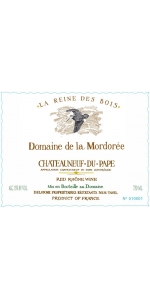
Mordoree Chateauneuf-du-Pape La Reine des Bois is made from Grenache 75 %, Mourvèdre 10%, Syrah 10 % , Counoise 3% & Vaccarese 2%.
This premium cuvee - whose name means "Queen of the Woods" - is from 65-year-old vines, planted on Villafranchian-era terrasses. Yield is 30 hl/ha.
Deep ruby red; opaque. Aromas of red fruits change to wooden touches of leather, black truffles and coffee. Fat, concentrated and full flavored with a very long liquoriced and fruity finish.
Pairs with red meats, sauce dishes, game animals (woodcock, wild boar) and semi mature cheeses.
Review:
"The 2019 Châteauneuf Du Pape Cuvée De La Reine des Bois is a deeper, more masculine wine with gorgeous cassis and blackberry fruits as well as graphite, licorice, crushed stone, violets, and lavender nuances. Rich, full-bodied, and incredibly concentrated, it has a brilliant sense of freshness and purity as well as length on the finish. It's going to require 4-5 years of bottle age, but this straight-up thrilling Châteauneuf du Pape will have 20-25 years of prime drinking."
- Jeb Dunnuck (November 2021), 98+ pts
Delas Freres Cote Rotie La Landonne Rouge is made from 100 percent Syrah.
This very ancient region dates back to the Roman Era and is located on the right bank of the Rhône. It is said that during the Middle Ages, “The Seigneur de Maugiron” gave a hillside to each of his two daughters - one was brunette and the other fair - thus, were born the names of “Côte Brune” and “Côte Blonde.” Wines from the Côte Blonde tend to be more delicate and lighter in character than the fuller wines of the Côte Brune. Together, they make a wine of style and substance. This cuvée is a vineyard plot selection. The grapes come exclusively from a plot within the named slope of “La Landonne.”
This cuvée‘s first vintage was 1997. The wine is only made in the very best years. Its highly limited production never exceeds 2,500 bottles per year.
The steep, terraced hillsides along the river produce wines that are among the "biggest" reds of France. The Delas Côte-Rôtie is primarily Syrah with an addition of up to 10 to 20% of Viognier grapes in the crop. The soils of the northern part of the Côte Brune vineyard consists of extremely steep, terraced slopes of ferruginous mica schists which are covered with schist sand (arzel). The Côte Blonde has a varied geology with gneiss and granite predominating at the most southern side of the appellation. The area has dry, hot summers with regular rainfalls during other seasons. The grapes for the “La Landonne” cuvée are picked by hand at maximum maturity. Fermentation takes place in traditional open-topped concrete tanks, following three days of pre-fermentation cold maceration. Before fermentation, the maceration process continues under controlled temperatures of 82°F to 86°F. Daily cap pushing down and pumping over are carried out for about 10 days with total vatting time of up to 20 days. The wine is aged for 14 to 16 months in new or one year old oak casks. The barrels are topped up regularly.
Food Pairing: This wine pairs wonderfully with fine meats, roasted beef, water games, truffles and spicy stews. The bottle should be opened 1 to 3 hours before drinking. This wine needs at least 3 years cellaring before it can open up its complexity. In such case it is strongly recommended to decant before serving.
Tasting Notes: The wine‘s deep color is underscored by plummy hues. A complex nose shows deep, fruity aromas with hints of licorice and roasted coffee. Endowed with a dense and silky tannic structure, this is a full, fleshy wine that provides an ample and generous palate. Its lasting finish speaks of considerable ageing potential.
Reviews:
This is dark and still a bit reticent, with a cast iron cloak around the core of dark currant, plum and blackberry paste flavors, showing lots of sweet bay leaf, anise and singed apple wood notes in the background. There's serious grip through the finish. For the cellar.
-Wine Spectator 96 Points
Very open, spicy and fresh on the nose, you could almost open this now. Struck flint notes assist in teasing out notes of leaf tea, tobacco, rosemary and rose. Very full-bodied, generous but powerful on the palate, tense and mineral. Mouthcoating ripe, sweet tannin and robust amounts of sweet baking spices, along with more tobacco and black fruit on the palate. Has depth, length, power and impressive balance despite the high alcohol. Drink from now into 2022, or from 2031 to 2040. Lieu-dit La Landonne, from the Brune side (mica schist bedrock). Matured in new and one-year-old barrels for 14 months.
-Decanter 96 Points
The 2019 Côte Rôtie La Landonne comes from one of the greatest sites for Syrah in the world, the La Landonne lieu-dit located close to the center of the appellation, on the Côte Brune side. It reveals a deeper purple hue (it's slightly more opaque than the Seigneur de Maugiron) and offers a brilliant nose of ripe cassis, black raspberries, scorched earth, smoked herbs, and seared meat. Full-bodied and powerful on the palate, this is a deep, spicy, concentrated Côte Rôtie with a plush, layered mouthfeel, sweet tannins, beautiful balance, and a great, great finish. This puppy brings the fruit, opulence, and texture of the vintage yet still has a classic Côte Rôtie character.
-Jeb Dunnuck 96 Points
Fresh aromatic layers of mint sit atop crushed red cherries and wild strawberries, with light clove and thyme on the nose. The palate is rich and enticing with black cherries, plums, rhubarb, pomegranate seeds, black olives and freshly picked rosemary leaves. Tremendous texture, structure, and refreshing acidity carry this wine to a robust finish of orange zest and black tea leaves. Maisons Marques & Domaines USA.
- Wine Enthusiast 96 Points
This very ancient region dates back to the Roman Era and is located on the right bank of the Rhône. It is said that during the Middle Ages, “The Seigneur de Maugiron” gave a hillside to each of his two daughters - one was brunette and the other fair - thus, were born the names of “Côte Brune” and “Côte Blonde.” Wines from the Côte Blonde tend to be more delicate and lighter in character than the fuller wines of the Côte Brune. Together, they make a wine of style and substance. This cuvée is a vineyard plot selection. The grapes come exclusively from a plot within the named slope of “La Landonne.”
This cuvée‘s first vintage was 1997. The wine is only made in the very best years. Its highly limited production never exceeds 2,500 bottles per year.
The steep, terraced hillsides along the river produce wines that are among the "biggest" reds of France. The Delas Côte-Rôtie is primarily Syrah with an addition of up to 10 to 20% of Viognier grapes in the crop. The soils of the northern part of the Côte Brune vineyard consists of extremely steep, terraced slopes of ferruginous mica schists which are covered with schist sand (arzel). The Côte Blonde has a varied geology with gneiss and granite predominating at the most southern side of the appellation. The area has dry, hot summers with regular rainfalls during other seasons. The grapes for the “La Landonne” cuvée are picked by hand at maximum maturity. Fermentation takes place in traditional open-topped concrete tanks, following three days of pre-fermentation cold maceration. Before fermentation, the maceration process continues under controlled temperatures of 82°F to 86°F. Daily cap pushing down and pumping over are carried out for about 10 days with total vatting time of up to 20 days. The wine is aged for 14 to 16 months in new or one year old oak casks. The barrels are topped up regularly.
Tasting Notes
The wine‘s deep color is underscored by plummy hues. A complex nose shows deep, fruity aromas with hints of licorice and roasted coffee. Endowed with a dense and silky tannic structure, this is a full, fleshy wine that provides an ample and generous palate. Its lasting finish speaks of considerable ageing potential.
Food Pairing
This wine pairs wonderfully with fine meats, roasted beef, water games, truffles and spicy stews. The bottle should be opened 1 to 3 hours before drinking. This wine needs at least 3 years cellaring before it can open up its complexity. In such case it is strongly recommended to decant before serving.
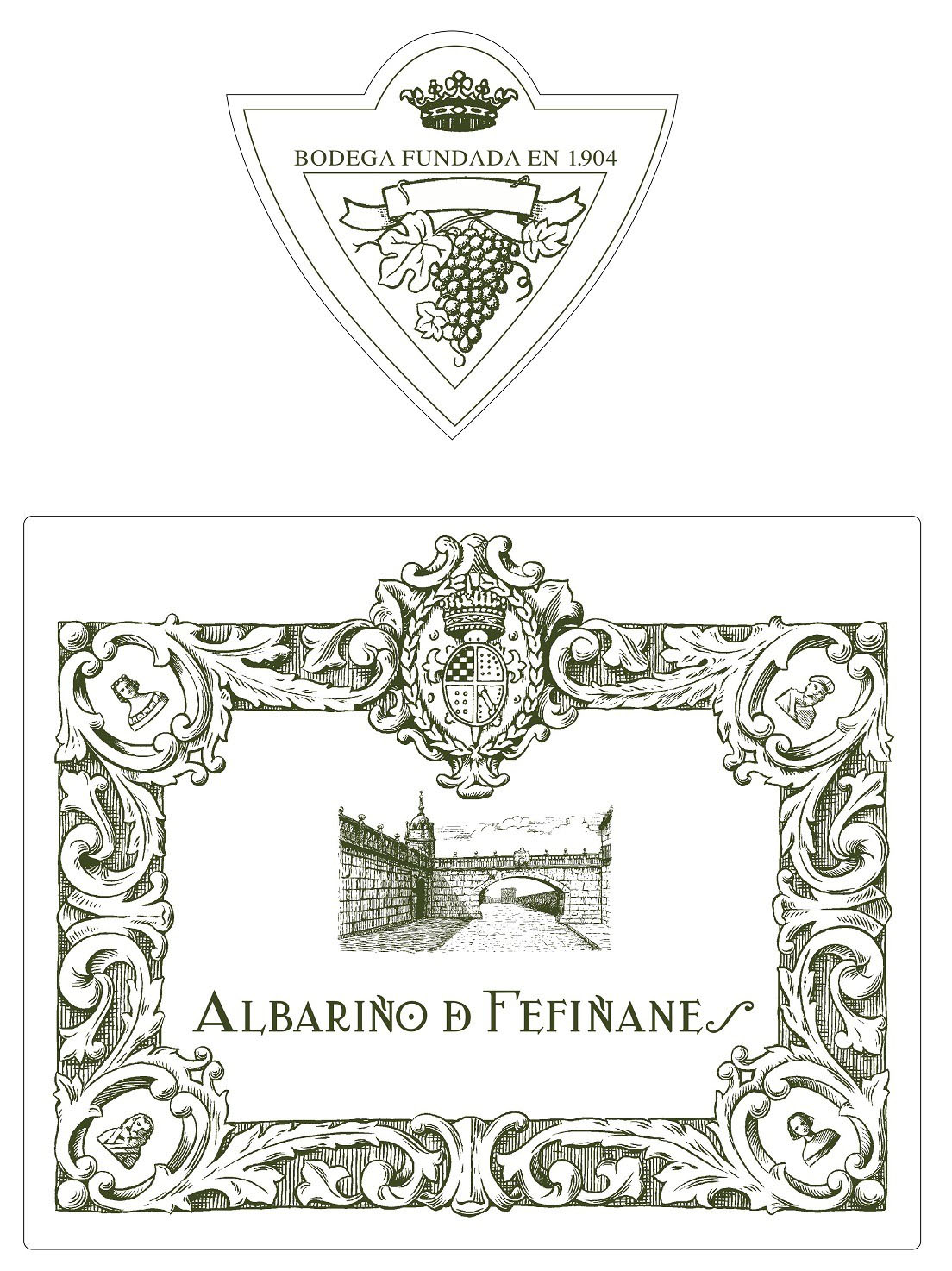
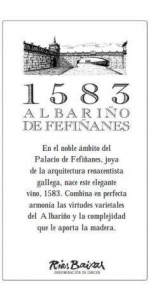
Fefinanes Albarino de Albarino (magnum) is 100 percent Albarino
Fresh fruit aromas of apricot and peach slices with notes of lemon and green apple. Pretty notes of honey and wet nutmeg, and the mouth is round, clean, and pleasant with baked apple, honey, and lemon.
This is a classic Albariño which is good young, but actually improves over two to three years and remains quite drinkable for up to five years. Owner Juan Gil comments that the wine really starts to come into its own in June/July, and he actually prefers it 18 or more months after it's made. A Fefiñanes "vertical" of three or four vintages can provide some most interesting surprises.
The Palacio de Fefinanes Estate
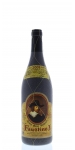
Founded in 1904, Palacio de Fefinanes is housed inside a spectacular baronial palace which sits on the lovely main square of coastal Cambados. The facility was built in 1647 by vicount of Fefiñanes Gonzalo Sarmiento Valladares (1583-1659) and is currently owned by Juan Gil Careaga. Palacio de Fefiñanes was the first producer to bottle wine under the D.O. Rías Baixas denomination. The label design dates from 1928 and shows an engraving of the Fefiñanes Palace.
The winemaker is Cristina Mantilla.
"Clean, mineral-laced Albariños from a producer housed in a baronial palace."
- Anthony Dias Blue's pocket guide to wine 2006
The Palacio de Fefinanes Vineyards
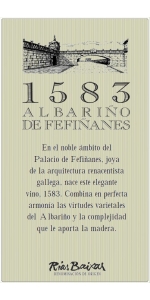
Produced in the Rias Baixas region, where the vineyards are quite windy due to the proximity of the Atlantic Ocean. It also provides acidity and freshness to the wine. The winery has only a token acreage, and buys its Albariño grapes from producers under long-term contract and with technical assistance from the winery's enologist. They make two 100% Albariño wines: Albariño de Fefiñanes, a young traditional style Rías Baixas white (30,000 bottles/year); and 1583 Albariño de Fefiñanes, aged six months in 600 liter sherry butts (4,000 bottles/year - annual production: 100,000 liters). Year after year, local critics rate Albariño de Fefiñanes as one of the best.
Argot Bastard Tongue Pinot Noir is made from 100 percent Sonoma Pinot Noir.
Inheriting an unbroken string of success, the “Bastard Tongue” arrives fully-formed and ready to impress. Always a blend from multiple Pinot Noir vineyards, this iteration of “BT” was selected from three distinct sites, each making their own unique contribution of Sonoma County terroir to the wine’s character.
Exploding forth on a tidal wave of high-toned, intense red and black fruits, this is a Pinot Noir that no stemware can contain. The palate’s profound depth is balanced by an inherent freshness, allowing the wine to crackle with brambly energy, while sustained by bass notes of underbrush, black tea, pie spice and baker’s chocolate. A formidable rendition of “Bastard Tongue”, and a deserving successor to its line.
Night harvested by hand throughout September, cluster and berry sorted by hand, de-stemmed, no crushing. 7-day cold soaks, followed by native fermentation in open-top bins. Average time on the skins, 14 days. Aging 20 months in French oak, 100% new. Never racked prior to bottling. Bottled unfined, unfiltered.
Very versatile for pairing. Goes well with grilled meat, vegetable, fish, poultry and cheese.
Review:
"The 2022 'Bastard Tongue' Pinot Noir from Argot is utterly mind-blowing. It immediately draws you in with its seductive aromatic of fresh black raspberries, wild strawberries and even a touch of blueberry all woven together with sweet spices, cinnamon, crushed violets and earthy undertones. On the palate, the wine is both rich and graceful, with a lively acidity that elevates the sweet red fruit notes of red currant and black raspberries. Fine, polished tannins provide a round, silky texture that leads into a supple finish that lingers with sweet berries and sweet spices. This Pinot Noir offers a beautiful balance of elegance and complexity, drinking beautifully now, with a depth that promises further enjoyment. This is one of the most delicious bottles of Pinot Noir I can recall." - 98 Points, International Wine Report
The Prisoner Wine Co. Blindfold Chardonnay is made from 100 percent Chardonnay.
Blindfold Chardonnay is gorgeously balanced and a true triumph. Fragrant with notes of lime zest, yuzu, jasmine, and a slight minerality, Bright on the palate with juicy green citrus, lychee, green apple and toasted hazelnut. You’ll find both freshness and soft texture from its time in oak. The finish is long and indulgent–let yourself sink into this luxurious pour.
All of the fruit was hand-picked and whole cluster pressed. Barrel fermentation took place in 100% French oak barrels, and 23% New barrels that were selected by forest or grain tightness to frame our fruit profile, bring texture, and soften acidity. Lots were tasted every other week while we stirred the lees to precisely soften the mouthfeel and achieve optimal balance. With fermentation, and subsequent elevage taking place over 11 months we have achieved this goal.
Chardonnay grapes were harvested as flavors of lime zest and green apple started to develop and before acid started to ripen away. Picking decisions were made based on acidity rather than sugar level (Brix). We want to showcase the vineyard sites and growing region in perfect balance.