" We don't sell the wine without touching the vine "
| BUY MORE! SAVE MORE! | ||||||||||||||||||||
|
| Country: | South Africa |
| Region: | Western Cape |
| Winery: | Lismore Estate Vineyards |
| Grape Type: | Pinot Noir |
| Organic: | Yes |
| Vintage: | 2018 |
| Bottle Size: | 750 ml |
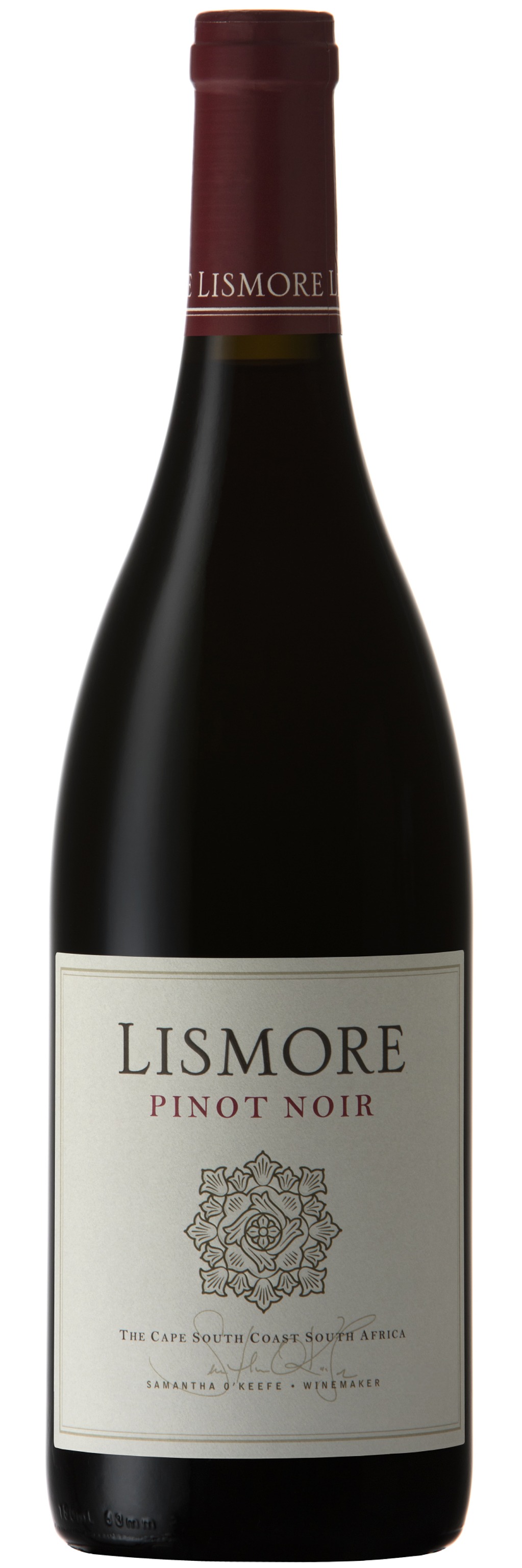
Lismore Pinot Noir is made from 100 percent Pinot Noir
Complex bouquet of crushed rose petals, wild jasmine and fresh French herbs followed by a palate full of cranberry, raspberry and a long savory finish.
The grapes were picked at optimal ripeness. 30% whole bunch fermented in large 5000 liter vats with gentle pump-overs twice a day. The process allowed for a long extraction period which lends to the fruit expression and structure of this wine. The free run wine was drained off and the fermented grapes were then pressed in a traditional wooden basket press. The wine was racked into 225, 300 and 500 liter barrels where malolactic fermentation took place and the wine was aged for 10 months. 35% new French oak was used.
Review:
"The 2018 Pinot Noir comes from Walker Bay and Kaaimansgat and includes 30% whole-bunch fruit, aged for 11 months in 25% new oak. The bouquet sports vivid red cherry and raspberry fruit that is exceptionally well defined and beautifully integrated with the oak. The palate is medium-bodied with supple tannins, well-judged acidity and a slightly fleshy texture. There is just the right amount of salinity here, and the finish is kept on a tight leash, allowing the detail and precision to be fully expressed. A slight sour edge on the finish keeps you coming back for another sip. Excellent and reassuringly classy. - Neal Martin" - Antonio Galloni's Vinous (November 2019), 92 pts
"Walker Bay and Elandskloof are the twin sources of 30% whole bunch-fermented Pinot from Sam O'Keefe. Juicy, floral and charming, it's a graceful, fruit forward style with some clove and tobacco spice and refreshing acidity. The finish is a little firmer than I remember. 2020-24"- Tim Atkin (South Africa 2020 Special Report), 92 pts
Lismore Estate
Tucked into the foothills of a dramatic mountain range at the bottom of Africa is Lismore Estate Vineyards. Californian Samantha O'Keefe has found paradise and the perfect terroir. Her passion combined with vines planted at 300 meters, chilled by the winter snow and nourished by the African summer sun, produce classic cool climate wines which are rich, complex and lovingly hand crafted.
Lismore Estate Vineyards
The Overberg region is rapidly earning a reputation for premium cool climate grapes. Greyton has now been designated a ward within that district recognizing the unique terroir expression of the wine that is produced there. Lismore is the only registered wine estate in the Greyton ward. Lismore's vineyards are planted on slopes at the base of the Riviersonderend Mountain Range. The combination of elevation and climate make for an extended ripening period which is roughly 3-4 weeks later than the more traditional wine growing areas in the Western Cape. There are a total of 12.5 ha planted with Chardonnay, Syrah, Sauvignon Blanc, and Viognier.

Cassis, blackberry and cherry. White pepper, ground herbs and the strong floral perfume of crushed violets. Light and elegant, but structured with fresh acidity.
40% Whole bunch ferment in small open vats. 60% destemmed and fermented in a 5000 ltr wooden fermenter with gentle pigeage (punch down of the cap) throughout. Pressed in a traditonal wooden basket press and racked into a 3000 litre oak vat for 9 months.
"The 2017 Syrah comes from Elgin and Greyton and includes 40% whole-bunch fruit aged in 500- and 700-liter barrels (30% new). It has a gorgeous bouquet of raspberry, pomegranate, burning embers and crushed violet aromas that seem to give the olfactory senses a big hug. The palate is quite brilliantly balanced, the fine tannins framing vivid brambly red and black fruit laced with cracked black pepper, dessicated orange peel, clove and an undercurrent of garrigue that becomes more prominent on the persistent finish. A fabulous Syrah from proprietor and winemaker Samantha O’Keefe. - Neal Martin"
- Antonio Galloni's Vinous (November 2019), 95 pts

Lismore Barrel Fermented Sauvignon Blanc is made from 100 percent Sauvignon Blanc.
As with all Lismore wines, balance is the key. The bracing acidity that is customary in new world Sauvignons has been brought into balance with a carefully chosen pick date and the barrel and egg fermentation and maturation. A full bodied, balanced wine was the goal.
Barrel fermentation and extended lees contact contribute to this full bodied, elegant and well balanced wine. Floral notes of passion flower and fynbos, granadilla, guava, gooseberry and pear on the palate along with an underlying minerality which gives this unique terroir driven wine its signature.
Wine Made in the Soil
The grapes come from 50% Lismore’s Greyton vineyards which are planted on East/Southeast facing slopes at 320 meters in the foothills of the Sonderend Mountain Range. The soils are deep decomposed shale. The other 50% comes from a vineyard in Stanford which overlooks Walker Bay on sandstone soils.

Lismore Pinot Noir is made from 100 percent Pinot Noir
Complex bouquet of crushed rose petals, wild jasmine and fresh French herbs followed by a palate full of cranberry, raspberry and a long savory finish.
The grapes were picked at optimal ripeness. 30% whole bunch fermented in large 5000 liter vats with gentle pump-overs twice a day. The process allowed for a long extraction period which lends to the fruit expression and structure of this wine. The free run wine was drained off and the fermented grapes were then pressed in a traditional wooden basket press. The wine was racked into 225, 300 and 500 liter barrels where malolactic fermentation took place and the wine was aged for 10 months. 35% new French oak was used.

Bydand Pinot Noir Umino Vineyard is made from 100 percent Pinot Noir.
This small, sustainably farmed vineyard perches on a south-facing ridge in the Sebastopol Hills area of the esteemed Russian River Valley AVA, and has produced exceptional Pinot Noir for Bydand since their first vintage. Third-generation farmer David Umino rejected early assessments that the site was too cool for viticulture, and planted Pinot Noir there in 1996. The cold maritime winds in fact help to modulate ripening, and protect the grape’s natural purity and balance - resulting in fruit-driven wines with expressive red fruit and dark berry flavors, balanced with crushed rock and mouth-watering freshness. Velvety tannins coat the palate, providing an alluring and persistent finish.
This site combines the best of the earthy west Sonoma Coast and well-fruited Russian River.

J. Davies Nobles Vineyard Pinot Noir is made from 100 percent Pinot Noir.
The Nobles Pinot Noir starts off with aromas of rich strawberry, black cherry and Earl Grey tea, followed gracefully with coriander and exotic spices. The palate offers a juicy mid-palate of blueberry and plum layered with mocha and rhubarb, closing with a long-integrated acidity.
Review:
Elegant and pure-tasting, with red berry, plum and raspberry flavors that are well-structured. Toasty midpalate, with a rich finish that offers spicy minerality. Drink now through 2026.
-Wine Spectator 92 Points

Maison Roy Willamette Valley Pinot Noir is made from 100 percent Pinot Noir.
The Willamette Valley Pinot Noir combines fruit from Roy's Dundee and Yamhill-Carlton estates. Gentle and suave, this Pinot offers inviting red fruit, baking spice, and a touch of purple floral tone. On the palate, a soft tannic structure makes this wine friendly and accessible in its youth and will keep drinking very well for the next 5-7years.

Hamilton Russell Vineyards Bramble Hill Pinot Noir is made from 100 percent Pinot Noir.
Hamilton Russell Vineyards in South Africa has developed an international reputation over 40 vintages for unusually restrained, classically styled Pinot noir, with deep structure and spice balancing fruit opulence. Hamilton Russell Oregon aims to express this stylistic philosophy with the very best Willamette Valley fruit - showcasing the restrained, structured classicism of great European Pinot noir and the bright purity of Oregon fruit. The celebrated Bramble Hill vineyard in Ribbon Ridge, delivers a particularly bright, pure, lively minerality to complement the complex lifted fruit the best Oregon Pinot noir is known for.
Review:
Limpid ruby-red. Fresh red berries, blood orange, floral and baking spice qualities on the incisive nose. Juicy, focused and lithe on the palate, offering subtly sweet raspberry and cherry flavors and building spicecake and cola nuances. Closes long and nervy, with discreet tannins framing repeating floral and spice notes.
-Vinous 93 Points

Kynsi Pinot Noir Edna Valley is made from 100 percent Pinot Noir.
The Edna Valley was one of the first registered appellations in California and boasts a rich agrarian history. The coastal terrain features varied soil types that are predominantly marine in origin, with ancient volcanic influences. The unusual transverse ranges allows the appellation to open up to the cooling breezes of the Pacific Ocean from nearby Morro Bay and Pismo Beach. The climate is strongly influenced by the ocean providing ideal, temperate growing conditions for Pinot Noir. Early spring warming, mild summer temperatures and late arriving cold fall temperatures and rain provide a long growing season for the development of rich color with concentrated and complex flavors.
Review:
Light berry and cherry aromas are fresh, crisp and inviting on the nose of this wine, which also offers light vanilla and star anise notes. There is a decent structure to the palate, where strong acidity cuts against the fruity flavors, and baking spice warms the tart finish.
-Wine Enthusiast 92 Points

Domaine de la Janasse Chateauneuf-du-Pape Cuvee Vieilles Vignes is made from 65% Grenache, 20% Mourvèdre, 10% Syrah, 5% divers.
In contrast to Chaupin, which is made from old-vine Grenache on sandy soils, the cuvée Vieilles Vignes is from old vines of Grenache, Mourvedre, Syrah along with smaller percentages of other permitted varieties that are grown in these old vineyards. The wine is sourced from 4 terroirs: pebbly clay, sand, gravelly red clay and sandy limestone. Vieilles Vignes is always the most powerful and concentrated Châteauneuf-du-Pape cuvée made at Domaine de la Janasse.
Review:
The 2020 Châteauneuf Du Pape Vieilles Vignes also saw some stems (the estate started keeping some stems with the 2016 vintage) and was 75% destemmed, with the blend being 70% Grenache, 20% Mourvèdre, and the rest Syrah, Cinsault, and Terret Noir. As usual, it’s a more powerful, black-fruited wine comparted to the Cuvée Chaupin and has lots of crème de cassis, liquid violet, crushed stone, woodsmoke, and peppery herbs. It displays the vintage’s purity and freshness yet brings the concentration as well as the structure. I’ll be shocked if it’s not in the handful of top wines in the vintage.
-Jeb Dunnuck 96-98 Points
-75x150.jpg "Maranones Garnacha Vinos de Madrid Sierra Gredos 2022")
“Marañones is so to say our signature vine. This is why the winery was named after this location.
It is part of the mountain at 800 m in altitude, oriented North. We find there the three types of granite of San Martin: the white granite, the brown and the pink. Each vineyard at Marañones has a different soil. Some are on a hill. Others are more towards the plains.
In this wine we wish to convey the Marañones area so representative of the whole winery. this is why we make this wine from the great Garnacha grape. We use a mix of vines since it is not a Parcela wine, which would be much more delicate and of more limited production.
The 100 percent Garnacha expresses itself fully, both in the nose and in the mouth, with flavours of blackthorn, a sensation of fleshy fruit retaining a slightly crispy texture. Then comes a full silkiness, with the granularity of these granite soils rich in quartz. That nugget of quartz is noticeable in the texture, length, fineness, elegance and the floral element of the wine.”
bright, ruby Grenache with wild herb, flower and crunchy red fruit flavors. Sharp tannins add structure to this full-bodied wine.