" We don't sell the wine without touching the vine "
| BUY MORE! SAVE MORE! | ||||||||||||||||||||
|
| Country: | Spain |
| Region: | Rias Baixas |
| Winery: | Fefinanes (Palacio de) |
| Grape Type: | Albarino |
| Vintage: | 2022 |
| Bottle Size: | 750 ml |
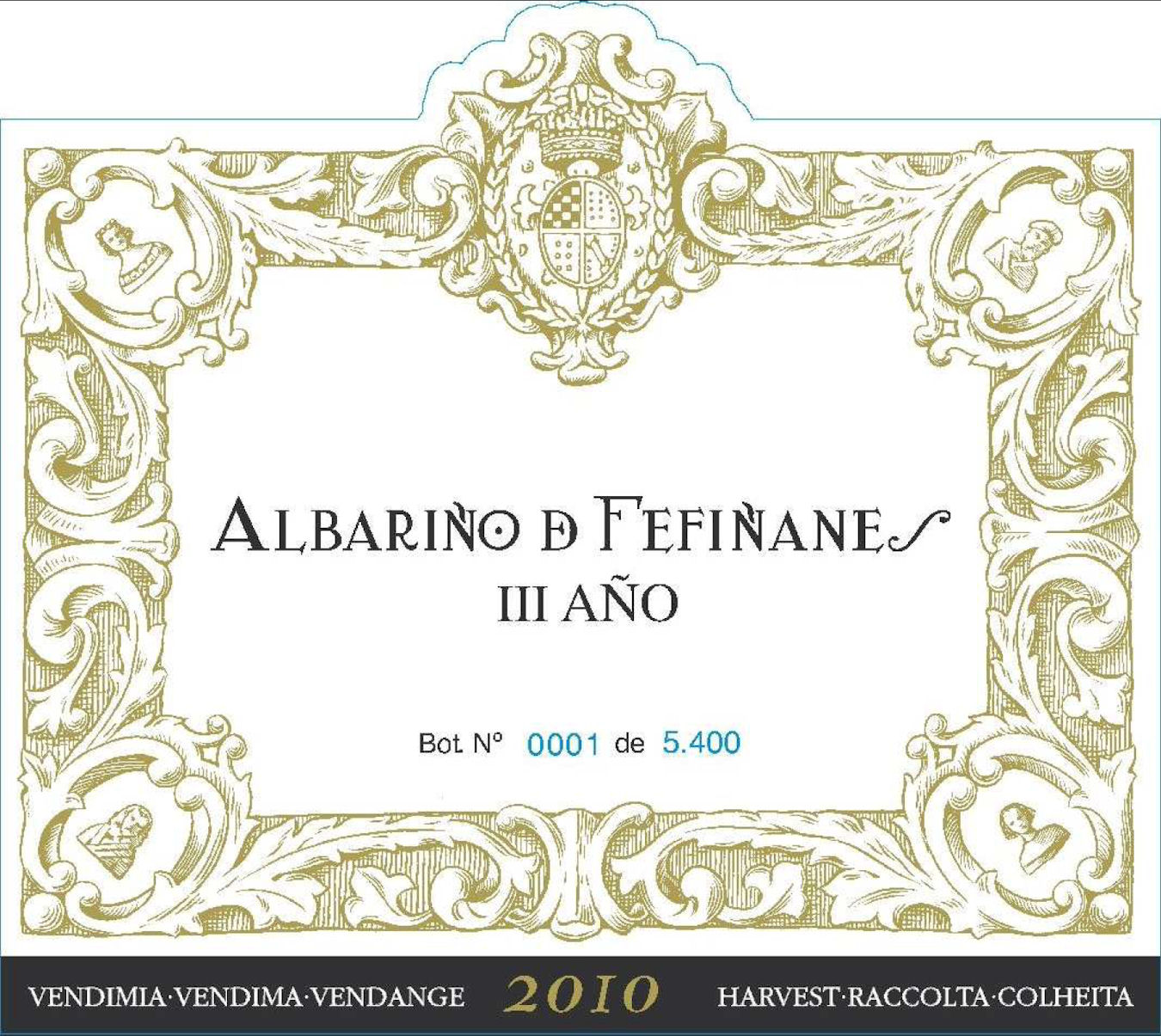
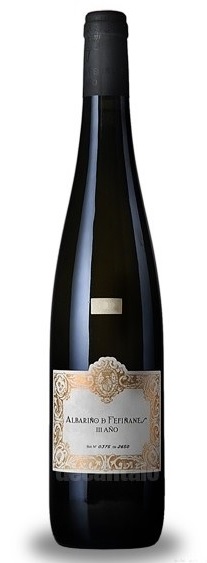
Palacio de Fefinanes Albarino "III Ano" is made from 100 percent Albarino
The III Año shows all the expressiveness of the Albariño grape, with full nose of mature fruit and a mineral character. Complex and meaty with firm structure in the mouth, it promises a splendid evolution which will favor a long life for this elegant wine with personality.
Aged for 3 years on the lees in stainless steel tanks.
Wine is aged for a total of 6 months: 4 months in French and American Oak barrels. No new oak, only 1, 2 and 3 year old barriques. During these 4 months, wine is aged on the fine lees with frequent Batonnage (stirring of the lees) in order to get the most expressive notes from the Albarino varietal. Then, it is transfered into a stainless steel tank, which allows the oak aromas to be assimilated and integrated.
1583 is the birth date of the Viscount of Fefinanes, Gonzalo Sarmiento Valladares, builder of the Castle of Fefinanes, in Cambados. They wanted to pay tribute to their ancestor with this wine that managed to reach a perfect harmony between the fruitiness of the Albarino grape and the complexity brought by the oak aging.
Excellent with shellfish, grilled or stewed fish, white meats, poultry
The Palacio de Fefinanes Estate
Founded in 1904, Palacio de Fefinanes is housed inside a spectacular baronial palace which sits on the lovely main square of coastal Cambados. The facility was built in 1647 by vicount of Fefiñanes Gonzalo Sarmiento Valladares (1583-1659) and is currently owned by Juan Gil Careaga. Palacio de Fefiñanes was the first producer to bottle wine under the D.O. Rías Baixas denomination. The label design dates from 1928 and shows an engraving of the Fefiñanes Palace.
The winemaker is Cristina Mantilla.
"Clean, mineral-laced Albariños from a producer housed in a baronial palace."
- Anthony Dias Blue's pocket guide to wine 2006
The Palacio de Fefinanes Vineyards
Produced in the Rias Baixas region, where the vineyards are quite windy due to the proximity of the Atlantic Ocean. It also provides acidity and freshness to the wine. The winery has only a token acreage, and buys its Albariño grapes from producers under long-term contract and with technical assistance from the winery's enologist. They make two 100% Albariño wines: Albariño de Fefiñanes, a young traditional style Rías Baixas white (30,000 bottles/year); and 1583 Albariño de Fefiñanes, aged six months in 600 liter sherry butts (4,000 bottles/year - annual production: 100,000 liters). Year after year, local critics rate Albariño de Fefiñanes as one of the best.

Quails Gate Chardonnay Okanagan Valley is made from 100% Chardonnay.
Quails’Gate Winery takes great pride in our portfolio of Chardonnays. As one of the original wineries in the Okanagan, our first Chardonnay clone was planted more than 30 years ago, and we have cultivated some of the oldest and most sought-after Chardonnay blocks in the region. The Estate Chardonnay is crafted to be bright, fresh, vivid and celebrated by all who drink it.
Tasting notes:
Fragrances of lemon, yellow flower, peach are accompanied by subtle hints of beeswax and vanilla. A bright-entry on the palate with medium acidity leads t o vibrant tastings of pear, lemon meringue crust and lime zest ending with a long and creamy finish.
This is a wonderfully versatile food wine. Try pairing with lemon roasted chicken, rich seafood risotto or creamy butternut squash soup.


Cap Cette Picpoul de Pinet is made from 100 percent Picpoul de Pinet
A very popular, traditional local variety planted on sun-drenched hillsides called "costières" (coastal region) in the Mediterranean garrigue, near the Etang de Thau - a coastal lagoon situated between the port of Sète and Marseillan.
The color is a superb pale yellow with bright hues. The nose is elegant, with aromas of fresh fruit and citrus fruit especially grapefruit. Well-balanced with typical focusing and zesty acidity. A pure expression of the grape varietal, the wine shows how good Picpoul can be when grown on its favorite terroir.
It will complement a vast array of dishes such as Asian cuisine, sushi, spicy fare and all sorts of seafood and grilled fish. Enjoy!

Jean-Michel Sorbe Quincy Blanc is made from 100 percent Sauvignon Blanc.
The first nose is expressive and opens up to notes of acacia, citrus (lemon, grapefruit). Full on the palate with lovely freshness. This wine boasts nice balance and good length.
The vines are 15 to 20 years old and are located on the left bank of the Cher River, southwest of Quincy. This vineyard enjoys good exposure to the sun and overlies hillocks composed of sandy alluvial deposits and gravel dating back to the Quaternary Period. Each terroir is managed with minimal intervention in an environmentally friendly approach. Vinification: Slow pressing. Fermentation took place under controlled temperatures (18°C).The wine was aged on fine lees for a minimum of 4 months. It was filtered only once before being bottled.
Pair with crustaceans, asparagus, or goat's cheeses.
After pouring, allow the wine to breathe for a few moments in the glass before enjoying so that it may fully release all of its aromas.

Fefinanes Albarino de 1583 Albarino is made from 100% Albarino.
Aged for 5 months in oak barrels (a combination of fine-grained American and French Allier barrels).
1583 is the birth date of the Viscount of Fefinanes, Gonzalo Sarmiento Valladares, builder of the Castle of Fefinanes, in Cambados.
They wanted to pay tribute to their ancestor with this wine that managed to reach a perfect harmony between the fruitiness of the Albarino grape and the complexity brought by the oak aging.
Lovely straw yellow color, clean and bright. The nose is reminiscent of ripe crystallized fruit and spices. The palate is elegant, round and well balanced, with a silky texture.
Excellent with shellfish, grilled or stewed fish, white meats, poultry.

Fefinanes Albarino de 1583 Albarino is made from 100% Albarino.
Aged for 5 months in oak barrels (a combination of fine-grained American and French Allier barrels).
1583 is the birth date of the Viscount of Fefinanes, Gonzalo Sarmiento Valladares, builder of the Castle of Fefinanes, in Cambados.
They wanted to pay tribute to their ancestor with this wine that managed to reach a perfect harmony between the fruitiness of the Albarino grape and the complexity brought by the oak aging.
Lovely straw yellow color, clean and bright. The nose is reminiscent of ripe crystallized fruit and spices. The palate is elegant, round and well balanced, with a silky texture.
Excellent with shellfish, grilled or stewed fish, white meats, poultry.
Fefinanes Albarino de 1583 Albarino is made from 100% Albarino.
Aged for 5 months in oak barrels (a combination of fine-grained American and French Allier barrels).
1583 is the birth date of the Viscount of Fefinanes, Gonzalo Sarmiento Valladares, builder of the Castle of Fefinanes, in Cambados.
They wanted to pay tribute to their ancestor with this wine that managed to reach a perfect harmony between the fruitiness of the Albarino grape and the complexity brought by the oak aging.
Lovely straw yellow color, clean and bright. The nose is reminiscent of ripe crystallized fruit and spices. The palate is elegant, round and well balanced, with a silky texture.
Excellent with shellfish, grilled or stewed fish, white meats, poultry.

Fefinanes Albarino de Albarino is 100 percent Albarino
Fresh fruit aromas of apricot and peach slices with notes of lemon and green apple. Pretty notes of honey and wet nutmeg, and the mouth is round, clean, and pleasant with baked apple, honey, and lemon.
This is a classic Albariño which is good young, but actually improves over two to three years and remains quite drinkable for up to five years. Owner Juan Gil comments that the wine really starts to come into its own in June/July, and he actually prefers it 18 or more months after it's made. A Fefiñanes "vertical" of three or four vintages can provide some most interesting surprises.
Fefinanes Albarino de Albarino is 100 percent Albarino
Fresh fruit aromas of apricot and peach slices with notes of lemon and green apple. Pretty notes of honey and wet nutmeg, and the mouth is round, clean, and pleasant with baked apple, honey, and lemon.
This is a classic Albariño which is good young, but actually improves over two to three years and remains quite drinkable for up to five years. Owner Juan Gil comments that the wine really starts to come into its own in June/July, and he actually prefers it 18 or more months after it's made. A Fefiñanes "vertical" of three or four vintages can provide some most interesting surprises.

Cueva de las Manos Cabernet Sauvignon Organic is made from 100 percent Malbec.
Cueva de las Manos translates to "Cave of Hands". There are a series of caves in Patagonia containing stenciled paintings of hands, dating back over 9,000 years ago. The caves have been named a World Heritage Site, and they are the inspiration for the label on these wines.
The wine offers an intense bouquet on the nose, with notes of green pepper. On the palate it is smooth and well-textured with a long and elegant finish.
Pair with game meats and pasta with heavy sauce.

Reviews:
On the savory side, this red opens with freshly mowed grass, hay and eucalyptus aromas before revealing cherry, strawberry, rose and mineral flavors. Fleshy, with a matrix of dense tannins flexing their muscles on the finish. Shows excellent potential. Best from 2023 through 2042.
-Wine Spectator 96 Points
Floral and red fruit nose. Supple attack, very polished and concentrated, with fine-grained tannins and ample acidity. This has a linear drive, precision. and a very long finish. The rewards will be substantial for the patient consumer.
-Decanter 97 Points

Dal Forno Romano Valpolicella Superiore is made from Corvina, Corvinone, Rondinella, Oseleta and Croatina grown at the Monte Lodoletta estate in the Val d'Illasi, eastern Valpolicella.
One of Italy's most iconic producers, Romano Dal Forno revolutionized Valpolicella winemaking with an obsessive pursuit of quality. The grapes are hand-harvested with meticulous selection, then dried for approximately 45 days in the estate's patented, computer-controlled appassimento rooms. After pressing, the wine is fermented in custom-designed stainless steel tanks and aged for 24 months in new French oak barrels, followed by extended bottle aging before release.
Deep ruby in color with aromas of blueberry, blackberry, cherry and cocoa. Full-bodied and opulent on the palate with powerful yet polished tannins, layers of dark fruit, sweet spice, tobacco and chocolate. Despite its remarkable concentration, the wine maintains an elegant freshness and balance. Pairs beautifully with grilled or roasted red meats, game and aged cheeses.
14.5% ABV
A perfumed and elegant wine with subtle aromas of balsamic, coconut, dark bramble fruit, jasmine, mulberries, red cherries and chocolate. It’s spicy rather than fruity. On the palate it shows salted chocolate flavors and a full body. It’s crisp, zesty and velvety, with creamy tannins and a graphite finish. It shows tension despite its concentrated style. It will be released in January 2027. Try then or hold.
-James Suckling 97 Points